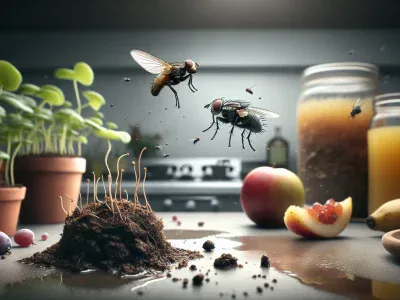
Understanding gnats involves recognizing their types, habits, and environmental preferences. These small flying insects might seem similar to fruit flies but distinguish themselves in various ways.
Common Types of Gnats
Gnats typically fall into several categories, with some examples being fungus gnats, drain flies, and eye gnats. Fungus gnats are often seen around potted plants. Drain flies appear near sinks and drains. Eye gnats tend to be found outdoors.
Habits and Behavior
Gnats exhibit different behaviors based on their type. Fungus gnats often lay eggs in damp soil. Drain flies breed in organic matter in stagnant water. Eye gnats frequently hover near animals and humans. Understanding these behaviors helps in identifying them correctly.
Environmental Preferences
Gnats thrive in specific environments. Fungus gnats prefer moist, rich soil, making plant pots ideal environments. Drain flies favor humid areas with organic buildup, such as drains. Eye gnats prefer open air environments, especially where organic material is present. Recognizing these conditions aids in managing gnat populations effectively.
Discovering Fruit Flies
Fruit flies are small insects often seen buzzing around ripe or decaying produce. They become a nuisance when attracted to uncovered fruits, fermenting beverages, and sugary residues.
Characteristics of Fruit Flies
Fruit flies measure about 0.1 inch long. They have brown bodies with bright red eyes. Their small size allows them to enter homes through window screens and tiny openings.
Lifecycle and Reproduction
Fruit flies lay eggs on moist, organic surfaces. A female can lay hundreds of eggs, which hatch quickly into larvae. The entire lifecycle, from egg to adult, takes about a week under optimal conditions.
Preferred Environments
Fruit flies thrive in warm, moist environments. They often appear in kitchens, compost bins, and areas where food is prepared or stored. Keeping these areas clean and covered helps reduce infestations.
Key Differences Between Gnats and Fruit Flies
Understanding the differences between gnats and fruit flies helps target pest control efforts. Focus on identifying physical characteristics, breeding habits, and effective control methods for each insect type.
Physical Appearance
Gnats are slender insects with long legs and range from gray to dark brown. They often measure about 0.08 to 0.1 inches. Fruit flies have a rounder body, usually 0.1 inch long, and display distinctive red eyes with a tan to brown coloring. Noticing these differences assists in proper identification.
Breeding Habits
Gnats breed in moist environments. Fungus gnats lay eggs in damp soil, while drain flies choose stagnant water. Fruit flies, but, lay eggs on overripe fruits and moist organic materials. The larvae develop quickly, highlighting the need to address conducive conditions immediately.
Control and Prevention Methods
Removing breeding sites effectively controls gnat populations. Allow soil to dry between waterings to deter fungus gnats. For fruit flies, store fruits in airtight containers and clean spills promptly. Repairing leaks and using traps also helps manage infestations for both gnats and fruit flies.
When to Seek Professional Help
Professional help becomes necessary when the gnat or fruit fly infestation is beyond control, affecting your home’s comfort. Infestations causing health concerns or persistent even though treatment efforts need expert intervention.
Identifying a Severe Infestation
Recognize a severe infestation by noticing increasing numbers of gnats or fruit flies. These pests are present daily, even after attempts to clean and remove breeding sites. You might see them in multiple rooms, not just kitchens or near plants. Their presence could indicate hidden breeding grounds, making them difficult to eliminate.
Effective Pest Control Solutions
Experts use targeted solutions to address severe infestations. They may apply insecticides, use traps, or employ natural predators. Professionals can identify and seal entry points to prevent future invasions. They offer advice on habits and cleanliness to help maintain pest-free environments.
Conclusion
Identifying and understanding the differences between gnats and fruit flies is key to managing these common household pests. By recognizing their distinct environments and behaviors, you can carry out effective control measures and maintain a pest-free home. Whether it’s adjusting your watering routine for plants or ensuring food storage areas are secure, addressing the specific conditions that attract these insects will help you prevent infestations. If you find yourself overwhelmed by these pests, don’t hesitate to seek professional assistance to regain control and ensure your living space remains clean and comfortable.
To provide the best experiences, we use technologies like cookies to store and/or access device information. Consenting to these technologies will allow us to process data such as browsing behaviour or unique IDs on this site. Not consenting or withdrawing consent, may adversely affect certain features and functions.
Functional
Always active
The technical storage or access is strictly necessary for the legitimate purpose of enabling the use of a specific service explicitly requested by the subscriber or user, or for the sole purpose of carrying out the transmission of a communication over an electronic communications network.
Preferences
The technical storage or access is necessary for the legitimate purpose of storing preferences that are not requested by the subscriber or user.
Statistics
The technical storage or access that is used exclusively for statistical purposes.The technical storage or access that is used exclusively for anonymous statistical purposes. Without a subpoena, voluntary compliance on the part of your Internet Service Provider, or additional records from a third party, information stored or retrieved for this purpose alone cannot usually be used to identify you.
Marketing
The technical storage or access is required to create user profiles to send advertising, or to track the user on a website or across several websites for similar marketing purposes.