Fishing, a time-honored activity, offers enthusiasts a profound connection to nature coupled with moments of tranquility. Among its numerous techniques, fly fishing and bait fishing stand out due to their unique practices and appeal. By understanding their differences and nuances, you’ll find a method that aligns harmoniously with your preferences and goals. This article delves into these two fishing styles, providing you with insights to better appreciate their distinct charms.
Overview of Fishing Styles
Key Characteristics of Fly Fishing
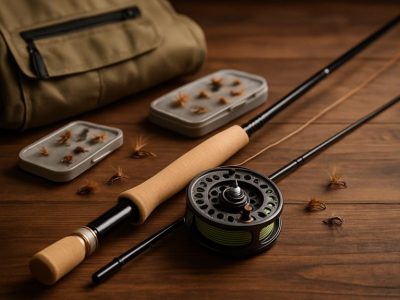
Fly fishing is an artful and skill-intensive approach that employs lightweight artificial flies to entice fish. These flies, crafted to mimic insects or other prey, are presented delicately on the water’s surface. This form of fishing demands precision and mastery over casting techniques, offering practitioners a chance to immerse themselves in the nuanced behavior of fish and the ecosystems they inhabit.
Essential Equipment Used in Fly Fishing
The equipment employed in fly fishing is distinct and highly specialized. Items include a flexible fly rod, a lightweight reel, and fly lines designed with different levels of buoyancy. Also, artificial flies are essential and can vary greatly in design and function, allowing anglers to adapt to varying environmental factors effectively.
Primary Target Fish and Locations for Fly Fishing
Fly fishing often targets species such as trout, salmon, and bass, frequently pursued in freshwater streams, rivers, and lakes. Some enthusiasts extend this technique to saltwater environments, aiming for bonefish or tarpon. Location plays a critical role, as practitioners seek areas teeming with the specific aquatic life resembling their designed artificial flies.
Defining Bait Fishing Techniques
Conversely, bait fishing employs live or procured bait to attract fish. This can range from worms and minnows to prepared baits designed to appeal to particular fish species. Bait fishing is versatile, accessible, and applicable across diverse water types, making it a popular choice for beginners and seasoned anglers alike.
Comparison of Methods and Strategies
Preparation and Techniques in Fly Fishing vs. Bait Fishing
Preparation in fly fishing involves selecting the appropriate fly and studying the water’s current and fish behaviors. Casting techniques are developed to simulate natural movements. In comparison, bait fishing focuses on positioning the bait effectively and often includes employing sinkers, floats, or hooks tailored for the target species.
Environmental, Technical, and Skill Modalities
Fly fishing demands active engagement with the environment, making it a rigorous and immersive pursuit. Its technical nature challenges anglers to adapt instantaneously, contributing to the technique’s allure. Bait fishing, by contrast, often takes a more relaxed pace but requires understanding fish feeding habits and bait presentation for success.
Understanding the Benefits of Each Approach
Ecological and Interactive Considerations
Fly fishing often requires acknowledging the minutiae of aquatic ecosystems, potentially fostering an eco-conscious mindset. Conversely, bait fishing provides opportunities for close family bonding due to its accessible nature.
Personal Preferences and Situational Suitability
Your choice between these approaches may stem from various factors, including physical location, target species, and available equipment. Fly fishing may attract those desiring a challenge, while bait fishing is suited for individuals seeking a laid-back pastime.
To provide the best experiences, we use technologies like cookies to store and/or access device information. Consenting to these technologies will allow us to process data such as browsing behaviour or unique IDs on this site. Not consenting or withdrawing consent, may adversely affect certain features and functions.
Functional
Always active
The technical storage or access is strictly necessary for the legitimate purpose of enabling the use of a specific service explicitly requested by the subscriber or user, or for the sole purpose of carrying out the transmission of a communication over an electronic communications network.
Preferences
The technical storage or access is necessary for the legitimate purpose of storing preferences that are not requested by the subscriber or user.
Statistics
The technical storage or access that is used exclusively for statistical purposes.The technical storage or access that is used exclusively for anonymous statistical purposes. Without a subpoena, voluntary compliance on the part of your Internet Service Provider, or additional records from a third party, information stored or retrieved for this purpose alone cannot usually be used to identify you.
Marketing
The technical storage or access is required to create user profiles to send advertising, or to track the user on a website or across several websites for similar marketing purposes.