Picture peering into the hidden world of insects, where transformation is a way of life. Among these tiny creatures, two fascinating stages—nymph and larva—hold secrets to their incredible journeys. At first glance, they might seem similar, but their roles in nature and development couldn’t be more distinct. Understanding these differences unlocks a deeper appreciation for the complexity of life around you. how a dragonfly emerges sleek and agile while a butterfly unfurls delicate wings from its cocoon? These transformations begin with either a nymph or larva, each following unique paths dictated by evolution. By exploring what sets them apart, you’ll uncover insights into survival strategies that shape ecosystems worldwide.
Understanding Nymph And Larva
Nymphs and larvae represent distinct developmental stages in the insect world, each with unique characteristics and roles. By examining these stages closely, you can uncover critical differences that shape an insect’s life cycle.
Definition Of Nymph
A nymph is an immature stage of insects undergoing incomplete metamorphosis (hemimetabolism). It resembles the adult form but lacks fully developed wings and reproductive organs. Nymphs grow by molting their exoskeleton several times before becoming adults. Examples include grasshoppers, dragonflies, and cockroaches.
In nymphal stages, insects often share habitats and diets with their adult counterparts. For instance, dragonfly nymphs live in water like adults but lack flight capabilities.
Definition Of Larva
Larvae are immature forms of insects experiencing complete metamorphosis (holometabolism). They look entirely different from their adult forms and usually occupy separate ecological niches to reduce competition for resources. Larvae undergo dramatic transformation during the pupal stage before emerging as adults. Caterpillars (butterflies), maggots (flies), and grubs (beetles) are larval examples.
Most larvae focus on feeding intensively to store energy needed for adulthood. For example, caterpillars consume leaves nonstop to fuel their transition into butterflies or moths.
Key Differences Between Nymph And Larva
Nymphs and larvae, while both immature insect stages, differ significantly in development, appearance, and behavior. These distinctions shape their roles within ecosystems.
Developmental Differences
Nymphs emerge through incomplete metamorphosis (hemimetabolism). They bypass a pupal stage and molt several times to reach maturity. For example, grasshoppers grow as nymphs by shedding exoskeletons until they develop functional wings and reproductive organs.
Larvae undergo complete metamorphosis (holometabolism). They pass through a distinct pupal phase before transforming into adults. Caterpillars exemplify this process, as they cocoon themselves during the pupal stage before emerging as butterflies.
Physical Appearance
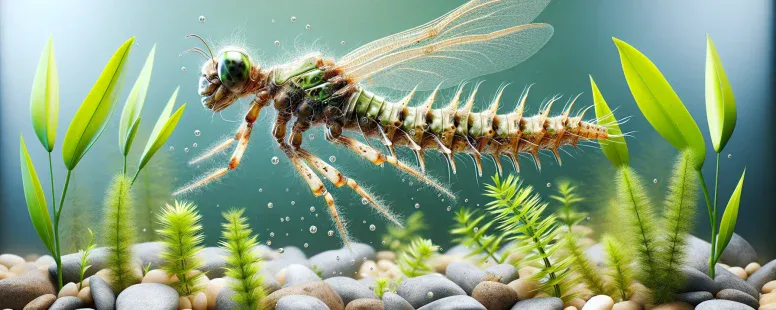
Nymphs resemble miniature versions of adults but lack fully developed features like wings or reproductive structures. Dragonfly nymphs display segmented bodies with visible legs similar to adult dragonflies.
Larvae appear entirely different from their adult forms. They often exhibit soft bodies and specialized feeding appendages. Fly maggots are legless larvae designed for consuming decaying matter—contrasting starkly with the winged flies they become.
Habitat And Behavior
Nymphs typically share habitats with their adult counterparts since their needs align. Aquatic nymphs like mayflies inhabit freshwater environments alongside mature mayflies.
Larvae usually occupy separate ecological niches to avoid competition with adults. Beetle grubs thrive underground feeding on roots while beetles live above ground consuming leaves or other materials post-metamorphosis.
Examples Of Organisms With Nymphs
Nymphs are commonly found in insects undergoing incomplete metamorphosis. They represent a critical stage in their life cycle, exhibiting similarities to adult forms but lacking full maturity.
Dragonflies: Dragonfly nymphs live in aquatic habitats, preying on small organisms like mosquito larvae. Unlike adults with strong flying abilities, nymphs use jet propulsion by expelling water through their rectum for movement.
Grasshoppers: Grasshopper nymphs resemble miniature versions of adults and share similar diets, feeding on vegetation. They molt multiple times before developing wings and reproductive capability.
True Bugs (Hemiptera): Species like aphids emerge as nymphs and grow gradually without drastic physical changes. These nymph stages often involve sucking plant sap using specialized mouthparts.
Mayflies: Mayfly nymphs spend months or years underwater, feeding on organic debris. Adults have short lifespans focused solely on reproduction, contrasting the active feeding behavior of nymphs.
Each example illustrates specific adaptations that allow survival during the developmental stage while maintaining ecological roles distinct from fully mature insects.
Examples Of Organisms With Larvae
Several organisms undergo their immature stages as larvae, showcasing diverse forms and ecological roles. These examples illustrate the transformation processes unique to complete metamorphosis.
Butterflies (Lepidoptera)
Caterpillars are butterfly larvae that focus on feeding intensively to prepare for the pupal stage. They consume leaves and store energy required for metamorphosis into winged adults.
Flies (Diptera)
Maggots, the larval form of flies, differ significantly from adults in both appearance and behavior. They primarily decompose organic matter, playing a crucial role in nutrient cycling within ecosystems.
Beetles (Coleoptera)
Beetle larvae, such as grubs or wireworms, vary widely in diet and habitat depending on species. For instance, Japanese beetle grubs feed on grass roots underground before emerging as adult beetles above ground.
Mosquitoes (Culicidae)
Mosquito larvae inhabit aquatic environments where they feed on microorganisms like algae and organic debris at water surfaces before developing into flying adults capable of reproduction.
Frogs (Amphibia: Anura)
Tadpoles represent the larval stage of frogs; although amphibians aren’t insects, their life cycle demonstrates complete morphological changes—from aquatic filter-feeders with gills to terrestrial adults with lungs.
Importance Of Studying Nymphs And Larvae
Understanding nymphs and larvae deepens your knowledge of insect life cycles, revealing their crucial roles in ecosystems. These immature stages contribute significantly to population dynamics, nutrient cycling, and ecological balance. For example, dragonfly nymphs control mosquito populations by preying on larvae in aquatic habitats. Similarly, fly maggots decompose organic matter, recycling nutrients back into the soil.
Studying these stages helps you identify species-specific behaviors and adaptations. Nymphal forms like grasshoppers showcase gradual development through molting without dramatic changes in appearance, aiding efficient environmental adaptation. On the other hand, larval forms such as caterpillars exhibit intensive feeding strategies to store energy for metamorphosis. Recognizing these traits supports pest management and conservation efforts.
Researching nymphs and larvae can unveil evolutionary insights into incomplete versus complete metamorphosis pathways. By comparing nymphal development with larval transformation processes—like the dramatic pupation phase seen in beetles—you uncover broader patterns of adaptability across insect taxa.
Monitoring these early life stages also assists scientists in assessing ecosystem health since many insects serve as bioindicators. For instance, mayfly nymph abundance reflects water quality levels due to their sensitivity to pollution. Likewise, observing mosquito larvae populations informs public health measures against vector-borne diseases.
Conclusion
Understanding the differences between nymphs and larvae offers valuable insights into the fascinating complexities of insect development. These early life stages play essential roles in ecosystems, influencing population dynamics, nutrient cycling, and ecological balance.
By studying their unique behaviors and adaptations, you can better appreciate their impact on nature while gaining tools for conservation and pest management. Observing these stages also helps monitor ecosystem health, highlighting their significance far beyond their developmental journeys.
To provide the best experiences, we use technologies like cookies to store and/or access device information. Consenting to these technologies will allow us to process data such as browsing behaviour or unique IDs on this site. Not consenting or withdrawing consent, may adversely affect certain features and functions.
Functional
Always active
The technical storage or access is strictly necessary for the legitimate purpose of enabling the use of a specific service explicitly requested by the subscriber or user, or for the sole purpose of carrying out the transmission of a communication over an electronic communications network.
Preferences
The technical storage or access is necessary for the legitimate purpose of storing preferences that are not requested by the subscriber or user.
Statistics
The technical storage or access that is used exclusively for statistical purposes.The technical storage or access that is used exclusively for anonymous statistical purposes. Without a subpoena, voluntary compliance on the part of your Internet Service Provider, or additional records from a third party, information stored or retrieved for this purpose alone cannot usually be used to identify you.
Marketing
The technical storage or access is required to create user profiles to send advertising, or to track the user on a website or across several websites for similar marketing purposes.