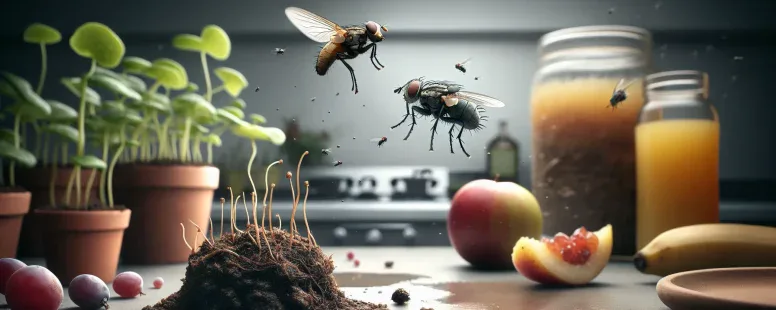
Picture this: you’re enjoying a crisp apple or tending to your favorite houseplants when a tiny winged intruder zips past your nose. Is it a gnat or a fruit fly? At first glance they seem almost identical—both small both quick both annoyingly persistent. But look closer and you’ll find a world of difference buzzing just beneath the surface.
Understanding what sets these pint-sized pests apart can transform your approach to keeping your home fresh and your plants thriving. You might be surprised by how much you can learn from these minuscule creatures and how the right knowledge can help you reclaim your space with confidence. Ready to uncover the secrets hiding in plain sight?
Understanding Gnats and Fruit Flies
Noticing tiny insects darting near your kitchen or windowsill? They might looks similar, but gnats and fruit flies play different roles in your home and garden. Knowing these subtle differences lets you target the right pest, making any control effort more effective.
What Are Gnats?
Gnats belong to several families in the order Diptera, including Sciaridae and Mycetophilidae. These insects thrive in moist soil and areas with decaying organic matter. You could spot fungus gnats hovering around potted plants or damp basements, searching for fungal growths or rotting roots.
A gnat’s slender, long-legged body—with gray, black, or brown coloring—distinguishes it from other flying pests. Adult gnats rarely grow larger than 0.13 in (3.3 mm). Most gnats avoid fruit altogether, focusing instead on fungus or dirty drains. Common scenarios: you overwater a plant, then hundreds of gnats appear in just a few days. According to the University of California Statewide Integrated Pest Management Program (UC IPM), gnats often infiltrate indoor plants more than food-containing areas.
What Are Fruit Flies?
Fruit flies, mostly Drosophila melanogaster, target fermenting or rotting produce. These insects reach only 0.10 in (2.5 mm) in length and display a brownish-orange body, with distinct red eyes that reflect light. You’ll often catch fruit flies circling ripe bananas, open wine bottles, or a neglected trash bin.
Unlike gnats, fruit flies thrive in kitchens and dining spaces, picking up the scent of yeast and sugars during warm weather. If you leave peaches or tomatoes out for too long, fruit flies rapidly multiply within days—up to 500 eggs per female, per source from the Centers for Disease Control and Prevention (CDC). In restaurants, persistent fruit flies can jeopardize sanitation scores and annoy customers.
Noticed both pests at once? Gnats cluster in soil, while fruit flies hover above fruit bowls. Recognizing each insect’s preferred zone—soil for gnats, sugary produce for fruit flies—helps you disrupt the cycle and preserve a clean, healthy living space.
Physical Differences Between Gnats and Fruit Flies
Spotting gnats and fruit flies in your kitchen can feel like solving a tiny mystery. You see a blur zip by, but do you notice the gnat’s long, skinny body or the fruit fly’s tiny, stocky form? Their anatomy tells distinct stories. Gnats usually measure 2-4 millimeters, showing off slender black or gray bodies, fragile legs, and long, transparent wings. They almost look like little mosquitoes but without the bite. If you ever watched gnats hover near plants, their dangling legs sort of dangle below them, almost like tiny trapeze artists caught mid-swing.
Fruit flies, in contrast, appear rounder and shorter, often just 3 millimeters long. Their tan or brown bodies show tinges of yellow, and you’ll spot bright red eyes—like pinpricks of sunset. According to University of Kentucky Entomology, those red eyes are one of the most reliable ways to recognize Drosophila melanogaster. Fruit flies also have shorter, more robust wings and stockier legs. If you set out ripe bananas or tomatoes, fruit flies swarm with the urgency of shoppers during a flash sale, bouncing from fruit to fruit, feeding and laying eggs.
Ever wonder why gnats seem more ghostly, floating above soil, while fruit flies zigzag around your fruit bowl? Gnats’ wings tend to be longer than their bodies, making their flight light and shaky. Fruit flies’ compact wings follow their bodies’ length, so their movement looks more determined and agile.
Have you ever tried squashing one? Sometimes, you can feel the difference too. Gnats crumble easily, like delicate ash, while fruit flies—especially adults—sometimes crunch lightly under pressure.
These visible contrasts might seem subtle, but if you keep plants indoors or manage food waste, recognizing who’s who can save you loads of time battling the wrong bug. Next time you play detective, ask yourself: Is it sporting rainbow eyes and bouncing on my banana, or is it haunting my potting soil with skinny legs and meek wings? Using these cues can turn your everyday pest problems into science-backed victories.
Habitat and Behavior
Gnats and fruit flies occupy different spaces in your world, each adapting to their habitat with unique behaviors. Knowing where they thrive helps you predict, prevent, and target infestations.
Where Gnats Are Commonly Found
Gnats appear if you’ve ever watered a houseplant and watched tiny insects rise like mist from the soil. These insects, part of the Sciaridae or Mycetophilidae families, make their homes in moist, organic-rich substrates—think overwatered potted plants, compost bins, or clogged sink drains (NC State Extension). Nurseries see waves of gnats after irrigation, watching them hover just above trays of young seedlings. Sometimes you’ll notice gnats clustering near windows, drawn to light, when searching for mates. If you could follow their life over a week, you’d see females laying eggs in damp soil crevices—each one a future emergence waiting for the next rainy day.
Where Fruit Flies Are Commonly Found
Fruit flies, especially Drosophila melanogaster, treat your ripening bananas and kitchen scraps like five-star resorts. If forgetting a peach in your fruit bowl for two days, you’ve probably seen a cloud of fruit flies appear seemingly out of nowhere. These insects hover near fermenting produce, vinegar bottles, or even recycling bins where sticky cans collect residue (University of Kentucky Entomology). Restaurant owners fear the smallest overripe fruit, knowing fruit fly infestations will follow for days, clustering on bar rags and drains. Occasionally, fruit flies surprise you in seldom-cleaned mop buckets, attracted by sugary film and biofilm. If you consider how a single fruit fly lays 500 eggs, a single overlooked apple can spark a population boom that feels like an invasion.
Researchers see these different behaviors shaping pest management. For example, plant care guides recommend watering only when soil dries out, reducing gnat numbers. Food waste tips highlight sealing produce and scrubbing kitchen drains, starving fruit flies before they scatter to every corner. Which pest would you rather battle: the ghostly gnats haunting your houseplants, or the fruit fly swarm chasing every softening fruit? Both can disrupt your home routine—but, knowing their habitats, you’re already one step ahead.
Life Cycle Comparison
Gnats and fruit flies follow unique pathways in their life cycles, twisting through stages that seem similar but diverge at every critical juncture. Ever noticed how gnats seem to vanish from one houseplant, only to reappear days later in another? That’s the stealth of a gnat’s life cycle at work. You might find their eggs tucked away in a moist pot’s darkest corners, almost invisible. Once these eggs hatch, you’ll see threadlike larvae wriggling beneath the soil, feeding softly on rotting leaves and microbes. This hidden world, called the larval stage, lasts about 2 weeks, with the entire journey from egg to full adult wrapping up in 3–4 weeks, as studied by the University of Minnesota Extension.
Contrast that with the chaotic explosion of a fruit fly infestation, which can turn a ripe banana into a busy nursery overnight. Fruit flies, particularly Drosophila melanogaster, always want sugary, fermenting food as their cradle. Their lifecycle’s like a rapid march: eggs on fruit’s sticky surface give way to pale larvae, which wiggle through mealy flesh before pupating right beside yesterday’s peel. Picture discovering over 100 new adults flitting around after just 8 days—that’s the fruit fly clock ticking fast (source: CDC). No house is too tidy when a single overripe peach becomes a metropolis.
Some say gnats live by the rules of hidden patience, taking their time in soil’s secret places. Others claim fruit flies are masters of opportunism, capitalizing on each moment a fruit gets soft—prompting the question: are you watching your countertop carefully enough? If you recall the last summer you found a single gnat resting on a window, you’ll remember how silent their population grows. Fruit flies, with their bursts of numbers, create an entirely different narrative: a quick, visible takeover.
Fascinatingly, both species depend on environmental cues for growth. Temperature and humidity can slow or speed up each stage. For example, higher kitchen temperatures accelerate fruit fly metamorphosis, while overwatering your plants quietly boosts gnat numbers. Entomologists suggest checking window sills for fruit fly pupae or poking gently through topsoil to find gnat larvae—hands-on detective work for control (source: University of California IPM).
What if your daily habits tipped these life cycles in your favor? Drying plant soil or refrigerating fruit disrupts these bugs’ plans entirely; a tiny change, a monumental effect. So next time you marvel at a swirl of tiny wings, know the battle hidden in dirt and fruit is not just science—it’s happening on your counter and in your pots, right under your nose.
Common Problems and Prevention
Discovering clouds of gnats near your windows or a parade of fruit flies crowding your bananas, you might wonder—how did things get so out of hand? Both pests, though tiny, can quickly turn carefree days into a flurry of swatting and wiping. Gnats often multiply in overwatered African violet pots or in the neglected corners behind your kitchen sink. You might once have laughed at a neighbor who baby-talked to their marigolds about “fungus gnat control”, but now you scan your own soil for wiggling larvae. Fruit flies write another story, swooping in for summer peaches left too long on the counter or congregating wherever wine glasses gather. Scientists at the University of California documented Drosophila melanogaster’s uncanny ability to sniff out ethanol emissions—proof that a half-empty cider bottle can become a breeding ground overnight.
Many people try homemade remedies—vinegar traps, sticky cards, or cinnamon dustings—but can you trust the folklore circulating on garden forums? Sometimes these solutions catch stray insects, but when moisture or organic debris lingers, new swarms reappear within days. Have you noticed fruit fly populations shrink after your local grocery started refrigerating overripe produce? That’s not coincidence. Cold storage disrupts their breeding cycle, curbing outbreaks before they begin, as confirmed in Journal of Economic Entomology (Vol. 109, Issue 6).
Curiosity might push you to experiment—does letting your spider plant’s soil dry completely change anything? , a single missed watering can break the life cycle of fungus gnats, who rely on moisture to nurture their larvae. Yet, as you celebrate, you might spot fruit flies zigzagging from your compost bucket. Layering kitchen waste with dry leaves instead of tossing eggshells on top smothers their access to fermentation, making the habitat less appealing.
It’s easy to believe gnats and fruit flies are united in purpose, but each responds to prevention differently. Gnats despise dry surfaces and high airflow; running a small desk fan across your succulents keeps them away, and forces them to seek more humid refuge. Fruit flies, relentless in kitchens, shrink from clean counters, sealed produce, and regular garbage removal. Store onions in mesh bags, wipe syrup rings off maple bottles, and check for leaks beneath your fridge.
Ever wondered why infestations pick certain seasons? Warmer weather and summer monsoons play a part, coaxing both species out in greater numbers. Nevertheless, indoor humidity spikes from frequent boiling or drying clothes on radiators can create microhabitats, drawing gnats to hypothetical indoor “meadows” and fruit flies to accidental “orchards” on your countertop.
Listing quick actions, you could post this on your fridge:
Let soil dry completely between waterings (gnats: peace for your pothos).
Clean and seal trash, compost, and recycling promptly (fruit flies: deter crowd scenes).
Inspect new plants for larvae on arrival (gnats: pause before introducing plague).
Store fruit in the blender drawer or fridge (fruit flies: nip in the bud).
Every home faces its own version of this saga; a child leaving apple cores in their room, a roommate overwatering the jade plant, or a compost bin left ajar after a rainstorm. You can transform habitats through everyday choices and simple troubleshooting. When you slow down these invaders, even a single step—like wiping a countertop just once extra a day—tips the balance in favor of a gnat- and fruit-fly-free home.
Conclusion
When you know what sets gnats and fruit flies apart, you’re better equipped to keep your home and plants safe from unwanted pests. Small changes in your daily routine can make a big difference in keeping these insects at bay.
By staying alert to their habits and adjusting your environment, you’ll enjoy a cleaner kitchen and healthier plants all year long.
Published: August 2, 2025 at 4:30 am by Ellie B, Site owner & Publisher
To provide the best experiences, we use technologies like cookies to store and/or access device information. Consenting to these technologies will allow us to process data such as browsing behaviour or unique IDs on this site. Not consenting or withdrawing consent, may adversely affect certain features and functions.
Functional
Always active
The technical storage or access is strictly necessary for the legitimate purpose of enabling the use of a specific service explicitly requested by the subscriber or user, or for the sole purpose of carrying out the transmission of a communication over an electronic communications network.
Preferences
The technical storage or access is necessary for the legitimate purpose of storing preferences that are not requested by the subscriber or user.
Statistics
The technical storage or access that is used exclusively for statistical purposes.The technical storage or access that is used exclusively for anonymous statistical purposes. Without a subpoena, voluntary compliance on the part of your Internet Service Provider, or additional records from a third party, information stored or retrieved for this purpose alone cannot usually be used to identify you.
Marketing
The technical storage or access is required to create user profiles to send advertising, or to track the user on a website or across several websites for similar marketing purposes.