Picture yourself standing under a tree on a sunny day, watching the intricate play of light and shadow beneath its canopy. why some shadows appear sharp and dark while others are softer, fading gently into the light? This fascinating phenomenon has everything to do with the concepts of umbra and penumbra—terms that might sound complex but describe something you’ve likely observed countless times.
These two types of shadows reveal the hidden beauty of how light interacts with objects in space. Whether it’s a solar eclipse casting dramatic contrasts or the subtle shading in your everyday surroundings, understanding the difference between umbra and penumbra opens up a whole new way to see the world around you. Let’s explore what sets these two apart and uncover their role in creating nature’s most captivating displays.
Understanding Shadows: Umbra And Penumbra
Umbra and penumbra describe distinct parts of a shadow formed when an object blocks light. The umbra is the darkest region, where the light source is completely obstructed. In contrast, the penumbra is a partially shaded area surrounding the umbra, where only some of the light reaches.
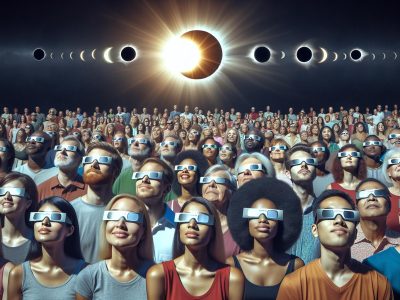
During solar eclipses, these terms become particularly relevant. When you’re standing in the umbra, you experience a total eclipse because no sunlight directly hits that area. But, if you’re within the penumbra, you’ll see a partial eclipse as some sunlight still filters through.
The sharpness of shadows also depends on how close or far an object is from its light source. A small nearby object creates a defined umbra and minimal penumbra, while distant objects produce softer edges due to broader penumbral zones.
Everyday examples include observing shadows cast by trees or buildings under direct sunlight. Tree leaves can create intricate patterns with clear umbras and overlapping penumbras on surfaces below them. Similarly, indoor lighting often results in diffuse shadows because artificial lights emit rays from multiple points rather than one concentrated source.
Understanding these concepts enriches your perception of natural phenomena like eclipses and enhances your appreciation for subtle details in everyday shading effects.
What Is An Umbra?
An umbra is the darkest part of a shadow where light from a source is completely blocked. It appears as a sharp, central region with no light penetration.
Definition And Characteristics
The umbra forms when an opaque object fully obstructs direct light rays. This results in complete darkness within the boundary of this region. The sharpness and size of the umbra depend on the distance between the light source, object, and surface receiving the shadow. For example, nearer objects create more defined umbras due to less diffusion of light around their edges.
During solar eclipses, standing in the Moon’s umbral shadow causes total sunlight obstruction. In this position, you experience night-like darkness during daytime hours.
Examples Of Umbra In Nature
You observe natural examples of umbras during celestial events like lunar or solar eclipses. When Earth’s shadow falls on the Moon during a lunar eclipse, it creates an umbral region that darkens part or all of its surface.
Closer to daily life, consider shadows cast by buildings under direct sunlight at noon—these contain well-defined umbras due to minimal scattering effects from overhead lighting angles.
What Is A Penumbra?
A penumbra is the partially shaded outer region of a shadow that forms when an opaque object blocks only part of a light source. It appears as a gradient or soft transition between complete darkness and full illumination, contrasting with the sharp edges of an umbra.
Definition And Characteristics
The penumbra occurs because light sources emit rays in multiple directions, causing some rays to bypass the object while others are blocked. This partial obstruction creates an area with varying brightness levels. Unlike the umbra, which is entirely dark, the penumbra’s intensity gradually decreases as you move away from its edge.
The size and sharpness of a penumbra depend on factors like the dimensions of the light source and its distance from both the object and surface receiving the shadow. For instance, larger light sources produce broader penumbras due to more scattered rays reaching surrounding areas. In contrast, smaller or point-like sources create narrower ones.
Examples Of Penumbra In Nature
Penumbras are visible during astronomical events like solar eclipses. When you’re within Earth’s penumbral shadow during a lunar eclipse, you observe only slight dimming rather than total darkness since sunlight still partially reaches the Moon’s surface.
Another example involves shadows cast by trees under diffused daylight conditions. The overlapping leaves allow varying amounts of sunlight through gaps, producing soft-edged patterns resembling natural penumbras on surfaces below. Similarly, standing near bright streetlights reveals how multi-directional beams generate faintly shaded regions around your shadowed outline.
Penumbras also enhance visual depth perception in art and photography by creating smooth transitions between highlights and shadows that mimic real-world lighting effects effectively aligning with human vision perception mechanics.
Key Differences Between Umbra And Penumbra
Understanding the differences between umbra and penumbra is essential for grasping how light interacts with objects. These terms describe distinct shadow regions, each with unique characteristics.
Intensity Of Shadow
The umbra represents complete darkness because the object entirely blocks the light source, leaving no illumination. You can observe this during a total solar eclipse when standing in the Moon’s umbral shadow; the Sun is completely obscured. In contrast, the penumbra forms a partially shaded area where only part of the light source is blocked. Shadows in this region appear lighter and more diffused, as seen under tree canopies on a sunny day.
Shape And Size
Umbra shapes are sharply defined when close to an opaque object but become less distinct at greater distances due to light scattering. For example, a building casts well-defined umbras at midday when sunlight hits perpendicularly. On the other hand, penumbras expand with distance from their light source because partial obstruction increases gradually over space. Streetlights create softer edges in shadows after sunset because of their broader emission zones.
Occurrence In Eclipses
During solar eclipses, you experience different phenomena depending on your position relative to these shadow regions. Standing within an umbra results in total darkness and a full eclipse view. But, being in the penumbra leads to partial coverage of the Sun’s disk—this occurs during annular or partial eclipses visible from specific Earth locations.
Applications And Significance In Science
Umbra and penumbra concepts play critical roles in various scientific disciplines, particularly astronomy, optics, and environmental studies. They help understand light’s behavior and its interaction with matter.
Astronomy
In astronomy, umbras and penumbras explain celestial phenomena like eclipses. During a lunar eclipse, Earth’s umbra creates total darkness on parts of the Moon’s surface. The penumbral shadow causes gradual dimming visible from Earth. These regions also dictate whether an observer experiences a total or partial solar eclipse.
Optics
In optics, studying shadows aids in designing imaging systems such as cameras and telescopes. Penumbral effects are analyzed to improve optical resolution by reducing blurring caused by partial shading. Umbra observations enhance precision in identifying light source positions during experiments.
Environmental Studies
Shadows influence microclimates under trees or structures by altering sunlight exposure levels. Umbra regions cool surfaces entirely shaded from direct sunlight, while penumbras allow partial light penetration necessary for plant growth beneath canopies.
Understanding these applications promotes advancements across multiple fields of science where accurate shadow analysis is essential for predicting natural events or improving technologies reliant on precise lighting conditions.
Conclusion
Understanding the difference between umbra and penumbra opens your eyes to the intricate play of light and shadow around you. These concepts go beyond simple definitions, offering insights into natural phenomena, artistic techniques, and scientific advancements. Whether you’re marveling at a solar eclipse or observing everyday shadows, recognizing these shadow regions deepens your appreciation for the world’s subtle details. Embracing this knowledge enhances how you perceive light’s interaction with objects in both nature and technology.
To provide the best experiences, we use technologies like cookies to store and/or access device information. Consenting to these technologies will allow us to process data such as browsing behaviour or unique IDs on this site. Not consenting or withdrawing consent, may adversely affect certain features and functions.
Functional
Always active
The technical storage or access is strictly necessary for the legitimate purpose of enabling the use of a specific service explicitly requested by the subscriber or user, or for the sole purpose of carrying out the transmission of a communication over an electronic communications network.
Preferences
The technical storage or access is necessary for the legitimate purpose of storing preferences that are not requested by the subscriber or user.
Statistics
The technical storage or access that is used exclusively for statistical purposes.The technical storage or access that is used exclusively for anonymous statistical purposes. Without a subpoena, voluntary compliance on the part of your Internet Service Provider, or additional records from a third party, information stored or retrieved for this purpose alone cannot usually be used to identify you.
Marketing
The technical storage or access is required to create user profiles to send advertising, or to track the user on a website or across several websites for similar marketing purposes.