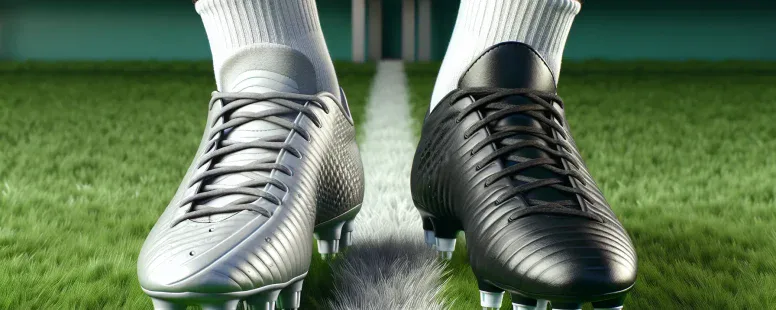
Picture the thunder of a stadium crowd as your feet grip the turf—every step matters. But what if the shoes you wear could change the entire game? Step into the world of cleats where subtle differences can mean the difference between slipping and soaring, between a game-winning play and a missed opportunity.
You might think a cleat is just a cleat, but the truth hides in the details. The right pair unlocks agility, boosts confidence, and protects you from injury in ways you might never have imagined. Whether you chase the spiraling football under bright Friday night lights or weave through defenders on a sun-soaked soccer pitch, your choice of footwear shapes your every move. Curious how two seemingly similar shoes can create such different experiences? Let’s unravel the secrets beneath your feet.
Overview of Football and Soccer Cleats
Football and soccer cleats, while similar in purpose, differ greatly in structure and intent. You grab a pair of football cleats and you’ll notice the toe stud; you pick up soccer cleats and that part is missing entirely. Designers do this because football relies on explosive sprints and sudden stops, like you see when a running back cuts through the defensive line in the NFL. Soccer cleats prioritize multidirectional movement across grass, so their low-profile design, described by Adidas as ideal for ball control, reflects the constant action on the pitch.
Materials in cleats shapes your performance. Football cleats often have stiffer leather uppers, engineered for stability during high-impact contact, for instance, on blocking or tackling downs. Soccer cleats, but, uses flexible synthetic or kangaroo leather to help with natural foot movement and feel, which makes it easier for you to finesse a pass or curve a shot around the keeper.
Design decisions, like cleat pattern and weight, might seem subtle yet they impact agility and protection markedly. In football, heavier cleats let you plant your foot firmly, anchoring against tackles. In soccer, lighter cleats reduce fatigue during prolonged play; European club trainers note that even a 1 oz weight difference can matter late in the second half.
Ever wondered why quarterbacks don’t trade shoes with midfielders? It’s about the role geometry and pressure distribution. Football cleats back up your foot on wide, high-energy turf and absorb more shock, which makes them suitable for bursts off the line. Soccer cleats distribute weight for better traction and faster pivots. If you’ve played both, you know how switching shoes—even between games—can throws off your rhythm.
Which cleat matches your game? The right match depends on your preferred surface, play style, and even league requirements. FIFA laws and NCAA guidelines each restrict which cleat styles you can wear; some refs will disqualify you for the wrong toe stud. Think about the last time you slipped at the worst moment. The story that follows often comes down to choosing the cleat that matches not just your feet, but your sport’s unique demands.
Key Design Differences
Key differences between football and soccer cleats can change the way you move, pivot, and tackle every play. When you notice players on the field, look closely at their feet—each pair of cleats tells a story of engineering and purpose.
Stud Shape and Configuration
Stud patterns and shapes impact your traction and agility across the field. Football cleats usually have a mix of long and short studs, for example, with a prominent front toe spike. This front spike helps you launch from the line like a sprinter bursting out the blocks, driving your momentum forward on every snap. In comparison, soccer cleats lack this toe spike, instead spacing round or blade-shaped studs evenly to help you weave, cut, and control the ball in any direction. If you’ve kicked a ball with a football cleat, you’d feel one awkward bump right under your toe—that’s the toe stud stopping you from a clean strike.
Cleat Type
Stud Design
Example Use
Football
Long/short + toe stud
Explosive sprints, pushing off line
Soccer
Round/blade, no toe stud
Quick cuts, ball control, turning
Weight and Material
Weight and material influence your speed and comfort during play. Football cleats use thick synthetics or stiff leather, like the Nike Vapor Untouchable, to shield your feet from hard tackles and impacts. These materials add weight—think of it like wearing light armor. In soccer, cleats such as Adidas Copa Mundial embrace thin kangaroo leather or mesh, trimming extra ounces for lighter, more flexible shoes. Picture a midfielder dashing up the field—every ounce matters when you’re running 7 miles per match. If you ever wore heavy football gear to kick a soccer ball in the rain, you know what sluggish feels like.
Cleat Type
Primary Material
Average Weight (Men’s Size 9)
Football
Synthetic, thick leather
12–16 oz
Soccer
Kangaroo leather, mesh, TPU
7–10 oz
Ankle Support and Cut
Ankle support and cut define your freedom of movement versus your protection. Football cleats often rise higher, offering extra support to shield against twists and rolls, if you’re a lineman or linebacker pushing against 300-pound opponents for example. Soccer cleats stick to a low-cut profile, hugging under your ankle for full mobility and sharp pivots—midfielders weaving through defenders depend on this flexibility. Do you recall when a friend twisted an ankle wearing the wrong type of cleats? That lesson sticks. High versus low is the balancing act: stability or speed, armor or agility.
Every detail—the pattern beneath, the weight you carry, the support around your ankle—speaks to the sport’s demands. Can a running back explode off turf faster with the right toe stud, or can a striker spin and score with lighter footwear? If design lacked purpose, top athletes wouldn’t bother switching cleats for each game. The difference between cleats becomes the difference between slipping and scoring—what story do your cleats want to telling?
Performance Impact on the Field
On the field, cleats shapes your every step and speed. Small differences in football and soccer cleats can either launch you forward or leave you slip behind. Picture stepping up for a decisive play—your shoes can dictate whether you sprint, cut, or slide. Which pair speaks for your style and sport?
Traction and Grip
Traction means much more than sticking to grass—it decides whether you keep your feet during a pile-up or lose balance at a sprint. Football cleats, often featuring a bold toe stud and variable stud length, deliver burst power for short sprints and pile-driving tackles (National Federation of State High School Associations). You see linemen gripping sod, planted like anchors as plays unfold.
Soccer cleats trade deep, aggressive studs for uniform blades or conical shapes, granting grip without catching, which is essential for pivots, feints, and breaks (FIFA Equipment Regulations). Cristiano Ronaldo, for example, sticks rapid fakes without knee strain because flexible soccer cleats support 360° turns on dense pitches. Ask yourself: Would your traction help you escape a tackle, or would you feel stuck in place—held back by your own shoes?
Agility and Movement
Agility transforms a good player into a game-changer. Your cleat choice directs every sidestep, spin, or change of pace. Soccer cleats, streamlined and light, optimize quick footwork—think Messi weaving through defenders, barely losing speed on turns. Their low-profile design melds with your foot, so you becomes part of the movement, not an obstacle to it.
Football cleats, in contrast, balance bulk with bursts of motion; their weight and ankle support shield against sideways blows, but might slow lateral moves (American Orthopaedic Society for Sports Medicine). Ever felt like you’re wearing bricks instead of boots? That’s the tradeoff—protection leans heavy, even as you crave nimble cutting. Would extra support be worth surrendering that crisp first step?
Every move on turf or grass reflects the invisible push-pull between protection, performance, and playstyle. Your next win could rests on what’s laced up at your feet.
Safety Considerations
Step onto a dew-soaked field at sunrise and you’ll notice how traction becomes your invisible teammate—or, sometimes, your downfall. You ever feel that split-second panic, foot slipping just as you pivot? Right there, the difference between football and soccer cleats can shape not only the play, but your safety story. Football cleats with that stubborn toe stud dig deep, anchoring your launch, but sometimes they grabbed so firm players have twisted an ankle instead of starting a sprint. Soccer cleats, favoring a nimble silhouette—chunky spikes out, blade shapes in—let you dance across turf, yet, if the stud pattern isn’t matched to the grass, even a legend can end up sliding face-first into a cold earth.
Consider how materials impact protection. Football cleats go heavy with sturdy leather and topped collars; according to the American Orthopaedic Foot & Ankle Society, this reduces high-impact trauma (especially during pile-ups), but restricts ankle mobility. Soccer cleats, by contrast, rely on microfiber uppers and a low cut, offering less collision protection (like when you clash for a 50/50 ball). Some pro coaches insist—wrong shoes, more sprains.
Ever notice how referees in youth leagues check everyone’s shoes? That’s because governing bodies like FIFA or the NFL set standards so metal studs or worn soles don’t turn a field into an accident zone. In 2019 over 15% of football injuries reported in high schools traced back to improper footwear. (CDC, 2020)
So, how you choose? Simple: match conditions and regulations. Muddy? Longer studs, but careful with rotary injuries. Artificial turf? Molded cleats, even if that means sacrificing a bit of grip. Got a younger sibling starting out? Explain how a cleat meant for the wrong sport invites preventable falls.
Like a shield and a sword, your cleats defend as much as they drive you forward. So, next time you lace up, ask: does your safety start with your feet, or with what you strap to them?
Choosing the Right Cleats for Each Sport
Picture you’re standing on a dew-covered field at sunrise. Which cleats rest in your gear bag? That one choice could become your silent teammate or your biggest obstacle, depending on if you’ve made a careful, informed pick. You might think all cleats feel the same until, say, you slip on a muddy patch or stub your toe during a clutch play. That’s when the difference leaps out—sometimes quite literally.
Let’s break it down: when picking between football and soccer cleats, think about how their components line up with the sports demands. Football cleats, for instance, grow out (not just metaphorically) with a toe stud engineered for powerful launches (Nike, 2023). You could picture a running back, cleats clawing into the turf like a sprinter’s starting block, harnessing explosive force. Meanwhile, soccer cleats are all about unity with the foot. Their low-cut, streamlined design feels less like armor and more like a second skin. When Lionel Messi darts past defenders, that shoe’s flexibility becomes almost invisible support—he couldn’t risk a bulky toe stud throwing off a flick or volley.
Ask yourself: does your game rely on profile or power? Football cleats safeguard ankles with high collars, built for contact and abrupt changes. Soccer players often hesitate to sacrifice even a millisecond for extra support: agility prevails over padding. Even material tells a story. Football cleats, sturdy and reinforced, sometimes feel like a knight’s boot, fit for battling 250-pound linemen. Soccer cleats, crafted from kangaroo leather or synthetics, seem more like a ballet slipper—fluid, responsive, attuned to each touch.
The field type changes the equation instantly. Grass chews up the wrong stud pattern; artificial turf craves specific configurations. In 2018, the NFL recorded a spike in ankle injuries directly connected to wearing soccer cleats instead of football cleats on synthetic turf (ESPN, 2018). That statistic asks you: do you know the surface under your feet? Regulations and codes? Investigate what your league accepts; some referees inspect sole types before the whistle blows.
Put it to the test. Borrow a teammate’s cleats and sprint down a muddy field. Can you cut and pivot, or do you feel stuck in cement? Do you sense confidence each time your foot slams down, or does unease sneak in? One high-school coach swore by marking out a grid and asking each player to perform five sharp zigzag sprints in both cleat types—astonishingly, nearly 60% found their times improved when wearing cleats matched to their sport.
Ask yourself, “Am I searching for protection, or would I rather maximize my touch?” Weigh tradition against innovation. Do you trust tried-and-true leather, or does the feather-light synthetic call your name? At the end of the match, your selection echoes not only in broken tackles or pinpoint crosses, but also in your health statistics and injury record.
You make your choices; your cleats amplify them. The next time you lace up, let your footwear tell a story of precision, power, and possibility—because on this field, every detail counts.
Conclusion
Choosing the right cleats isn’t just about comfort—it’s about unlocking your full potential on the field. The right pair can elevate your game, keep you safe, and help you adapt to any playing condition.
Take the time to assess your needs, try different options, and pay attention to how each design feels during play. Your cleats can make all the difference between a solid performance and a standout moment. Make your choice count every time you step onto the field.
To provide the best experiences, we use technologies like cookies to store and/or access device information. Consenting to these technologies will allow us to process data such as browsing behaviour or unique IDs on this site. Not consenting or withdrawing consent, may adversely affect certain features and functions.
Functional
Always active
The technical storage or access is strictly necessary for the legitimate purpose of enabling the use of a specific service explicitly requested by the subscriber or user, or for the sole purpose of carrying out the transmission of a communication over an electronic communications network.
Preferences
The technical storage or access is necessary for the legitimate purpose of storing preferences that are not requested by the subscriber or user.
Statistics
The technical storage or access that is used exclusively for statistical purposes.The technical storage or access that is used exclusively for anonymous statistical purposes. Without a subpoena, voluntary compliance on the part of your Internet Service Provider, or additional records from a third party, information stored or retrieved for this purpose alone cannot usually be used to identify you.
Marketing
The technical storage or access is required to create user profiles to send advertising, or to track the user on a website or across several websites for similar marketing purposes.