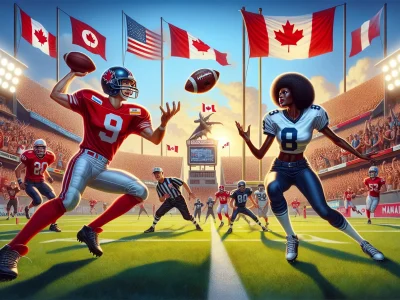
The words “soccer” and “football” describe two popular sports but carry different meanings across regions. Their origins and usage reveal cultural and linguistic distinctions.
Origin Of The Terms
The term “football” dates back to medieval England, describing games played on foot rather than horseback. As different forms of the game evolved, each gained unique names. In the late 19th century, British universities formalized the rules. The Rugby Football Union (rugby) and the Football Association (association football) emerged, leading to the abbreviation “assoc football,” which later became “soccer” in casual speech.
By the early 20th century, “soccer” and “football” coexisted in England. After football’s spread, regions like the United States adopted “soccer” to distinguish it from American football.
Regional Usage Differences
“Football” refers to association football in most countries, including Europe, South America, and Africa. In the US, Canada, and Australia, “soccer” is used to differentiate it from respective football variants like gridiron or Aussie rules football. For example, American football features a distinct set of rules and equipment compared to association football.
In England, where the term “soccer” originated, it’s now rarely used, with “football” becoming the standard term. These linguistic variations showcase how regional preferences shape the way sports are referenced.
Key Differences In Gameplay
Soccer and football differ significantly in their gameplay, including team composition, scoring methods, and field requirements. These distinctions define the two sports and influence their strategies.
Team Composition And Roles
Soccer involves 11 players per team, including a goalkeeper, defenders, midfielders, and forwards. Each player has designated roles but can move freely within the field during play. The goalkeeper is the only player allowed to use hands, restricted to the penalty area.
Football teams consist of 11 players on the field, divided into offensive, defensive, and special teams. Roles are highly specialized, with responsibilities like quarterback, running back, and wide receiver in offense, or linebacker and cornerback in defense. Units rotate frequently between plays, depending on possession or game strategy.
Rules And Scoring Systems
Soccer focuses on continuous play, with two 45-minute halves and minimal stoppages. Scoring occurs when the ball crosses the opponent’s goal line, earning one point per goal. The team with more goals at the end of the game wins.
Football divides play into four 15-minute quarters with frequent pauses. Teams score by touchdowns (6 points), field goals (3 points), or safeties (2 points). Extra points and two-point conversions can follow touchdowns. The game stops between plays, creating a start-and-stop rhythm.
Equipment And Field Dimensions
Soccer uses a round ball with a standard circumference of 68-70 cm and cleats with no toe spikes. The field measures 100-130 yards long and 50-100 yards wide, with a rectangular shape and clearly marked penalty and goal areas.
Football employs an oval-shaped ball, approximately 11 inches long, with cleats designed for explosive movements. The field is 100 yards long and 53.3 yards wide, marked with yardage lines and end zones of 10 yards. Protective gear like helmets, shoulder pads, and mouthguards is essential in football due to contact intensity.
Cultural Significance And Popularity
The cultural impact of soccer and football reflects their roles in different societies. Soccer dominates global sports culture, while football holds unique importance in the US.
Global Reach Of Soccer
Soccer is the most-watched and played sport worldwide. Over 4 billion fans follow soccer, with high participation in countries like Brazil, Germany, and Nigeria. Major events like the FIFA World Cup attract massive viewership, with the 2022 tournament reaching over 1.5 billion viewers for the final match alone. Soccer’s accessibility boosts its popularity, as it requires limited equipment and minimal costs, making it popular in both urban and rural areas.
Youth soccer leagues have helped develop talent globally. Europe’s academies, like FC Barcelona’s La Masia, develop players who later star in international competitions. Soccer unites diverse communities and serves as a cultural identity marker in many nations.
Popularity And Prestige Of Football In The US
Football is the most popular sport in the United States. The NFL draws over 17 million fans to stadiums annually and reaches over 200 million viewers during the Super Bowl, the most-watched event in US sports. College football also contributes significantly, with NCAA games attracting millions of fans every season.
Football’s popularity stems from its strong association with American culture. High school football games foster community pride, while major college rivalries carry historical significance. Financial support from media rights, sponsorships, and merchandise sales sustains football’s prominence in the US sports world.
Historical Evolution Of The Sports
Both soccer and football have evolved from unique origins, shaped by historical, cultural, and regional influences. Their development reflects distinct paths that have created modern gameplay, rules, and identities.
Soccer’s Historical Development
Soccer traces its origins to ancient civilizations where ball games were played on foot. In medieval England, similar games gained popularity, leading to the codification of rules during the 19th century. The formation of the Football Association (FA) in 1863 standardized regulations, distinguishing association football (soccer) from rugby football. By the early 20th century, “assoc football” became abbreviated as “soccer” in Britain.
Global adoption grew rapidly in the 20th century, with FIFA founded in 1904 to govern international competitions. The FIFA World Cup, established in 1930, became soccer’s most prestigious event. Today, soccer is the world’s most played and watched sport, with over 4 billion global fans and organized leagues across every continent.
Football’s Roots And Growth In America
Football in America evolved from rugby and soccer-like games played at Ivy League colleges in the mid-19th century. Rule modifications, led by Walter Camp in the 1880s, introduced key elements like the line of scrimmage, downs, and the quarterback position. These changes laid the foundation for modern American football.
The establishment of professional leagues in the early 20th century, particularly the NFL in 1920, cemented football’s status. Over time, innovations like the forward pass and protective gear transformed the game further. Football achieved cultural prominence in the US, becoming a major part of American identity. The Super Bowl, introduced in 1967, highlights its widespread popularity, drawing millions of viewers annually.
Conclusion
Understanding the difference between soccer and football goes beyond just terminology. It’s about appreciating the unique histories, rules, and cultural significance that define each sport. Whether you’re drawn to soccer’s global appeal or football’s deep roots in American culture, both offer exciting experiences that unite fans worldwide. By exploring these distinctions, you’ll gain a deeper respect for the traditions and passion that make each sport truly special.
To provide the best experiences, we use technologies like cookies to store and/or access device information. Consenting to these technologies will allow us to process data such as browsing behaviour or unique IDs on this site. Not consenting or withdrawing consent, may adversely affect certain features and functions.
Functional
Always active
The technical storage or access is strictly necessary for the legitimate purpose of enabling the use of a specific service explicitly requested by the subscriber or user, or for the sole purpose of carrying out the transmission of a communication over an electronic communications network.
Preferences
The technical storage or access is necessary for the legitimate purpose of storing preferences that are not requested by the subscriber or user.
Statistics
The technical storage or access that is used exclusively for statistical purposes.The technical storage or access that is used exclusively for anonymous statistical purposes. Without a subpoena, voluntary compliance on the part of your Internet Service Provider, or additional records from a third party, information stored or retrieved for this purpose alone cannot usually be used to identify you.
Marketing
The technical storage or access is required to create user profiles to send advertising, or to track the user on a website or across several websites for similar marketing purposes.