When nature unleashes its waters, the outcomes can be both awe-inspiring and devastating. While floods and flash floods are natural phenomena that involve the overflowing or sudden influx of water, they differ fundamentally in their causes, behaviors, and impacts. Understanding these differences not only deepens your knowledge of natural events but also ensures your safety and preparedness during such occurrences. This article explores the nuances of floods and flash floods to offer a clear and comprehensive understanding.
Understanding Floods
Definition and Characteristics of Floods
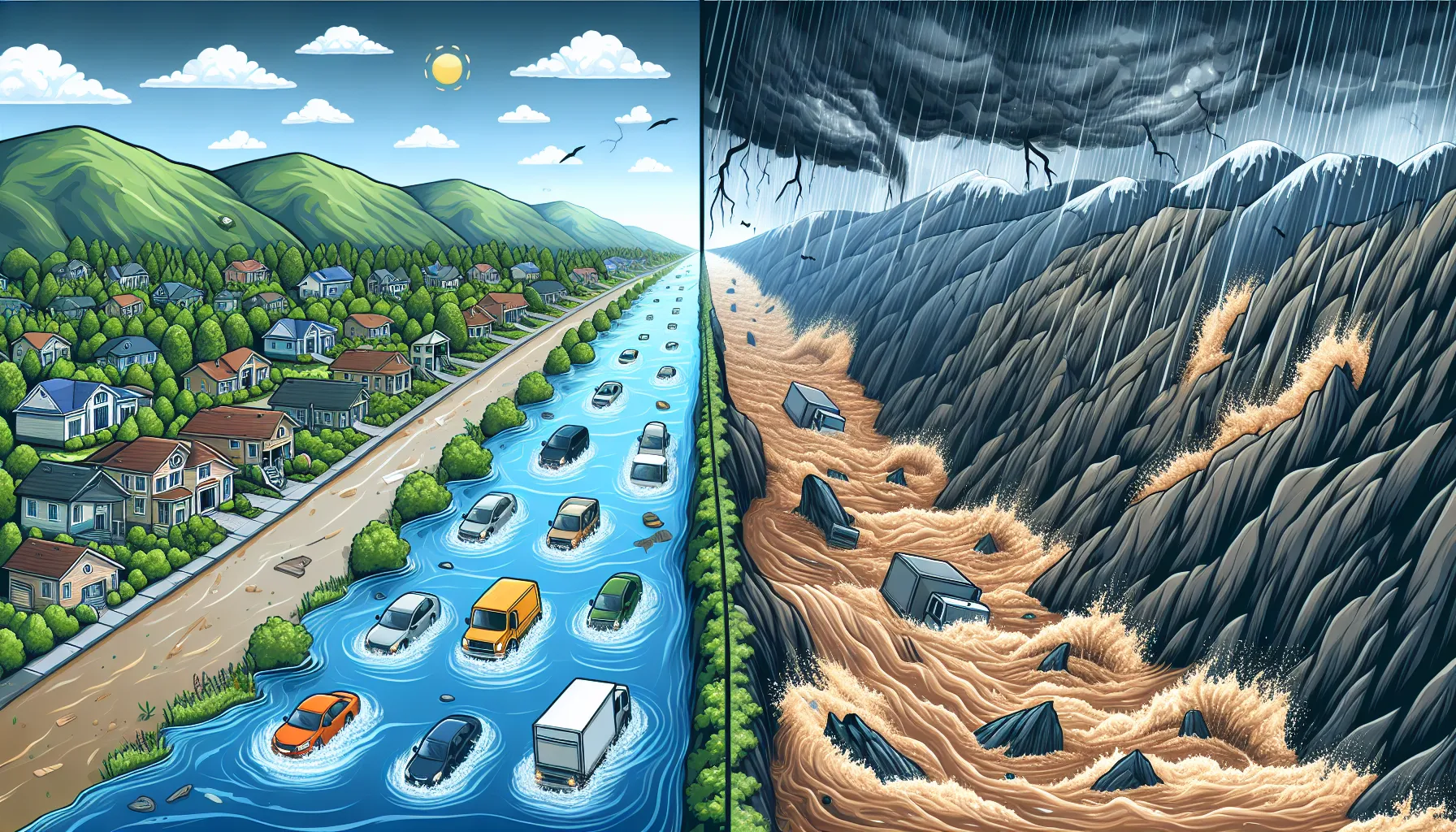
Floods are extended durations of water inundation in normally dry areas. These events often develop over hours or days, allowing time for precautionary measures. Their scope can vary from localized incidents to widespread coverage of cities and regions.
Main Causes of Flooding
Flooding results from several contributors, such as prolonged rainfall, excessive snowmelt, dam breaches, and poor drainage systems. These factors either individually or collectively cause water bodies to exceed their capacities, leading to water accumulation in affected areas.
Analyzing Flash Floods
Definition and Characteristics of Flash Floods
Flash floods are rapid and intense flooding events occurring with a remarkably short warning time. Typically, they result from sudden heavy rainfall, dam failures, or rapid snowmelt. Due to their swift nature, they pose significant risks to life and infrastructure.
Conditions Leading to Flash Floods
Flash floods stem from conditions that concentrate large amounts of water within short periods. Factors include thunderstorms, high-intensity rainfall events, and terrain characteristics that hinder water absorption, such as steep hillsides or urban areas with significant pavement coverage.
Key Differences Between Floods and Flash Floods
Speed of Onset
Floods develop gradually, often providing time for mitigation strategies, whereas flash floods arise suddenly and can occur within minutes.
Impact and Damage Potential
While both floods and flash floods can lead to significant destruction, flash floods are often more deadly due to the lack of warning and high velocity of water. Meanwhile, larger-scale floods have prolonged implications, affecting ecosystems and economies over extended periods.
Examples of Phenomena
Case Studies of Flood Events
Historical floods, such as the 1931 China floods, remain significant due to their extensive geographic and societal impacts.
Notable Instances of Flash Floods
Events like the Big Thompson Canyon Flood in 1976 highlighted the devastating intensity of flash floods, underscoring the importance of immediate, responsive awareness.
To provide the best experiences, we use technologies like cookies to store and/or access device information. Consenting to these technologies will allow us to process data such as browsing behaviour or unique IDs on this site. Not consenting or withdrawing consent, may adversely affect certain features and functions.
Functional
Always active
The technical storage or access is strictly necessary for the legitimate purpose of enabling the use of a specific service explicitly requested by the subscriber or user, or for the sole purpose of carrying out the transmission of a communication over an electronic communications network.
Preferences
The technical storage or access is necessary for the legitimate purpose of storing preferences that are not requested by the subscriber or user.
Statistics
The technical storage or access that is used exclusively for statistical purposes.The technical storage or access that is used exclusively for anonymous statistical purposes. Without a subpoena, voluntary compliance on the part of your Internet Service Provider, or additional records from a third party, information stored or retrieved for this purpose alone cannot usually be used to identify you.
Marketing
The technical storage or access is required to create user profiles to send advertising, or to track the user on a website or across several websites for similar marketing purposes.