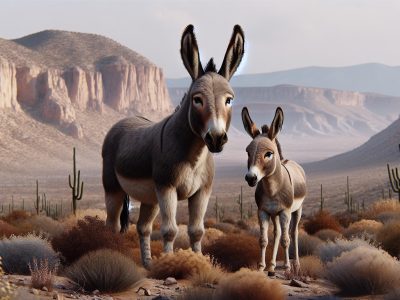
Imagine standing in a sunlit pasture, watching a sturdy donkey and a hardworking mule side by side. At first glance, they might seem nearly identical, but their differences run deeper than appearances. These remarkable animals, each with their unique traits, have played vital roles in human history, from carrying heavy loads to exploring rugged terrains.
You might wonder—what truly sets a donkey apart from a mule? Is it their origins, their abilities, or perhaps their temperament? Understanding these distinctions not only satisfies curiosity but also helps you appreciate how nature and human ingenuity have shaped these creatures. Whether you’re an animal enthusiast or just love uncovering fascinating facts, exploring the differences between donkeys and mules will leave you with a newfound respect for both.
Overview Of Donkeys And Mules
Donkeys and mules both play integral roles in agriculture, transportation, and companionship, yet their origins and purposes differ significantly. Understanding these differences provides deeper insight into their unique capabilities and genetic makeup.
What Are Donkeys?
Donkeys, scientifically named Equus asinus, belong to the equine family and trace their origins to Africa. Domestic donkeys are hardy, able to survive in harsh environments with minimal resources. Their ability to carry heavy loads through arid regions made them vital to early civilizations. Donkeys typically measure between 31 and 63 inches at the withers and weigh around 400 to 570 pounds, depending on their breed.
Known for their calm disposition and strong survival instincts, donkeys form close bonds with humans. Their unique vocalization, a loud bray, often helps them communicate across long distances. Over time, donkeys have been crossbred for specific traits, resulting in over 185 breeds globally, including the Poitou donkey and the American Mammoth Jackstock.
What Are Mules?
Mules result from breeding a male donkey (jack) with a female horse (mare). As hybrids, mules inherit traits from both parents, combining a donkey’s endurance with a horse’s strength and agility. They are sterile due to having 63 chromosomes, an intermediate count between donkeys (62) and horses (64). This sterility reflects their hybrid nature, which limits reproduction.
Mules are often prized for their resilience, particularly in challenging terrains. Their size varies widely, ranging from smaller pack mules to larger draft mules capable of pulling heavy farming equipment. For instance, draft mules can weigh 1,200 to 1,600 pounds. Their intelligence and temperament make them favored by farmers, military operations, and adventurers historically and today.
Key Physical Differences
Donkeys and mules exhibit distinct physical traits that make it easy to distinguish them. These differences arise from their unique genetic makeups and parentage.
Size And Build
Donkeys generally have a smaller and stockier build compared to mules. Adult donkeys range from 35 to 51 inches in height at the shoulder and weigh between 400 and 570 pounds. Mules, being hybrids, inherit a taller and leaner frame from horses. They typically stand 50 to 70 inches tall and weigh from 800 to 1,000 pounds, depending on the breed of the horse parent.
Mules also have better muscular development in their limbs, which contributes to their strength and endurance. Donkeys, on the other hand, have a compact structure suited for rugged terrains. If you observe the two side by side, the mule’s longer legs and larger size would immediately stand out.
Coat And Coloring
Donkeys often have gray or brown coats, though some can display a black or white shade. Their coats are usually thicker, providing resistance to harsh weather. A distinctive dorsal stripe often runs along their back, with a cross-like shoulder stripe marking in many breeds.
Mules have a wider coat variety due to their mixed lineage. Most mules inherit their coat color from the horse parent, resulting in coats in shades of bay, chestnut, black, or palomino. Unlike donkeys, mules lack consistent stripe patterns, making their appearance more diverse. Their coats may also have a finer texture, similar to horses.
Tail And Mane Features
The tail and mane of donkeys are unique compared to mules. Donkeys have a coarse and tufted tail resembling that of a cow. Their manes are typically short, upright, and stiff, offering a distinct look different from a horse’s flowing mane.
Mules, conversely, take after the horse parent in this aspect. They possess a long, flowing tail and a softer mane that can be styled. But, the mule’s mane tends to grow less densely than a purebred horse’s. You might notice this when grooming or examining these animals closely.
Behavioral Differences
Donkeys and mules, even though sharing some traits, exhibit distinct behavioral patterns influenced by their genetics and environments. Understanding these differences can help you choose the right animal for specific tasks.
Temperament
Donkeys are cautious and can appear stubborn, but this behavior stems from their strong self-preservation instincts. You’re more likely to see a donkey pause and evaluate potential threats rather than react impulsively. For instance, when introduced to new surroundings, donkeys take their time to familiarize themselves with every detail.
Mules, on the other hand, often display a calmer demeanor inherited from their donkey parent but combine it with a horse-like willingness to cooperate. This blend creates an animal that is both intelligent and dependable. If you observe mules in a demanding environment, like mountainous terrain, you’ll notice their ability to make calculated decisions while maintaining their composure.
Work Ethic And Strength
The work ethic and physical resilience of donkeys are remarkable. They’re capable of carrying loads up to 50% of their body weight, which makes them reliable pack animals. For instance, in regions with arid climates, donkeys frequently transport goods over long distances due to their endurance.
Mules, but, have an advantage in strength and stamina thanks to their hybrid vigor. They’re more efficient when carrying heavier loads or performing strenuous tasks, particularly in agriculture or logging operations. If tasked with pulling a plow or hauling large cargo, mules consistently outperform both donkeys and horses.
Sound And Vocalization
Donkeys produce a distinctive braying sound, often described as a “hee-haw.” This sound, which can travel up to 60 miles under the right conditions, is commonly used to communicate distress or locate other donkeys. If you pay close attention, each donkey’s bray carries unique characteristics, acting almost like an animal’s fingerprint.
Mules vocalize differently, producing a sound that blends a donkey’s bray and a horse’s neigh. This hybrid vocalization often sounds peculiar and is less frequent. Instead, mules rely more on body language and subtle noises to communicate within their environments.
Biological And Genetic Differences
Donkeys and mules possess unique biological and genetic characteristics, distinguishing them in significant ways. These distinctions shape their physical traits, behaviors, and roles.
Reproductive Capabilities
Donkeys are capable of reproducing within their own species, with female donkeys (jennies) giving birth after a gestation period of around 11 to 14 months. They can produce offspring consistently, contributing to their stable population numbers globally. Male donkeys (jacks) are also essential in cross-species breeding, such as producing mules.
Mules, on the other hand, are sterile hybrids due to the mismatch in chromosome numbers between their parents. Donkeys have 62 chromosomes, while horses have 64, producing a mule with 63 chromosomes. This odd number prevents normal pairing during meiosis, rendering mules unable to reproduce in almost all cases. Though rare instances of female mules (mollies) giving birth exist, these are genetic anomalies rather than the norm.
Hybrid Nature Of Mules
Mules inherit 50% of their genetic traits from each parent, combining the donkey’s hardiness and intelligence with the horse’s strength and agility. This hybrid nature creates “hybrid vigor,” where mules often outperform both parent species in areas like endurance and resistance to disease. For instance, mules are renowned for their ability to traverse rugged terrains while carrying substantial loads without the fatigue observed in horses or donkeys.
While genetically unique, mules exhibit more variability in their physical appearance, influenced heavily by the horse parent. Colors, size, and even tail or mane characteristics align more with the horse than the donkey, making mules visually diverse. This diversity and adaptability highlight the genetic complexities involved in creating a mule, blending traits for optimized performance in demanding tasks.
Role In Agriculture And Transportation
Donkeys and mules have played essential roles in agriculture and transportation for centuries. Their physical and behavioral traits significantly determine their suitability for various tasks.
Traditional Uses Of Donkeys
Donkeys are ideal for carrying heavy loads over long distances. They excel in rural areas where mechanized vehicles struggle due to harsh terrains or limited infrastructure. For example, in many African and South Asian regions, farmers use donkeys to transport water, firewood, and crops between villages and fields. Their calm temperament and ability to carry up to 50% of their body weight make them indispensable.
In agricultural settings, donkeys plow small fields and haul goods for daily farming operations. Their resistance to dehydration and ability to survive on low-quality forage increase their reliability, especially in arid environments. Even though their smaller stature compared to mules, donkeys’ adaptability makes them a popular choice in geographically challenging areas.
The Versatility Of Mules
Mules combine strength, stamina, and intelligence, making them highly versatile for labor-intensive tasks. Farmers in mountainous regions often rely on mules to traverse steep trails while carrying heavy loads. In the United States, mules historically played a crucial role in large-scale agriculture, pulling plows and wagons in crops like cotton and tobacco. Their resilience allows them to work long hours without compromising productivity.
In transportation, mules outperform both donkeys and horses by pulling heavier loads over varying terrains. For example, during the Gold Rush, mules transported mining equipment across rugged landscapes. Also, modern-day logging industries value mules for their sure-footedness and ability to navigate dense forests, retrieving logs inaccessible to machines.
If you’re considering these animals for agriculture or transportation, mules are better suited for heavy-duty work, while donkeys excel in lighter, endurance-based tasks.
Comparison Chart: Donkey Vs. Mule
Attribute
Donkey
Mule
Scientific Name
Equus asinus
Hybrid of Equus asinus and Equus caballus
Height
35–51 inches
50–70 inches
Weight
400–570 pounds
800–1,000 pounds
Coat Features
Thick, coarse, often gray/brown with stripes
Varied colors, softer coat resembling horses
Tail & Mane
Coarse tufted tail, short upright mane
Long flowing tail, softer mane
Behavior
Cautious, independent, strong instincts
Calm, intelligent, cooperative
Vocalization
Distinct bray
Combination of bray and neigh
Reproductive Ability
Can reproduce
Sterile due to chromosome mismatch
Strength & Stamina
Reliable for load carrying, up to 50% of body weight
Superior endurance and strength (“hybrid vigor”)
Main Roles
Carrying loads, agriculture, transportation
Labor-intensive tasks like logging, agriculture, and farming
Conclusion
Understanding the differences between donkeys and mules offers a deeper appreciation for their unique qualities and contributions. These animals, shaped by distinct genetics and histories, continue to play vital roles in agriculture, transportation, and companionship.
Whether you’re drawn to the resilience of a mule or the steadfast nature of a donkey, both animals showcase remarkable traits that make them invaluable. Exploring their characteristics not only highlights their importance but also deepens your connection to these fascinating creatures.
To provide the best experiences, we use technologies like cookies to store and/or access device information. Consenting to these technologies will allow us to process data such as browsing behaviour or unique IDs on this site. Not consenting or withdrawing consent, may adversely affect certain features and functions.
Functional
Always active
The technical storage or access is strictly necessary for the legitimate purpose of enabling the use of a specific service explicitly requested by the subscriber or user, or for the sole purpose of carrying out the transmission of a communication over an electronic communications network.
Preferences
The technical storage or access is necessary for the legitimate purpose of storing preferences that are not requested by the subscriber or user.
Statistics
The technical storage or access that is used exclusively for statistical purposes.The technical storage or access that is used exclusively for anonymous statistical purposes. Without a subpoena, voluntary compliance on the part of your Internet Service Provider, or additional records from a third party, information stored or retrieved for this purpose alone cannot usually be used to identify you.
Marketing
The technical storage or access is required to create user profiles to send advertising, or to track the user on a website or across several websites for similar marketing purposes.