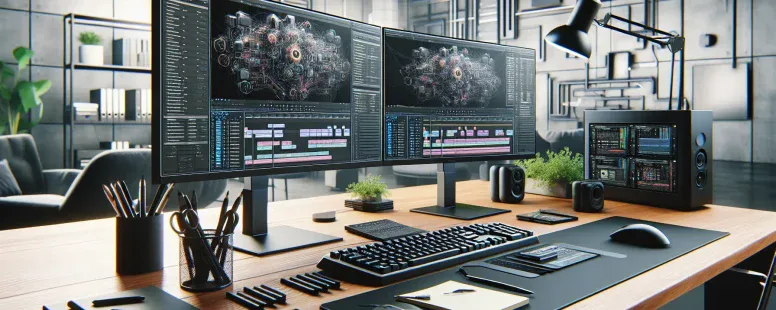
Video editing and compositing are cornerstones of modern content production, enabling creators to convey their visions through captivating visuals. Deciding on the most suitable software for your needs can seem overwhelming given the sheer variety of tools available. Among these are two prominent choices: DaVinci Fusion and After Effects Lite. Each application offers a unique approach to enabling visual effects and motion graphics creation, catering to distinct workflows. By exploring the characteristics, capabilities, and differences of these software solutions, you can make a more well-informed choice that aligns with your specific creative goals.
Overview of DaVinci Fusion and After Effects Lite
Introduction to DaVinci Fusion
DaVinci Fusion, developed by Blackmagic Design, is a powerful node-based compositing tool integrated into the DaVinci Resolve software suite. Fusion is designed for advanced visual effects, motion graphics, and compositing tasks. Its robust capabilities streamline intricate workflows for professionals.
Capabilities and Features
Fusion offers a dedicated node-based system, providing unmatched flexibility in compositing. Its advanced 3D workspace, extensive tool library, and high-performance rendering engine make it a go-to choice for complex visual effects and animation tasks.
Key Applications in Video Editing
Professionals use DaVinci Fusion for creating cinematic visual effects, matte paintings, and intricate compositing within video production pipelines. Its ability to handle high-resolution footage efficiently enhances productivity.
Introduction to After Effects Lite
After Effects Lite, a simplified version of Adobe’s flagship After Effects software, enables users to create motion graphics and visual effects with a more streamlined feature set. It caters to beginner-to-intermediate users seeking a user-friendly platform.
Capabilities and Features
After Effects Lite provides layer-based editing, basic composition tools, and integration with Adobe’s Creative Cloud ecosystem, ensuring a seamless workflow for video creators familiar with other Adobe software.
Key Applications in Video Workflow
Commonly used for creating title sequences, motion graphics, and basic visual effects, After Effects Lite helps expand the creative options available to video professionals and hobbyists alike.
Core Workflow Differences Between Fusion and After Effects Lite
Interface and User Experience
Fusion provides a unique and customizable interface tailored for node-based workflows, while After Effects Lite utilizes a traditional layer-based approach, which resembles a visual timeline. New users may find After Effects Lite’s familiar structure more intuitive, whereas seasoned professionals might appreciate Fusion’s level of control.
Node-Based Versus Layer-Based Editing
Node-based workflows, such as those in Fusion, allow for non-linear compositing and highly granular control over effects chains. Conversely, After Effects Lite’s linear, layer-based editing offers a straightforward method for managing and organizing visual elements in a composition.
Integration With Other Software and Ecosystems
Fusion integrates seamlessly with DaVinci Resolve, enabling a hybrid editing and compositing workflow. After Effects Lite benefits from its connection to Adobe’s suite of applications like Premiere Pro and Photoshop, granting access to a comprehensive creative environment.
Performance and Hardware Requirements
Resource Utilization and Recommended Specifications
Fusion is optimized for high-tier hardware configurations to manage its demanding requirements effectively, while After Effects Lite operates smoothly across a broader range of systems, making it more accessible for users with varying technical capacities.
Scalability for Complex Projects
For large-scale projects, Fusion excels in scalability by handling layers of high-resolution footage without compromising performance. In contrast, After Effects Lite, though capable, may reach limitations when managing extensive workloads due to its simpler architecture.
Suitable Use Cases for Each Workflow
Standalone Projects and Collaborative Environments
Fusion is often used in collaboration-heavy environments due to its robust file output and compatibility. After Effects Lite, with its simpler install base, works well for independent creators focusing on smaller scale projects.
Accessibility for Beginners and Learning Curve
Beginners may find After Effects Lite more approachable because of its user-friendly interface and tutorials. Fusion, while richly featured, might present a steeper learning curve but offers advanced resources for experienced professionals seeking deep engagement with complex visual effects.
To provide the best experiences, we use technologies like cookies to store and/or access device information. Consenting to these technologies will allow us to process data such as browsing behaviour or unique IDs on this site. Not consenting or withdrawing consent, may adversely affect certain features and functions.
Functional
Always active
The technical storage or access is strictly necessary for the legitimate purpose of enabling the use of a specific service explicitly requested by the subscriber or user, or for the sole purpose of carrying out the transmission of a communication over an electronic communications network.
Preferences
The technical storage or access is necessary for the legitimate purpose of storing preferences that are not requested by the subscriber or user.
Statistics
The technical storage or access that is used exclusively for statistical purposes.The technical storage or access that is used exclusively for anonymous statistical purposes. Without a subpoena, voluntary compliance on the part of your Internet Service Provider, or additional records from a third party, information stored or retrieved for this purpose alone cannot usually be used to identify you.
Marketing
The technical storage or access is required to create user profiles to send advertising, or to track the user on a website or across several websites for similar marketing purposes.