Picture the sizzle of golden fries and the aroma of fresh-baked cookies swirling through your kitchen. You crave that perfect crunch—crispy outside, tender inside—but which appliance truly delivers? The convection oven and air fryer both promise mouthwatering results, yet their magic lies in the details.
Maybe you’ve wondered if you really need both or if one can replace the other. As you weigh convenience against flavor, energy savings against versatility, you’ll discover surprising perks and hidden quirks in each. Get ready to unravel the tasty secrets behind these kitchen powerhouses and find out which one will transform your cooking game.
What Is a Convection Oven?
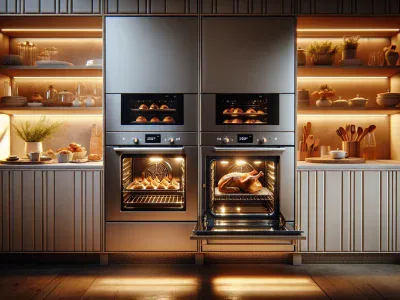
Convection ovens bring commercial kitchen technology to your home, spinning hot air in swift currents so your roasted veggies get browned edges and your pastries puff just right. The hum of the fan and the gleam of the tray—if you’ve ever wondered how bakeries get that deeply golden finish, this appliance holds a big part of the answer.
How Convection Ovens Work
Convection ovens use a fan, sometimes paired with an exhaust system, to blow air around food for even heat distribution. Instead of letting heat rise and settle unevenly, this circulating air means chicken thighs brown at the same pace on every side. When you place a casserole or a sheet pan of cookies on the middle rack, each bite bakes through at the same temp—no more burnt tops and raw centers.
Picture cooking a dozen cookies: AFineCooking notes they’ll spread less and get crispier edges under convection compared to traditional baking. NASA’s own kitchens at Johnson Space Center use convection for dependable results (NASA 2021). By keeping dry, moving air running over the food, moisture evaporates fast and caramelization happens quicker. Recipes sometimes tell you decrease the oven temperature by 25°F when using convection. That’s not a random guess—it’s because heat transfer efficiency goes up with all that active air.
Common Uses for Convection Ovens
Convection ovens shine in scenarios where consistent heat matters. Batches of roasted vegetables—think carrots, Brussels sprouts, and potatoes—brown evenly with minimal tossing. Home bakers rely on convection for pastries. Croissants, danishes, and biscuits all rise reliably, thanks to a steady blast of dry heat.
Chefs in test kitchens, such as those at America’s Test Kitchen, often turn to convection settings for roasting meats; the aggressive airflow accelerates crisping of chicken skin or rack of lamb. Even frozen foods like pizza, fries, or chicken tenders cook faster according to Consumer Reports (2022). Sometimes professional food stylists even use countertop convection for photo-perfect cheese melts and caramelized toppings.
Did you remember the first time you used a convection setting and pulled out a tray of perfectly bronzed French fries—crispy, golden, not soggy? That’s the magic at work. Though not every recipe benefit, tasks like dehydrating apple chips or toasting nuts see remarkable improvements.
Can you see yourself baking three trays of cookies at once, each turning out identical? That’s routine when a convection oven’s in play.
What Is an Air Fryer?
Air fryers use compact convection technology to deliver crisp, tender cooking with minimal oil. These countertop appliances have become popular for their fast, energy-saving results in kitchens where time and counter space matter.
How Air Fryers Operate
Air fryers cook food by circulating very hot air rapidly around ingredients, creating a Maillard reaction for browned, crunchy exteriors (source: FDA, 2021). The device includes a heating element above a perforated basket and a powerful fan, forcing air to move across every surface. This design ensures the heat reaches all food sides—fries, wings, or vegetables get consistent texture. Because air fryers systems keep the food close to the heating source, you’ll notice they reduces overall cook times compared to many convection ovens. Self-contained baskets also trap crumbs and oil, making cleanup simple.
Typical Applications for Air Fryers
Air fryers handle tasks ranging from crisping frozen snacks to reheating leftovers. People use them for making fries, breaded chicken tenders, and vegetables—for example, zucchini chips or sweet potato fries. Small-batch baking works well in air fryers, so you can quickly toast garlic bread or bake a cookie without an oven preheat. Some users experiment with creative recipes: reheating pizza, “grilling” sandwiches, or crisping leftover rice. Since air fryers use tiny amounts of oil, you can cook lighter versions of traditionally deep-fried foods while keeping flavor and crunch. The compact basket means you can’t prepare large meals at once, but for single servings or sides they’re unmatched.
Key Differences Between Convection Oven and Air Fryer
Spotting the difference between a convection oven and an air fryer seems simple, but their core mechanics shape how your fries crunch or your cookies brown. Appliances like these shift how your kitchen operates, so knowing each device’s strengths gets your food closer to restaurant-quality right at home.
Cooking Technology and Design
Convection ovens use a fan, along with a heating element, to circulate hot air uniformly around trays and racks. You load three racks of cookies or two big roasting pans, the air moves around everything, and each piece gets evenly cooked—think of the wind swirling autumn leaves inside an invisible box. According to Consumer Reports, these ovens work best when hot air covers as much surface as possible (source: Consumer Reports, 2023). Air fryers, on the other hand, resemble a turbocharged mini convection oven, except the chamber is compact and the basket cradles the food so the airflow surrounds every side at close range. Picture tossing potato wedges in a tiny wind tunnel—each wedge crisps up, not just the top layer. No preheating for 10-15 minutes like traditional ovens, just a tap and the cycle starts.
Size and Capacity
Space matters—do you cook for a bustling crowd or for just yourself? Traditional convection ovens run between 3 and 6 cubic feet; even smaller wall units offer enough space for large pans, pizzas, or batches meant for a whole family gathering. Picture fitting a Thanksgiving turkey and still having room for two trays of sides. Air fryers, compact and lightweight, target the single-plate crowd. Their baskets hold about 2-6 quarts. That means fries for two, not for a feast. You ever tried to cook a whole chicken in an air fryer? Some large models can do it—barely. But forget about much else sharing that cramped space.
Speed and Efficiency
Speed often wins hearts on a weeknight. Air fryers preheat in two minutes or less, then knock out fries, wings, or shrimp in half the time a convection oven manages—20 minutes for crunchy chicken wings instead of 40. Their smaller chambers mean less air volume to heat. The U.S. Department of Energy has found compact appliances use up to 70% less energy than a standard oven (DOE, 2021). Convection ovens shine when volume counts, but if you want one roasted carrot and not a sheet pan, the energy and time costs add up fast.
Appliance
Typical Preheat Time
Energy Use vs Standard Oven
Best Speed (e.g., fries)
Convection Oven
10-15 mins
20-30% less
30-35 mins
Air Fryer
1-3 mins
65-70% less
12-15 mins
Taste and Texture of Food
Taste, that elusive star, makes or breaks your experience. Convection ovens produce even browning and gentle caramelization—classic bakery-style cookies and puff pastry remain their domain. Air fryers, with their intense direct heat, generate a crisp, crackling surface often mistaken for deep frying. Nuggets come out with air pockets, fries with a crackling crunch that’s dry rather than greasy, and leftover pizza tastes revived, almost new. Critics argue that air-fried foods can taste dry if misjudged, lacking the melting, tender finish that larger ovens achieve with slower roasting. But who’s right? Only your taste test knows for sure. What matters: in a side-by-side snack-off, you’ll notice air fryers nail singles and snacks, convection ovens win with roasts, breads, and anything needing slow rising.
Pros and Cons of Each Appliance
Comparing convection ovens and air fryers means considering more than just crispy fries or golden cookies. Each appliance unlocks a different story in your kitchen—some chapters filled with feasts, others with a single, satisfying midnight snack.
Advantages and Disadvantages of Convection Ovens
Convection ovens bring restaurant-style results right to your home. With fans and heating elements, they mimic the uniformity of a bakery kitchen, circulating hot air for even browning. You can roast a whole chicken surrounded by root vegetables, or bake three trays of chocolate chip cookies that all come out perfect—no swapping shelves needed like in a traditional oven.
But, size cuts both ways. They make batch cooking a breeze, yet for small meals, you might feel like you’re starting a freight train to travel a single block. Energy use runs higher than an air fryer, especially noticeable when preheating large cavities. Cleanup, too, could involve scrubbing racks and stubborn corners after a glazed ham feast.
Some convection ovens feature settings for broiling, proofing dough, or even dehydrating fruit. These versatile options empower ambitious bakers or home chefs, but—if you’re tight on kitchen space—their footprint will dominate your countertop. Even with the “convection” setting, heat can run away, overbaking thin cookies or delicate pastries unless you reduce temperatures, as King Arthur Baking suggests. Does the idea of monitoring and rotating pans sound exhausting, or energizing?
Pros and Cons of Air Fryers
Air fryers, by contrast, play the role of speedy sous chef for solo meals or crispy side dishes. Their compact baskets and turbocharged fans brown fries with a teaspoon of oil. Feeling peckish late at night? You drop frozen dumplings in, hit a button, and your dinner sizzles back to life in minutes, with barely any mess left behind. Popular models from Philips or Ninja, for example, offer presets so you skip guesswork for nuggets, wings, or veggie chips.
But, the story shrinks with the serving sizes. Hosting friends? You’ll cook fries in small batches, eating the first round while finishing the second. Whole roasted chicken or multiple pizza slices don’t just squeeze in, they won’t—not unless you quarter or halve everything.
Unlike convection ovens, air fryers rarely double as a baker’s oven or a dehydrator beyond small, flat batches—think two cookies or apple chips for two. Cleaning’s quick, though, since baskets pop out and slide into a dishwasher in seconds. Studies by Consumer Reports show air fryers cut energy use by 50-70% for quick tasks compared to ovens.
These choices ask you: is fast, hands-off crisping your daily goal, or do you crave the flexibility to bake, roast, and experiment with bigger meals?
Appliance
Strengths (with Example)
Limitations (with Example)
Convection Oven
Large meals, batch baking (roast turkey)
Slow preheat, more energy (single toast)
Air Fryer
Fast snacks, energy saving (curly fries)
Small capacity, batch limitation (family dinner)
By exploring these trade-offs, you decide which tool becomes your kitchen’s hero. Maybe you reach for both—one for feasts, the other for crispy cravings. Every meal tells a little more of your culinary story, so which chapter’s perking your curiosity today?
Which Should You Choose?
Choosing between a convection oven and an air fryer feels a lot like picking the right tool from a well-stocked toolbox—each shines brightest in a different cooking scenario. Picture craving golden, crispy sweet potato fries on a Friday night; do you want them fast, or are you cooking for a crowd? Before heading shopping, consider these questions, and the answers might just surprise you.
Factors to Consider Before Buying
Kitchen Space and Layout
Countertop real estate inspires most decisions small appliances. If your kitchen bursts with gadgets, a compact air fryer slots neatly next to your blender—think of quick single-serving wings during game night. For spaces with ample counters or built-in wall units, the convection oven stands as your culinary anchor, baking three trays of chewy chocolate chip cookies at once.
Portion Size and Batch Cooking
Frequently feeding a family of six means a convection oven easily handles full sheet pans of roasted Brussels sprouts, similar to what you’d see in a bustling restaurant kitchen. On the flip side, air fryers create magic for solo chefs or couples—crisping four chicken tenders in 12 minutes but leaving you reaching for a second batch if friends surprise you.
Speed and Energy Efficiency
Craving quick results? An air fryer zips from zero to 400°F in under three minutes, according to ENERGY STAR’s appliance efficiency data (2023). This efficiency slashes cook times for hash browns or mozzarella sticks but if you’re prepping slow-cooked meats, the oven’s steady, even heating prevents dried-out dinners.
Taste and Cooking Techniques
Convection ovens coax out complex flavors through even caramelization, producing bakery-quality pastries with flaky, tender layers. Air fryers, as Consumer Reports (2022) points out, use rapid air technology to create a crunch reminiscent of deep-fried treats—think panko shrimp without the oil slick.
Versatility and Available Features
Ask yourself if versatility tempts you—do you want one tool for everything or a specialist for crunch? Convection ovens bake, roast, dehydrate, and toast; some come loaded with steam injectors and air fry settings, blurring boundaries. Air fryers specialize, offering precise crisping and reheat presets but sometimes stumble with multi-layer baking.
Picture a scene: friends gather for a weekend brunch. The convection oven bakes blueberry scones, while the air fryer reheats yesterday’s pizza to perfection. The right choice isn’t a simple answer; sometimes it’s both. Would you trade six perfectly crisped samosas for twenty diminutive batches, or sacrifice quick cleanup for a larger, all-in-one station? The culinary canvas is yours, so paint it deliciously.
Conclusion
Choosing between a convection oven and an air fryer really comes down to your cooking habits and kitchen priorities. If you often cook for a crowd or love baking in batches, a convection oven gives you that flexibility. When speed, convenience, and healthier frying are your main goals, an air fryer fits right in.
Both appliances have a place in a modern kitchen, letting you enjoy everything from crispy snacks to perfectly roasted meals. By weighing your needs, you can make the most of your space and elevate your everyday cooking.
Published: July 25, 2025 at 8:57 am by Ellie B, Site owner & Publisher
To provide the best experiences, we use technologies like cookies to store and/or access device information. Consenting to these technologies will allow us to process data such as browsing behaviour or unique IDs on this site. Not consenting or withdrawing consent, may adversely affect certain features and functions.
Functional
Always active
The technical storage or access is strictly necessary for the legitimate purpose of enabling the use of a specific service explicitly requested by the subscriber or user, or for the sole purpose of carrying out the transmission of a communication over an electronic communications network.
Preferences
The technical storage or access is necessary for the legitimate purpose of storing preferences that are not requested by the subscriber or user.
Statistics
The technical storage or access that is used exclusively for statistical purposes.The technical storage or access that is used exclusively for anonymous statistical purposes. Without a subpoena, voluntary compliance on the part of your Internet Service Provider, or additional records from a third party, information stored or retrieved for this purpose alone cannot usually be used to identify you.
Marketing
The technical storage or access is required to create user profiles to send advertising, or to track the user on a website or across several websites for similar marketing purposes.