Imagine your body as a perfectly designed machine, each part playing a unique role to keep you moving, bending, and thriving. At the core of this intricate system are two vital yet distinct components: bone and cartilage. While they often work together seamlessly, their differences are what make your body so adaptable and resilient.
Bones give you structure and strength, acting as the framework that supports your every move. Cartilage, on the other hand, is the unsung hero, providing flexibility and cushioning in places where rigidity just won’t do. But have you ever wondered what truly sets these two apart? Understanding their unique roles can unlock a deeper appreciation for how your body functions and adapts to the demands of daily life.
Overview Of Bone And Cartilage
Bones and cartilage form essential tissues in the human body, performing distinct yet complementary functions. Bones consist of a rigid, calcified matrix, making them hard and dense. This structure supports your body, protects internal organs, and stores minerals like calcium and phosphorus. For example, your femur provides structural stability while shielding parts of the circulatory system.
Cartilage, on the other hand, is composed of a semi-rigid connective tissue characterized by its flexibility and lack of blood supply. This flexibility is crucial in areas like your nose, ears, and joints, ensuring smooth movement and shock absorption. For instance, the cartilage in your knees reduces friction between bones during physical activities such as running or climbing.
Bones regenerate through a complex process known as ossification that involves specialized cells, including osteoblasts and osteoclasts. Cartilage, but, heals slower due to its avascular nature, relying on diffusion to transport nutrients. This difference demonstrates why fractures recover faster compared to cartilage injuries like meniscus tears.
While bones are rich in nerves and blood vessels, cartilage lacks these features, which makes it less sensitive but limits its regeneration. For example, feeling pain from a bone fracture occurs more immediately than detecting damage in cartilage tissue.
The distinction between these connective tissues underpins their roles in structural integrity, mobility, and adaptability. Together, they enable responsiveness to physical demands while maintaining biological equilibrium.
Structure And Composition
Bones and cartilage differ significantly in terms of structure and composition, reflecting their unique roles in the body. These differences determine their mechanical properties and biological functions.
Bone Structure
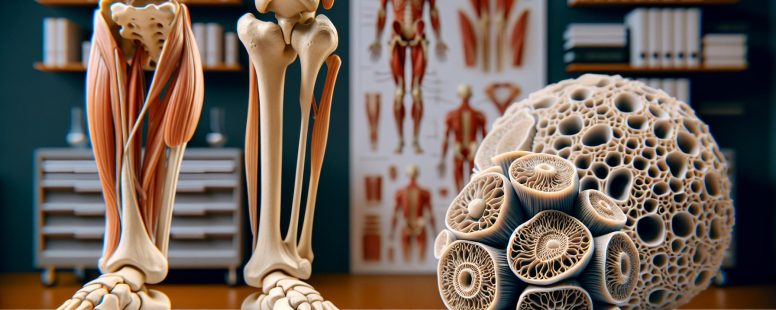
Bones have a rigid, mineralized composition, providing strength and support. Made primarily of calcium phosphate and collagen fibers, their matrix ensures durability. The structure includes compact (cortical) bone on the outer layer, which offers rigidity, and spongy (trabecular) bone inside, which reduces weight and houses bone marrow. Compact bone contains Haversian systems (osteons) that help nutrient exchange through blood vessels. Spongy bone fosters hematopoiesis by housing marrow.
Specialized cells including osteoblasts, osteoclasts, and osteocytes regulate bone remodeling. Osteoblasts form new bone, osteoclasts break down matrix, and osteocytes maintain bone’s structural integrity. Periosteum, a dense connective tissue layer, encases the bone surface, supporting attachment of ligaments and tendons.
Cartilage Structure
Cartilage, in contrast, has a flexible, avascular matrix. It’s composed of chondrocytes embedded within lacunae, surrounded by a gel-like substance rich in proteoglycans and collagen or elastin fibers. This non-mineralized matrix provides elasticity and resilience. Unlike bones, cartilage doesn’t contain blood vessels or nerves, relying on diffusion for nutrient and waste transport.
There are three types of cartilage: hyaline, elastic, and fibrocartilage. Hyaline cartilage, found in joints, ribs, and the nose, offers shock absorption and smooth surfaces for articulation. Elastic cartilage, present in the ear and epiglottis, allows flexibility, while fibrocartilage, found in intervertebral discs and the meniscus, withstands compression due to its dense collagen content. Cartilage growth occurs via interstitial or appositional processes, which are slower compared to bone formation.
Both structures demonstrate their specialization through their composition and arrangement, ensuring precise functionality.
Functions Of Bone And Cartilage
Bones and cartilage play distinct yet interconnected roles, enabling mobility, support, and protection within the body. Understanding their individual functions highlights their critical contributions to overall health and movement.
Bone Functions
Bones provide structural support, forming the framework of your body. They protect vital organs, like the skull safeguarding your brain or the ribcage shielding your heart and lungs. They also act as a reservoir for minerals such as calcium and phosphorus, releasing them as needed to maintain essential physiological processes.
Your bones help movement by serving as attachment points for muscles. When muscles contract, they pull on bones, creating movement at the joints. For example, the coordination between your femur and tibia allows smooth bending of the knee during walking.
Bone marrow within certain bones produces red blood cells, white blood cells, and platelets, a process known as hematopoiesis. This function supports oxygen transport, immunity, and clotting. Compact and spongy bone tissues regulate strength and flexibility, ensuring balance during physical activities.
Cartilage Functions
Cartilage provides flexibility and reduces friction in joints. Acting as a cushion, it absorbs shocks, minimizing wear on bones during activities like running or jumping. For instance, hyaline cartilage covers the ends of long bones at joints to prevent them from rubbing together.
It shapes and supports softer structures in your body. Elastic cartilage maintains the shape of the ear and nose, while fibrocartilage strengthens areas like the intervertebral discs and pubic symphysis, resisting compression under heavy loads.
Cartilage enables smooth respiratory function by maintaining an open airway. The trachea’s cartilaginous rings keep it rigid, avoiding collapse during breathing. Although cartilage lacks blood vessels, its resilience and low-friction properties make it indispensable in specific roles.
Key Differences Between Bone And Cartilage
Understanding the distinctions between bone and cartilage highlights their significance in maintaining your body’s structure and function. Both serve unique yet interdependent roles, ensuring mobility, support, and protection.
Physical Characteristics
Bones possess a hard, rigid texture, primarily due to their calcified matrix composed of calcium phosphate and collagen fibers. Their structure includes compact and spongy bone, granting both strength and flexibility. Cartilage, but, has a semi-rigid, elastic texture, derived from its gel-like matrix of chondroitin sulfate and collagen or elastic fibers. This flexibility makes cartilage ideal for cushioning joints and shaping structures like your nose and ears.
Cellular Makeup
Bone tissues consist of osteocytes, osteoblasts, and osteoclasts. Osteoblasts form the bone matrix, osteocytes maintain it, and osteoclasts break it down during remodeling. Cartilage contains chondrocytes housed in lacunae within its matrix. Chondrocytes are fewer compared to osteocytes, reflecting cartilage’s lower metabolic activity.
Blood Supply And Nerves
Bones are highly vascularized and innervated. They contain blood vessels that help nutrient delivery and waste removal, and nerves that enable sensation. In contrast, cartilage lacks blood vessels and nerves. Nutrient diffusion occurs passively through the surrounding synovial fluid or perichondrium, which slows healing and metabolic processes.
Regeneration Capability
Bone’s rich vascular network supports efficient healing and regeneration. Minor fractures may heal within weeks or months, depending on their severity. Cartilage regenerates slowly due to its avascular nature. Damage in cartilage, such as from osteoarthritis, often leads to permanent issues without medical intervention.
Similarities Between Bone And Cartilage
Both bone and cartilage provide structural support and play crucial roles in the body’s functionality. These connective tissues contribute to the overall framework of the body, ensuring mobility, protection, and balance.
Connective Tissue Classification
Bone and cartilage belong to the connective tissue group, forming essential components of the skeletal system. Their shared origin from mesenchymal stem cells highlights their interconnected roles in maintaining body structure.
Composition of Extracellular Matrix
Both tissues feature an extracellular matrix (ECM) that provides strength and flexibility. While bone ECM is calcified and rigid, and cartilage ECM is gel-like and elastic, their matrix ensures durability and adaptation under mechanical stress.
Cellular Maintenance
Chondrocytes in cartilage and osteocytes in bone are responsible for maintaining matrix integrity. Although these specialized cells differ in function, their activity ensures the longevity of these tissues amidst daily wear and tear.
Role in Joint Function
Bones and cartilage work together to enable smooth joint movement. For instance, articular cartilage covers bone ends in joints such as the knee, reducing friction and cushioning impacts during physical activities.
Their similarities extend to their functionality in shock absorption. Even if bones provide greater stability and cartilage prioritizes flexibility, both help manage forces during activities like running or jumping.
Even though the differences in healing capacity, as bones regenerate faster and cartilage heals slower due to its avascular nature, both tissues pursue cellular remodeling processes to adapt to changing functional demands over time.
Importance In The Human Body
Bones and cartilage are vital tissues that maintain your body’s structure, movement, and resilience. Bones provide rigidity, enabling upright posture and serving as levers for muscle action. Without bones, basic activities like walking or grasping would be impossible. Also, bones protect critical organs such as the brain, heart, and lungs—your skull shields the brain, while the ribcage encases the heart and lungs.
Cartilage complements bones by offering flexibility and reducing joint wear. In areas like your knee, articular cartilage acts as a cushion, absorbing impact during activities like running or jumping. In contrast to bones’ protective role, cartilage maintains the shape of soft structures; for example, it keeps your ears elastic and supports your nose’s framework.
Both tissues also play roles at a cellular and physiological level. Bones store minerals like calcium and phosphate, vital for metabolic processes, and house bone marrow where blood cell production occurs. Cartilage, though avascular, ensures mobility by minimizing friction in joints and allowing smooth movement through its elastic matrix. You can observe this in actions like bending an elbow or flexing a knee.
Bones and cartilage collaborate in unique ways to sustain your skeletal integrity. When a joint is stressed, bones carry force while cartilage mitigates damage by dispersing pressure. Imagine lifting a heavy object—bones provide the strength needed, while cartilage prevents grinding at joint surfaces. This interdependence underscores their combined importance for mobility and protection.
Conclusion
Understanding the differences between bone and cartilage gives you a deeper appreciation for how your body functions. These two tissues work together seamlessly to provide strength, flexibility, and protection, ensuring your body can adapt to various physical demands. By recognizing their unique properties and roles, you can better understand the incredible design of your skeletal system and its importance in maintaining your overall health.
To provide the best experiences, we use technologies like cookies to store and/or access device information. Consenting to these technologies will allow us to process data such as browsing behaviour or unique IDs on this site. Not consenting or withdrawing consent, may adversely affect certain features and functions.
Functional
Always active
The technical storage or access is strictly necessary for the legitimate purpose of enabling the use of a specific service explicitly requested by the subscriber or user, or for the sole purpose of carrying out the transmission of a communication over an electronic communications network.
Preferences
The technical storage or access is necessary for the legitimate purpose of storing preferences that are not requested by the subscriber or user.
Statistics
The technical storage or access that is used exclusively for statistical purposes.The technical storage or access that is used exclusively for anonymous statistical purposes. Without a subpoena, voluntary compliance on the part of your Internet Service Provider, or additional records from a third party, information stored or retrieved for this purpose alone cannot usually be used to identify you.
Marketing
The technical storage or access is required to create user profiles to send advertising, or to track the user on a website or across several websites for similar marketing purposes.