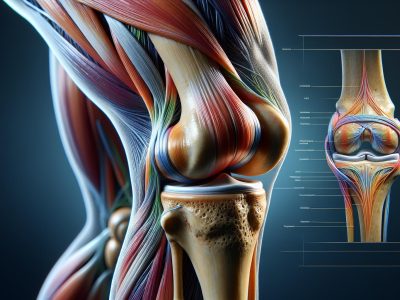
Picture this: you’re sprinting across the field, feeling the power in your legs and the precision in your movements. Behind the scenes, your body’s intricate network of tissues is working in harmony to keep you agile and strong. But have you ever wondered what keeps your muscles and bones connected, or how your joints stay stable under pressure? That’s where tendons and ligaments come into play.
These two vital structures often get lumped together, but they serve entirely different roles in your body. Tendons and ligaments may look similar, yet their functions and importance couldn’t be more distinct. Understanding these differences isn’t just for biology buffs—it can help you better care for your body, prevent injuries, and recover smarter. So, what truly sets tendons and ligaments apart? Let’s unravel the mystery and jump into their unique characteristics.
Overview Of Tendons And Ligaments
Tendons and ligaments are fibrous connective tissues that play key roles in the body’s movement and structural stability. Even though their similar composition, they have distinct functions and locations.
What Are Tendons?
Tendons attach muscles to bones, enabling movement when muscles contract. They’re strong, flexible, and designed to handle the tension generated during activities like running or lifting. For example, the Achilles tendon connects the calf muscle to the heel, providing the thrust needed for walking or jumping.
Tendon injuries, such as tendinitis, often result from overuse or sudden strain. There are varying degrees of elasticity in tendons, but their primary role remains biomechanical force transmission to help motion.
What Are Ligaments?
Ligaments connect bones to other bones, stabilizing joints and preventing excessive movement that might lead to injury. They’re less elastic than tendons, offering a firm yet limited range of motion. The anterior cruciate ligament (ACL), for instance, stabilizes the knee joint during rapid directional changes.
Injuries to ligaments, like sprains, commonly occur during sports or accidents. The healing process for ligaments can be slow due to their limited blood supply, often necessitating physical therapy or longer recovery times.
Key Differences Between Tendons And Ligaments
Although tendons and ligaments are both connective tissues, their structural designs, functions, and compositions show marked differences that contribute to their roles in the body.
Structural Differences
Tendons are dense, fibrous tissues attaching muscles to bones. They appear cord-like and are built to withstand tension, transferring force generated by muscles to bones for movement. For instance, the Achilles tendon helps in walking and running by linking the calf muscles to the heel bone.
Ligaments connect bones to other bones and are shorter and more elastic compared to tendons. They resemble bands or sheets of tissue, supporting joint stability. The anterior cruciate ligament (ACL), for example, stabilizes the knee by preventing excessive forward movement of the tibia.
Functional Differences
Tendons help motion by transmitting muscle contractions to bones. They endure significant mechanical stress during dynamic movements like sprinting or lifting, making them critical for maintaining mobility.
Ligaments play a stabilizing role, ensuring joint alignment. They limit excessive or abnormal movements, such as hyperextension. Injuries to ligaments, such as a torn ACL, often result in joint instability rather than impaired motion.
Composition And Elasticity
Tendons primarily consist of collagen fibers aligned in a parallel arrangement. This structure maximizes tensile strength, but they are relatively inelastic, providing efficiency in force transfer rather than flexibility.
Ligaments also contain collagen but have a crisscross fiber pattern interwoven with elastin. This composition increases elasticity, allowing some stretch while maintaining joint support. For example, the elasticity of spinal ligaments permits flexibility in movements like bending and twisting.
Importance In The Human Body
Tendons and ligaments serve critical roles in maintaining the structure and functionality of the human body. Their distinct contributions to movement and stability highlight their necessity in everyday activities and physical interactions.
Role In Movement
Tendons act as connectors between muscles and bones. They transmit the force generated by muscle contractions to the skeletal system, enabling motion. For example, the Achilles tendon allows you to push off the ground when walking or running. Without tendons, tasks like lifting objects or climbing stairs would be impossible, as muscles alone cannot generate skeletal movement.
Tendons endure high levels of tension, especially during repetitive or strenuous activities. The patellar tendon, found in the knee, withstands stress during jumping and squatting. Overuse or sudden strain, but, can lead to conditions such as tendinitis. Their resilience and tensile strength make tendons essential for dynamic, coordinated motion.
Role In Stability
Ligaments connect bones to other bones, reinforcing joint alignment and preventing excessive or abnormal movement. For example, the anterior cruciate ligament (ACL) in the knee prevents your tibia from shifting too far forward, maintaining joint stability during pivoting or sudden stops. Similar ligaments in the spine ensure you remain upright and balanced.
Elasticity in ligaments accommodates some joint flexibility, but this flexibility is limited to avoid injuries. When ligaments overstretch or tear, as in sprains, joint instability increases. Everyday actions like standing, sitting, or exercising rely heavily on the stabilizing function of ligaments to protect joints from strain or dislocation.
Their roles, while different, highlight the intricate biomechanics of the human body, emphasizing how tendons and ligaments work together for seamless movement and stability.
Common Injuries And Healing Process
Tendons and ligaments are prone to injuries due to their critical roles in movement and joint stability. The healing process for each structure varies depending on the type and severity of the damage.
Tendon Injuries
Tendon injuries often result from overuse or excessive strain, such as repetitive motions in sports or work-related activities. Common examples include tennis elbow (lateral epicondylitis) and Achilles tendinitis. A tendon rupture, like a torn Achilles tendon, may occur during high-intensity activities or sudden accidents.
Tendon healing is slower due to its limited blood supply. Inflammation is the initial phase, followed by cell proliferation and collagen remodeling. Treatments range from rest and physical therapy to, in severe cases, surgical repair. For example, partial tears might heal with immobilization, while complete ruptures often require surgery for proper functionality.
Ligament Injuries
Ligament injuries frequently occur during sudden movements or impact, particularly in sports. Anterior cruciate ligament (ACL) tears and ankle sprains are common ligament-related issues. They often result from twisting motions or direct trauma to a joint.
The healing process for ligaments is more unpredictable; while they have slightly better blood flow than tendons, their recovery depends on the injury’s severity and location. Minor sprains can heal with rest, while full tears, such as an ACL tear, typically require surgical intervention to restore joint stability. Physical rehabilitation helps regain strength and flexibility post-repair.
Effective prevention involves proper warm-ups, using correct techniques, and avoiding overexertion.
Conclusion
Understanding the difference between tendons and ligaments is essential for appreciating how your body moves and stays stable. These structures work together to support your physical activities while protecting your joints and muscles from injury. By recognizing their unique roles and vulnerabilities, you can take better care of your body.
Incorporating proper warm-ups, practicing good techniques, and avoiding overexertion can go a long way in preventing injuries. Whether you’re an athlete or just staying active, prioritizing your tendon and ligament health ensures long-term mobility and strength.
To provide the best experiences, we use technologies like cookies to store and/or access device information. Consenting to these technologies will allow us to process data such as browsing behaviour or unique IDs on this site. Not consenting or withdrawing consent, may adversely affect certain features and functions.
Functional
Always active
The technical storage or access is strictly necessary for the legitimate purpose of enabling the use of a specific service explicitly requested by the subscriber or user, or for the sole purpose of carrying out the transmission of a communication over an electronic communications network.
Preferences
The technical storage or access is necessary for the legitimate purpose of storing preferences that are not requested by the subscriber or user.
Statistics
The technical storage or access that is used exclusively for statistical purposes.The technical storage or access that is used exclusively for anonymous statistical purposes. Without a subpoena, voluntary compliance on the part of your Internet Service Provider, or additional records from a third party, information stored or retrieved for this purpose alone cannot usually be used to identify you.
Marketing
The technical storage or access is required to create user profiles to send advertising, or to track the user on a website or across several websites for similar marketing purposes.