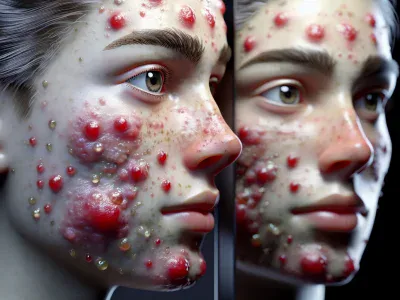
Picture waking up to a tingling sensation on your lip or a mysterious bubble forming on your hand. Your mind races—could it be a harmless blister or something more? The difference between these two tiny troublemakers isn’t just skin deep. Each tells a unique story about what’s happening beneath the surface.
You might be surprised to learn that recognizing the subtle clues can save you discomfort and even help you heal faster. Understanding these differences doesn’t just ease your worry—it empowers you to take control of your skin’s health. Ready to uncover what your body’s trying to tell you? The answer might be closer than you think.
Understanding Blisters and Cold Sores
Visualize touching your lip one morning and feeling a sting, rough and out the ordinary—you ask, is this a blister or a cold sore? These skin eruptions might seem similer, but they have roots in very different causes. You might find a blister after a long hike when your shoes rub constantly against your heel, turning friction into a bubble of clear fluid. Cold sores, on the other hand, form because of the herpes simplex virus (HSV-1), which stays dormant in your nerve cells until stress, sun, or illness triggers an outbreak as explained by Mayo Clinic.
You experience a blister as an isolated reaction. It appears anywhere—on your palms, feet, or even from burns or new tools. Are they contagious? No, since blisters like those from eczema or dermatitis result from mechanical or allergic irritation, not viral transmission.
Remember your friend who nervously tried to cover a cold sore before a big meeting—the anxiety rising with every glance in the mirror? Cold sores always cluster; rarely do you see just one. Tiny vesicles gather near your mouth, often tingling or itching before showing, and then crusting over as they heal. If you touch or kiss when they’re active, you spread the virus. According to CDC, HSV-1 infects over 67% of the global population under 50, meaning these outbreaks are far more common than you’d think.
Did you ever try to pop a blister, only to find it just refilled or stung worse after? Don’t pop—intact skin shields against infection. But a cold sore? That can’t be drained like a regular blister or treated with a bandaid. Antivirals—acyclovir, valacyclovir—help lessen duration, supported by data from American Academy of Dermatology.
If you find yourself searching for answers late at night, remember this: You can learn the language of your skin by noticing triggers, shapes, and sensations. Start to see these signs not with worry, but with curiosity. Which signals ask for rest, which for protection, and which want medical help?
What if you’re not sure? Contact a dermatologist. You’re not just treating a blister or a cold sore—you’re tuning into a story your body’s been telling all along.
What Is a Blister?
Blisters appear as tiny bubbles under your skin, filled with clear fluid that look like hidden messages from your body’s surface. Ever find one after hiking in new boots or maybe after grasping a hot pan? That’s a blister trying to get your attention—saying, “Something’s rubbed me the wrong way.”
Causes of Blisters
Pressure and friction usually causes blisters, especially on hands and feet—think of marathon runners or guitarists after hours of practice. Burns, both thermal and chemical, frequently lead to blistering; for instance, a child who touches a hot stove forms a blister as the skin’s defense. Allergic reactions, such as poison ivy exposure, results in blistering as well. Some infections can spark blisters, like impetigo (bacterial) or hand, foot, and mouth disease (viral), which shows in school-age children. According to Mayo Clinic, chronic diseases—such as autoimmune conditions called pemphigus or bullous pemphigoid—trigger persistent blisters in adults over fifty.
Symptoms and Appearance
You’ll spot blisters as round, raised pockets, usually 2-10 mm wide, nestled just beneath your upper skin layers. A new blister’s skin looks shiny and taut, sometimes flushed or a bit pink. Sometimes blisters bunch together, like pearls strung along fingers after raking leaves all afternoon. Touch one, and you’ll feel its squishy, watery core—unless it’s popped, then you’ll see a raw and tender base that stings when you try cleaning it. Pain often flares up when the blister’s pressure builds, particularly if the liquid’s trapped. Sometimes, blisters don’t hurt at all—an odd sensation when your palm’s covered but it barely registers.
Blisters rarely signals something dangerous if caused by shoes or mild burns, but if you notice streaks of red, pus, or fever, involving a healthcare provider’s best. Sometimes blisters signals underlying problems, so if they keep returning or arrive without cause, it’s worth questioning.
What Is a Cold Sore?
Cold sore describes a patch of skin that suddenly feels different, often tingling or itching, before a cluster of small, fluid-filled blisters pops up along the lip. If you’ve ever wondered why this happens, you’re not alone; these fleeting visitors affect about 67% of the global population under age 50 according to the World Health Organization. When it appears, a cold sore sometimes takes center stage at the most inconvenient moment like right before a presentation or a family photo. Could your body be trying to warn you of something brewing beneath the surface?
Causes of Cold Sores
Cold sores most commonly originate from infection by the herpes simplex virus type 1 (HSV-1). Transmission happens through direct skin-to-skin contact—think kissing, sharing drinks, or even touching your face after shaking hands with someone who has an active outbreak. Once the virus enters your body, it doesn’t leave, instead it hides in nerve cells, often reactivating years later when you’re tired, stressed, exposed to sunlight, or fighting an illness. Rarely, HSV-2 (normally associated with genital herpes) can cause cold sores around the mouth too, especially if oral-genital contact occurred. Sometimes cold weather, hormonal shifts, or dental work provokes these outbreaks as well.
Symptoms and Appearance
Cold sores typically announce their arrival with a burning, tingling, or itching sensation, usually around the edge of your lip or nostrils. Over a day or two, this site erupts into a group of tiny, red blisters clustered tightly together. These blisters burst, leaving shallow open sores that crust over with a yellowish scab after few days. Pain, tenderness, and mild swelling often accompany the process; some people get fever, sore throat, or swollen lymph nodes, particularly during their first outbreak. If the blisters spread to eyes or fingers, which is rare, immediate medical attention is critical, says Mayo Clinic. Would you notice the subtle warning signs, or realize only after the stinging starts? Cold sores heal in 7–10 days, yet their emotional sting sometimes last longer, especially when a social event or photo day is looming.
Key Differences Between Blisters and Cold Sores
You spot something bubbling up on your skin—a tiny clear dome or a cluster of tingling bumps along the lip. Your body’s trying to tell you a story, but is it whispering blister, or is cold sore humming its virus-laden tune? These two conditions might overlap in appearance, but key differences leap out when you listen closely to their symptoms, triggers, and preferred habitats.
Location and Triggers
Blisters usually pop up where shoes, tools, or swift movement rub at your skin. Think heels after a weekend hike, toes after breaking in new sneakers, or palms after raking leaves the whole afternoon. These little pockets form as your skin shouts “enough!” from friction, burns, allergic reactions, or chemical exposure (CDC, 2022). In contrast, cold sores are party crashers invited by HSV-1. They gather in clusters on lips, mouth edges, or sometimes nose and cheeks—rarely straying elsewhere. Stress, sunlight, fevers, or hormonal shifts (WebMD, 2024) flick the “on” switch for a dormant virus, so these outbreaks love returning in familiar places.
Associated Symptoms
Blisters flag mechanical stress. You’ll spot a clear, fluid-filled bubble, possibly feel tenderness or burning, then often nothing but healing. Sometimes blisters ache, itch, or burn—if you ignore underlying friction, the skin protests longer. Rare conditions, like pemphigus, might trigger persistent and scattered blisters over your trunk, arms, or mouth.
Cold sores, but, script a more dramatic narrative. They tingle and itch hours before the main act starts, then small red bumps transform into cloudy blisters, burst, and crust. You may run fevers, feel muscle aches, or notice swollen lymph nodes, especially during initial outbreaks (Mayo Clinic, 2024). Pain intensifies during eating or talking, and in immunocompromised people, sores might spread, causing more dangerous complications.
Treatment Approaches
Blisters urge a gentle hand—protect them with a clean bandage, and let them breathe. If you pop or pick, infection risks sneak in, delaying recovery and sometimes causing cellulitis or deeper infections (American Academy of Dermatology, 2023). For ordinary blisters, keeping dry and reducing pressure speeds up healing.
Cold sores, by contrast, thrive on inaction. Antiviral creams or oral meds like acyclovir target HSV-1 directly, so you break the cycle and shrink healing time if started early (JAMA Dermatology, 2023). Ice packs might soothe pain, but for repeated breakouts, a specialist may suggest longer-term suppressive meds. Sharing utensils or kisses spreads cold sores, but your blister’s a private affair—no need to quarantine from loved ones.
Can you recall the last time your body tried to warn you, either with a fiery blister or sudden lip tingle? Your story matters, and recognizing these clues empowers you to chart a smarter path for your skin health.
When to See a Doctor
Picture your skin as a messenger, one that sometimes sounds alarms only you can hear—then sometimes, it’s loud enough for everyone to notice. You might ask, “Should I be worried if a blister hasn’t healed after a week?” If it’s filled with pus or surrounded by angry red skin, it’s time to consult a dermatologist, especially if fever tags along. Harvard Medical School highlights that persistent or infected blisters, for example those crusting or oozing, can be signs of deeper problems like cellulitis, which needs quick medical attention.
Cold sores sometimes seem like an annoying guest who never leaves; the American Academy of Dermatology reminds you that if these clusters keep visiting more than six times a year, or if they stray beyond your lips to your nose or eyes, you’ll want to check in with a healthcare provider. Vision problems, sudden pain, or blisters on your fingers (herpetic whitlow) signal deeper viral mischief. There’s a story about a student who, after ignoring a stubborn cold sore, woke up with swelling near her right eyelid—turns out, HSV-1 can travel where it’s not welcomed.
If your immune system is weakened—maybe you take chemotherapy, or have HIV—the risks magnifies, seemingly harmless blisters or cold sores can become medical emergencies. Did you ever notice a relative’s blisters seemed to multiply overnight, accompanied by confusion or general malaise? Those could be signs of a systemic infection, where prompt care’s essential.
Sometimes, people mistake eczema herpeticum (widespread painful blisters from HSV infection, often in those with eczema) for simple blisters. That misstep can worsen things, leading to hospitalization if left unchecked. So ask yourself: does the pain keep you up at night, or is your skin refusing to respond to over-the-counter remedies? These are the moments when guessing upfront means better healing later.
You might’ve read on Mayo Clinic that children, especially infants, can get severe dehydration from extensive blisters, needing urgent pediatric care. Questions like “Is it safe for my child’s blister to keep spreading?” or noticing their energy disappearing, ought to prompt swift action.
Blisters from simple friction fade; cold sores fade, too—but sometimes, the signs grow louder. If your body’s messenger is getting desperate for attention, listen closely before the message turns into a shout.
Conclusion
Paying close attention to your skin’s signals helps you respond quickly and confidently to changes. Whether you’re dealing with a simple blister or an uncomfortable cold sore knowing what to look for puts you in control of your health.
Trust your instincts when something feels off and don’t hesitate to reach out to a healthcare professional if you’re unsure. Your skin’s story matters and staying informed is one of the best ways to protect it every day.
To provide the best experiences, we use technologies like cookies to store and/or access device information. Consenting to these technologies will allow us to process data such as browsing behaviour or unique IDs on this site. Not consenting or withdrawing consent, may adversely affect certain features and functions.
Functional
Always active
The technical storage or access is strictly necessary for the legitimate purpose of enabling the use of a specific service explicitly requested by the subscriber or user, or for the sole purpose of carrying out the transmission of a communication over an electronic communications network.
Preferences
The technical storage or access is necessary for the legitimate purpose of storing preferences that are not requested by the subscriber or user.
Statistics
The technical storage or access that is used exclusively for statistical purposes.The technical storage or access that is used exclusively for anonymous statistical purposes. Without a subpoena, voluntary compliance on the part of your Internet Service Provider, or additional records from a third party, information stored or retrieved for this purpose alone cannot usually be used to identify you.
Marketing
The technical storage or access is required to create user profiles to send advertising, or to track the user on a website or across several websites for similar marketing purposes.