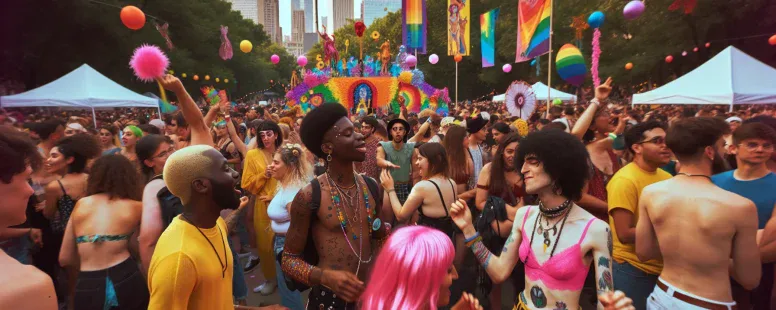
Picture standing at a vibrant festival where colors swirl and music pulses through the air—everyone’s celebrating love in all its forms. You overhear a conversation: someone mentions they’re bi, another says they’re pan. Their words drift through the crowd like confetti, sparking curiosity about what truly sets these identities apart.
You might wonder if there’s a hidden depth to these labels or if they’re just two sides of the same coin. Understanding the difference between bi and pan isn’t just about definitions—it’s about embracing the beautiful complexity of attraction and identity. By diving into these nuances, you’ll open doors to richer conversations, deeper self-awareness, and a more inclusive world.
Understanding Bi and Pan Sexual Orientations
You enter a vibrant parade, where rainbow flags ripple above heads and laughter echoes through the crowd. People exchange stories—someone named Jamie confides, “I’m bi—I’ve dated both men and women.” Next to Jamie, Alex grins, “I’m pan—I fall for someone regardless of their gender.” Their words pulse with meaning, hinting at subtle yet impactful distinctions that shape experiences.
Bisexuality defines attraction to more than one gender, including men and women, sometimes nonbinary people (GLAAD, 2023). For example, a bisexual woman may date a man now and a nonbinary person later. Dependency grammar links “bisexual” to the direct object “people of two or more genders,” highlighting a focus on the presence of multiple gender identities.
Pansexuality refers to attraction to individuals regardless of gender. Pansexual people often describe their attraction as not limited by gender distinctions, connecting the verb “love” directly to the semantic entity “person” without a gender filter. Alex, our parade-goer, might say “Gender isn’t a factor for me.” While bisexuality can imply boundaries between genders, pansexuality explicitly rejects gender as a barrier to attraction (APA, 2022).
Some ask, “What’s the real difference, when both involve attraction beyond one gender?” Picture a painter: a bisexual person may choose colors from a broad but defined palette, while a pansexual person sees a gradient with infinite blends—each shade accessible without labels.
Society sometimes assumes these orientations overlap entirely, but that’s not always accurate. Bi people may still notice gender or relate strongly to their unique history within the LGBTQ+ community. Pan people often express a desire to bypass gender as relevant altogether. Both communities have forged distinct spaces, language, and belonging.
Curious how this difference could shape identity? Picture introducing yourself at a queer meetup. The word you choose—bi or pan—signals nuanced aspects of self, community, and worldview. Which one resonates with your story?
Defining Bisexuality
Bisexuality crafts a multifaceted narrative within the larger tapestry of LGBTQ+ identities. You might notice its symbols—like the pink, purple, and blue flag—fluttering at pride events or spot someone sharing their story on social media, weaving threads between personal history and community visibility.
Key Characteristics of Bisexuality
Bisexuality centers on attraction toward more than one gender. You might feel drawn to men and women, or to nonbinary and genderqueer individuals too—there’s no universal formula. In 1990, activist Robyn Ochs famously described it as attraction to people of “more than one gender, not necessarily at the same time, in the same way, or to the same degree” (source: Robyn Ochs’ Website).
Consider Alex, who grew up in a small Texas town. They found themselves falling for a guy in sophomore year—then later developed feelings for a nonbinary classmate. Alex’s story reflects the unexpected ways bisexual attraction can unfold, untethered from a fixed pattern.
Curiosity often surrounds how bi identities navigate romantic relationships. Some ask if your attraction “shifts” depending on context. Others wonder if, when you’re dating, your identity changes. Cishet people, like your aunt at Thanksgiving, sometimes propose that bisexuality’s about “being indecisive,” but the reality’s richer and more stable—your orientation stands regardless of who you’re with.
Common Misconceptions About Bisexuality
Misunderstandings stick to bisexuality like Velcro. You could hear things like, “It’s just a phase,” or, “You can’t be bi if you’re married.” These assumptions ignore research: a 2013 Pew Research Center survey found 40% of bi adults reported identity-related stigma even within LGBTQ+ spaces.
Another common myth claims bisexual people are attracted to everyone they meet. Picture you’re at a bustling café, scrolling through your phone, and someone asks, “So you just love everyone?” The idea disregards individual preferences and emotional boundaries, much like assuming all pizza lovers adore every topping.
In some circles, you’ll find the bi-erasure phenomenon, where your identity gets dismissed or “explained away.” Media, for example, often describes celebrities as “experimenting” rather than acknowledging a lasting bisexual identity. Those narratives can make you question: do others see your orientation, or only the relationship you’re in today?
If you’ve ever paused before coming out, you’re not alone—many navigate these challenges. The truth is, bisexuality’s vibrancy and resilience form an integral chapter in modern conversations on gender, love, and belonging.
Defining Pansexuality
Pansexuality means attraction reaches beyond the binaries, mapping connections wherever gender falls on the spectrum. While society often sorts attraction into neat categories, pansexuality questions these boxes by centering desire on the person rather than their gender. Picture walking through a gallery, drawn to art not by its frame but by its emotion—pan attraction works similarly, responding to humanity first.
Key Characteristics of Pansexuality
Attraction without Gender Barriers
You experience attraction that doesn’t consider someone’s gender identity—cis men, trans women, nonbinary, agender, and genderqueer people all exist within the scope. Singer Miley Cyrus has publicly shared her pansexual identity, demonstrating that gender borders don’t shape her romantic connections.
Fluid and Inclusive Identity
Pansexual identity adapts with cultural shifts, making it one of the most inclusive labels in the LGBTQ+ continuum. If you think about labels as rooms at a party, pansexuality leaves the doors open wide. Some believe pansexuality means attraction to “all”, but advocates clarify it’s not about ‘everyone’ but ‘anyone’—potential isn’t limited by gender.
Unique Community and Symbols
Pansexuals rally around the yellow, pink, and blue flag, representing attraction to those beyond the male-female binary. Many engage with digital communities on apps like Tumblr and Twitter where conversations about pansexual experience thrive, showing you the language is always evolving.
Common Misconceptions About Pansexuality
Pansexuality Means Attraction to Everyone
Many confuse pansexuality with being universally attracted to all people, but real pan experiences center around the possibility for attraction to anyone—not the inevitability. For example, if you’re pan, you won’t feel drawn to every person you meet. You might, if gender isn’t the deciding factor.
Pansexuality and Bisexuality Are Interchangeable
Some sources, such as GLAAD, note the fluid lines between bisexuality and pansexuality (GLAAD, 2023). But, they’re not the same—many pan individuals say the identity’s nuance is crucial. In practice, bisexuality might recognize gender as a factor, while pansexuality doesn’t do so.
“Pansexual Is Just a Trend”
Media sometimes suggest that pan identity marks a passing phase or internet meme. In reality, activists like Jazz Jennings and pop culture figures continue to illustrate the deep, meaningful roots this identity holds for thousands. If someone dismisses pansexuality as a fad, research and testimony from lived experience say otherwise.
What matters most is your connection to the concept. How might recognizing genderless attraction impact the relationships in your own life? How do you see pansexuality shifting the broader conversation about love, identity, and belonging in your community?
Core Differences Between Bi and Pan
Grasping the core differences between bi and pan means recognizing how attraction, labels, and self-identity weave together in unique patterns. Each orientation, while sharing intersections, carves its own distinct path through language and lived experience.
Attraction Scope and Inclusivity
Bisexual and pansexual attractions, both layered, diverge in the relationship to gender. Bisexual attraction often centers on more than one gender—these may include men, women, and nonbinary people—yet sometimes acknowledges the gender distinction. Some bi people, for instance, describe feeling attraction “to my own gender and to other genders,” as noted by the Bisexual Resource Center.
Pansexuality, according to GLAAD, stretches past these boundaries, describing attraction not tied to gender at all—just the person themself. If you’ve ever found yourself captivated by someone’s humor or kindness before you noticed how they identify, you’re glimpsing the spirit of pan inclusion. Consider Jamie, who says, “I’m pan because I fall for hearts, not parts.” This isn’t just semantics: pan communities are built on the explicit erasure of gendered barriers.
Ask yourself: do you experience attraction as a response to the person in front of you, or do you feel a spark depending on their gender identity? This simple question, which resonates in LGBTQ+ spaces, highlights the nuanced difference in how bi and pan people describe their feelings—even as their experiences sometimes overlap.
Terminology and Identity Preferences
Terminology in LGBTQ+ spaces, fluid and fiercely debated, holds powerful meaning. Some bi people reclaim “bisexual” to emphasize historic ties, visibility battles, and a sense of kinship from groups like BiNet USA. You might hear: “Bi is broad—it means more than just two!” because modern bisexuality often means “hearts, not parts,” just as pan does.
Pansexual, by contrast, sidesteps the prefix “bi-” entirely, centering on limitless attraction. This label, popularized in online forums and by celebrities like Janelle Monáe, sometimes signals a conscious political stance—rejecting a gender binary altogether. Someone may say, “I use pan because it feels more inclusive to nonbinary partners.”
Disagreements over language sometimes spark tension. For some, bi and pan feel synonymous; for others, the difference is essential and deeply tied to personal history. Which label fits feels personal, rooted in community, comfort, or even protest. When you choose a label, you’re joining an ongoing dialogue on love’s boundaries and language’s limits.
Concept
Bisexual
Pansexual
Scope of Attraction
More than one gender (e.g., men, women, nonbinary)
To people regardless of gender
Gender Awareness
May acknowledge gender distinction
Explicitly rejects gender as a barrier
Example Phrase
“I like my own and other genders”
“I’m attracted to people, not genders”
Flag
Pink, purple, blue
Yellow, pink, blue
Key Entities
Bisexual Resource Center, BiNet USA, LGBTQ+ Spectrum
GLAAD, Janelle Monáe, Online Communities
How you define yourself shapes your world. The difference between bi and pan isn’t just about attraction—it lives in the words you chose, the protests you join, and the connections you seek out.
Similarities and Overlaps
Both bisexual and pansexual identities operate in the lush landscape of fluid attractions, defying binary boundaries. In many conversations at pride parades or in online spaces, you might hear people ask, “Isn’t pan just a new word for bi?” That question itself hints at a core similarity—both describe the capacity for attraction to people of more than one gender, inviting you to question how you see gender and connection. For example, your friend Jamie never really cared whether they’re dating a man, woman, or someone nonbinary—they say, “I just like people.” This echoes what you see in both bi (GLAAD, 2021) and pan communities: attraction that’s about the person, not just their gender.
Consider the gym as a meeting ground. Picture you and Sam—Sam identifies as bi, you as pan—see the same three gym-goers: one uses they/them pronouns, one him/his, one she/her. You both notice you’re interested in all three. In lived experience, your day-to-day yous might look identical. This overlap often sparks unity at events and in hashtags like #StillBisexual or #PanPride, creating a sense of kinship and shared activism, like the mural unveiled during Bi Visibility Day or Pan Week.
Science and advocacy groups, such as the American Psychological Association (2023), confirm that both bi and pan people often experience similar erasure or “invalidations”—from those who claim each identity “doesn’t exist” or is “just confusion.” These microaggressions, which can happen even within LGBTQ+ groups, are real and hurtful, making solidarity between bi and pan folks both necessary and powerful.
The metaphor of a spectrum comes alive here: Picture gender as infinite hues of a rainbow, and your capacity to love as the sunlight that makes those colors visible. Whether you name your orientation bi or pan, that light shines on every color, and the similarities bond you more than the differences separate. You’ve probably heard folks say labels don’t matter much when you’re holding hands on a crowded dancefloor—labels can shapes community, but shared experience builds it.
Here’s a table summarizing where overlap and similarity appear most often in the bi and pan community:
Similarity
Bi Example
Pan Example
Attraction to multiple genders
Dating men, women, nonbinary people
Attracted to individuals regardless of gender
Shared activism
Participating in Bi Visibility Day marches
Organizing Pan Pride panels
Facing invalidation
Called “undecided” or “confused”
Told pansexuality “doesn’t exist”
Value of fluidity
Describes attraction as “not fixed”
Describes love as “person-specific, not gender-specific”
You’ve seen people argue that bi and pan are different, but when you listen to their personal stories, their laughter, and sometimes their pain, you’ll find more bridges than walls. Faced with love’s vast landscape, together, you question labels and craft meanings that welcome every color.
Importance of Respecting Individual Identity
You shape the landscape of the LGBTQ+ community every time you respect how someone defines themselves. Every label—bi or pan—carries personal meaning that transcends simple definitions. Picture, for a moment, sitting across from Jordan at a café. Jordan smiles and shares that they identify as pansexual, explaining how gender never really factored into their feelings for others. Across town, Hayden describes their bisexuality as rooted in attraction to more than one gender. Two experiences, both vibrant; yet society sometimes flatten these stories into generic assumptions.
By tuning into the nuances of your friends’ identities, you cultivate trust and make space for authentic conversations. It is not rare for well-meaning questions—like, “Aren’t bi and pan the same thing?”—to land awkwardly. These moments, but, open doors for empathy and education. In 2022, a survey from The Trevor Project found that 62% of LGBTQ+ youth reported feeling misunderstood or erased about their sexuality, highlighting the ongoing need for nuanced recognition.
Labels, for many, serve as both shield and invitation. Their flag—blue, pink, and purple for bisexuality, or yellow, pink, and blue for pansexuality—flies with pride not just for themselves but for everyone looking for belonging. Consider Kayla at Pride, waving the pan flag. Someone tries to “correct” her about her orientation, dismissing the distinction. Such microaggressions leaves lasting impact, reinforcing invisibility. When you take the time to listen, ask, and genuinely care about the words someone uses for themselves, you’re planting seeds for solidarity and even hope.
Your respect isn’t just a quiet gesture. It’s a visible affirmation. When you model that open-mindedness in your friend group, you encourage others—sometimes even strangers online—to do the same. It’s how communities grow resilient, especially as harmful myths or erasure persist. If you ever feel tempted to shortcut someone’s label, pause—what would it have felt like in your shoes if people disregarded your self-knowing?
The stories, the flags, the language—these are all more than labels. They are testimony of existence and authenticity. Backing up each person’s identity with respect, not caveats, you lead conversations that shape a more inclusive world. Why not start today, the next time someone shares their truth with you?
Conclusion
Navigating the differences between bi and pan identities means recognizing the depth and diversity within the LGBTQ+ community. When you take the time to listen and learn from each person’s unique experience, you help create a space where everyone feels seen and valued.
Your willingness to respect personal labels and challenge misconceptions goes a long way in building a more inclusive world. By staying curious and supportive, you’re not just expanding your own understanding—you’re also strengthening the community around you.
To provide the best experiences, we use technologies like cookies to store and/or access device information. Consenting to these technologies will allow us to process data such as browsing behaviour or unique IDs on this site. Not consenting or withdrawing consent, may adversely affect certain features and functions.
Functional
Always active
The technical storage or access is strictly necessary for the legitimate purpose of enabling the use of a specific service explicitly requested by the subscriber or user, or for the sole purpose of carrying out the transmission of a communication over an electronic communications network.
Preferences
The technical storage or access is necessary for the legitimate purpose of storing preferences that are not requested by the subscriber or user.
Statistics
The technical storage or access that is used exclusively for statistical purposes.The technical storage or access that is used exclusively for anonymous statistical purposes. Without a subpoena, voluntary compliance on the part of your Internet Service Provider, or additional records from a third party, information stored or retrieved for this purpose alone cannot usually be used to identify you.
Marketing
The technical storage or access is required to create user profiles to send advertising, or to track the user on a website or across several websites for similar marketing purposes.