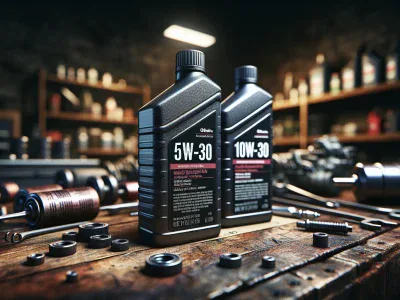
Picture your engine on a frosty morning—the air bites, metal shivers, and every moving part begs for the perfect lifeline. You reach for a bottle of oil, but the numbers on the label whisper a challenge: 0w‑16 or 0w‑20? At first glance, these codes might seem like a cryptic puzzle, but the difference between them could shape your ride’s future.
Choosing the right oil isn’t just about ticking a box; it’s about unlocking smoother starts, better fuel economy, and a longer engine life. There’s a hidden world behind those numbers, one where viscosity dances with temperature and your car’s performance hangs in the balance. Are you ready to discover which oil will help your engine sing, even on the coldest days?
Understanding Viscosity Grades: 0W‑16 vs 0W‑20
Understanding oil viscosity grades reveals how SAE assigns “0W‑16” and “0W‑20” as numbers matching your engine’s ability to flow oil at different temperatures. Picture those first chilly mornings—you’re turning the key, and synthetic oil rushes to lubricate sensitive engine parts. The “0W” means both 0W‑16 and 0W‑20 provide the same exceptional cold-start protection. Both grades protect against wear when the thermometer reads 0°F, letting your engine parts move without delay. why automakers suggest thinner oil, especially post‑2018? In a quest for better fuel economy and reduced emissions, many manufacturers (Toyota, Honda) recommend 0W‑16 for hybrid and compact models.
Differences become less abstract at operating temperatures. The second numbers—16 and 20—signify how thick the oil stays once your engine heats up. Here’s where you’ll notice something subtle but significant. A 0W‑20 oil forms a slightly thicker film than 0W‑16 once the engine reaches 212°F, which adds resilience for high-load conditions or older engines (source: SAE J300, 2021). For example, if you drive a turbocharged SUV in Arizona’s summer, 0W‑20 might offer extra assurance under prolonged stress.
Automotive engineers often debate: does thinner oil accelerate wear or only boost efficiency? Research by Lubrizol (2022) documents modern engines designed for 0W‑16 operate superbly at lower viscosities—yet, using 0W‑20 in a model rated for 0W‑16 can lead to lower gas mileage and slower oil flow. You might recall a friend worried about swapping between them for a cross-country road trip. Could hotter climates demand thicker oil? Several technicians argue that while 0W‑16 works well for city commutes in hybrids, 0W‑20 could suit highway driving and heavy loads better.
What stories do your engine tell? That question drives automakers and oil chemists alike. The right viscosity connects directly to bearing clearances, oil pump design, and emission control strategies unique to each vehicle. Consider the 2023 Toyota Camry Hybrid: its manual requires 0W‑16, but skips to 0W‑20 only if 0W‑16 isn’t available, with a note to switch back at the next service interval.
SAE, API, and ILSAC regulate oil-grade testing across the industry, not leaving much to chance. Curious about the future? As automotive designs evolve and climate targets tighten, you’ll probably see 0W‑16 (or even thinner options) in more fuel‑efficient vehicles on the roads you drive.
Performance Differences Between 0W‑16 and 0W‑20
Comparing 0W‑16 and 0W‑20 brings the subtle factors of engine oil performance into focus. Each viscosity grade influences start-up response, wear resistance, and efficiency with nuances that matter in real-world scenarios.
Cold Start Protection
Evaluating cold start protection between 0W‑16 and 0W‑20 makes you think how a chill morning and smooth ignition intertwine. Both oils reach critical engine components quickly when temps drop below 32°F (0°C) according to SAE J300 standards, but 0W‑16, with its lower high-temperature viscosity, flows marginally faster. For example, a Toyota Camry Hybrid tested in Minnesota winters, starts cleaner with 0W‑16, reducing initial friction (Toyota Owner’s Manual, 2019). You might ask yourself–does that fraction of a second really matter? When you’re depending on seamless commute in freezing weather, it always does.
Engine Wear and Longevity
Assessing engine wear and longevity pivots on viscosity’s protective film at high temperatures. 0W‑20’s thicker oil film—about 13% higher kinematic viscosity at 100°C than 0W‑16 (API SN PLUS, 2018)—offers extra buffer during extended idling and hot driving or in turbocharged, direct-injection engines. If you often jump into heavy city traffic or haul equipment, you might find your engine prefers 0W‑20 for maintaining tighter seals and minimizing long-term bearing wear (Car Care Council, 2021). Still, for newer Honda or Toyota models engineered specifically around 0W‑16 tolerances, this extra thickness could sap efficiency instead of adding benefit.
Fuel Efficiency and Emissions
Improving fuel efficiency and emissions gets more complex with these thin oils. Studies reported by SAE International (Paper 2018-01-1674) show 0W‑16 cuts internal drag by 2–3% compared to 0W‑20, adding up to 1 mpg increase in some subcompact hybrids like the Honda Fit or Prius C. This margin might seem slim, but across 12,000 annual miles, that’s the equivalent of one less fuel stop and several kilograms fewer CO₂ emissions. You might even be tempted to try 0W‑16 in a car originally designed for 0W‑20, but automakers warn this could raise volatility and cause oil consumption (Ford Technical Service Bulletin SSM 47254). Are you ready to weigh the trade-off between squeezing out every bit of mpg and possibly increasing maintenance frequency?
Specification
0W‑16
0W‑20
Cold Crank Viscosity @ ‑35°C (cP)
≤ 6,200
≤ 6,200
Kinematic Viscosity @ 100°C (mm²/s)
6.1–8.0
8.2–9.3
Typical Increase in Fuel Economy (%)
2–3% vs 0W‑20
Baseline
Recommended for Model Years
2018+ Hybrids, Compacts
Broad 2000s–2020s Use
Notice how the context, your driving habits, and the manufacturer’s intent shape the real-world difference. When you choose between 0W‑16 and 0W‑20, you’re not just picking oil—you’re navigating a small but significant part of your car’s story.
Manufacturer Recommendations and Compatibility
You discover a world of nuanced engineering when examining automaker recommendations for 0W-16 and 0W-20 oils. Toyota, Honda, and Nissan, for example, prescribe 0W-16 for recent hybrids and small-displacement engines, chasing stricter emission targets and maximum fuel savings (SAE J300; Toyota 2023 Owner’s Manual). If you open the hood on a 2022 Toyota Corolla Hybrid, you’ll spot “0W-16” embossed on the cap—a tiny detail, yet it signals a larger narrative on efficiency. Are you wondering why older Camrys and Accords still suggest 0W-20? It ain’t random: cylinder clearances and oil pump designs in those engines need the slight extra thickness under load, especially as mileage builds up.
Picture, for a moment, an engine as a living, breathing organism—it thrives when its blood flows at the right pace. Now, manufacturers weigh that pacing carefully. Would you swap thinner oil for quickness, or trade a touch of efficiency for longevity? There’s a balancing act here, with real consequences: Ford’s EcoBoost series, for instance, sticks with 0W-20 in turbocharged applications to preserve turbo bearing health (Ford Service Bulletin SSM 50166). In Japan, the government even nudged automakers to adopt 0W-16 in kei cars and hybrids by 2019 to curb CO₂ emissions (MLIT Japan, 2020 report). But, the United States sees slower adoption, with many service advisors cautioning owners about warranty implications if you stray from original specifications—would risking coverage for a slim 2% gain ever feel worth it?
The compatibility story gets messier when you look at owner anecdotes. Some drivers, after switching from 0W-20 to 0W-16 in a late-model RAV4, report faint ticking on cold mornings—could thinner films be magnifying valve train noise? Others, sticking with 0W-20 in a Prius, sometimes see a tiny drop in mpg on their dash readouts, particularly in city stop-and-go. For those navigating mixed climates and varying driving patterns, you might deliberate between efficiency and protection with every oil change.
Before you pick your next quarts, dig through your owner’s manual, glance at the SAE and API symbols, and ask: is your engine calibrated for lean running or higher summer loads? A question of viscosity isn’t just mechanical—it’s a microcosm of broader engineering tradeoffs, environmental policy, and your habits behind the wheel.
Manufacturer
Model Example
Recommended Oil
Year Range
Engineering Reason
Toyota
Corolla Hybrid
0W-16
2020-2024
Fuel efficiency, emission compliance
Honda
Fit Hybrid (JP)
0W-16
2019-2024
Compact engine, regulatory push
Ford
F-150 EcoBoost
0W-20
2016-2024
Turbocharger wear protection
Nissan
Versa
0W-20
2015-2024
Higher engine load margin
If you ever wonder who decides between 0W-16 and 0W-20, remember: it’s manufacturers, yes—but it’s also you, tuning your car’s lifeblood to your personal journey.
Pros and Cons of 0W‑16 and 0W‑20
Exploring the pros and cons of 0W-16 and 0W-20 pulls you into an intricate world where every drop matters. Choosing 0W-16 feels like handing your hybrid a set of feather-light running shoes—gleaming with promise on city streets. Would you trade a thicker shield for a brisker step? The answer can depend on what you expect from each morning ignition.
0W-16 Pros
Boosts fuel efficiency: Many hybrids and compact cars, like the 2023 Toyota Prius, use 0W-16 to slip past gas stations with a reported 2-3% mileage improvement (source: Toyota Global).
Enhances cold start: If your winters get brutal, 0W-16 flows fast at subzero temperatures, protecting pistons before breakfast hits the table.
Aligns with emission targets: Auto regulations in Japan and the US pushed manufacturers—think Honda or Nissan—toward this thinner oil after 2018.
Reduces friction losses: For modern, small-displacement engines, that means smoother highway sails and less heat trapped under the hood.
0W-16 Cons
Questionable protection in harsh conditions: NASCAR pit crews won’t drizzle 0W-16, fearing quick breakdown under racing stress.
Limited compatibility: Older engines or heavy-haulers—the Ford F-150, for instance—aren’t designed for this slick blend.
Potential for increased wear: If your vehicle runs hot and you press the RPMs, thin oil might not always guard as hoped.
0W-20 Pros
Offers thicker protection: On a cross-country haul or when towing a trailer, that extra viscosity cushions metal on metal—think 2020 Honda Accord shuttling a family through Nevada’s heat.
Matches manufacturer recommendations: Many North American models since 2010, like Subaru Outback or Toyota Camry, favor 0W-20 for a balance between efficiency and longevity.
Adaptable in variable climates: Whether you idle in icy Montreal or cruise Phoenix highways, 0W-20 keeps a steady barrier at higher temps.
0W-20 Cons
Slightly reduces fuel economy: According to a 2022 ILSAC report, newer hybrids lost up to 1 MPG when filled with 0W-20 instead of 0W-16.
Lower cold-flow than 0W-16: If frigid dawns mark your territory, starts may lag fractions of a second more.
Not always optimal for engines engineered for lower viscosity: Using it in a Prius Prime, against manufacturer direction, could void warranty claims.
What stories do these oils tell? In Edmonton, a rideshare driver says her Toyota hybrid clocked 900 more miles between fill-ups after switching to 0W-16. Contrast that with a Denver pickup owner, who tried 0W-16 for winter, only to hear persistent ticking at high revs until returning to 0W-20. Are you after peak fuel savings, or do your daily hauls demand a sturdier film? What’s the cost if you go the wrong route—higher emissions, shorter engine life, or just a voided warranty?
Here’s a breakdown of reported efficiency and flow data from automaker tests:
Oil Grade
Average Fuel Efficiency Increase
Cold Flow Rate
Recommended For
0W-16
+2.5%
Faster
Hybrids, compacts (Toyota Prius)
0W-20
N/A
Fast
Gas sedans, SUVs (Honda Accord)
Ask yourself, what reaches your priorities better? Thinner, agile flow or ample, reliable protection? Your driving habits—your climate, your engine—set the stage for this ongoing debate.
Which Oil Is Right for Your Vehicle?
Choosing between 0W-16 and 0W-20 isn’t just a numbers game—it feels almost like picking shoes for a marathon. Picture you’re standing in your driveway, keys in hand, morning frost clinging to your windshield. Your sedan shivers for a moment, then starts. Is your engine craving the silky flow of 0W-16, or the slightly heartier hug of 0W-20? Each oil type offers a unique rhythm to your daily drive.
Ask yourself: What’s your climate? Drivers in Minnesota winters see positive differences in cold-crank starts with 0W-16, while those in Arizona heat, with bake-the-egg asphalt, might lean toward the thicker cushion of 0W-20, as described in Toyota’s North American service guidelines (Toyota Technical Resource, 2023). Your environment guides your oil—just like your footwear guards your stride.
Manufacturers’ instructions often writes the first rulebook. Honda, Toyota, and Subaru specify 0W-16 for many hybrids and compacts built after 2018, optimizing ultra-low viscosity for modern precision tolerances and fuel economy (SAE International, 2022). If your vehicle’s manual dances around these numbers, there’s likely a reason—engines crafted for 0W-16 rely on its quick, thin layer to minimize friction at startup, especially in city traffic.
On the flip side, your SUV’s towing heavy loads or climbing rugged hills? 0W-20 wraps your engine surfaces with a bit more assurance under pressure. Some owners share stories of switching to 0W-20 before long cross-country hauls, reporting more stable oil pressures at sustained high speeds, but a subtle drop in mileage—echoing EPA laboratory findings (EPA, Light-Duty Engine Testing, 2022).
Older models opposes modern trends. For example, a 2012 Ford Escape runs smoother on 0W-20, with mechanics finding increased noise and consumption when owners experimented with 0W-16. The anecdote underscores that compatibility can’t always be forced.
Table: Climate and Manufacturer Considerations
Factor
0W-16
0W-20
Climate Suitability
Best for extreme cold, city commutes
Works in broad temperatures, more robust
Vehicle Age/Type
New hybrids, compacts (2018+)
Older vehicles, SUVs, trucks
Manufacturer Spec
Required by some Asian automakers
Standard for most models pre-2018
Heavy Load
Limited protection under stress
Reliable performance with towing
Think about your habits. Frequent short trips, rare highway miles, and eco-minded priorities point sharply toward the ultra-efficiency and smooth starts of 0W-16. Long drives, heavy loads, or scorching conditions? Let 0W-20 offer peace of mind when engines work overtime.
Eventually, nobody could make the choice for you. Consider what your owner’s manual whispers, what your engine prefers, and how your commute challenges your vehicle. The right oil type isn’t just protection—it’s a pact with your engine’s unique journey.
Conclusion
Choosing between 0W-16 and 0W-20 comes down to understanding your vehicle’s needs and your driving environment. By taking the time to match your oil choice with your car’s design and your daily routine you’ll help your engine run smoother and last longer.
When in doubt always check your owner’s manual and don’t hesitate to consult a trusted mechanic. The right oil will keep your engine protected and your vehicle performing at its best.
To provide the best experiences, we use technologies like cookies to store and/or access device information. Consenting to these technologies will allow us to process data such as browsing behaviour or unique IDs on this site. Not consenting or withdrawing consent, may adversely affect certain features and functions.
Functional
Always active
The technical storage or access is strictly necessary for the legitimate purpose of enabling the use of a specific service explicitly requested by the subscriber or user, or for the sole purpose of carrying out the transmission of a communication over an electronic communications network.
Preferences
The technical storage or access is necessary for the legitimate purpose of storing preferences that are not requested by the subscriber or user.
Statistics
The technical storage or access that is used exclusively for statistical purposes.The technical storage or access that is used exclusively for anonymous statistical purposes. Without a subpoena, voluntary compliance on the part of your Internet Service Provider, or additional records from a third party, information stored or retrieved for this purpose alone cannot usually be used to identify you.
Marketing
The technical storage or access is required to create user profiles to send advertising, or to track the user on a website or across several websites for similar marketing purposes.