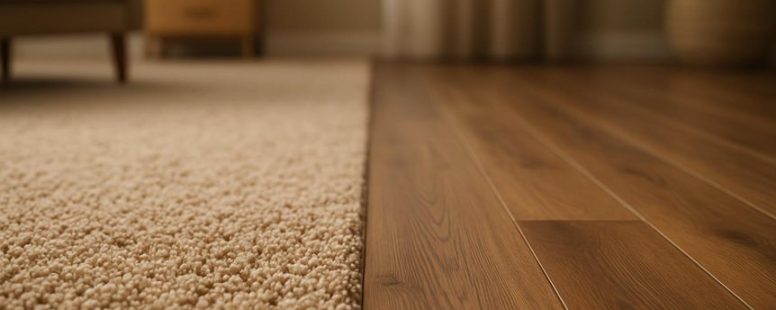
Are you torn between carpet and laminate flooring, wondering which will save you the most money in the long run? Imagine stepping onto plush carpet’s soft embrace or the sleek, cool surface of laminate—each with its own story to tell.
I’ll reveal what truly matters like the initial cost, how tough each option is, and what it takes to keep them looking their best. Beneath the surface, there’s more than meets the eye—unexpected perks like laminate’s surprising resistance to scratches that can keep your home looking fresh longer.
Stick with me, because choosing the right flooring could be the game-changer for your budget and comfort.
Decide Early: Which Flooring Best Fits Your Budget
When choosing between carpet and laminate flooring, your budget is the first thing to consider. Knowing your budget helps you decide what type of flooring is best for your home. If you want low upfront costs, laminate flooring is usually cheaper. It looks nice, is durable, and installs quickly. Brands like Pergo and Shaw make popular laminate options that last for years.
On the other hand, carpet can feel more comfortable and warm, especially in bedrooms and living rooms. It is often less expensive to buy and install than some types of laminate. But keep in mind, carpets can wear out faster and need more cleaning. Replacing carpet can cost more over time, especially if it gets stained or damaged.
Think about not just the price of the flooring but also how much it will cost to keep it looking good. Laminate is easy to clean and maintain, and it lasts a long time if taken care of. Carpet might need regular vacuuming and occasional deep cleaning, which adds to the cost. Also, consider color and texture. Laminate offers modern styles with many textures, while carpet provides a soft, cozy feel.
Choosing early helps prevent second-guessing later. If your budget is tight, laminate might be the better choice. If comfort is more important, carpet could be worth the extra expense. Remember, both options have their pros and cons, so pick what fits your needs and your wallet best.
Understand the Cost Equation: Upfront Installation and Materials
The upfront costs are the starting point for comparing carpet and laminate flooring. These costs include the price of materials, installation labor, and any surprise fees that might come up. Material prices vary a lot, from cheap carpets to fancy laminate options. This can make the total cost go up or down quite a bit. For example, choosing a basic carpet might save money now, but a high-end laminate could last longer and look better.
Installation time also affects costs. If you want quick installation, it might cost more because workers need to finish faster. If you’re okay with waiting a little longer, you might save some money. Sometimes, scheduling work during off-peak times can also lower costs.
Upfront Cost Breakdown
Upfront costs are what you pay before you start saving money or get any discounts. When choosing between carpet and laminate flooring, it’s helpful to understand these initial expenses.
Carpet usually costs less to buy but can have higher installation costs. You’ll need padding and underlayment, which make the carpet softer but add to the price. Labor for carpet installation can take longer, especially if you need to remove old flooring first. Sometimes, you also pay for disposing of the old carpet or flooring. Carpet also comes in many colors and styles, but if the room is tricky or has odd angles, it might waste material and raise costs.
Laminate flooring often costs more for the material but can be cheaper to install. It generally needs only a simple underlayment and can be installed faster because it snaps together and doesn’t require as much cutting or fitting. This can save you money on labor. Like carpet, laminate may need disposal fees if old floors are removed. The range of colors and styles is broad, but some designs may require more precise cutting, which can add to the costs.
Both options vary in price based on room size, the complexity of the space, and the quality of the finish. For example, a small room with straight walls may cost less to install than a large, irregularly shaped room.
Material Price Variances
Material price variances can change your flooring costs more than you might think. Here is what you need to know to plan your budget better. Material costs are not fixed; they go up and down based on supply, demand, and quality choices. For example, carpet fibers and backing can affect the price. Laminate flooring varies depending on the core materials and wear layers.
Color options also matter. Trendy colors often cost more, while standard shades tend to stay affordable. Texture is another factor. Rich textures need more detailed manufacturing and finishing, which raises the price and can create more waste.
When comparing quotes, always look at the total cost per square foot. Don’t just focus on the sticker price. Think about how durable the flooring is and how it matches your style and budget. Understanding these price differences helps you make smarter choices, balancing looks, performance, and costs.
Keep in mind, prices can change quickly, and sometimes choosing the cheaper material might mean sacrificing durability. On the other hand, spending more upfront might save you money over time. So, weigh your options carefully before buying.
Installation Time Impact
Installation time is more than just waiting for floors to settle. It directly affects your total cost because it uses up labor hours, affects crew schedules, and can cause project delays. Here is how timing relates to installation and materials, especially when choosing between carpet and laminate flooring.
Scheduling impact: Faster installs save money on labor and help keep other projects on schedule. For example, completing flooring quickly means workers can move on to the next job sooner.
Subfloor prep: If the prep work is messy or rushed, it can take longer and cut into your profits, even if you pick durable materials. Proper prep is key to a smooth install.
Technique efficiency: Using the right installation techniques can reduce rework. This saves both time and money. For example, a skilled installer can lay laminate faster without mistakes.
Crossover disruption: Quicker installation means less time living with construction mess and less disruption in your home. This is especially helpful if you live in the space during the work.
Knowing these factors helps you compare how long carpet and laminate flooring take to install. It also helps you choose the best option for your needs, balancing durability, costs, and how much disruption you can handle.
Some people might think that a faster install always costs less. That is true sometimes, but rushing can lead to mistakes or poor quality. Take your time to find the right balance for your project.
Longevity at a Glance: How Long Carpet and Laminate Last
Carpet and laminate last for different amounts of time, and knowing this helps you plan when to repair or replace them. Carpet usually wears out faster, especially in busy areas. Most carpets last between 5 and 15 years, depending on the type of fibers used and how they are installed. For example, a plush carpet in a quiet bedroom might last longer than a frieze carpet in a busy hallway. Laminate flooring typically lasts longer, about 15 to 25 years. Its durability depends on how well you protect the edges and keep moisture away. If water seeps into laminate, it can cause swelling and damage. Both types of flooring are affected by factors like foot traffic, pets, sunlight, and accidental drops. For instance, a laminate floor in a kitchen might last longer if you use mats and avoid spilling liquids.
Laminate has a hard surface, which makes it better at resisting dents from heavy furniture or dropped objects. Carpet feels softer and more comfortable underfoot, but it can show wear faster. If you want a cozy look, carpet might be best, but if you need something more durable for busy areas, laminate could be the better choice.
Knowing how long each will last helps you budget for replacements and choose the right flooring for each room. Keep in mind that how you care for your floors makes a big difference in how long they stay good.
Maintenance Demystified: Cleaning, Repairs, and Stain Care
Cleaning and fixing your floors doesn’t have to be hard. The first step is knowing how to keep your carpet and laminate looking good. Regular cleaning helps remove dirt and stains before they get worse. For example, vacuuming your carpet weekly prevents dirt from settling deep in the fibers. For laminate floors, use a soft mop and a gentle cleaner to wipe away dust and spills.
When it comes to stains, acting fast is key. Blot spills with a clean cloth instead of rubbing, which can spread the stain. For common stains like coffee or juice, a mix of water and a little dish soap can help. Always test cleaning products on a small spot first to avoid damage. Remember, some stains like pet accidents may need special stain removers, and in tough cases, calling a professional might be the best move.
For repairs, small issues like scratches on laminate floors can often be fixed with touch-up kits from stores like Home Depot or Lowe’s. For carpets, patching small tears or replacing worn spots can keep your floor looking fresh. But be careful: DIY fixes work well for minor problems, but bigger damage might need professional help to avoid making things worse.
Some people think cleaning is just about using harsh chemicals. Others prefer natural solutions like vinegar and baking soda because they are safer and cheaper. Both ways have their pros and cons—harsh chemicals might work faster but can damage your floors or cause health issues if not used properly. Natural cleaners are gentler but may require more effort or time.
Cleaning Routines Made Easy
Cleaning routines are simple when you know the right steps. Keeping your carpet and laminate floors looking good doesn’t have to be hard. Here are easy tips for daily and weekly cleaning that save you time and money.
First, vacuum your carpet often using the right settings. It helps lift dirt and debris without pulling at fibers. If you have a vacuum from brands like Dyson or Shark, make sure to use a setting suited for carpets. This prevents fraying and keeps your carpet looking fresh.
Next, clean spills immediately. Blot the mess with a cloth to soak up liquids. Then, clean with a mild soap or floor cleaner that matches your surface. For example, use a gentle carpet cleaner for your carpet and a laminate-safe cleaner for your floors. This helps prevent damage and keeps stains from setting in.
Using mats at entrances is a smart move. They catch dirt before it gets tracked inside. Also, avoid walking with dirty shoes on your laminate or carpet. Think of it like a shield that keeps your floors cleaner longer.
Schedule deep cleans every few months. For carpets, consider renting a steam cleaner or hiring a professional. For laminate, mop carefully avoiding over-wetting the edges. Too much water can cause swelling or damage. Always check the manufacturer’s care guide for your specific flooring type.
Some people also like to switch out cleaners or tools based on color or pattern choices. Just make sure they are compatible with your flooring type. Avoid harsh abrasives, which can scratch or dull the surface. For example, avoiding steel wool on laminate helps keep its shine.
Stain Management Basics
Stain management is key to keeping carpets and laminate floors looking good for a long time. If you want your floors to stay fresh, you need to act quickly when spills happen. The best way to do this is to blot the stain with a clean cloth instead of rubbing it. Rubbing can push the stain deeper and make it harder to remove. For liquids like juice or coffee, use a mild cleaning solution and a soft cloth. After that, rinse with water and blot again to get rid of any leftover residue.
Before using any cleaner, test it in a hidden spot first. This helps you check if the cleaner will cause any color transfer or damage to your flooring. For stubborn stains, you might want to use a commercial cleaner made for your floor type. Always follow the instructions on the label to avoid damaging your floors.
Prevention can also save you time. Place mats at entryways to catch dirt and stains before they reach your floors. Address stains as soon as you see them because the longer they sit, the harder they are to remove. Regular care keeps your floors looking bright and makes cleaning easier later.
Some people prefer natural cleaning methods like vinegar and water, but these may not work on all stains or floor types. Commercial cleaners can be stronger but need to be used carefully. Both options have their pros and cons, so think about what works best for your home.
In all, quick action and regular cleaning help your floors stay beautiful. Whether you choose simple home remedies or store-bought cleaners, the key is to stay consistent and careful.
Repair and Maintenance Tips
Keeping your floors looking good doesn’t mean you have to do a lot of work. Here are some simple tips for repairing and caring for your carpets and laminate floors.
First, cleaning with eco-friendly products is best. These cleaners are gentle on your floors and the environment. For example, using a vinegar-based cleaner can remove stains without damaging the finish. Also, applying a floor protector or sealant on high-traffic areas helps prevent scratches and wear. This keeps your floors looking new longer.
Next, sealing areas that get a lot of foot traffic is helpful. High-traffic zones like hallways or entryways tend to wear out faster. Sealing these spots with a special coating can slow down the damage and keep the soundproofing qualities in open rooms. It’s a simple way to save money on repairs later.
Spill clean-up is also key. When you spill something, clean it up right away. Waiting too long can cause stains or damage. But be careful—scrubbing hard can make scratches or dull the surface. Use a soft cloth or mop for gentle cleanup.
Lastly, check your floors regularly for loose planks or fibers. Fixing small problems early can stop bigger repairs. For example, if a plank starts to lift, address it before it causes more damage.
Some people might worry that these tips won’t protect their floors enough. While preventive care helps, it’s not foolproof. Heavy furniture or pet claws can still cause damage despite good habits. So, it’s good to combine these tips with occasional professional inspections if you want your floors to stay in top shape.
Following these simple steps saves money and keeps your floors looking nice for years. Would you like to know which eco-friendly products work best for your type of floor?
Underfoot Comfort and Insulation: Which Feels Better Where
Carpet usually feels warmer and softer underfoot than laminate. This makes walking on carpet more comfortable, especially if you spend a lot of time standing or walking around. Carpet naturally cushions your footsteps, which can be easier on your joints and help you feel less tired. On the other hand, laminate flooring feels firmer and cooler. It might seem less comfortable at first, but with the right underlayment, laminate can be surprisingly cozy. An underlayment adds a soft layer that makes walking more comfortable and reduces noise.
Thermal insulation is another key difference. Carpet traps a layer of air that helps keep your room warm. This means your feet stay warmer when you walk on carpet. Laminate doesn’t naturally trap heat, but if you add a good underlayment designed for insulation, it can help keep things warm too. So, if warmth is your main goal, carpet might be better. If you prefer a cooler, easy-to-clean surface, laminate could work for you.
Room by Room: Where Carpet Shines and Where Laminate Wins
Carpet and laminate each have their strengths and are best suited for different parts of your home. Knowing where each one shines can help you make better choices for your floors.
In living rooms, laminate is a good choice if you want floors that last a long time and are easy to clean. Laminate mimics wood or tile and stands up well to daily wear. But if you want a cozy space where people gather, carpet can make the room feel warmer and softer underfoot. It also absorbs sound, making your living room quieter. Think about your needs—do you prefer durability or comfort?
Bedrooms are often best with carpet because it feels soft and warm. When you get out of bed, stepping onto plush carpet makes mornings more comfortable. However, if you want a room that’s easier to clean or has a more modern look, laminate can work too. Just keep in mind that laminate can be harder underfoot if you prefer plushness.
High-traffic areas like hallways and entryways need floors that can handle a lot of use. Laminate is usually better here because it resists scratches and stains. It’s also simple to clean, making it a practical choice. But if you like a pop of color or want to add a bit of softness, a carpet runner can be a good option. Just remember, carpets in busy zones can wear out faster and trap dirt more easily.
Kitchens demand floors that can handle spills and stains. Laminate with water-resistant coatings is often the best choice because it cleans up quickly. Some homeowners add textured laminate that feels more like carpet underfoot, especially in softer zones like breakfast nooks. Bathrooms, however, almost always need laminate with moisture barriers to prevent water damage. A plush rug at the edge of the tub can add comfort but should be kept dry to avoid mold.
In the end, think about how each room is used. Durability, comfort, and style all matter. Laminate is great for busy, high-traffic spots, while carpet is perfect for cozy, quiet spaces. Choosing the right flooring room by room helps your home look good and stay functional for years.
Real-World Costs: Hidden Fees and Replacement Timelines You’ll Actually See
Hidden costs and timelines are important but often overlooked. They can make a big difference in what you actually spend. When comparing carpet and laminate flooring, watch out for extra fees. Underlayment, padding, and disposal costs can add up quickly. Sometimes, delivery or shop charges are not included in the initial quote. So, the price you see first is not the total cost.
Replacement timelines also matter. How long the flooring lasts, how hard it is to install, and when you might need to redo or replace it are key factors. For example, carpet may feel soft and warm but might wear out faster in high-traffic areas. Laminate can look like wood but might chip or fade over time. Warranties can help, but they often don’t cover every issue or damage.
Knowing these hidden fees and how long each flooring lasts helps you make a smarter choice. Do you want to spend less now but pay more later? Or invest in something that lasts longer, even if it costs more upfront? Comparing these details can save you money and frustration in the long run.
Smart Shopping for Flooring: A Practical Quote-Comparison Checklist
Smart shopping for flooring begins with a simple, clear quote-checklist you can use. This helps you compare prices easily and avoid surprises later. The goal is to get a good deal without hype. Focus on the main things you need to decide between carpet and laminate.
Ask for itemized costs. This means getting a list of what you’re paying for, such as the cost of the material, underlayment, installation, and disposal. For example, some quotes might skip showing disposal fees, which can add up.
Request warranty terms. Find out what kind of guarantee comes with the flooring and what the service is after the install. A good warranty gives you peace of mind if something goes wrong.
Compare eco-friendly options and how long the finish lasts. Some flooring brands like Shaw or Mohawk offer options that are better for the environment. Durability is also key; ask how many years the finish should last under normal use.
Check design options. Make sure the color matches samples and that the flooring can fit different styles in your home. Some brands offer more color choices or realistic samples for you to see before buying.
If a quote isn’t clear or tries to push extra sales, it’s best to walk away. Use this checklist to keep the conversation fair and focused. Remember, the right choice depends on what fits your home and your budget. Comparing quotes carefully helps you pick the best flooring without overspending.
Quick-Payoff Guide: Rules to Save Money Without Sacrificing Quality
Cutting costs doesn’t mean you have to give up quality. Here’s a simple guide to save money while keeping your home comfortable and attractive.
Start with eco-friendly options that save money over time. For example, choosing flooring with durable fibers or surfaces resistant to moisture can last longer and need fewer replacements. This saves you money in the long run. When shopping, compare products based on their total cost over their lifetime, not just the initial price. Look for items that come with good warranties. A strong warranty can save you money if something breaks.
Design flexibility is also important. Pick styles that work well in busy areas and can match changing tastes. This way, you won’t need a big remodel every few years. For example, neutral colors and simple designs can look fresh even as trends change.
Choose options that are easy to install and don’t need much maintenance. These choices save money on labor and upkeep over time. Before buying, measure carefully. Ask for quotes from professionals and watch out for hidden fees. This helps you avoid surprises and overspending.
Finally, balance the initial cost with future savings. Sometimes spending a little more upfront can keep you from paying more later. But, remember, don’t sacrifice comfort, safety, or performance just to save a few dollars now. For example, cheap flooring might look good at first but could wear out quickly, costing you more to replace.
To provide the best experiences, we use technologies like cookies to store and/or access device information. Consenting to these technologies will allow us to process data such as browsing behaviour or unique IDs on this site. Not consenting or withdrawing consent, may adversely affect certain features and functions.
Functional
Always active
The technical storage or access is strictly necessary for the legitimate purpose of enabling the use of a specific service explicitly requested by the subscriber or user, or for the sole purpose of carrying out the transmission of a communication over an electronic communications network.
Preferences
The technical storage or access is necessary for the legitimate purpose of storing preferences that are not requested by the subscriber or user.
Statistics
The technical storage or access that is used exclusively for statistical purposes.The technical storage or access that is used exclusively for anonymous statistical purposes. Without a subpoena, voluntary compliance on the part of your Internet Service Provider, or additional records from a third party, information stored or retrieved for this purpose alone cannot usually be used to identify you.
Marketing
The technical storage or access is required to create user profiles to send advertising, or to track the user on a website or across several websites for similar marketing purposes.