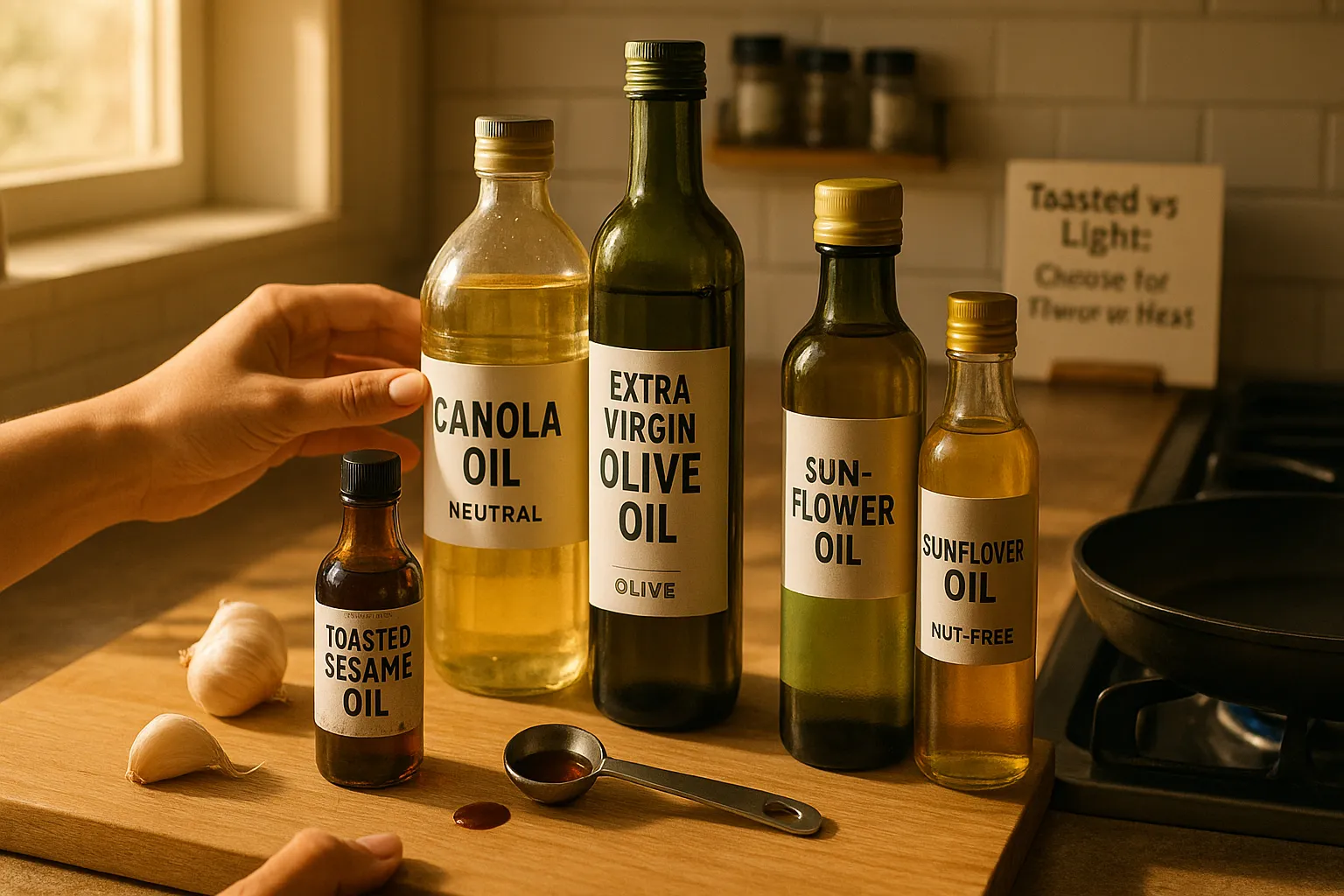
You can still get the toasty, nutty lift that sesame oil gives your food even when the bottle runs dry. Sesame oil, especially the dark, toasted kind, adds an immediate aroma that often defines a dish: stir-fries sing, dressings feel alive, marinades feel finished. But dietary restrictions, allergies, or pantry gaps mean you sometimes need an alternative. This guide shows which oils and flavoring tricks replace sesame oil’s role, when to use them, and how to mix them so your dish keeps its intended character. Expect practical swaps, exact ratios, and shopping tips that save dinner and protect the original flavor intent.
Why You Might Need A Substitute
Fact: People swap sesame oil for allergy, availability, or cooking needs. You may have a peanut or tree‑nut allergy that rules out sesame. Or a recipe calls for toasted sesame oil for finish, but your pantry only has neutral canola. Sometimes you need a higher smoke point for frying, and sesame oil, which smokes relatively low, is a poor match.
Context: Sesame oil comes in two main forms: toasted (dark, strong aroma) and light/untoasted (paler, neutral). Toasted oil gives flavor, while light oil behaves like a cooking oil. When you choose a substitute, decide whether you need flavor replication, heat suitability, or allergy-safe neutrality.
Quick follow-ups you might ask: Will olive oil work? Can I mimic the roast? Is there a nut-free substitute? The next sections answer those directly and show specific brands and techniques.
Quick Overview: Substitute Options At A Glance
Fact: You can group substitutes into flavor mimics, neutral cooking oils, and allergy-friendly options.
Flavor mimics (best for finishing): Toasted walnut oil, sesame seed paste diluted with neutral oil, or a small amount of toasted sunflower oil.
Neutral cooking oils (best for sautéing/frying): Canola, vegetable, refined avocado, or light olive oil.
Allergy-friendly and nut-free: Refined safflower oil, refined grapeseed oil, or rice bran oil.
Context: Use toasted substitutes sparingly: their aroma is concentrated. Use neutral oils by volume when heat is the priority. Allergy-friendly oils are usually refined to remove proteins that cause reactions, but always check labels.
If you want a quick pick: for flavor use toasted walnut or toasted sunflower: for heat use canola or refined avocado: for allergies use rice bran or refined safflower.
Top Substitutes And When To Use Them
Toasted Sesame Oil Alternatives
Fact: Toasted walnut oil and toasted sunflower oil give the closest routine aroma to toasted sesame oil. They share browned‑nutty notes.
Depth: Use toasted walnut oil in dressings, drizzles, and small amounts in stir-fries after cooking. Brands like La Tourangelle and Spectrum produce toasted walnut oil with strong fragrance. Toasted sunflower oil, while less common, mimics the roasted scent without the sesame protein, handy for allergy-safe kitchens. Note: walnut oil is a tree‑nut product: it’s not safe for people with nut allergies.
Light (Untoasted) Sesame Oil Alternatives
Fact: Light sesame oil behaves like vegetable oil and has higher smoke point than toasted oil. Good substitutes are canola, refined sunflower, and light olive oil.
Depth: Use these in recipes where sesame is a base frying medium or ingredient but not the flavor focal point. For 1:1 substitution, swap equal volumes. Brands: Spectrum and Trader Joe’s sell neutral oils suitable here.
Neutral Oils For High-Heat Cooking
Fact: Refined avocado, refined peanut, and rice bran oils have higher smoke points and work well for frying.
Depth: If you need to fry at 375–400°F, switch to refined avocado or rice bran oil. Peanut oil heats well, but it’s unsafe for peanut allergies. Rice bran oil is neutral, light, and often used in East Asian kitchens: it also has a mild nutty note that echoes sesame without being assertive.
Nut-Free And Allergy-Friendly Options
Fact: Safflower oil, refined grapeseed oil, and rice bran oil are reliable nut-free choices.
Depth: Choose refined versions: cold‑pressed oils may carry protein fragments that cause reactions. If you serve someone with sesame allergy, avoid tahini or any sesame‑based products entirely, labels sometimes hide sesame in spice blends. Brands like Kevala and La Tourangelle label allergies , but you still must read each package.
Flavor-Forward Alternatives For Dressings And Finishes
Fact: Toasted sesame’s role at the finish is aroma, not bulk. Toasted almond oil, browned butter (ghee if you need dairy removal), or a tiny squeeze of soy sauce plus neutral oil can mimic the savory, toasty finish.
Depth: For a sesame oil finish in a dressing, try 3 parts neutral oil plus 1 part toasted walnut or 1/2 part soy sauce and 1/2 part toasted sunflower oil. If you use soy sauce, reduce additional salt. For a vegan umami boost, finely grated roasted nori or 1/4 teaspoon of toasted sesame seeds steeped briefly in oil also adds the toasty note.
How To Substitute: Ratios, Techniques, And Timing
Adjusting Quantities And Balancing Flavor
Fact: Use less of a strong toasted substitute than you would sesame oil. Strong oils are concentrated so a little goes further.
Depth: If a recipe calls for 1 tablespoon of toasted sesame oil, start with 1/2 tablespoon of toasted walnut oil or toasted sunflower. Taste, then add up to full tablespoon if needed. For light sesame oil called at 1 tablespoon, use 1:1 with canola or refined sunflower. When you add soy sauce or fish sauce to replace flavor, use 1 teaspoon per tablespoon of sesame oil as a starting point, these add salt and umami, so adjust other salt accordingly.
When To Add During Cooking Versus At The End
Fact: Toasted sesame oil loses aroma with prolonged heat. Add it at the end.
Depth: Add toasted oils off-heat or in the last 30 seconds. Light sesame oil can go in at the start if the recipe requires oil for stir-frying. Neutral high-smoke oils go in early when you need heat. If you use a flavor mimic plus neutral oil, reserve the mimic for finish and cook with the neutral oil.
Combining Oils And Flavor Enhancers For Best Results
Fact: A blend often gives the best result, balance heat tolerance and aroma.
Depth: Technique example: For a stir-fry, heat 1 tablespoon refined avocado oil for high heat, finish with 1/2 teaspoon toasted walnut oil and 1 teaspoon low-sodium soy sauce. For a dressing, whisk 3 tablespoons olive oil, 1/2 tablespoon toasted sunflower oil, 1 teaspoon rice vinegar, 1 teaspoon honey, and a pinch of toasted sesame seeds ground finely. These combos mimic sesame’s complex profile without relying on the seed itself.
Cooking Performance And Nutritional Considerations
Smoke Point And Suitability For Sautéing, Frying, And Roasting
Fact: Smoke point matters: pick refined oils for high heat.
Depth: Typical smoke points (approximate): toasted sesame oil ~350°F: light sesame oil ~410°F: refined avocado ~520°F: rice bran ~450°F: canola ~400°F. Use refined avocado or rice bran for deep frying. Use light sesame or canola for pan-searing and sautéing. Toasted oils are for low-heat finishing: they will burn and turn bitter if overheated.
Nutritional Profile Comparisons And Allergy Notes
Fact: Most neutral oils are similar in calories and fat composition but vary in fatty acids.
Depth: Olive oil offers more monounsaturated fats and antioxidants. Canola and safflower provide a balance of mono- and polyunsaturated fats. Sesame oil contains sesamol and sesamin, antioxidants linked to modest health benefits, but you won’t lose essential nutrition by using other quality oils in typical cooking amounts. Allergy note: sesame is a top allergen in many countries: always check labels and cross-contamination warnings. If you cook for someone with sesame allergy, avoid oils labeled ‘may contain sesame’ or produced on shared lines.
Shopping, Storage, And Flavor Preservation Tips
How To Choose The Right Substitute In The Grocery Store
Fact: Read labels for ‘refined’ vs ‘cold‑pressed’ and for allergen statements.
Depth: For heat, buy refined avocado or rice bran. For finish, buy toasted walnut or toasted sunflower that list “toasted” on the label. If you need nut-free, buy oils explicitly labeled ‘nut‑free’ or ‘processed in a nut‑free facility’. Look for small bottles of toasted oils: they lose aroma over months once opened. Brands to watch: La Tourangelle, Spectrum, Kadoya (sesame oil itself), and Kevala. Also consider local Asian markets for small-batch rice bran oil.
Storing Oils To Maintain Freshness And Flavor
Fact: Store oils in a cool, dark place and use within recommended timeframes.
Depth: Keep oils away from heat and light. Refrigerate nut oils (walnut, almond) to extend life: they can last 3–6 months refrigerated. Neutral refined oils can sit in a pantry for 6–12 months. Toasted oils keep best in dark glass and should be used within 3–4 months after opening for peak aroma. If oil smells bitter or “off”, discard it, rancid oil spoils flavor and can upset digestion.
Shopping tip: Buy small bottles of specialty toasted oils and replace often. If you must substitute often, keep a small bottle of toasted walnut or toasted sunflower on hand and a larger bottle of rice bran for frying.
Practical warning: When cooking for people with allergies, do not trust memory, read labels each time. Cross-contact in shared kitchens happens very fast, and a tiny splash of sesame can trigger severe reactions.
To provide the best experiences, we use technologies like cookies to store and/or access device information. Consenting to these technologies will allow us to process data such as browsing behaviour or unique IDs on this site. Not consenting or withdrawing consent, may adversely affect certain features and functions.
Functional
Always active
The technical storage or access is strictly necessary for the legitimate purpose of enabling the use of a specific service explicitly requested by the subscriber or user, or for the sole purpose of carrying out the transmission of a communication over an electronic communications network.
Preferences
The technical storage or access is necessary for the legitimate purpose of storing preferences that are not requested by the subscriber or user.
Statistics
The technical storage or access that is used exclusively for statistical purposes.The technical storage or access that is used exclusively for anonymous statistical purposes. Without a subpoena, voluntary compliance on the part of your Internet Service Provider, or additional records from a third party, information stored or retrieved for this purpose alone cannot usually be used to identify you.
Marketing
The technical storage or access is required to create user profiles to send advertising, or to track the user on a website or across several websites for similar marketing purposes.