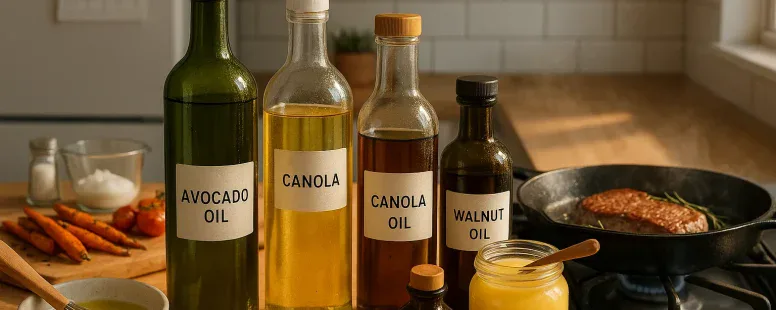
Olive oil is a kitchen staple, but you don’t always have it on hand, or its flavor doesn’t suit the dish. Whether your bottle turned rancid, you’re tackling a recipe that needs a neutral fat, or you need a higher smoke point for searing, good substitutes exist. This guide helps you pick the right alternative fast, so your pan stays hot, your dressing tastes bright, and your baked goods keep the right crumb. You’ll learn practical swaps, exact ratios, and flavor pairings that keep results consistent and delicious.
Why You Might Need an Olive Oil Substitute
Fact: You might need an olive oil substitute when flavor, smoke point, dietary restrictions, or availability demand it. Olive oil has a distinctive fruit-forward taste and a moderate smoke point (usually 375–410°F for extra virgin). That flavor can clash with certain Asian stir-fries or neutral baked goods. Likewise, its smoke point can limit high-heat searing.
Context and examples: If you’re cooking a steak at a restaurant-quality sear, chefs often pick oils like canola or grapeseed for their higher smoke points. If you follow a low-FODMAP diet or have an allergy to olives, you need alternatives like avocado oil or clarified butter (ghee). In Mediterranean dishes where the oil’s aroma is central, think bruschetta or finishing a salad, replacing olive oil changes the experience. But in pan-fried tofu or muffins, the swap can be invisible.
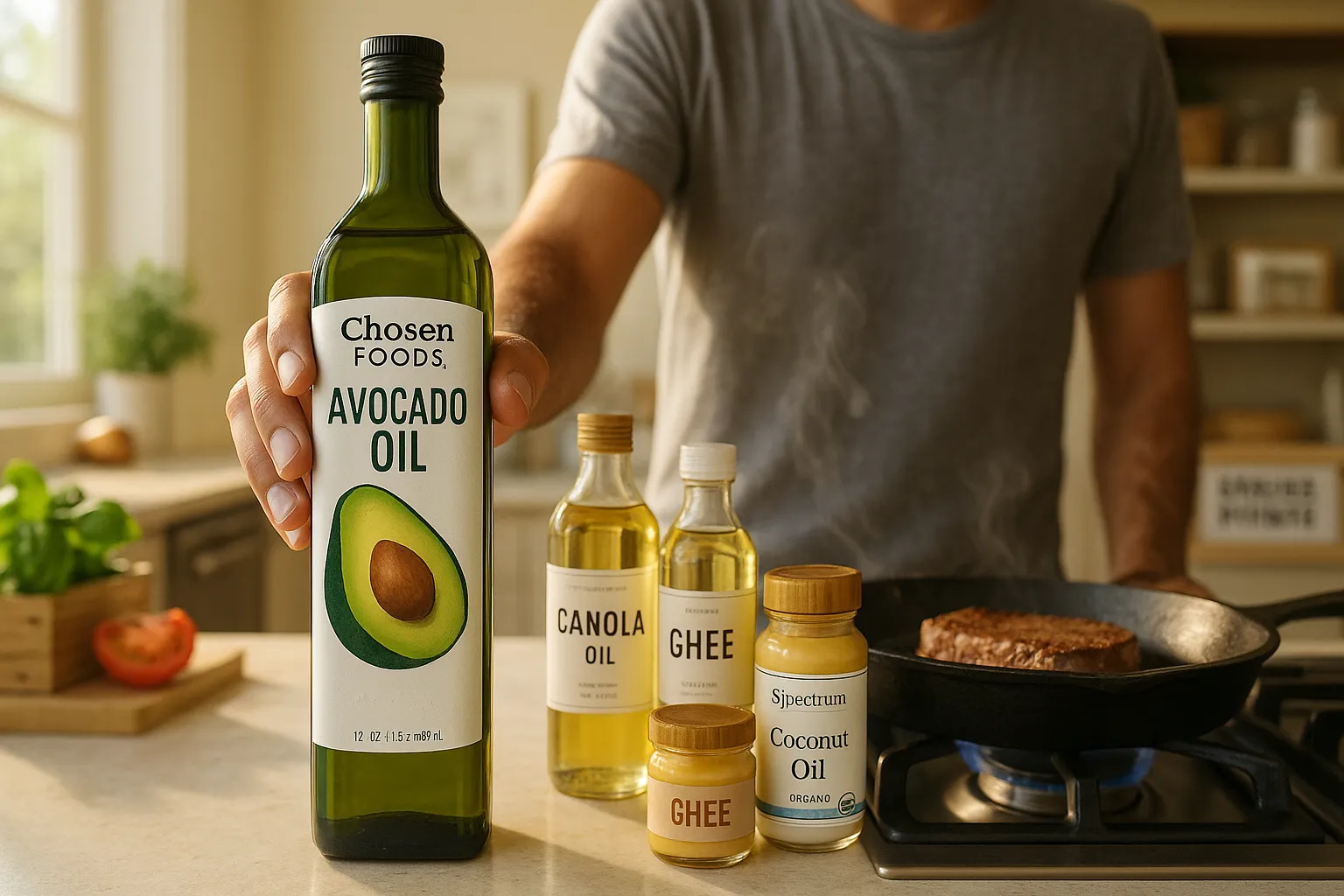
Named entities: Look to brands like Chosen Foods (avocado oil), Spectrum (organic coconut oil), and KerryGold (butter) as reliable store options. Grocery stores such as Whole Foods Market or Trader Joe’s often label smoke points on shelf tags, which helps quick comparison.
How to Choose the Right Substitute
Insight: Match the substitute to three things, flavor, smoke point, and nutrition, before swapping. Start by answering: Will the oil flavor matter? Will you cook at high heat? Do you need a low-saturated-fat option?
Steps to choose:
Check flavor: Use neutral oils (canola, sunflower) when you don’t want extra taste. Choose nut oils (walnut, almond) or sesame when a pronounced note improves the dish.
Check smoke point: For frying and searing, pick oils with smoke points above the target temperature. Avocado oil (>500°F refined) and refined peanut oil (~450°F) are good for high heat.
Check nutrition and allergies: If you want omega-3 benefits, walnut oil helps. For dairy-free cooking, avoid butter and ghee. If you have nut allergies, avoid almond or walnut oils.
Practical tip: When in doubt, test a teaspoon in a small pan at target heat. Watch for smoking or odd aromas. That quick test prevents ruined batches.
Follow-ups you might ask: What about price and pantry life? Oils like olive and avocado last months unopened, but nut oils oxidize faster and should be refrigerated after opening.
Top Substitutes Categorized by Use
Fact: Different cooking tasks require different substitutes. Below are clear categories with specific recommendations, use cases, and small recipe notes.
Flavor, Smoke Point, and Nutrition Comparison
Insight: Compare substitutes on three axes, flavor, smoke point, nutrition, to pick the best fit quickly.
Quick chart (described):
Olive oil (extra virgin): flavor = fruity/peppery, smoke point = 375–410°F, nutrition = high monounsaturated fats, polyphenols.
Avocado oil (refined): flavor = mild, smoke point = ~520°F, nutrition = high monounsaturated fats.
Butter/ghee: flavor = rich/butterscotch, smoke point ghee = ~485°F, nutrition = saturated fats: ghee removes milk solids for higher heat.
Coconut oil: flavor = coconut (virgin) or neutral (refined), smoke point = 350–450°F, nutrition = high saturated fat.
Nut oils (walnut, almond): flavor = nutty, smoke point = low to moderate, nutrition = omega-3s (walnut).
Practical note: If a recipe lists extra virgin olive oil for flavor, don’t replace it with coconut or canola unless you’re okay changing the taste.
Practical Substitution Ratios and Technique Tips
Fact: Most liquid oil substitutes use a 1:1 ratio, but solid fats and butter require small adjustment. Measure by weight when precision matters.
Common swaps:
Liquid oils (canola, avocado, grapeseed): 1 cup substitute = 1 cup olive oil.
Butter (melted): Use 3/4 cup butter for 1 cup olive oil (by volume).
Coconut oil (melted): 1:1 works for most baking, expect slight flavor change.
Applesauce or mashed banana (baking): Replace up to 50–75% of oil with pureed fruit: reduce sugar slightly if fruit is sweet.
Technique tips:
When searing, preheat pan and add oil just before food hits the pan to reduce smoking.
For vinaigrettes, blend oil slowly into acid to form a stable emulsion: a neutral oil gives a silkier mouthfeel than olive oil’s peppery texture.
Warm solid fats to liquid state before measuring to keep ratios accurate.
Mistakes to avoid: Don’t assume every oil behaves the same under heat. Use oil with a higher smoke point than your cooking temperature.
Flavor Pairing Examples and Recipe-Specific Advice
Insight: Match oil flavor to recipe theme. Use examples to guide swaps.
Examples and pairings:
Italian tomato salad that calls for extra virgin olive oil: Use a high-quality light olive oil if you want milder flavor: avoid coconut.
Stir-fry with soy and ginger: Use peanut or refined avocado oil for high heat and complementary flavor.
Lemon vinaigrette for arugula: Use mild avocado or grapeseed to let lemon shine: walnut oil will add a toasty note if you want complexity.
Chocolate cake: Use neutral vegetable oil for moist crumb: melted butter adds depth and brown-sugar notes.
Recipe-specific tip: For pesto, keep strong oil character, use extra virgin olive oil or a portion of it mixed with neutral oil to lower intensity without losing aroma.
Common Mistakes When Replacing Olive Oil And How To Avoid Them
Fact: The top mistakes are ignoring smoke point, mismatching flavor, and forgetting storage differences. Avoid them by checking three things before you swap: smoke point, flavor intensity, and shelf life.
Mistakes and fixes:
Mistake: Using virgin coconut oil for high-heat searing. Fix: Use refined avocado or peanut oil instead.
Mistake: Substituting nut oils without noting allergies. Fix: Ask guests or choose a neutral oil.
Mistake: Leaving walnut oil at room temperature. Fix: Refrigerate nut oils and label them with an open date.
Vulnerable moment: I once used walnut oil for frying thinking “it’d be fine”: the oil smoked and tasted bitter. I learned to reserve nut oils for finishing and dressings. You’ll sometimes need to test and adapt recipes: that’s normal.
Call to action: Try one swap this week, make a vinaigrette with avocado oil or roast vegetables with grapeseed, and note the flavor change. Small experiments teach faster than rules.
To provide the best experiences, we use technologies like cookies to store and/or access device information. Consenting to these technologies will allow us to process data such as browsing behaviour or unique IDs on this site. Not consenting or withdrawing consent, may adversely affect certain features and functions.
Functional
Always active
The technical storage or access is strictly necessary for the legitimate purpose of enabling the use of a specific service explicitly requested by the subscriber or user, or for the sole purpose of carrying out the transmission of a communication over an electronic communications network.
Preferences
The technical storage or access is necessary for the legitimate purpose of storing preferences that are not requested by the subscriber or user.
Statistics
The technical storage or access that is used exclusively for statistical purposes.The technical storage or access that is used exclusively for anonymous statistical purposes. Without a subpoena, voluntary compliance on the part of your Internet Service Provider, or additional records from a third party, information stored or retrieved for this purpose alone cannot usually be used to identify you.
Marketing
The technical storage or access is required to create user profiles to send advertising, or to track the user on a website or across several websites for similar marketing purposes.