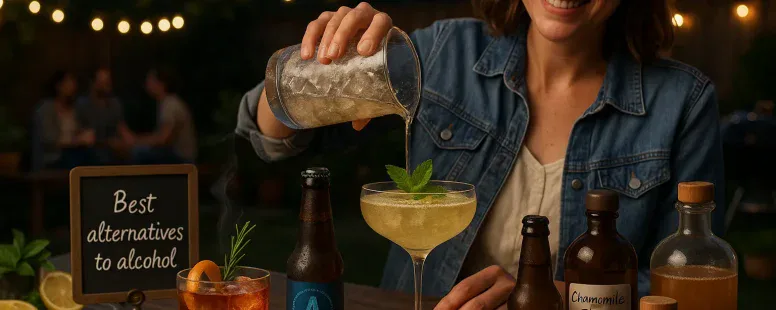
You can enjoy bright, satisfying drinks without the buzz. Choosing alternatives to alcohol can improve sleep, reduce calories, and keep your social life intact, all while giving your palate something interesting. Picture the fizz of a well-made sparkling botanical on your tongue, or the warm spice of a functional elixir after a long day. Those sensations can replace the ritual of drinking alcohol, and often deliver benefits you didn’t expect: clearer mornings, steadier mood, and new flavor discoveries. This guide shows practical options, tasting tips, and real recipes so you can pick alternatives that fit your goals and social routines.
Why Choose Alcohol Alternatives?
Fact: Choosing alcohol alternatives lowers your short- and long-term health risks. Alcohol raises blood pressure, impacts sleep, and adds empty calories: cutting back reduces these harms. The CDC links heavy drinking to liver disease and cancer risk, and even moderate drinking affects sleep cycles.
Beyond health, alternatives solve social needs. You keep rituals like toasting and sipping while avoiding impaired judgment. People choose substitutes for medical reasons, pregnancy, medication interactions, or recovery. Others want better mornings or weight control.
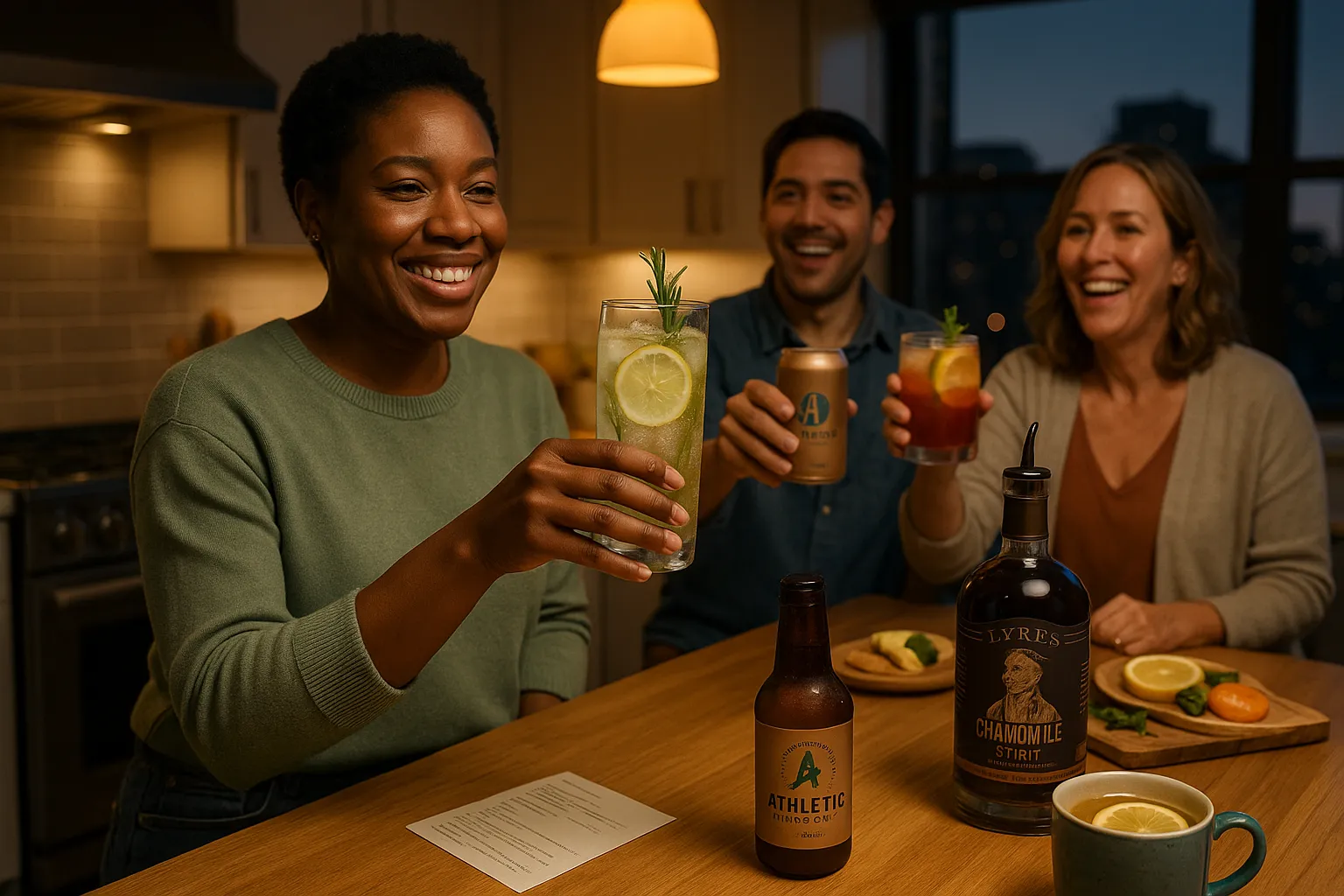
Consider your goal first. If you want better sleep, a chamomile-based tonic helps more than a fizzy soda. If you want to join friends without drinking, mocktails or nonalcoholic beers mimic ritual and taste. Name brands like Athletic Brewing (nonalcoholic beer) and Lyre’s (alcohol-free spirits) give you familiar textures. Decide what you gain (sleep, clarity, weight loss, sobriety) and pick options that support it.
Types Of Nonalcoholic Beverages
Fact: A wide range of nonalcoholic drinks exists, each filling different roles that booze used to. Below you’ll see types, taste notes, and practical uses.
text
Start with the two broad categories: fermented but low- or no-alcohol (like kombucha and NA beer) and crafted nonfermented beverages (botanical tonics, adaptogen blends). Each group supplies mouthfeel, bitterness, acidity, or sweetness to replace familiar cues from alcohol.
Nonalcoholic Beer And Wine: What To Expect
Fact: Nonalcoholic beer and wine often contain 0.0–0.5% ABV and mimic many sensory cues of alcoholic versions. Expect malt body, tannin-like bitterness in red NA wines, and carbonation in many beers. Brands such as Athletic Brewing, Heineken 0.0, and Ariel (NA wine) invest in flavor engineering. Taste-wise, some NA beers can be lighter and less warming: try several to find the one that matches your memory of a favorite pint.
Botanical And Functional Sparkling Drinks
Fact: Botanical sparkling drinks use herbs, citrus, and bittering agents to create adult flavors. These drinks often replace cocktail complexity. Fever-Tree, Q Mixers, and brands like Ceder’s (botanical spirit alternative) craft mixers that pair well with food. Use them when you want a crisp, refined sip with low sugar.
Adaptogenic, Herbal, And Mushroom Elixirs
Fact: Adaptogens and mushroom blends aim to reduce stress and support resilience. Brands such as Four Sigmatic (mushroom coffee, elixirs) and Recess (l-theanine drinks) combine lion’s mane, ashwagandha, or l-theanine with pleasant flavors. Expect earthy, sometimes bitter notes: many include citrus to brighten the profile. These drinks can help with relaxation without sedation.
Low‑Alcohol And Alcohol‑Free Cocktail Mixes (Mocktails)
Fact: Mocktail mixers give you structure. You get acid, sweetness, and aromatics without ethanol. Look for products with clear ingredient lists, cane sugar, citrus, bitters, and plant distillates. You can also reduce alcohol content by substituting a nonalcoholic spirit for the alcoholic component in classic recipes.
Kombucha, Fermented Tonics, And Shrubs
Fact: Fermented tonics like kombucha and shrubs (vinegar-based syrups) deliver tang and funk similar to sour cocktails. Kombucha brands such as GT’s and Health-Ade provide probiotic benefits but vary in sugar and acidity. Shrubs cut through fatty food and pair well with sparkling water for a refreshing, grown-up drink.
Sober Substitutes For Social Settings
Fact: The best sober substitute preserves ritual and social ease. Use a drink that looks and feels familiar so you avoid questions or pressure.
At bars, order a nonalcoholic stout or a ‘mocktail on the rocks’ with citrus and bitters. At dinner parties bring a sparkling botanical in a wine glass: people accept it without fuss. If you’re in recovery, be upfront when you want to be: otherwise, use subtlety, pour a tonic with lime into a coupe glass.
Tell a short truth if needed: “I’m not drinking tonight,” is enough. Many friends will respect that. Prepare a few standard orders so you don’t stall: NA beer, sparkling water with a twist, or a house mocktail. That keeps you confident and the conversation flowing.
Real example: Sarah, who reduces alcohol for health, brings herbal spritzers to gatherings. Guests love the flavors and ask for recipes, her choice became a social asset. You can do the same, and sometimes your substitutes spark new traditions.
How To Build A Great Mocktail
Fact: A great mocktail balances acid, sweetness, texture, and aromatics. Start with that formula and you’ll rarely miss alcohol.
text
Make the balance clear: acid (citrus, vinegar), sweet (syrup, fruit), body (juice, tea, nonalcoholic spirit), and finish (bitters, herbs). Use chilled glassware and proper ice to control dilution.
Simple Mocktail Recipes For Gatherings
Fact: You can scale mocktail recipes easily. Here are three reliable builds:
Citrus Shrub Spritz: 1 oz apple shrub, 3 oz sparkling water, 1 oz orange juice, garnish with mint. Mix shrub and juice, top with ice and bubbles.
Herbal Ginger Fizz: 1 oz ginger syrup, 0.75 oz lemon, 3 oz botanical soda, sprig of rosemary. Shake syrup and lemon, strain over ice, top with soda.
Tea Negroni (alcohol-free): 1 oz strong black tea, 1 oz nonalcoholic bitter aperitif, 1 oz sweet vermouth substitute (pomegranate molasses + water). Stir with ice, garnish with orange peel.
Making Drinks That Feel Special Without Alcohol
Fact: Presentation creates perceived value. Use coupe glasses, smoked rosemary, or a sugared rim to elevate a drink. Warm spices (clove, cinnamon) can mimic the warmth of spirits without alcohol. Serve on a tray, add a small bite, people will treat the moment as special.
Tip: Keep simple syrups at home (ginger, lavender) and a stash of high-quality bitters (many are nonalcoholic) to layer flavor.
Health, Safety, And Practical Considerations
Fact: Not all alternatives are safe for every person. Check interactions with medications and medical conditions.
Choosing Alternatives Based On Goals (Sleep, Weight, Recovery)
Fact: Match your drink to your goal. For sleep, avoid sugar and caffeine: choose chamomile or tart cherry-based drinks. For weight control, choose low-calorie options like plain sparkling water with citrus or zero-calorie botanical sodas. For recovery from alcohol use disorder, choose alcohol-free branded options and avoid anything with trace alcohol if you’re sensitive, some NA beers contain up to 0.5% ABV.
If you’re using alternatives to reduce alcohol-related health risks, track changes: sleep quality, weight, blood pressure. These metrics will show progress and keep you motivated.
Interactions, Allergens, And Legal Notes (CBD, Herbal Supplements)
Fact: Herbal and CBD products can interact with drugs. CBD affects how the liver metabolizes certain medications. Herbs like kava can harm the liver, especially with alcohol or other drugs. Always check with a clinician or pharmacist before using adaptogens or CBD regularly.
Labels matter. Read ingredient lists for allergens (soy, sulfites in NA wine), and if you’re subject to workplace drug testing, verify CBD product testing and THC levels. Regulatory status varies: the FDA regulates food products but not many herbal claims, so buy from reputable brands with third-party testing.
Where To Buy And How To Taste Test Alternatives
Fact: You can find quality alternatives at specialty shops, mainstream grocery stores, and online marketplaces. Look for shelf-stable brands like Lyre’s, Athletic Brewing, Four Sigmatic, and smaller local producers at farmers markets.
Taste testing approach: do blind tastings with friends or alone. Use water as a palate cleanser. Evaluate aroma, body, acidity, and finish. Score each drink on a simple 1–5 scale and note what role it could play (aperitif, dinner sip, after-dinner).
Try mini-pairings: test a nonalcoholic stout with grilled food, a botanical soda with oysters, or an adaptogen elixir after a stressful day. Over time you’ll learn which alternatives replace which alcoholic drinks best.
Tips For Sticking With Alternatives Long Term
Fact: Long-term change needs routines, triggers, and rewards. Replace habit loops tied to alcohol with new rituals.
Set simple rules: limit alcohol to weekends, allocate alcohol-free days, or replace the first drink with water or a mocktail. Keep substitutes visible, stock your fridge with favorite NA beers and a jar of fresh garnishes. Track wins: better sleep, clearer mood, weight loss. Those small proofs keep you going.
Create social scripts to avoid pressure, like “I’m off alcohol for a while” or offering to bring a special nonalcoholic drink. Build community by joining sober-curious groups or following creators who share recipes and tips.
Honest note: You will face slip-ups. That’s normal. Identify triggers, stress, boredom, certain friends, and plan alternatives like a walk, a call, or a warming tea. Over time your new choices will feel as natural as old ones, and you’ll gain freedom rather than feel deprived.
To provide the best experiences, we use technologies like cookies to store and/or access device information. Consenting to these technologies will allow us to process data such as browsing behaviour or unique IDs on this site. Not consenting or withdrawing consent, may adversely affect certain features and functions.
Functional
Always active
The technical storage or access is strictly necessary for the legitimate purpose of enabling the use of a specific service explicitly requested by the subscriber or user, or for the sole purpose of carrying out the transmission of a communication over an electronic communications network.
Preferences
The technical storage or access is necessary for the legitimate purpose of storing preferences that are not requested by the subscriber or user.
Statistics
The technical storage or access that is used exclusively for statistical purposes.The technical storage or access that is used exclusively for anonymous statistical purposes. Without a subpoena, voluntary compliance on the part of your Internet Service Provider, or additional records from a third party, information stored or retrieved for this purpose alone cannot usually be used to identify you.
Marketing
The technical storage or access is required to create user profiles to send advertising, or to track the user on a website or across several websites for similar marketing purposes.