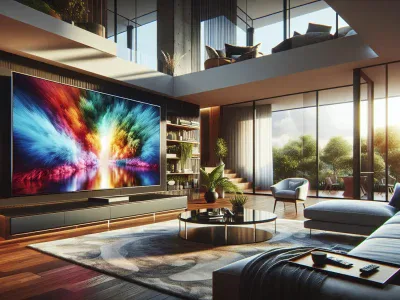
Picture sinking into your couch as a stunning display bursts to life, colors so vivid they almost leap off the screen. Choosing the right smart TV isn’t just about size or price—it’s about unlocking a world of entertainment tailored to your lifestyle. LG and Samsung, two giants in the smart TV arena, the decision can feel like navigating a maze of tech specs and features.
But what if you could cut through the noise and discover which brand truly elevates your viewing experience? From sleek design to intuitive interfaces and picture-perfect clarity, each offers surprising perks that might just change how you watch TV forever. Ready to find out which smart TV fits your world best? Let’s jump into the battle of LG versus Samsung and uncover what makes each a standout choice.
Overview of LG and Samsung Smart TVs
Both LG and Samsung dominate the smart TV market, each bringing distinct strengths and innovations that impact your viewing experience. Understanding their brand reputation and comparing popular models sharpens your choice between them.
Brand Reputation and Market Presence
LG’s reputation leans heavily on its mastery of OLED technology, offering deep blacks and vibrant colors that woo cinephiles and gamers alike. Samsung counters with QLED displays, enhancing brightness and color volume, which excel in well-lit rooms. Both have global market presence; LG holds about 18% of the TV market share, while Samsung leads with 32% as reported by Statista in 2023. LG’s commitment to webOS delivers a straightforward, user-friendly interface, but Samsung’s Tizen OS boasts a wider app ecosystem and regular updates. If you value picture quality in a darker environment, LG might suit you better, whereas Samsung fits better for bright rooms and app variety. These distinctions often create passionate debates among reviewers and users, yet both brands score high in reliability and customer satisfaction surveys from J.D. Power.
Popular Models Comparison
LG’s C2 and G2 series showcase its OLED prowess, promising cinema-quality visuals and superb contrast. Samsung’s counterpart, the QN90B Neo QLED, offers impressive HDR performance with quantum mini-LEDs that boost detail clarity. Notably, LG’s models offer 120Hz refresh rates tailored for gaming, supported by NVIDIA G-SYNC, while Samsung provides excellent motion handling and upscaling algorithms. But, if you’re a sports enthusiast, Samsung’s superior brightness and anti-reflective screen often enhance fast-paced action scenes better. Could you sacrifice luminous intensity for deeper blacks, or does a more versatile brightness range captivate you? In this realm, it comes down to your environment and usage habits. Both brands include voice control via Google Assistant and Alexa, but Samsung adds its SmartThings platform, integrating home devices smoothly.
Feature
LG C2 OLED Series
Samsung QN90B Neo QLED
Display Type
OLED
QLED (Mini-LED)
Refresh Rate
120Hz
120Hz
HDR Support
Dolby Vision, HDR10
HDR10+, HDR10
Gaming Features
G-SYNC Compatible, VRR
FreeSync Premium Pro
Operating System
webOS
Tizen
Market Price (approx.)
$1,500 (55-inch)
$1,600 (55-inch)
What drives your preference? Innovations and specs form part of the story, but user experience, ecosystem integration, and content preferences weigh heavily. Weighing these specifics encourages a smarter investment aligned with your lifestyle and viewing habits.
Design and Build Quality
Design and build quality form the first tangible impression you get from a smart TV. LG and Samsung each bring distinctive strengths that shape your living room’s look and feel while promising lasting performance.
Aesthetic Differences
LG tends to emphasize minimalist, sleek designs with ultra-thin bezels that blend seamlessly with modern interiors. Their OLED models, such as the LG G2, often feature gallery-style mounting options that let you hang the TV flush on your wall, creating a refined, art-like presence. Samsung’s approach favors bold, sophisticated designs with subtle curves and metallic finishes that add a touch of luxury. The QN90B Neo QLED, for instance, combines slim borders with a sleek stand that balances elegance and stability.
Does a TV’s look truly impact your viewing enjoyment, or is it a superficial choice? If your living space reflects your personality and style, these design elements influence the atmosphere and immerse you deeper into content. Also, consider if you prefer wall-mounting or stand placement, since LG’s thinner profile suits wall mounts, whereas Samsung’s sturdy stands offer versatile positioning. Both brands leverage premium materials and design insights, ensuring your TV complements your home.
Durability and Materials
Durability depends on the materials used and how manufacturers execute build quality. LG employs reinforced aluminum frames and high-grade plastics that resist wear and slips, contributing to a robust yet lightweight unit. Samsung incorporates metal and tempered glass components, often with a matte finish that minimizes fingerprints and scratches. Both brands subject their products to rigorous testing for heat, humidity, and impact resistance.
Real-world durability matters when you consider kids or pets around, or if you rearrange furniture frequently. While LG’s materials foster a sleeker profile, Samsung’s build tends to feel rock-solid, providing confidence in longevity. Neither compromises on safety; both scanners conform to international standards like IEC 62368-1 for electrical safety and UL certification.
Eventually, your choice reflects where durability weighs more: LG for a refined, modern aesthetic with reliable build quality, or Samsung for bolder design combined with robust construction designed for high-traffic environments. Neither sacrifices function for form, so your living room can stay stylish and enduring, regardless of which smart TV you choose.
Display Technology and Picture Quality
Choosing between LG and Samsung starts with understanding how their display technologies shape your viewing experience. Image quality, color accuracy, brightness, and resolution all play crucial roles, influencing everything from movie nights to gaming sessions.
OLED vs QLED Technologies
LG’s OLED technology uses organic compounds that emit light individually, delivering perfect blacks by turning off pixels completely. Picture watching a night scene in a film where shadows deepen and stars pop vividly without any glow around darker areas—LG makes that possible. Conversely, Samsung’s QLED relies on quantum dots illuminated by LED backlights, resulting in brighter images ideal for sunlit rooms. You’ve probably noticed how some TVs struggle with glare; Samsung’s QLED combats this with higher peak brightness, making scenes clear even during daylight. But, OLED’s self-emissive pixels offer unmatched contrast, while QLED excels in brightness and durability. So, if you prefer cinematic depth, OLED fits best, but if you watch mostly in bright spaces, Samsung’s QLED suits you better.
Color Accuracy and Brightness
Color accuracy affects how true-to-life your content appears. LG’s OLEDs offer nearly perfect color reproduction with deep blacks enhancing saturation, thanks to its infinite contrast ratio. Samsung’s QLEDs, while slightly less exact in color fidelity, shine—literally—with peak brightness levels sometimes reaching 2000 nits in high-end models, outperforming OLEDs that range mostly between 600 and 800 nits. This brightness advantage ensures vivid and punchy colors in HDR content. Real-world tests by RTINGS.com confirm Samsung’s QLED models handle bright outdoor scenes impressively, but LG provides a cozy cinema-like ambiance that many viewers appreciate for streaming movies or playing games late at night.
Viewing Angles and Resolution
Viewing angles define how well the picture holds up when you’re off-center. LG’s OLED screens maintain consistent color and brightness even at wide angles, which means family or friends sitting across your living room won’t miss details. Samsung’s QLEDs traditionally lose color accuracy and contrast when viewed from the side, although newer models with anti-reflective layers reduce this issue notably. Both brands offer 4K resolution as standard in most models, with some pushing into 8K territory for those craving cutting-edge tech. Remember, resolution alone isn’t everything; how the display handles that resolution’s data under different lighting conditions matters too.
Each display technology type connects to specific viewing habits and environments. Ask yourself: Do you often watch TV in a dim room or bright space? Is ultra-deep black important to you? Answer those, and you’re closer to picking the right smart TV brand for your needs.
Smart Features and User Interface
Choosing between LG and Samsung goes beyond the screen — the smart features and user interfaces shape how easily you access entertainment. Both brands load their TVs with sophisticated systems, yet they deliver distinct experiences that affect daily use.
Operating System and App Availability
LG’s webOS centers on simplicity and speed. Its card-based interface lets you jump between apps like Netflix, Hulu, or Disney+ with minimal fuss. Thanks to a rich app store, you get thousands of streaming options, games, and utilities. For instance, webOS supports popular apps like Apple TV and Amazon Prime Video seamlessly. You can customize the launcher bar for quick access to preferred services — perfect when you’re eager to binge-watch after a long day. But, some niche apps may be missing compared to other ecosystems, requiring occasional workarounds.
Samsung employs Tizen OS, known for its robust multitasking and smart hub integration. Its interface balances aesthetics with functionality, presenting personalized content recommendations right on the home screen. The app library is expansive, including specialized apps such as HBO Max or YouTube TV. Tizen’s ecosystem tends to sync well with Samsung phones and gaming consoles, creating a smooth tech environment if you own Samsung devices. Conversely, the learning curve for navigation might feel steeper initially, demanding patience to master.
Both systems support popular streaming protocols and cast functionalities, but choosing between webOS and Tizen often boils down to your preferred ecosystem and comfort with interface navigation.
Voice Control and Smart Home Integration
LG’s ThinQ AI pushes voice control beyond simple commands, letting you search content, adjust settings, and even control compatible smart home devices like lights and thermostats. It integrates with Google Assistant and Amazon Alexa, expanding the scope of smart home control. For example, you could say, “Turn off the living room lights,” right from your couch while watching a movie. This level of integration fosters a seamless home ecosystem, though response times might vary slightly based on network conditions.
Samsung’s Bixby voice assistant aims to deliver conversational intelligence, enabling you to navigate the TV hands-free and control a wider range of Samsung SmartThings appliances. Its deep integration with Samsung’s IoT platform means the TV acts as a central hub for managing refrigerators, washers, and even air conditioners. If your home is heavily invested in Samsung tech, the voice commands become intuitive and context-aware. But, Bixby sometimes struggles with non-native accents or complex queries, which can be momentarily frustrating.
Both brands also allow voice control through external devices like Google Nest or Amazon Echo, making it easier to blend TV control into daily routines. It’s worth considering which ecosystem your current or planned smart devices belong to when evaluating these options.
Feature
LG webOS
Samsung Tizen
Interface Style
Card-based, minimalist
Personalized smart hub
App Availability
Thousands, including Apple TV
Extensive, includes HBO Max
Voice Assistant
ThinQ AI, Google Assistant, Alexa
Bixby, Google Assistant, Alexa
Smart Home Ecosystem
Google, Amazon integrations
Samsung SmartThings platform
Choosing the right smart TV blends interface preferences with your ecosystem investments. If ease and speed feel essential, webOS shines; if integration with diverse Samsung appliances excites you, Tizen scores high in versatility. Reflect on how you’ll interact with your TV daily, because the smarter setup you choose, the smoother your entertainment flow becomes.
Performance and Speed
Performance and speed define how smoothly your smart TV handles apps, streaming, and navigation. Choosing between LG and Samsung often comes down to which offers quicker response times and more powerful processing.
Processing Power
Processing power drives your TV’s ability to manage high-resolution content and multitask without lag. LG’s α9 Gen 5 AI Processor, found in models like the C2 and G2 series, integrates deep learning algorithms to optimize picture quality dynamically, reducing noise and enhancing clarity even in fast scenes. Samsung counters with its Neo Quantum Processor 4K or 8K, depending on the model, which combines AI upscaling with real-time scene analysis to boost brightness and color accuracy. In practice, LG’s processor excels with smoother color gradients in OLED displays, particularly noticeable during fast action sequences in movies or games. Samsung’s chip shines in brightly lit rooms, maintaining image sharpness when the environment is challenging. If you prefer gaming or rapid app switching, consider Samsung’s slight advantage in handling multiple tasks simultaneously, thanks to more generous RAM allocation on models like the QN90B.
User Experience and Responsiveness
User experience hinges on responsiveness and interface fluidity. LG’s webOS reacts swiftly to remote commands, with minimal buffering when launching streaming apps like Netflix or Disney+. It feels intuitive, with card-based navigation that cuts clutter and helps you get to your content faster. Samsung’s Tizen OS provides a robust smart hub integrating smart home controls, voice assistants, and quick access menus. It excels in multitasking, enabling you to search content while watching TV without stutter. But, some users note occasional delays in app updates or third-party integration. If you’re juggling between multiple streaming platforms or smart home devices, Samsung’s ecosystem might offer a smoother ride. On the other hand, LG’s simpler interface suits those valuing seamlessness over bells and whistles. Both brands use voice control—LG ThinQ and Samsung Bixby—with varying results depending on your smart home setup and spoken accents.
Try imagining your typical usage: do you switch apps frequently during a show, or do you mostly binge-watch? Pokémon fans, for instance, may prefer LG’s ability to maintain vivid colors during rapid animations, while sports enthusiasts in sunlit rooms could lean towards the high refresh rates and brightness Samsung’s Neo QLED provides. Both brands deliver top-tier performance, yet your lifestyle nuances will guide the ideal pick.
Brand
Processor
Strength
Notable Model
LG
α9 Gen 5 AI Processor
AI-driven picture enhancements
C2, G2 OLED
Samsung
Neo Quantum Processor
Real-time upscaling and brightness
QN90B Neo QLED, QN900B 8K
Which performs best eventually depends on testing both systems in your home environment, factoring in room lighting, content preferences, and ecosystem compatibility. Performance can feel subjective, but knowing the specs and use cases help clarify which smart TV you’ll enjoy long-term.
Sound Quality and Audio Features
Sound quality defines your viewing experience as much as the picture does. Both LG and Samsung integrate advanced audio technologies in their smart TVs, yet each brand takes a distinct approach to ensure immersive soundscapes that complement their visual excellence.
Built-in Speaker Performance
LG equips many of its OLED models with Dolby Atmos support combined with upward-firing speakers, delivering a three-dimensional audio effect that places you in the center of the action. You’ve likely noticed how these TVs recreate subtle nuances, like the rustling of leaves or distant thunder, with crisp clarity and depth. On the other hand, Samsung pairs its QLED and Neo QLED TVs with Object Tracking Sound technology, which tracks on-screen movement to project sound dynamically, mimicking real-world directionality. For example, in a soccer match, the cheering fans and commentary shift fluidly as the camera follows the ball, drawing you closer into the stadium’s excitement.
Even though these strengths, built-in speakers on both brands often don’t match the power of dedicated audio systems. If you rarely use external speakers, Samsung’s emphasis on spatial sound offers a slight edge in dynamic environments, whereas LG tends to shine in delivering richer bass and clearer dialogue in standard viewing scenarios.
Support for External Audio Devices
Pairing your smart TV with external audio devices takes the auditory experience to another level. Both LG and Samsung support a wide range of soundbars, AV receivers, and wireless speakers via HDMI ARC/eARC, Bluetooth, and optical outputs. LG’s compatibility with Dolby Atmos-enabled soundbars offers you theater-like surround sound that fills your room with precise audio layers. In contrast, Samsung’s Multi-Channel Amplifier technology provides powerful output when connected to compatible soundbars, enhancing volume without distortion.
If you’re considering integrating your smart TV into an existing smart home ecosystem, Samsung’s TVs often coordinate better with Samsung-branded audio devices via proprietary features like Q-Symphony, which enables simultaneous use of TV speakers and soundbar for a fuller sound. LG counters this by offering seamless pairing through Bluetooth and AI Sound Pro, which automatically adjusts audio settings based on the content type.
To choose wisely, consider your room size and primary use cases: a smaller room with casual viewing might suffice with LG’s built-in speakers, while a larger room or devoted home theater setup benefits greatly from Samsung’s flexible external audio support.
Feature
LG Smart TVs
Samsung Smart TVs
Built-in Speaker Technology
Dolby Atmos, upward-firing speakers
Object Tracking Sound, Multi-Channel Amp
External Audio Connectivity
HDMI ARC/eARC, Bluetooth, Optical
HDMI ARC/eARC, Bluetooth, Optical
Smart Sound Features
AI Sound Pro, Dolby Atmos support
Q-Symphony, adaptive sound profiles
Ideal Use Case
Rich bass, clear dialogue for casual/home use
Dynamic spatial audio for immersive setups
Understanding these audio features can transform your viewing occasion, whether it’s savoring dialogue-rich dramas or cheering during a live sports event. You might prefer LG for its natural-sounding audio depth or lean toward Samsung’s cutting-edge object tracking sound for more lively scenes. Exploring sound in action, via a demo or reviews, helps you judge which audio style resonates with your tastes and living space acoustics. With years of continual innovation, both brands promise to keep elevating the sound experience for audiences like yourself.
Pricing and Value for Money
Smart TV pricing often reflects the features and innovation packed into the device, making it vital to assess cost against what it delivers. LG and Samsung compete fiercely in this arena, offering models that target different budgets while promising robust performance.
Cost Comparison
LG smart TVs typically offer OLED technology at prices ranging from $1,200 to $3,000, depending on size and series, such as the popular C2 or G2 models. Samsung’s QLED and Neo QLED sets balance brightness and tech enhancements with prices mostly between $900 and $2,800, with the QN90B model standing out. Both brands include mid-range options under $1,000, perfect for budget-conscious buyers seeking solid smart features and decent picture quality. For example, a 55-inch LG C2 might sit near $1,400, while the Samsung QN90B hovers slightly above $1,500. When considering pricing, look beyond the upfront cost to long-term satisfaction—features like screen longevity, smart platform updates, and potential repair expenses play essential roles. Do you prioritize cutting-edge OLED for richer contrast even though higher prices, or does Samsung’s bright QLED offer better value in your usually well-lit living room?
Brand
Technology
Model Example
Price Range
Screen Size Example
LG
OLED
C2, G2
$1,200-$3,000
55″-77″
Samsung
QLED/Neo QLED
QN90B
$900-$2,800
50″-75″
Warranty and Customer Support
LG provides a standard one-year warranty on smart TVs, covering repairs and parts, often extendable through purchase. Samsung matches this with a one-year limited warranty but offers more comprehensive customer care programs in select regions, including in-home repair services and hotline support. User reports commonly point to responsive Samsung customer service but praise LG’s straightforward warranty claim process. When investing in a smart TV, your consideration of customer support quality ensures fewer headaches should technical issues arise. Picture buying a stunning LG OLED, then months later facing panel problems—will the warranty make the repair seamless or complicated? Samsung’s extra support channels may offer peace of mind, especially for users new to smart TV ecosystems or those valuing quick fixes. Both brands maintain online troubleshooting tools and firmware updates, helping you maintain peak performance without service visits.
Which warranty structure fits your lifestyle best depends on how you weigh risk and convenience: is it worth paying a bit more for added service coverage, or prefer the baseline warranty with reliable self-help resources? The question remains: how much does exceptional support influence your buying choice in this competitive smart TV landscape?
Conclusion
Choosing between LG and Samsung smart TVs comes down to what fits your lifestyle and preferences best. Whether you prioritize OLED’s deep blacks and color accuracy or QLED’s brightness and durability, both brands deliver impressive performance. Consider how the design, user interface, and sound features align with your daily use and viewing environment.
Keep in mind your budget, desired features, and how each TV integrates with your existing devices. With either choice, you’re investing in a quality smart TV that enhances your entertainment experience for years to come. Your perfect TV is the one that feels right for you.
To provide the best experiences, we use technologies like cookies to store and/or access device information. Consenting to these technologies will allow us to process data such as browsing behaviour or unique IDs on this site. Not consenting or withdrawing consent, may adversely affect certain features and functions.
Functional
Always active
The technical storage or access is strictly necessary for the legitimate purpose of enabling the use of a specific service explicitly requested by the subscriber or user, or for the sole purpose of carrying out the transmission of a communication over an electronic communications network.
Preferences
The technical storage or access is necessary for the legitimate purpose of storing preferences that are not requested by the subscriber or user.
Statistics
The technical storage or access that is used exclusively for statistical purposes.The technical storage or access that is used exclusively for anonymous statistical purposes. Without a subpoena, voluntary compliance on the part of your Internet Service Provider, or additional records from a third party, information stored or retrieved for this purpose alone cannot usually be used to identify you.
Marketing
The technical storage or access is required to create user profiles to send advertising, or to track the user on a website or across several websites for similar marketing purposes.