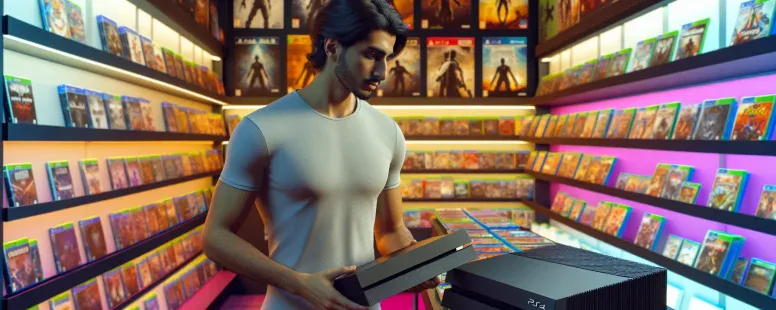
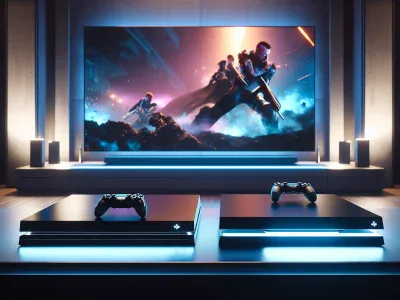
Picture yourself standing in a neon-lit game store your heart pounding as you weigh two futuristic consoles side by side. One gleams with the promise of classic discs and midnight releases while the other whispers of a sleek all-digital future where your entire library lives at your fingertips. The choice isn’t just about hardware—it’s about how you want to experience the thrill of next-gen gaming.
Do you crave the satisfying click of a disc sliding into place or does the idea of instant downloads and a clutter-free setup spark your imagination? Each PlayStation 5 version hides unexpected perks and subtle trade-offs that could transform your gaming life in ways you might not expect. Before you make your decision let’s peel back the layers and uncover which PS5 truly fits your playstyle.
Overview of PS5 and PS5 Digital Edition
You stand in the store staring at two consoles—PlayStation 5 and PlayStation 5 Digital Edition—wondering which one belongs in your gaming setup. Both consoles share the same AMD Zen 2 CPU, AMD RDNA 2 GPU, and 16 GB GDDR6 RAM, so your gameplay performance won’t change whichever path you picks. But then, you fact the major fork: discs or digital only?
Think of the PS5 as a collector’s safe full of Blu-ray adventures. You pop in games, 4K movies, or even trade your discs with friends who’ve beat that one boss and crave a new quest. Physical games pile up, memories stack beside them. Ever ran your fingers over a shiny, new steelbook case, reliving the excitement of midnight releases? That’s an experience the disc drive brings—it’s tactile, it’s nostalgic, and sometimes, it’s cheaper because of pre-owned game swaps or rare discounts (GameStop has often weekly deals).
The PS5 Digital Edition, it’s sleeker—a minimalist’s dream. No disc slot, just smooth, seamless lines. Every game you get comes from PlayStation Store, downloaded with a click. You never fumble for discs, never wait for shipping, never worry about storage space for game boxes. But, what if your internet drops or Sony delists a game? You loose access until you’re back online or the store restores availability. That’s the tradeoff for instant delivery.
Why might you choose one console over the other? Your library matters. If you already own PS4 discs (Sony confirms backward compatibility for most titles), only the disc model lets you replay them. If you buy everything digitally or go all-in on PlayStation Plus and streaming, Digital Edition fits perfectly. The price difference, typically around $100 (Sony official pricing lists), nudges budget-focused gamers toward digital, but long-term disc sales could offset that up-front savings.
Ask yourself: How do you play? Are you the nostalgic collector or digital trailblazer? Friends who swap games or trade at local shops swear by discs, but those who binge the latest indie drops at midnight love the instant access that digital brings.
For both models, the core hardware runs the same—the main difference sits in how you get your games in your hands, or on your hard drive. Stark choice, isn’t it?
Design and Hardware Comparison
Your first look at both the PS5 and PS5 Digital Edition reveals subtle yet important differences. Both stand tall, like monoliths promising digital adventures, but only one carries the physical disc drive—a small detail that changes everything for some players.
Build Quality and Aesthetics
You’ll spot the biggest difference on the right side, where the PS5’s disc drive forms a bulge, breaking the PS5 Digital Edition’s perfectly symmetrical lines. If minimalism is your thing, the Digital Edition feels like it’s sculpted for modern living rooms. Picture a console that blends into your entertainment center, with no visible slot to remind you of discs. If you fancy tradition, but, the disc drive hints at nostalgia, an echo of swapping game cases and sharing discs with friends.
Neither really feels cheap in your hands; Sony built both with the same sturdy plastics and that unique, textured logo pattern on the inner panels. The Digital Edition’s lighter weight—about 8.6 lbs compared to the disc model’s 9.9 lbs—makes it just a tad easier to move around, especially if you’re always upgrading your space. Many users, on social platforms like Reddit, say guests barely notice which version they own until it’s time to insert a disc. Have you ever had to explain why you can’t borrow a game at a party? That moment often frames a console’s identity.
Storage and Performance
Performance feels identical on both, thanks to shared AMD Zen 2 CPUs, RDNA 2 GPUs, and 16 GB GDDR6 RAM. No matter what edition you choose, load speeds, graphics fidelity, and frame rates remain equally impressive: Spider-Man: Miles Morales runs at 60 FPS with ray tracing, and you won’t see any shortchange.
What surprises some players is the implication of storage. Both launch with 825 GB SSDs, but the Digital Edition’s strict reliance on downloads makes storage space vanish rapidly—Call of Duty: Warzone, for example, eats over 100 GB. If you’re the type who hops between NBA 2K, Gran Turismo 7, and indie titles, that SSD will fill up fast without disc installs easing the load. For the disc model, you can keep some titles as physical copies, which feels reassuring when the internet is slow or outages hit. Digital-native gamers may wonder if an external SSD becomes inevitable after six months of downloads, while collectors joke about finding shelf space instead.
Feature
PS5 (Disc)
PS5 Digital Edition
Disc drive
Yes
No
Weight
9.9 lbs
8.6 lbs
SSD capacity
825 GB
825 GB
Physical media support
Yes (Blu-ray, PS4)
No
Size (approx.)
15.4 x 10.2 x 4.1
15.4 x 10.2 x 3.6 (in)
Whenever you think about your daily gaming routine, ask yourself: Is a larger, slightly heavier console a fair trade for swapping discs with your neighbor, or does the slim profile and pure-digital focus better suit your collection’s hidden ambitions?
Game Library and Backward Compatibility
Game libraries shape your journey through PlayStation’s worlds. The way you collect or access these experiences can physically define which version fits your home and heart.
Physical vs Digital Games
Physical games speak to the collector in you—shelves lined with vibrant art, discs ready for spontaneous swaps with friends, and the comforting weight of a new release in your hand. If nostalgia colors your gaming, the standard PS5’s disc drive keeps classics alive. Trading, lending, and selling used copies remain possible only here. For example, if you grab a deal at GameStop or trade with a neighbor, you’ll keep ownership fluid.
Digital games on the PS5 Digital Edition flip the script. There’s no waiting on shipping and no midnight lines; downloads land instantly. You switch between titles like flipping TV channels, with everything stored in your library. Your access never hinges on scratched discs, but digital purchases are locked to your PlayStation Network account. When a regional sale hits PS Store, you can buy and play in seconds, but you can’t share a code or drop off a game at a friend’s house.
Gamers often wonder: Does a physical shelf give better value than a growing digital collection? The answer depends on how you prefer to experience, store, and share your games.
Access to Older Titles
Backward compatibility isn’t just about reliving last-gen moments—it’s collecting history and replaying iconic franchises that shaped PlayStation. With the standard PS5, pop in most of your PS4 discs and revisit Ghost of Tsushima or Bloodborne without rebuying digitally. You can even hunt for out-of-print titles at flea markets and game shops, a rare quest digital-only owners can’t undertake.
The PS5 Digital Edition lets you download backwards-compatible digital PS4 purchases. If your PS4 library lived online, smooth continuation is possible, but if you bought discs, there’s a wall: physical media won’t work, only digital copies sync to your new system. Some games offer free next-gen upgrades via the store, but only if you bought their digital versions.
Sony supports over 4,000 PS4 titles on both consoles, according to PlayStation’s official site. Yet, just your method of ownership—physical or digital—defines what’s truly accessible. When new digital exclusives and classic remasters launch, your entry point is defined at checkout.
Which future are you building? A trove of tangible treasures, or a seamless virtual vault? Consider how your past habits shape your next adventures.
Pricing and Value for Money
You spot the price tags—one is glaringly lower than the other, so you pause. You weigh not just the upfront cash but your future game nights, your shelves, your downloads, and your digital wallet. How much are you really paying for convenience or nostalgia?
Initial Purchase Cost
PS5 Digital Edition sits at $399, PS5 Standard hits $499—prices current since the 2020 launch (Sony Interactive Entertainment, 2023). That slim $100 gap buy you the disc drive, compatibility with used games, and a sense of old-school ownership. Gamers who stick with downloaded titles save cash at checkout, but what if your friend hands you a disc-only release for your birthday? Are you fine missing out on limited edition physical sets, collector’s steelbooks, and bargain-bin finds at GameStop?
Example: You walk into a local retailer. Pre-owned PS5 games line an entire wall, some as low as $10, but with only a Digital Edition, that wall don’t exists for you—you’re locked out before you even start.
Long-term Costs
Over months, spending snowballs. Digital storefronts rarely match physical discounts; NPD Group data (2023) shows on average, physical copies drop in price faster. Used games let you rent, lend, or trade for near-zero extra costs, a savings model impossible in a digital-only setup.
Collectors empty wallets for rare boxed games, but frequent digital flash sales sometimes offer blockbuster titles for $20—just not as often, and never for discs you want to trade.
Table: PS5 Cost Comparison
Cost Factor
PS5 Standard
PS5 Digital Edition
MSRP
$499
$399
Used/Loaned/Traded Games
Yes
No
Digital Store Sales Frequency
Moderate
Moderate
Physical Sale/Discounts
Frequent
None
Collector’s Editions
Yes
Digital only (limited)
Ask yourself—are your savings on day one worth surrendering flexibility over years? Your habits write the final total, not just today’s number on the sticker.
User Experience and Convenience
You enter your living room, the air hums with anticipation—there’s the imposing PS5 with its disc slot or its svelte Digital Edition sibling waiting. Both promise worlds of adventure and immersion, but how each fits in your daily gaming routine differs profoundly. Which console enhances your routine, your spontaneity, your rituals?
Disc Drive Advantages and Drawbacks
Accessing physical games on the PS5 Standard Edition means you slip a disc from its vibrant cover and, sometimes, catch the scent of fresh plastic—a nostalgic ritual for many enthusiasts such as retro gamers and collectors. If you’ve stacks of PS4 titles, you just insert a disc and play, backward compatibility providing instant return to favorites. Swapping discs or lending games to friends or siblings transforms gaming into a half social connection—not easily replicated by digital licenses (TechRadar, 2021).
But, physical media comes with literal weight. Shelves cluttered with cases, the persistent threat of lost or scratched discs, and the drag of swapping titles between sessions can feel cumbersome. Picture realizing during a weekend wind-down that your missing disc is across town with a friend—your plans stall. If you want to access new releases instantly at midnight, the disc format might feels slow, forcing you to either wait for shipping or pick-up.
Will trading games at a local shop save you money? Often, yes, as resale value on popular titles remains around 40-60% of original pricing (GameStop Trade Values, 2023). Flexibility thrives, but at the price of physical management and occasional delays. Does that tactile engagement outweigh convenience, in your case?
Digital-Only Benefits and Limitations
PS5 Digital Edition streamlines your play. No more stacks or shuffling; with a few clicks, you access the PlayStation Store, browsing a library of thousands—releases drop at midnight and download fast, their bits flowing swiftly through fiber optic cable. Games can’t be lost or scratched, and the Digital Edition fits almost invisibly under a wall-mounted TV; minimalists and space-conscious urban dwellers especially notice the difference.
Yet, your autonomy meets new barriers. No trading old games, no spontaneous swaps with friends, and, during online store outages—like the PSN downtime in July 2023—access can vanish without notice. Storage becomes a delicate puzzle, with blockbuster games such as “Call of Duty: Modern Warfare II” occupying nearly 90 GB each (Activision, 2023), exhausting your SSD after a handful of downloads. Price flexibility disappears: digital games usually drop in price slower, and flash sales don’t always sync with your impulse to buy.
Have you ever wanted to lend a friend your new favorite indie hit? With digital, your generosity ends at sharing a screenshot, not the whole experience. Are you willing to trade tangible sharing for instant access and clean shelves? The answer reveals your gaming priorities—and perhaps, your identity as a player.
Whether you’re drawn toward the nostalgia of spinning discs or the seamlessness of digital libraries, the context of your life shapes what feels most convenient and immersive. The PS5 in either form offers joy, but only you—through reflecting on daily moments—will discover which model threads best into the fabric of your gaming rituals.
Which Is Better: PS5 or PS5 Digital Edition?
Holding a PS5 game disc, you might feel the weight not just of plastic but of memories—your shelf a living archive. Digital-only, though, your library lives in the cloud, without a footprint but always just a click away. You ever wonder why that difference tugs at some players?
Sony’s PS5 and PS5 Digital Edition share core silicon—the 8-core AMD Zen 2 CPU and custom RDNA 2 GPU—so frame rates soar and load times shrink no matter the model (source: Sony). But dependency grammar shows a choice web: owning, trading, or sharing physical games connects you with other players, while downloading keeps interactions virtual, often solitary.
Collectors might tell you swapping discs for digital tales loses more than you think. Maybe your friend once lent you their copy of “The Last of Us Part II.” On PS5 Standard, you could pay it forward; with Digital, your generosity hits a wall, since licenses don’t transfer. Isn’t that small trade-off worth considering, for those who value a shared experience?
On the PS5 Digital Edition, your library follows you, as nimble as a fox in a streaming forest. Purchase, download, play—repeat. But digital-first has pitfalls: Storage fills up—only 667 GB usable after the OS, according to Tom’s Guide—which makes you delete before you download. You ever had to pick which memory to lose? It’s a digital coin toss, never quite satisfying.
Comparing both on cost, your wallet might love the $399 sticker for Digital. Yet watch how game pricing evolves—physical games often drop faster, used copies abound, sales pop up in unexpected places. Digital stores, meanwhile, anchor prices more firmly, making deals less common (GameSpot). In a year, did you really save, or just shift your spending?
Backward compatibility tilts the scale. Your PS4 disc collection, decades in the making, quickly transfers to the PS5 Standard. But your digital past only follows you on the Digital Edition if you already owned the downloadable games. That makes the disc drive worth more than nostalgia—it’s a bridge connecting generations.
Search your habits: Do you enjoy the ritual of unwrapping new games, or crave the convenience of midnight launches from your couch? Your preference isn’t just practical—it’s part of your gaming identity. How do you want to shape your legacy as a gamer?
If sharing, trading, and ownership matter to you, the PS5 Standard’s your companion for the long haul—even if it’s heavier and costs a little more. But if simplicity, speed, and a streamlined setup define your play, the PS5 Digital Edition aligns closer with a modern, minimalist lifestyle.
Gaming, after all, is more than a screen—it’s the story you tell by the choices you make.
Conclusion
Choosing between the PS5 and PS5 Digital Edition really comes down to what matters most to you as a gamer. Whether you value the feel of a physical collection or the sleek convenience of digital access your decision will shape your gaming experience for years to come.
Take a moment to think about your habits and preferences before making your purchase. No matter which model you choose you’ll be stepping into the next generation of gaming with a console built for performance and excitement.
To provide the best experiences, we use technologies like cookies to store and/or access device information. Consenting to these technologies will allow us to process data such as browsing behaviour or unique IDs on this site. Not consenting or withdrawing consent, may adversely affect certain features and functions.
Functional
Always active
The technical storage or access is strictly necessary for the legitimate purpose of enabling the use of a specific service explicitly requested by the subscriber or user, or for the sole purpose of carrying out the transmission of a communication over an electronic communications network.
Preferences
The technical storage or access is necessary for the legitimate purpose of storing preferences that are not requested by the subscriber or user.
Statistics
The technical storage or access that is used exclusively for statistical purposes.The technical storage or access that is used exclusively for anonymous statistical purposes. Without a subpoena, voluntary compliance on the part of your Internet Service Provider, or additional records from a third party, information stored or retrieved for this purpose alone cannot usually be used to identify you.
Marketing
The technical storage or access is required to create user profiles to send advertising, or to track the user on a website or across several websites for similar marketing purposes.