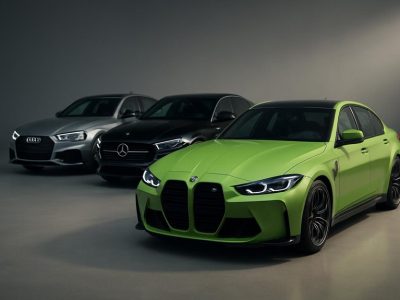
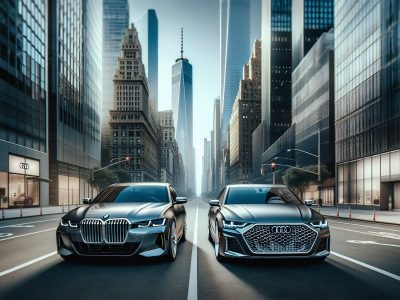
Picture yourself gliding down a winding road, the world blurring past as you grip the wheel of a machine that feels almost alive beneath your fingertips. The soft purr of the engine, the subtle aroma of leather, and the shimmer of polished chrome spark a question that stirs every car enthusiast’s soul: which reigns supreme—Audi, BMW, or Mercedes?
Choosing between these iconic German brands isn’t just about horsepower or price tags. It’s about the thrill of acceleration, the comfort that cocoons you on long drives, and the prestige that turns heads at every stoplight. Each marque hides surprising strengths and signature quirks, from cutting-edge tech to handcrafted luxury touches you’d never expect. So which one truly suits your style and spirit? Get ready to discover the details that could change the way you see the road forever.
Brand Overview
Shaping your expectations of German luxury, Audi, BMW, and Mercedes-Benz represent distinct lineages of design, technology, and prestige. Each brand’s legacy creates a different kind of excitement the moment you grip the steering wheel.
Audi: Innovation and Elegance
Audi leverages advanced engineering to deliver understated elegance and cutting-edge tech—think digital OLED lighting or the virtual cockpit interface in its A6 and Q8 models. You often see quattro all-wheel drive systems transforming slick mountain passes into playful playgrounds, which boost confidence and safety for you. High-profile collaborations with artists and architects spotlight the brand’s design-driven culture. Customers often recall feeling a certain silence and serenity inside the cabin, due to class-leading sound insulation (Car and Driver, 2023). If a vehicle whisper emotions while cruising city nights, Audi tends to leave that impression.
BMW: The Ultimate Driving Machine
BMW turns every corner into an event, blending precision and athleticism in over 30 unique models, like the 3 Series or the electrifying i4 M50. Consistent chassis feedback, rear-wheel-biased balance, and variable steering evoke sports car confidence even in their SUVs. On legendary tracks, the M3’s engine roar stands as a familiar legend. Options such as adaptive dampers and performance-tuned xDrive all-wheel drive shape BMW’s reputation as the enthusiast’s marque. Have you ever notice how the steering wheel just beg to be turned? Driving a BMW usually gives that sensation, pulling you deeper into the mechanics of every journey.
Mercedes-Benz: Luxury and Prestige
Mercedes-Benz crowns each drive with a meticulous focus on comfort, status, and historic prestige. S-Class sedans have transported world leaders for decades; the three-pointed star draws on more than a century of innovation, like pioneering safety features and semi-autonomous Drive Pilot technology (Mercedes-Benz, 2023). Even AMG variants remixes performance with elegance, adding handcrafted engines to the luxury equation. Owners often describe the sensation of being insulated from the outside world, cocooned in Nappa leather and walnut trim. If you seek a car that makes every arrival an event, Mercedes subtly cues tradition, grandeur, and quiet confidence—it’s more than just a logo on the grille.
Performance Comparison
You pivot from city avenues to open highways, watching the badge shimmer on your hood. Do you chase acceleration, embrace nimble cornering, or crave seamless tech at your fingertips? In this section, see how Audi, BMW, and Mercedes translate legendary reputations into real-world performance.
Engine Power and Handling
Audi unlocks power through quattro all-wheel-drive. You grip the steering wheel of the Audi S4, 349 horses eager under your right foot, how the grip sticks through rain-slicked bends. BMW infuses every model with rear-wheel-drive DNA: the 3 Series balances, nearly like a dancer, through twisting roads, its 330i turbocharged inline-4 surging to 60 mph in just 5.3 seconds (Car and Driver). Mercedes leans into a different rhythm—you’re cocooned in an E-Class AMG, V6 hum deep under the calm, and air suspension transforms broken pavement into silk. The question—do you thrill to Audi’s obsessive traction, BMW’s athlete heart, or Mercedes’ refined dominance?
Technological Features
Audi’s Virtual Cockpit draws your eyes—a 12.3-inch digital world replaces old-school gauges, customizable by touch. Apple CarPlay or wireless Android Auto, you’ll see them integrated seamlessly. BMW’s iDrive, with iDrive 8, stands out for voice assistants and over-the-air updates; gesture controls let you skip tracks without a button press. Mercedes steps ahead with MBUX: think a digital concierge who gets smarter—voice commands in natural language, augmented reality navigation overlays, and a central touchscreen sprawling up to 12.8 inches in the new S-Class. Which tech elevates your drive—Audi’s clean visuals, BMW’s smart adaptability, or Mercedes’ intelligent luxury?
Fuel Efficiency
Audi commits to mild hybrids and plug-in options—A4 40 TFSI delivers 27 city/35 highway mpg (EPA), with the Q5 PHEV promising 61 MPGe. BMW counters with efficient dynamics: a 330e plug-in sips at 75 MPGe, while the X5 diesel stretches every gallon on long journeys. Mercedes plugs into sustainability too; C 300’s mild hybrid system offers 25 city/36 highway mpg, and the EQB crossover enters the electric fray with 243 miles of range (EPA). If smooth miles per dollar is your priority, do you lean toward Audi’s innovation, BMW’s hybrid prowess, or Mercedes’ strides in electrification?
Brand
Engine Power Example
Tech Feature Example
Fuel Efficiency Example
Audi
S4: 349 hp, quattro AWD
Virtual Cockpit, seamless CarPlay
A4: 27/35 mpg, Q5 PHEV: 61 MPGe
BMW
3 Series: 255-503 hp, RWD
iDrive 8, gesture controls
330e: 75 MPGe, X5 diesel: high mpg
Mercedes
E 53 AMG: 429 hp, air suspension
MBUX w/ AR nav, 12.8″ touchscreen
C 300: 25/36 mpg, EQB: 243 mi range
Your keys, your experience—what happens next, that’s the story you shape with every turn of the wheel, every tap on a digital display.
Interior and Comfort
When you slip inside an Audi, BMW, or Mercedes, the interior sets the tone for your entire journey. Each cabin speaks a distinct language, blending luxury, innovation, and comfort but with nuanced approaches that shape your daily drives. Consider how these interiors transform not only long commutes but spontaneous detours, or even a rain-soaked evening when ambiance becomes everything.
Design and Materials
Audi interiors immerse you in modern minimalism, often characterized by crisp horizontal lines and seamless digital displays. In the Q7, for example, real oak wood trims meet aluminum accents, evoking a Scandinavian lounge; you might notice how the tactile switchgear whispers precision engineering (source: Car and Driver). BMW tends to focus on driver-centric cockpits—look at a 5 Series, and you’ll notice the angled controls and thick leather-wrapped steering wheel almost pulling you into the driver’s seat. Mercedes strikes a regal chord, with S-Class models often draped in Nappa leather and ambient lighting that evokes calm, like a private jet waiting for takeoff. But then you’d ask yourself: Do soft-touch plastics in an entry-level model ruin the magic, or does thoughtful design still shine through? Across models, each brand uses premium materials, just different forms and philosophies.
Comfort Features
Audi’s comfort features blend German efficiency with subtle luxury—think massaging seats in the A8, customizable air quality systems, and multi-zone climate control that quietly adjust to your every whim. Ever noticed how you barely feel a pothole in a Mercedes E-Class? Credit the adaptive air suspension and seat kinetics system that adapts to your posture, minimizing fatigue on those never-ending road trips (source: Edmunds). BMW prioritizes sporty comfort, but even in a sharp M340i you’ll find power-adjustable bolsters and heated armrests—little luxuries that prove performance doesn’t mean compromise. How much does it matter that you can choose from 64 colors of ambient lighting in a Mercedes, or that Audi’s seats cool and heat individually? These features sometimes blur into expectations, until you spend hours behind the wheel and realize—these touches make your car, in effect, your sanctuary.
Infotainment Systems
Each brand equips their vehicles with advanced infotainment, yet the experiences differ. Audi’s Virtual Cockpit, with its 12.3-inch high-res digital display, turns maps into works of art and lets you toggle layouts with ease. BMW’s iDrive 8 responds to gestures and spoken requests—ask “Take me to the nearest gas station?,” and it complies almost instantly. Mercedes’ MBUX system stands out with its natural language processing—it recognizes “Hey Mercedes, I’m cold,” and bumps up the heat, all displayed on twin panoramic screens. Glitches and learning curves exist, though—voice commands sometimes misfires, updates may lag, and touchpads can get smudgy. Still, you’ll almost forget your phone, given features like wireless Apple CarPlay and Android Auto in all three brands, keeping you connected on every journey.
Brand
Design Highlights
Comfort Features
Infotainment Example
Audi
Minimalist, crisp lines, quality switches
Massaging seats, customizable air, multi-zone AC
Virtual Cockpit, wireless CarPlay
BMW
Driver-focused, tactile, sporty cockpit
Power-adjusted seats, bolsters, heated armrests
iDrive 8, gesture control
Mercedes
Luxurious, refined, ambient lighting
Air suspension, seat kinetics, 64 ambient colors
MBUX, conversational voice
As you weigh Audi, BMW, and Mercedes, ask: Does minimalist serenity, sporty immersion, or regal ambiance best transform the way you experience the road?
Safety and Reliability
Evaluating Audi, BMW, and Mercedes through the lens of safety and reliability uncovers a contest among elite standards, not mere checkboxes. You notice how each brand weaves technology, engineering, and philosophy into its approach—sometimes like an orchestra’s different sections, unique yet harmonious. Some questions echo: Which of these iconic marques guards you best on the open road? How does each keep the years rolling by with confidence?
Safety Ratings and Features
Safety ratings and features showcase a blend of innovation, history, and competitive edge. Mercedes-Benz often earns high Euro NCAP and IIHS scores for models like the E-Class, combining PRE-SAFE® technologies and robust collision-avoidance systems (IIHS, 2023). You find Radar-based Active Brake Assist and ATTENTION ASSIST as metaphorsical guardian angels, assisting drivers in critical moments.
Audi pushes boundaries with the quattro AWD system, integrating Audi pre sense® and adaptive cruise assist. For example, in the 2024 Audi Q5, standard automatic emergency braking and lane-departure warning help reduce risk in urban and highway settings. Think of it as the quiet sentinel in the background—never boastful but always there.
BMW often targets active involvement, framing safety in the vocabulary of interaction. Lane Keeping Assistant, Collision Warning with City Braking, and optional Driving Assistant Professional stand out in models like the BMW 5 Series. Results? Consistent 5-star Euro NCAP ratings for models from 2019 to 2023, aligning with the “driver engagement” ethos, giving you a sense of not just being protected—but actively involved in your own safety.
Brand
Flagship Safety Tech (2024)
IIHS Top Safety Pick 2023
Average Euro NCAP Stars (2019-2023)
Audi
pre sense® City, adaptive cruise, quattro AWD
Yes (Q5, A6, e-tron)
5
BMW
Driving Assistant Pro, Lane Keeping, Frontal Collision Warning
Yes (3/5/X5 Series)
5
Mercedes-Benz
PRE-SAFE®, Active Brake Assist, Car-to-X Communication
Yes (E-Class, GLE)
5
Maintenance and Longevity
Maintenance and longevity paint different landscapes for each brand. Mercedes earns a reputation for long-term durability, commonly reaching 200,000+ miles with attentive care—taxi fleets in Germany often favor the E-Class for this reason. But, advanced electronics bring higher complexity, sometimes increasing repair costs if maintenance lapses.
BMW stories often blend driving excitement with routine, detailed attention. Owners of the “old” E46 3 Series still narrate journeys spanning two decades; but, missed oil changes or ignoring cooling systems could spell trouble. BMWs demand you listen and respond—treating regular check-ups as a partnership.
Audi threads technology and longevity into a delicate dance. Models like the A4 impress with reliability into the sixth year and beyond, but intricate AWD (quattro) systems need scheduled servicing. A mechanic familiar with Audi’s diagnostic systems saves headaches. Some might say ignoring Audi’s cautious signals is like missing the tuning in a symphony—outcomes get less harmonious.
You’re often comparing not just brands, but philosophies—do you want to glide reliably into old age, dance with athletic precision, or find an elegant balance somewhere between? Ask yourself if reliability means long uninterrupted journeys, low ownership costs, or the reassurance of innovation that feels trustworthy.
Because—but you choose—these German titans showcase reliability as layered as their driving dynamics.
Pricing and Value for Money
Getting behind the wheel of a German luxury car feels like entering a different world, doesn’t it? As you compare Audi, BMW, and Mercedes, you’ll notice that pricing isn’t just about the sticker on the window—it’s about how much each moment on the road feels worth it. Whether you’re splurging on self-indulgence or seeking a solid investment, these brands approach value with distinct advantages and sometimes, a few odd twists.
Initial Cost
Audi, BMW, and Mercedes lineup their entry sedans—A3, 2 Series, and A-Class—with starting prices between $36,000 and $39,000 (edmunds.com, 2024). Step into the mid-range sedan territory, and Mercedes C-Class might command more than a BMW 3 Series or Audi A4 by a couple thousand bucks with similar features. Mercedes often bundles luxury in standard, while BMW leaves you customizing, and that freedom can tip your bill higher faster than you intended. Audi throws in technology packages early, so the base trim feels richer, but reaching for quattro or S-line upgrades, your total cost can easily climb.
Ever been tempted by an “entry-level” Audi Q3, then marveled at how quickly the price multiplies with four options boxes checked? It’s a quirk that buyers swap stories about at dealers everywhere.
Resale Value
Commitment to a brand means thinking two steps ahead—to the day you swap keys. BMW retains strong resale value for sports sedans, like the M340i, if you maintain its condition well. Mercedes commands high residuals especially in the SUV segment; the GLE and GLC, for example, commonly surpass 50% value retention over three years (Kelley Blue Book, 2024). Audi, while commanding high-tech appeal, usually sees steeper initial depreciation except for models like the Q5.
Ask yourself: would you rather drive something that looses value quicker but feels fresh with cutting-edge tech, or a model that keeps its shine in the secondhand market? Owners who’ve sold a seven-year-old Mercedes often remark on how little buyers quibble over the price compared with similar Audis, which occasionally see faster price drops in year two and three.
Ownership Costs
Long-term costs sneak into your wallet quietly—maintenance, insurance, taxes. Mercedes may look pricey to service, but includes more scheduled maintenance the first years than most BMW models. BMW wears the title of enthusiastic driver’s car but that comes with frequent tire changes and pricier parts as models age. Audi falls somewhere in the middle; its Quattro system, for example, tend to boost winter tire wear, but reliability studies place it favorably against earlier perceptions of imported car hassle (J.D. Power, 2023).
If you enjoy meticulous care, like changing your oil on schedule, you might find that BMW and Porsche group together in maintenance complexity. Mercedes simplifies with prepaid maintenance packages—but insurance premiums for AMG models can surprise even affluent buyers, especially in urban ZIP codes.
So, when you weigh the lifetime value of these German legends, ask yourself what matters most: upfront savings, steady value, or quiet stability through years of driving?
Conclusion
Choosing between Audi BMW and Mercedes really comes down to what you want most from your luxury car. Each brand brings its own unique flavor to the table whether you’re after cutting-edge tech sporty driving or pure comfort.
Think about what matters most to you—how the car feels on the road the ambiance inside or the long-term value. Once you know your priorities you’ll find the perfect match among these German icons.
To provide the best experiences, we use technologies like cookies to store and/or access device information. Consenting to these technologies will allow us to process data such as browsing behaviour or unique IDs on this site. Not consenting or withdrawing consent, may adversely affect certain features and functions.
Functional
Always active
The technical storage or access is strictly necessary for the legitimate purpose of enabling the use of a specific service explicitly requested by the subscriber or user, or for the sole purpose of carrying out the transmission of a communication over an electronic communications network.
Preferences
The technical storage or access is necessary for the legitimate purpose of storing preferences that are not requested by the subscriber or user.
Statistics
The technical storage or access that is used exclusively for statistical purposes.The technical storage or access that is used exclusively for anonymous statistical purposes. Without a subpoena, voluntary compliance on the part of your Internet Service Provider, or additional records from a third party, information stored or retrieved for this purpose alone cannot usually be used to identify you.
Marketing
The technical storage or access is required to create user profiles to send advertising, or to track the user on a website or across several websites for similar marketing purposes.