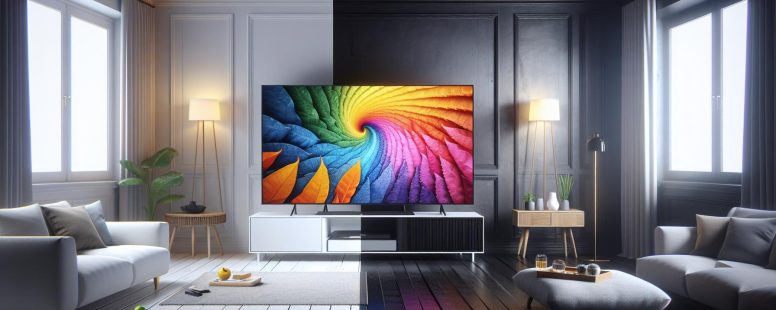
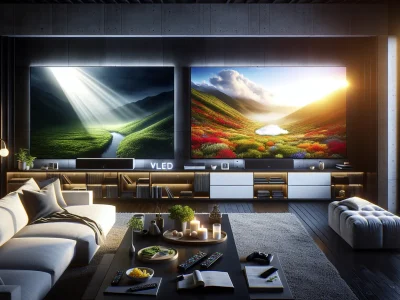
Imagine standing in front of a wall of dazzling TVs, each promising the ultimate viewing experience. The vibrant colors of QLED pull you in, while the deep, inky blacks of OLED feel like peering into another dimension. Choosing between these two cutting-edge technologies can feel like deciding between a masterpiece and a marvel—both stunning, yet so different.
You’re not just buying a TV; you’re investing in how you experience movies, games, and shows. QLED boasts brightness and vivid hues that thrive in well-lit spaces, while OLED offers unparalleled contrast and lifelike visuals that immerse you in the darkest scenes. But which is truly the best for your needs? Understanding what sets them apart could change how you see entertainment forever.
Understanding QLED And OLED Technology
Grasping the basics of QLED and OLED technology helps clarify their unique strengths and applications. These groundbreaking innovations have transformed modern displays, offering tailored solutions for diverse viewing needs.
What Is QLED?
QLED stands for Quantum Dot Light Emitting Diode. It uses a layer of quantum dots placed between the LED backlight and the LCD panel to enhance brightness and color reproduction. Quantum dots emit precise colors when exposed to light, resulting in a wider color gamut and vibrant visuals.
You’ll notice that QLED displays excel in well-lit environments due to their high brightness levels, often exceeding 1,000 nits. For example, many Samsung QLED TVs incorporate HDR10+ for greater contrast and detail. Also, QLED screens tend to be more affordable for larger sizes, making them suitable for family rooms or bright living spaces.
But, QLED relies on backlighting, limiting its ability to achieve pure blacks. This contrast limitation means it may not deliver the same depth in darker scenes as OLEDs.
What Is OLED?
OLED stands for Organic Light Emitting Diode. Unlike QLED, OLED panels produce light at the pixel level, enabling true black levels when pixels are turned off. This self-emissive technology eliminates the need for a separate backlight, resulting in incredible contrast and near-infinite black depth.
OLED screens shine in dimly lit rooms, where their perfect black levels and superior contrast enhance movie watching. For instance, LG’s OLED models, like the CX series, are renowned for delivering cinematic quality with Dolby Vision support. They’re also thinner and lighter due to the absence of a backlight, enabling sleeker designs.
Although OLED provides exceptional image quality, it’s more susceptible to burn-in if static images are displayed for prolonged periods. This issue, while less common in newer models, might concern gamers or users who leave static interfaces on screen for hours.
Picture Quality Comparison
Examining picture quality between QLED and OLED reveals their distinct strengths and weaknesses, impacting your viewing preferences.
Brightness And Contrast
QLED displays excel in brightness, often achieving over 1,000 nits, ideal for bright rooms or daytime viewing. Quantum dots enhance brightness without compromising color fidelity. But, QLED’s reliance on LED backlighting reduces its ability to produce perfect blacks, as some light bleeds into darker areas. For example, in a scene with a star-filled night sky, QLED may struggle to isolate black space around stars, slightly diminishing contrast.
OLED delivers unmatched contrast due to its self-emissive pixels, which individually emit light or turn off entirely. This produces true blacks and superior depth. Watching a thriller with dimly-lit scenes, like “The Batman,” feels immersive on an OLED screen. But, their dimmer peak brightness may seem underwhelming in well-lit conditions, limiting their effectiveness in bright spaces.
Color Accuracy And Vibrancy
QLED provides vibrant and dynamic colors, making it suitable for sports or animated shows. Quantum dots offer a broader color spectrum, maintaining saturation even at higher brightness levels. For example, when showcasing a 4K HDR nature documentary, you might notice more defined greens and reds on QLED.
OLED excels in color accuracy, crucial for movies and high-quality content. The natural tones and realism brought by OLED screens, particularly in red hues and skin tones, heighten the cinematic experience. But, slight color shifts might occur over time if static images are persistently displayed.
Viewing Angles
QLED screens experience color fading or brightness loss when viewed from extreme side angles. This could affect family gatherings where viewers sit at varying positions. Advanced models with improved viewing angle technologies mitigate this issue, but some disparities persist compared to OLED.
OLED screens maintain consistent color accuracy and brightness across all angles. Even sitting far to the side during a group movie night, your experience remains uncompromised. This uniformity enhances shared viewing but, on naturally brighter settings, OLED may appear dimmer across large rooms.
Performance Factors
When evaluating the performance of QLED and OLED, multiple technical factors offer clear distinctions. Each technology excels in specific scenarios, shaping your viewing experience in unique ways.
Response Time And Motion Handling
OLED displays stand out with a near-instantaneous response time, often around 0.1 milliseconds. This speed ensures smoother motion, especially during rapid action scenes or gaming. For example, when watching a soccer match, the ball’s motion remains fluid without noticeable blurring. QLED, using LED backlight, generally exhibits slower response times, averaging between 2 and 8 milliseconds, which may result in minor motion blur during rapid transitions.
Also, OLED’s pixel-level illumination enhances motion clarity. In contrast, QLED relies on motion interpolation to mask lag, which can introduce an “artificial” appearance if sensitive to visual artifacts. If you’re a gamer or sports enthusiast, OLED offers a more immersive experience by virtually eliminating motion distortion. QLED suits a casual viewing preference where motion precision isn’t as critical.
Durability And Lifespan
QLED panels boast higher durability for long-term use. With an estimated lifespan exceeding 50,000–60,000 hours, QLED resists image retention, making it ideal for static content like menus or news tickers. These traits stem from QLED’s reliance on inorganic quantum dots and an LED backlight that doesn’t degrade as quickly as organic materials.
OLED durability faces challenges due to organic compounds used in pixel construction. Over time, uneven degradation, leading to burn-in, might occur if static images frequently dominate the display. For example, prolonged viewing of a gaming map or a news logo could leave faint impressions on OLED screens. To mitigate this risk, many manufacturers incorporate screen shift or automatic dimming features, though they’re not foolproof.
Still, OLED panels maintain their pristine picture quality longer under dynamic usage, losing brightness gradually rather than experiencing abrupt degradation. QLED offers peace of mind for users seeking consistency for extended daily viewing, while OLED captivates users prioritizing superior contrast with mixed content usage.
Price And Value For Money
The choice between QLED and OLED impacts your budget and long-term satisfaction. Evaluating costs is critical to determining which technology gives you better value.
Initial Cost
QLED TVs generally cost less compared to OLED, especially for larger sizes. For example, you might find a 65-inch QLED model priced around $1,000, while a similar-sized OLED could cost over $1,500. This makes QLED a more affordable entry into high-quality displays. Manufacturers like Samsung and TCL offer QLED models in various price ranges, which helps cater to budget-conscious buyers.
On the other hand, OLED TVs, such as those from LG or Sony, carry a premium price tag due to their advanced self-emissive technology. These higher initial costs reflect OLED’s superior image quality and precise performance. If you’re prioritizing picture perfection over initial affordability, OLED becomes a justified investment.
Long-Term Investment
QLED provides better durability with resistance to image retention and burn-in, which reduces the need for early replacements. These features make QLED more suited for gaming setups or static-content-heavy usage, giving better long-term reliability for such scenarios.
OLED, while delivering unmatched picture quality, may require more careful handling to avoid issues like burn-in over time. You’d experience exceptional performance for dynamic, varied content usage, though static imagery for prolonged durations could shorten the screen’s life. But, OLED’s energy efficiency in producing true blacks results in lower power consumption, adding value over years of use.
Best Use Cases For QLED And OLED
Selecting between QLED and OLED depends on your specific needs. Each excels in different scenarios, providing unique benefits based on viewing conditions and content types.
Ideal Scenarios For QLED
Choose QLED for bright rooms or daytime viewing. Its quantum dot technology and high brightness, often exceeding 1,000 nits, make it perfect for spaces with sunlight or strong artificial light. Watching live sports, animated films, or shows with vibrant color palettes like Moana or Coco becomes more visually engaging on QLED panels.
Large screen QLED TVs are more affordable compared to OLEDs. This makes them ideal for family rooms or as a centerpiece for casual entertainment setups. QLED’s resistance to image retention or burn-in ensures reliability when displaying static visuals for hours, such as video game HUDs, news tickers, or slideshows.
Although QLED struggles with black level accuracy, its durability and cost-effectiveness outweigh this limitation for many. For example, it’s a better fit for heavily-used living room TVs that accommodate mixed-use viewing by different family members.
Ideal Scenarios For OLED
Opt for OLED if you prioritize contrast and picture depth. Self-emissive pixels create true blacks and exceptional contrast, making OLED ideal for movie enthusiasts or those seeking a cinematic experience. Streaming services like Netflix and Disney+ shine on OLED screens, especially in dimly lit rooms where dark scenes from shows like Stranger Things appear ultra-realistic.
OLED suits gamers who value rapid response times and minimal input lag. For rapid games such as Call of Duty or Forza Horizon, OLED delivers smoother gameplay with no ghosting effects. This precision also enhances action-packed sports content.
For a home theater feel, OLED’s uniform performance across wide viewing angles enhances group viewing. Even if you’re seated at the far end of a sectional couch, you experience consistently vibrant and clear visuals. But, OLED requires cautious use for reducing risks of burn-in, especially amidst static images like logos or menus displayed for an extended period.
Use OLED if you value energy efficiency. Because it turns off individual pixels for true blacks, OLED consumes less power during darker content, potentially saving energy for avid binge-watchers.
Conclusion
Choosing between QLED and OLED eventually depends on your specific needs and viewing habits. If you prioritize brightness, vibrant colors, and affordability for larger screens, QLED might be the better fit. It’s a solid choice for well-lit spaces and family entertainment.
On the other hand, if you value deep blacks, superior contrast, and lifelike visuals, OLED delivers an unparalleled cinematic experience. It’s perfect for dimly lit environments and excels in gaming with its fast response times.
By understanding what matters most to you, you can make a confident decision that enhances your viewing experience.
To provide the best experiences, we use technologies like cookies to store and/or access device information. Consenting to these technologies will allow us to process data such as browsing behaviour or unique IDs on this site. Not consenting or withdrawing consent, may adversely affect certain features and functions.
Functional
Always active
The technical storage or access is strictly necessary for the legitimate purpose of enabling the use of a specific service explicitly requested by the subscriber or user, or for the sole purpose of carrying out the transmission of a communication over an electronic communications network.
Preferences
The technical storage or access is necessary for the legitimate purpose of storing preferences that are not requested by the subscriber or user.
Statistics
The technical storage or access that is used exclusively for statistical purposes.The technical storage or access that is used exclusively for anonymous statistical purposes. Without a subpoena, voluntary compliance on the part of your Internet Service Provider, or additional records from a third party, information stored or retrieved for this purpose alone cannot usually be used to identify you.
Marketing
The technical storage or access is required to create user profiles to send advertising, or to track the user on a website or across several websites for similar marketing purposes.