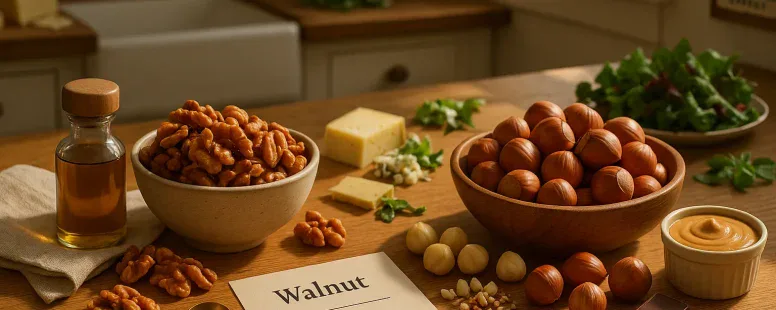
Walnut vs. Hazelnut is a question you’ll ask when you want flavor, health benefits, or the perfect crunch in a recipe. One nut brings a bold, slightly bitter richness that reminds you of toasted wood and coffee: the other offers a sweet, creamy snap that pairs with chocolate like old friends. You can use either to boost protein and healthy fat in your snacks, but they behave very differently in cooking and impact health in distinct ways. This piece shows clear, practical differences so you can pick the nut that fits your taste, goals, and pantry, fast and without fuss.
Quick Nutritional Comparison
Fact: Walnuts and hazelnuts deliver similar calories but different micronutrient and fat profiles. Below is a focused, clear look.
Calories And Macronutrients
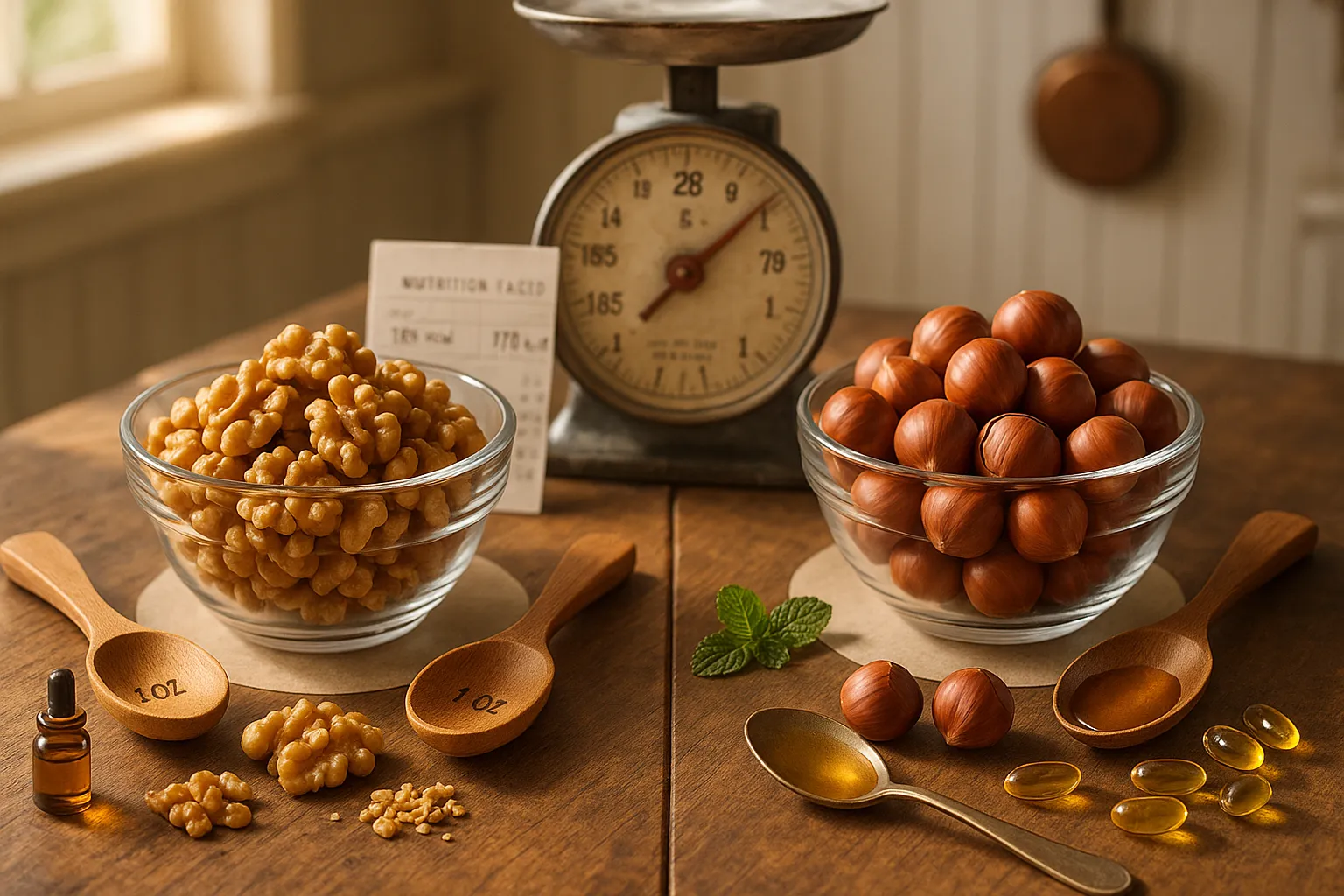
Walnuts and hazelnuts are calorie-dense. Per 1 ounce (28 g) the USDA lists walnuts at about 185 kcal and hazelnuts at about 178 kcal. Both supply roughly 4–5 g protein and 2–3 g carbs, leaving fat as the main macronutrient. Walnut has slightly more polyunsaturated fat while hazelnut has more monounsaturated fat. These differences change the way each nut affects hunger and metabolism.
Vitamins, Minerals, And Micronutrients
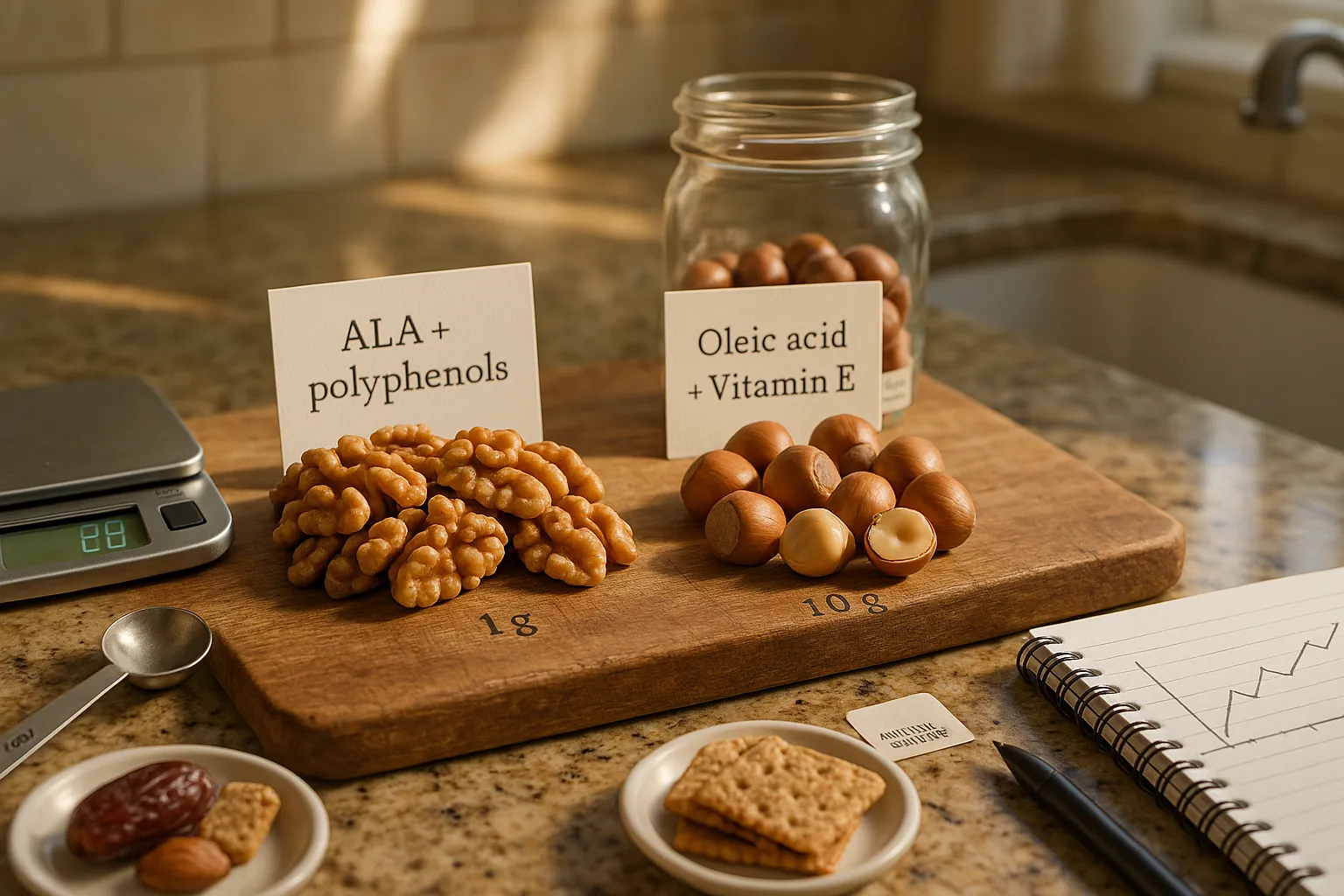
Hazelnuts are a stronger source of vitamin E and manganese. Walnuts supply more alpha-linolenic acid (ALA), a plant omega-3, and modest amounts of copper and magnesium. If you track micronutrients, pick hazelnuts for antioxidant vitamin E and walnuts for omega-3s and mineral variety. The USDA nutrient database confirms these contrasts.
Fatty Acid Profile And Heart-Healthy Fats
Walnuts lead in polyunsaturated fats, especially ALA, which links to heart and possibly brain benefits. Hazelnuts are high in oleic acid, the same monounsaturated fat that makes olive oil heart-friendly. If you want to lower LDL cholesterol, both help, but hazelnuts mimic olive oil while walnuts boost omega-3 intake.
Antioxidants, Polyphenols, And Other Bioactives
Hazelnuts deliver strong vitamin E levels and flavonoids. Walnuts show higher total polyphenol content and unique bioactives that reduce oxidative stress in some studies. Research from journals like the American Journal of Clinical Nutrition highlights walnut polyphenols for vascular benefit. Both nuts have antioxidant action, but they emphasize different compounds.
Flavor, Texture, And Culinary Uses
Fact: Walnuts taste more bitter and complex: hazelnuts taste sweeter and more buttery. That base fact determines most culinary uses.
Taste And Mouthfeel Differences
Walnuts give a slightly astringent, earthy bite with a soft crumbly texture. Hazelnuts are rounder, with a crisp shell and a rich, almost praline-like sweetness when toasted. You will notice walnut’s complexity in savory sauces: hazelnut’s sweetness wins in desserts.
Baking And Dessert Applications
Use hazelnuts in pralines, gianduja or chopped into cookies for an immediate sweet lift. Ferrero Rocher and Nutella-style spreads show how hazelnuts pair exceptionally with chocolate. Walnuts suit carrot cake, banana bread, and brownies where the bitter nuts balance sugary batter. Toast either nut first: that step unlocks oils and aroma.
Savory Dishes, Salads, And Snacks
Walnuts pair with blue cheese, beets, and herbs like parsley and rosemary. They work well in pesto in place of pine nuts. Hazelnuts match roasted vegetables, Brussels sprouts, and aged cheeses like Manchego. Both make good snack mixes: walnuts offer chew, hazelnuts offer crispness.
Oils, Butters, And Ingredient Substitutions
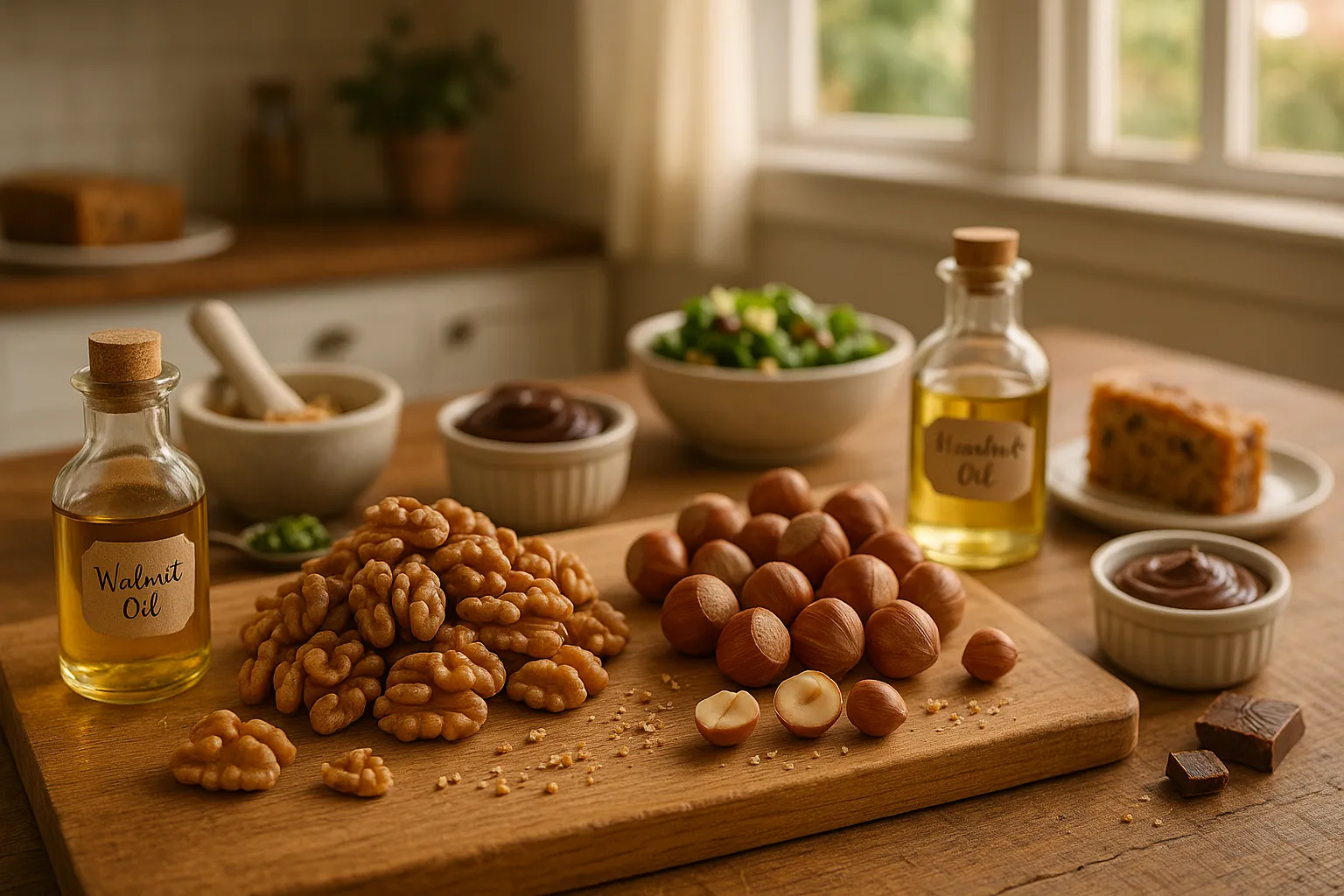
Hazelnut oil tastes floral and sweet, and it enhances vinaigrettes or drizzled desserts. Walnut oil tastes walnutty and robust: use it in dressings or to finish grilled vegetables. For nut butter swaps, substitute hazelnut butter when you want chocolatey notes, use walnut butter to add a deep, savory fat. When substituting, keep volume equal but expect small texture changes.
Health Benefits And Potential Risks
Fact: Both nuts support heart health, but each has specific risks and physiological effects you should know.
Cardiovascular And Brain Health Evidence
Walnuts have the stronger evidence for improving markers of cardiovascular and cognitive health due to their ALA and polyphenols. Randomized trials and cohort studies associate walnut intake with lower inflammation and better endothelial function. Hazelnuts improve lipid profiles thanks to oleic acid and vitamin E, and observational studies link regular nut consumption to lower heart disease risk. If you want a targeted brain-food choice, walnuts are slightly favored.
Allergies, Sensitivities, And Digestive Considerations
Both are tree nuts and can trigger severe allergic reactions in susceptible people: always follow FDA allergen labeling. Hazelnut-specific oral allergy can occur in people with birch pollen sensitivity, your mouth may itch after eating raw hazelnut. Walnuts sometimes cause GI upset if eaten in very large amounts because of high polyphenol content. Roast nuts reduce some proteins and can lower mild sensitivities but won’t protect someone with a true allergy.
Weight Management, Satiety, And Blood Sugar Effects
Nuts are calorie-dense yet can help with weight control. They raise satiety and modulate blood sugar responses when eaten with carbs. Hazelnuts’ monounsaturated focus and walnut ALA both contribute to improved metabolic markers in studies. Portion control matters: a small handful (about 1 oz) fits most healthy patterns. I once tracked my hunger after snacking: a hazelnut-and-date combo kept me full longer than crackers, but walnuts made the next meal feel more balanced.
Selection, Storage, And Preparation Tips
Fact: Freshness, not brand, drives flavor and nutrient quality. Choose and store nuts to maximize taste and shelf life.
How To Choose Fresh, High-Quality Nuts
Buy nuts with firm texture and no rancid smell. For shelled nuts, look for even color and no dark spots. In the U.S., California and Oregon are major walnut growers: hazelnuts often come from Oregon, Turkey, and Italy. If you can, buy from local producers or brands with short harvest-to-shelf times to get fresher stock.
Proper Storage To Preserve Flavor And Nutrients
Store nuts in an airtight container in the refrigerator for up to six months, or freeze for up to a year. Warm pantry storage speeds rancidity. Keep oils away from light and heat. Toast small amounts just before use to preserve nutrients in the remainder.
Simple Prep And Cooking Techniques
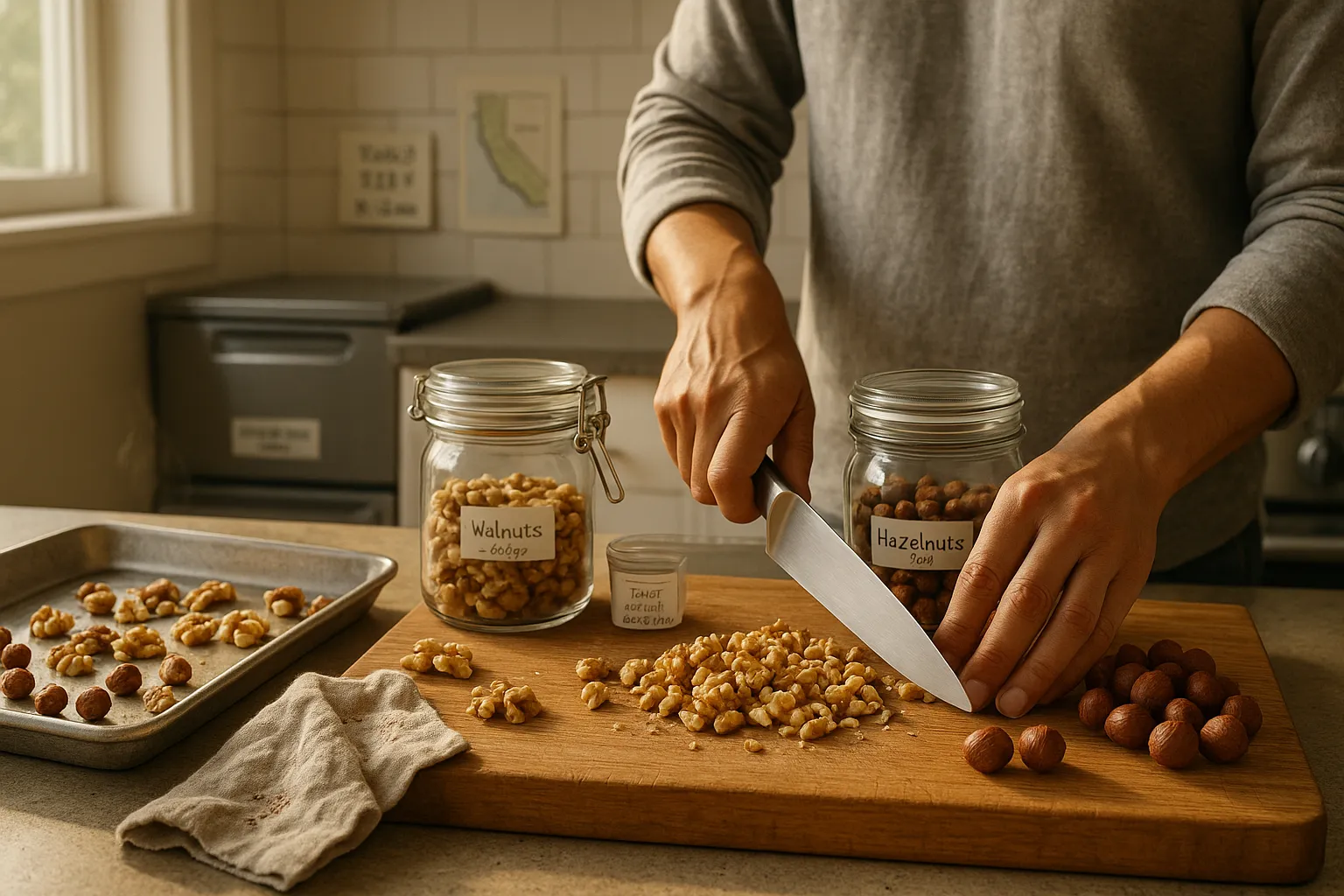
Toast whole nuts on a sheet pan at 325°F for 8–12 minutes, stirring once. Chop walnuts coarsely for salads, pulse hazelnuts fine for pastry. For skin removal on hazelnuts: roast, then rub in a towel to lift skins. For walnut halves, remove bitter inner skins by blanching if needed. Grind gently for nut flours, and avoid overheating to prevent oil separation.
Environmental Impact, Farming, And Cost
Fact: Hazelnuts require less water per kilogram than walnuts, but both crops have local environmental trade-offs. Understanding origin helps choose ethically.
Growing Practices And Sustainability Considerations
Walnut orchards, especially in California, can demand significant irrigation and face water-stress issues during droughts. Hazelnut production in Oregon or Turkey often uses less intensive irrigation and can integrate into mixed farms more easily. Agroforestry and organic practices reduce negative impacts for both. Look for third-party certifications or farmer transparency when sustainability matters to you.
Cost, Availability, And Seasonal Variations
Walnuts are widely available year-round in supermarkets: hazelnuts can be pricier and sometimes seasonal depending on origin. Import fluctuations from Turkey or supply shifts from Oregon affect price. During harvest months (autumn in the Northern Hemisphere) you’ll find the best prices and freshest stock. If cost is a concern, buy in bulk and freeze in portions.
Practical Guide: Choosing Between Walnut And Hazelnut
Fact: Your choice should match cooking purpose, nutrition goals, and taste preference. Use this practical guide to decide quickly.
Which Nut To Use Based On Culinary Purpose
Choose hazelnuts for desserts, chocolate pairings, and any dish that benefits from a sweet, crunchy note. Choose walnuts for savory sauces, salads, and recipes that need a more complex, slightly bitter crunch. For nut-based pestos pick walnuts: for a cookie with a praline note pick hazelnuts.
Which Nut To Choose Based On Health Goals
Choose walnuts to boost plant omega-3s and support brain health. Choose hazelnuts if you want higher vitamin E and an olive-oil-style fat profile to support cholesterol management. Both support heart health when eaten in moderation as part of the Mediterranean diet pattern.
Quick Swap Chart And Final Decision Tips
Swap equal volumes when substituting, but expect flavor shifts: hazelnut → sweeter, more fragrant: walnut → earthier, richer. If you want a neutral swap in baking, toast and blend the nut to a consistent texture. When in doubt pick the nut that complements the other ingredients: chocolate goes hazelnut, sharp cheese goes walnut.
Try this simple test at home: toast a tablespoon of each, taste plain, then with dark chocolate and with roasted beets. Your palate will tell you which one fits your cooking style, and that decision will likely be the right one for your pantry and health goals.
To provide the best experiences, we use technologies like cookies to store and/or access device information. Consenting to these technologies will allow us to process data such as browsing behaviour or unique IDs on this site. Not consenting or withdrawing consent, may adversely affect certain features and functions.
Functional
Always active
The technical storage or access is strictly necessary for the legitimate purpose of enabling the use of a specific service explicitly requested by the subscriber or user, or for the sole purpose of carrying out the transmission of a communication over an electronic communications network.
Preferences
The technical storage or access is necessary for the legitimate purpose of storing preferences that are not requested by the subscriber or user.
Statistics
The technical storage or access that is used exclusively for statistical purposes.The technical storage or access that is used exclusively for anonymous statistical purposes. Without a subpoena, voluntary compliance on the part of your Internet Service Provider, or additional records from a third party, information stored or retrieved for this purpose alone cannot usually be used to identify you.
Marketing
The technical storage or access is required to create user profiles to send advertising, or to track the user on a website or across several websites for similar marketing purposes.