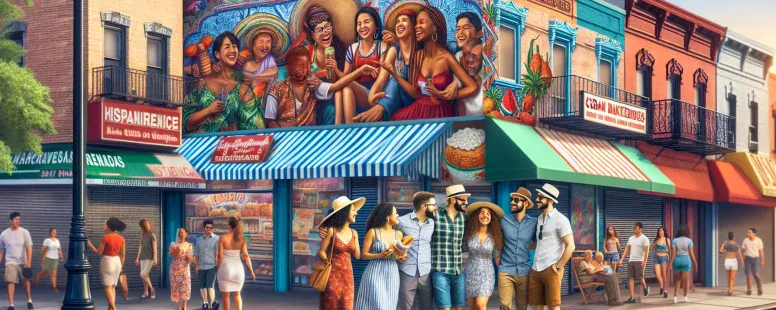
What makes a city feel like home? Is it the vibrant streets buzzing with life, the irresistible aroma of local cuisine, or the sense of community that pulls you in? When comparing Union City and Jersey City, you’re stepping into two worlds that are close in distance but vastly different in character. Each offers its own unique energy, culture, and opportunities.
Union City charms you with its small-town vibe and rich cultural roots, while Jersey City dazzles with its urban skyline and fast-paced lifestyle. Whether you’re drawn to cozy neighborhoods or dynamic cityscapes, these neighboring gems deliver experiences as diverse as their residents. But which one truly fits your rhythm?
Exploring what sets these cities apart could help you uncover hidden perks and surprising challenges. From cost of living to nightlife scenes each has something special waiting for you to discover. So where will your heart lead you?
Overview Of Union City And Jersey City
Union City and Jersey City, though geographically close, offer contrasting lifestyles and environments. Union City is often called the “Embroidery Capital of the World,” celebrating its deep-rooted cultural heritage and vibrant Hispanic community. It’s known for its compact layout, residential feel, and family-oriented neighborhoods.
Jersey City, by contrast, serves as a bustling urban hub with a dynamic skyline dominated by high-rise buildings. The city boasts diverse dining options, art galleries like Mana Contemporary, and proximity to Manhattan via PATH trains. Its waterfront areas provide scenic views of the Hudson River and iconic landmarks like the Statue of Liberty.
Union City’s population density ranks among the highest in the U.S., creating an intimate atmosphere where local businesses thrive. Examples include bakeries offering Cuban pastries or markets showcasing Latin American goods.
In Jersey City you experience more cosmopolitan energy due to its larger size; it’s home to over 292,000 residents (as of 2023). Neighborhoods like Downtown attract young professionals with trendy cafes while Greenville maintains a more suburban vibe.
Both cities cater to different needs—whether you prefer community-focused living or metropolitan convenience depends on your lifestyle priorities.
Comparing Cost Of Living
Union City and Jersey City differ significantly in terms of cost of living, impacting housing, daily expenses, and overall affordability. These factors influence lifestyle choices based on budget constraints.
Housing Market
Housing costs in Union City are generally lower than in Jersey City. Median rent prices for a one-bedroom apartment can be around $1,600 in Union City compared to $2,800 in Jersey City’s Downtown district. While Union City’s residential areas offer smaller homes and apartments with a suburban charm, Jersey City’s real estate includes luxury high-rises near the waterfront. Homeownership similarly reflects this gap; median home values hover near $400,000 in Union City but exceed $600,000 in many parts of Jersey City.
Even though higher prices, Jersey City’s neighborhoods like Journal Square provide more affordable options compared to its Downtown area. In contrast, Union City’s densely packed housing fosters community connections while catering to middle-income families.
Daily Expenses
Daily costs such as groceries and dining vary between the cities but remain slightly lower overall in Union City. A meal at an inexpensive restaurant might cost about $15 there versus $20-$25 in popular areas of Jersey City like Grove Street or Exchange Place. Grocery stores priced competitively—like those stocking Latin American goods—are more common throughout Union City.
Transportation costs also differ due to connectivity options; commuting via PATH trains from Jersey City ensures quick Manhattan access but incurs higher monthly transit expenses than NJ Transit buses serving Union City’s residents.
Lifestyle And Culture
Union City and Jersey City both offer distinct lifestyles shaped by their demographics, histories, and cultural influences. While Union City exudes a close-knit, community-driven atmosphere, Jersey City’s urban energy attracts diverse crowds with its bustling streets and modern amenities.
Dining And Entertainment
Union City’s dining scene reflects its vibrant Hispanic heritage. Local restaurants serve authentic dishes like Cuban sandwiches from casual cafes or hearty plates of arroz con pollo at family-owned eateries. Small bakeries on Bergenline Avenue sell fresh pastries like tres leches cake and empanadas. Entertainment options are more modest but intimate, featuring local theaters and occasional street performances.
Jersey City boasts a cosmopolitan array of dining choices. From high-end steakhouses near the waterfront to trendy vegan bistros in Downtown neighborhoods, there’s something for every palate. Grove Street hosts events like food festivals where you can sample cuisines from around the globe. Nightlife thrives here too—bars with live music, rooftop lounges offering skyline views, and art-centric venues like White Eagle Hall cater to varied interests.
Community And Events
Union City’s strong sense of community is evident through regular cultural celebrations such as the annual Cuban Day Parade that honors its immigrant roots. Residents often gather at parks for weekend soccer matches or outdoor concerts during summer months. Churches frequently host charity drives or festivals that bring neighbors together.
In contrast, Jersey City’s event calendar includes large-scale gatherings appealing to broader audiences. The All About Downtown Street Fair draws thousands with artisan vendors and live entertainment while Liberty State Park serves as a venue for outdoor activities like yoga classes or movie screenings under the stars. Diverse communities unite during occasions such as Holi celebrations or LGBTQ+ pride marches held throughout the city.
Transportation And Accessibility
Union City and Jersey City offer contrasting transportation options that cater to different needs. Union City’s compact layout, with its densely packed streets, makes walking a convenient way to navigate the area. NJ Transit buses are the primary public transit option, connecting you to major hubs like Port Authority in Manhattan and nearby towns across Hudson County. These buses run frequently but can get crowded during peak hours.
Jersey City provides more extensive transit infrastructure due to its size and urban nature. The PATH train system offers swift connections to Manhattan, Newark, and Hoboken, making it ideal for commuters working in New York City. Light Rail services further enhance intra-city mobility by linking neighborhoods like Downtown Jersey City, Newport, and Liberty State Park.
If your priority is easy access to Manhattan at a higher cost, Jersey City’s transit options outperform Union City’s bus network. But, if affordability and proximity matter more than speed or comfort during your daily commute, Union City meets those criteria effectively.
Ride-sharing services such as Uber and Lyft operate widely in both cities but tend to be more expensive during rush hours or bad weather conditions. Cyclists find better infrastructure in Jersey City with dedicated bike lanes along main thoroughfares like Grand Street and Marin Boulevard; meanwhile, Union City’s narrow streets pose challenges for safe cycling routes.
For car owners considering parking convenience or costs—Union City’s limited street parking might feel restrictive compared against Jersey City’s mix of residential permits alongside metered spaces near commercial areas.
Education And Employment Opportunities
Education and employment options in Union City and Jersey City reflect their distinct demographics and urban structures. Each city provides unique advantages depending on your priorities.
Schools And Universities
Union City’s public schools, managed by the Union City School District, are known for serving a largely Hispanic student body. Programs like bilingual education support students from diverse linguistic backgrounds. The city’s commitment to education is evident in institutions such as Union City High School, which features an innovative rooftop football field.
Jersey City offers a broader range of educational institutions. Public schools operate under the Jersey City Public Schools system, with magnet programs like McNair Academic High School ranking among New Jersey’s top high schools. Higher education options include Hudson County Community College and Saint Peter’s University, providing accessible opportunities for local residents to pursue degrees or certifications.
While Union City’s focus remains on catering to its close-knit community, Jersey City’s wider selection of private schools (e.g., Hamilton Park Montessori) and specialized programs caters to families seeking varied academic environments.
Job Market
Union City’s job market centers on small businesses and local services. Industries like textile manufacturing historically shaped the economy but have gradually shifted towards retail, food services (e.g., family-owned restaurants), and healthcare roles that align with community needs.
Jersey City boasts a more dynamic employment landscape due to its proximity to Manhattan and thriving financial district at Exchange Place. Major employers include companies in finance (Goldman Sachs), technology startups, healthcare systems (RWJBarnabas Health), and logistics due to its port operations.
Commuters often favor Jersey City’s PATH train access for jobs across New York City while Union City’s affordability appeals those who prioritize cost-effective living over job location flexibility.
Conclusion
Choosing between Union City and Jersey City eventually depends on what aligns best with your lifestyle and priorities. Both cities offer unique advantages, whether you’re drawn to the community-focused charm of Union City or the fast-paced energy of Jersey City.
Consider factors like cost of living, commuting needs, cultural vibe, and available amenities as you evaluate which city feels like home. Each offers a distinct experience that caters to different preferences, making your choice an opportunity to embrace what suits you most.
To provide the best experiences, we use technologies like cookies to store and/or access device information. Consenting to these technologies will allow us to process data such as browsing behaviour or unique IDs on this site. Not consenting or withdrawing consent, may adversely affect certain features and functions.
Functional
Always active
The technical storage or access is strictly necessary for the legitimate purpose of enabling the use of a specific service explicitly requested by the subscriber or user, or for the sole purpose of carrying out the transmission of a communication over an electronic communications network.
Preferences
The technical storage or access is necessary for the legitimate purpose of storing preferences that are not requested by the subscriber or user.
Statistics
The technical storage or access that is used exclusively for statistical purposes.The technical storage or access that is used exclusively for anonymous statistical purposes. Without a subpoena, voluntary compliance on the part of your Internet Service Provider, or additional records from a third party, information stored or retrieved for this purpose alone cannot usually be used to identify you.
Marketing
The technical storage or access is required to create user profiles to send advertising, or to track the user on a website or across several websites for similar marketing purposes.