Picture a world where the devices you rely on daily—your phone, laptop, or even your refrigerator—suddenly stopped working. Behind the scenes of these modern marvels lies an invisible force: electricity. But what makes it flow so effortlessly? The answer often comes down to the materials at play.
Copper and aluminum are two names that frequently pop up in conversations about electrical conductivity. They’re used in everything from power lines to intricate circuits, but why? Are they truly as good at conducting electricity as they’re claimed to be, or is this just a widely accepted assumption? Understanding their role could reshape how you think about the technology woven into your life.
Dive deeper into this electrifying topic to uncover whether copper and aluminum deserve their reputation—or if there’s more than meets the eye.
Understanding Electrical Conductivity
Electrical conductivity measures a material’s ability to allow electric current flow. Materials like copper and aluminum are widely recognized for their high conductivity, making them staples in electrical applications such as wiring and circuits.
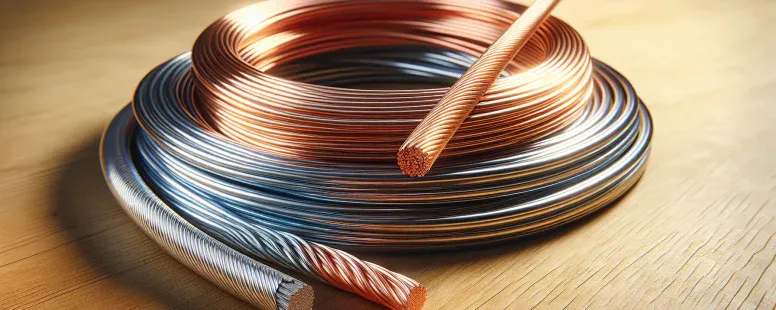
Copper exhibits excellent conductivity due to its atomic structure, which allows free movement of electrons. For example, a standard household copper wire efficiently transmits electricity with minimal resistance. Industries prioritize copper for high-performance requirements like power generation and telecommunications.
Aluminum also ranks highly among conductive materials but is less efficient than copper by about 40%. Even though this, its lightweight nature and cost-effectiveness make it ideal for large-scale uses such as overhead power lines. Its application balances performance with economic considerations.
Both metals owe their conductivity to their electron configurations—copper has one loosely bound electron in its outer shell, while aluminum has three. This enables both to support the flow of electric charge effectively under most conditions.
True Or False: Copper And Aluminium Are Good Conductors Of Electricity
Copper and aluminum are widely recognized as effective electrical conductors. Their properties make them essential in various industries, but examining their specific characteristics highlights why they’re so valued in conductivity.
Properties Of Copper As A Conductor
Copper exhibits exceptional electrical conductivity due to its atomic structure. Its single loosely bound electron allows for minimal resistance during electric current flow. This efficiency makes it the standard material for wiring in power generation, telecommunications, and electronic devices.
For example, copper’s conductivity is approximately 5.96 × 10^7 S/m (siemens per meter) at room temperature, placing it among the highest of all metals. This high value ensures consistent performance even under challenging conditions where energy loss needs to be minimized.
Even though these advantages, copper is more expensive than aluminum and weighs significantly more—factors that can limit its practicality in certain applications like long-distance power transmission or large-scale installations.
Properties Of Aluminium As A Conductor
Aluminum ranks lower in conductivity compared to copper but offers unique benefits that compensate for this shortfall. With a conductivity of about 3.5 × 10^7 S/m—roughly 40% less efficient than copper—it still supports efficient electricity transfer when weight and cost considerations dominate design choices.
Its lightweight nature (approximately one-third that of copper) reduces structural loads in overhead cables and transportation systems. Aluminum also forms an oxide layer upon exposure to air; while this slightly hampers surface conduction initially, it provides corrosion resistance over time—a valuable trait for outdoor or industrial use cases like power grids or aircraft wiring systems.
Though not as conductive as copper on a per-volume basis, aluminum compensates by being cheaper and easier to handle during manufacturing processes requiring large-scale material deployment.
Comparison Between Copper And Aluminium Conductivity
Copper and aluminum are both renowned for their electrical conductivity, yet they differ significantly in efficiency and application. Understanding these differences helps you make informed choices for specific electrical needs.
Factors Affecting Conductivity
Material purity directly impacts conductivity. For example, high-purity copper exhibits superior conductivity compared to alloys or impurities-laden variants. Similarly, the presence of alloying elements in aluminum reduces its overall conductive capacity.
Atomic structure influences electron flow. Copper’s tightly packed atomic arrangement facilitates low resistance, while aluminum’s less dense structure results in comparatively higher resistance levels.
Temperature changes affect performance differently. Copper maintains consistent conductivity under heat stress, whereas aluminum experiences a more pronounced decline as temperatures rise.
Oxidation plays a role in outdoor applications. Aluminum forms an insulating oxide layer that can impede conductivity unless properly managed; but, copper resists oxidation better without significant performance loss.
Practical Applications In Electrical Systems
Copper dominates wiring systems where reliability is crucial, like residential circuits and telecommunications networks. Its exceptional current-carrying capacity ensures minimal voltage drops over long distances.
Aluminum excels in large-scale infrastructure such as power transmission lines. Its lightweight nature eases installation on towers and reduces overall structural demands even though offering lower conductivity than copper.
Copper finds extensive use in precision components like connectors and motor windings due to its durability and excellent thermal management properties critical for stability under heavy loads.
Aluminum suits cost-sensitive projects requiring corrosion-resistant materials for harsh environments. Examples include outdoor lighting fixtures and industrial busbars where affordability outweighs slightly reduced efficiency.
Both metals complement each other across industries depending on technical requirements—copper for unmatched efficiency; aluminum when weight reduction or budget constraints take precedence.
Myths And Misconceptions About Conductors
Beliefs about electrical conductors, like copper and aluminum, often oversimplify their properties. These oversights can lead to misconceptions that impact material choices in technology and industry.
All Metals Are Good Conductors
Not all metals exhibit efficient conductivity. For instance, while copper offers high conductivity at 5.96 × 10^7 S/m, materials like stainless steel perform poorly due to higher resistance levels. Assuming all metals work equally well disregards critical factors such as atomic structure and purity.
Copper Is Always The Best Choice
Though copper excels in many applications, it isn’t universally optimal. Its cost and weight limit its use in scenarios like overhead power lines where lightweight alternatives matter more. Aluminum’s lower conductivity (around 3.5 × 10^7 S/m) is often acceptable given its reduced weight and cost-effectiveness.
Aluminum Is A Subpar Conductor
Even though being less conductive than copper, aluminum serves effectively in large-scale infrastructure projects because of its unique attributes—lightweight nature and corrosion resistance through oxide layer formation make it indispensable for outdoor uses.
Conductivity Remains Constant Across Conditions
Environmental variables alter material performance significantly; temperature increases reduce aluminum’s efficiency faster than they do for copper, which maintains stability under heat stress.
Scientific Evidence Supporting Conductivity
Copper and aluminum are scientifically proven to be excellent conductors of electricity, supported by extensive research and measurable data. Conductivity, quantified in siemens per meter (S/m), directly correlates with a material’s atomic structure and electron mobility. Copper’s high conductivity of approximately 5.96 × 10^7 S/m stems from its nearly free-flowing electrons, which face minimal resistance during electric current flow.
Research published in the Journal of Applied Physics highlights copper’s superior efficiency under varying conditions. Its low resistivity ensures consistent performance even at elevated temperatures, making it ideal for high-demand applications like power generation and telecommunications cables.
Aluminum, while less conductive than copper with a value around 3.5 × 10^7 S/m, compensates with its lightweight nature and corrosion resistance. Studies from the Institute of Electrical Engineering confirm that aluminum forms a protective oxide layer when exposed to air, preventing degradation in outdoor environments like overhead power lines or industrial facilities.
Temperature significantly impacts both materials’ conductivity but in differing ways. Copper maintains stability due to its robust atomic bonds; meanwhile, aluminum exhibits greater sensitivity to heat-induced expansion that increases resistive losses.
Empirical testing further validates these properties through practical applications: for instance, copper is predominantly used in household wiring systems where reliability is critical. In contrast, aluminum dominates large-scale infrastructure projects such as transmission towers due to weight advantages that reduce structural stress without compromising functionality.
These findings underscore how scientific understanding of atomic behavior supports the practical use of copper and aluminum across industries globally—encouraging you to consider their unique benefits based on specific needs rather than misconceptions surrounding “ideal” conductors alone.
Conclusion
Copper and aluminum are undeniably valuable in the world of electrical conductivity, each excelling in different aspects. Their unique properties make them indispensable for a variety of applications, from household wiring to large-scale infrastructure. When choosing between these materials, it’s essential to weigh factors like cost, efficiency, and environmental conditions to determine which best suits your needs.
Understanding the science behind their conductivity helps you make informed decisions about their use in technology. By appreciating their individual strengths and limitations, you can fully use the benefits they bring to modern advancements in electricity and beyond.
To provide the best experiences, we use technologies like cookies to store and/or access device information. Consenting to these technologies will allow us to process data such as browsing behaviour or unique IDs on this site. Not consenting or withdrawing consent, may adversely affect certain features and functions.
Functional
Always active
The technical storage or access is strictly necessary for the legitimate purpose of enabling the use of a specific service explicitly requested by the subscriber or user, or for the sole purpose of carrying out the transmission of a communication over an electronic communications network.
Preferences
The technical storage or access is necessary for the legitimate purpose of storing preferences that are not requested by the subscriber or user.
Statistics
The technical storage or access that is used exclusively for statistical purposes.The technical storage or access that is used exclusively for anonymous statistical purposes. Without a subpoena, voluntary compliance on the part of your Internet Service Provider, or additional records from a third party, information stored or retrieved for this purpose alone cannot usually be used to identify you.
Marketing
The technical storage or access is required to create user profiles to send advertising, or to track the user on a website or across several websites for similar marketing purposes.