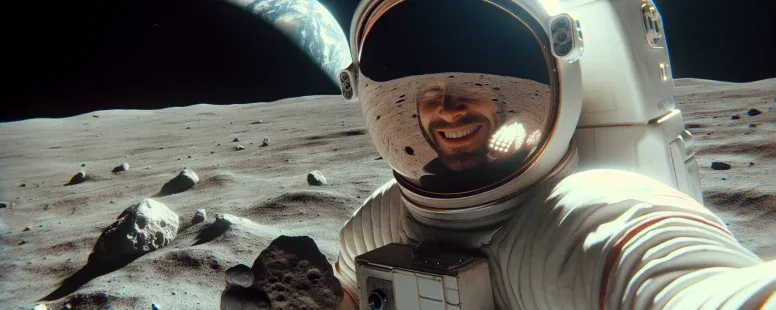
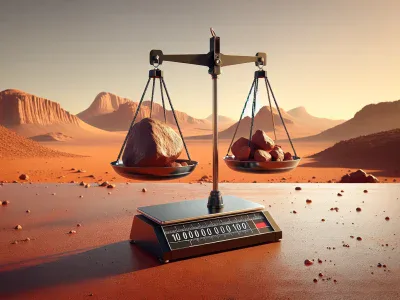
Picture standing on a surface where gravity feels like it’s taken a step back, almost as if the weight of the world has been lifted—literally. The moon, with its barren beauty and lower gravitational pull, offers just that experience. But how this celestial difference impacts the weight of objects?
You’ve likely heard that things weigh less on the moon, but is it really true? And if so, why does this happen? Understanding the science behind this phenomenon not only deepens your appreciation for physics but also sparks curiosity about how our universe works. Let’s explore whether an object truly weighs less on the moon and uncover what makes these two worlds so distinct.
Understanding Weight And Gravity
Weight represents the force exerted on an object due to gravity. It changes depending on the gravitational pull of the celestial body you’re on.
What Determines Weight?
Mass and gravity determine weight. Mass, measured in kilograms or pounds, remains constant regardless of location. Gravity varies based on a planet or moon’s size and density. For example, Earth’s gravitational acceleration is 9.8 m/s², while it’s only 1.62 m/s² on the Moon.
Using a scale to measure weight reflects the local gravitational pull acting upon your mass. On Earth, a 150-pound person weighs about 25 pounds on the Moon because lunar gravity is roughly one-sixth that of Earth’s.
How Gravity Affects Weight On Different Celestial Bodies
Gravity directly impacts weight by altering how much force acts upon an object’s mass. Larger planets like Jupiter exhibit stronger gravity (24.79 m/s²), making objects weigh more than they do on Earth, while smaller bodies like Mars (3.71 m/s²) reduce apparent weight.
In microgravity environments such as space stations orbiting Earth, you experience near-weightlessness since there’s minimal gravitational force pulling you toward any surface.
Comparing weights across celestial bodies clarifies these differences:
Celestial Body
Gravitational Acceleration (m/s²)
Weight of 150-lb Person (lbs)
Earth
9.8
150
Moon
1.62
~25
Mars
3.71
~57
Jupiter
24.79
~375
True Or False: An Object Weighs Less On The Moon Than It Does On Earth
True. An object weighs less on the Moon than it does on Earth because of the Moon’s lower gravitational force. Weight is directly proportional to gravity, and since the Moon’s gravity is about 1/6th of Earth’s, objects weigh significantly less there.
Comparing Gravity On The Moon And Earth
Gravity on the Moon measures approximately 1.62 m/s², compared to Earth’s 9.8 m/s². This difference means that an object experiencing a downward force due to gravity on Earth will feel much lighter when placed on the lunar surface. For instance, a rock weighing 12 pounds on Earth would weigh only 2 pounds on the Moon.
Earth’s larger mass and size generate stronger gravitational pull than the smaller and less dense Moon. As a result, astronauts can jump higher and carry heavier equipment with ease during lunar missions—something impossible under Earth’s gravity.
The Science Behind Weight Difference
Weight depends upon two factors: mass and gravitational acceleration (weight = mass × gravity). While your mass stays constant regardless of location, changes in gravitational acceleration alter your weight.
For example:
Celestial Body
Gravitational Acceleration (m/s²)
Weight of a 150 lb Person (lbs)
Earth
9.8
150
Moon
1.62
~25
The reduced weight occurs because fewer newtons of force act upon objects in weaker gravitational fields like those found on the Moon or other small celestial bodies.
Real-Life Examples And Experiments
Understanding weight differences between Earth and the Moon becomes clearer through real-world examples and experiments.
Astronaut Experiences On The Moon
Astronauts’ activities during Apollo missions highlighted reduced gravity’s effects. While on the Moon, Neil Armstrong and Buzz Aldrin effortlessly leaped higher than possible on Earth due to lunar gravity being only 1/6th as strong. This allowed them to carry heavy equipment, which would be cumbersome under Earth’s gravitational pull. For example, a spacesuit weighing 180 pounds on Earth felt like just 30 pounds on the Moon, enabling easier mobility.
Video recordings from these missions demonstrate astronauts moving in slow-motion-like strides. These movements occurred because of decreased gravitational acceleration (1.62 m/s²). Observing their ability to jump multiple feet into the air reinforces how weaker gravity directly influences weight perception.
Demonstrations Of Weight Differences
Experiments conducted during lunar missions visually displayed weight disparities. In one instance, astronaut David Scott dropped a feather and a hammer simultaneously while standing on the Moon’s surface. With no atmospheric resistance present, both objects hit the ground at the same time—validating Galileo’s principle that all objects fall at equal rates in vacuum conditions regardless of their mass.
Another notable demonstration involves tools used for samples collection. A geologist hammer weighing approximately 3 pounds on Earth felt less than half-a-pound on the Moon when held by astronauts due to reduced gravitational force acting upon it.
These instances not only highlight fundamental physics concepts but also showcase tangible effects of differing celestial gravities through memorable visual evidence captured during space exploration missions.
Implications Of Weight Variation
Weight variation between celestial bodies influences various fields, from space exploration to education. Understanding these differences helps you grasp the broader impact of gravity.
Impact On Space Exploration And Technologies
Reduced gravity on the Moon impacts how missions are planned and executed. Equipment design for lunar exploration considers lighter weight requirements due to reduced gravitational pull. For example, lunar rovers weigh less on the Moon, enabling easier maneuverability and transport.
Astronaut training also adapts to replicate Moon-like conditions. Neutral buoyancy pools simulate low-gravity environments, preparing astronauts for mobility challenges they’ll face during Moonwalks. Lunar dust handling technology accounts for its unique behavior under weaker gravity—particles stick more readily due to electrostatic forces.
Gravitational differences extend beyond equipment and training, affecting future colonization plans. For instance, structures on the Moon require lower material strength compared to Earth because of reduced weight loads. But, challenges arise in maintaining human health; prolonged exposure to low-gravity weakens bones and muscles over time.
Relevance In Science Education
Teaching about weight variation enhances understanding of fundamental physics concepts like mass and gravitational force. You can use engaging examples from Apollo missions or experiments demonstrating these principles in action.
Interactive activities improve comprehension among students. Simulating different gravities using weighted objects or VR technology makes learning tactile and memorable. Posing questions like “Why do astronauts leap higher on the Moon?” encourages critical thinking about real-world applications of scientific laws.
Conclusion
Understanding how gravity impacts weight across different celestial bodies opens up fascinating insights into physics and space exploration. The Moon’s significantly weaker gravitational pull compared to Earth creates unique conditions that affect everything from astronaut mobility to equipment design. Exploring these differences not only deepens your knowledge of fundamental concepts but also sparks curiosity about the challenges and opportunities in future lunar missions and beyond.
To provide the best experiences, we use technologies like cookies to store and/or access device information. Consenting to these technologies will allow us to process data such as browsing behaviour or unique IDs on this site. Not consenting or withdrawing consent, may adversely affect certain features and functions.
Functional
Always active
The technical storage or access is strictly necessary for the legitimate purpose of enabling the use of a specific service explicitly requested by the subscriber or user, or for the sole purpose of carrying out the transmission of a communication over an electronic communications network.
Preferences
The technical storage or access is necessary for the legitimate purpose of storing preferences that are not requested by the subscriber or user.
Statistics
The technical storage or access that is used exclusively for statistical purposes.The technical storage or access that is used exclusively for anonymous statistical purposes. Without a subpoena, voluntary compliance on the part of your Internet Service Provider, or additional records from a third party, information stored or retrieved for this purpose alone cannot usually be used to identify you.
Marketing
The technical storage or access is required to create user profiles to send advertising, or to track the user on a website or across several websites for similar marketing purposes.