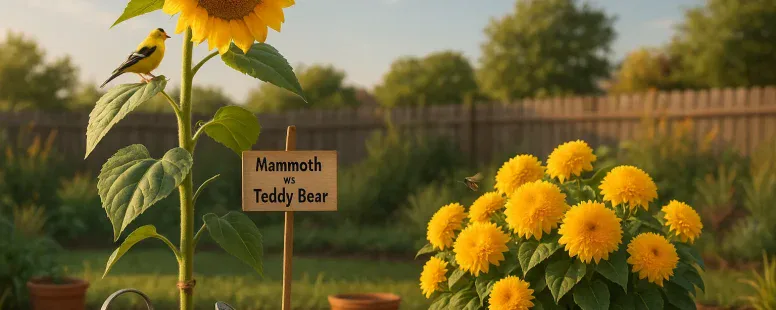
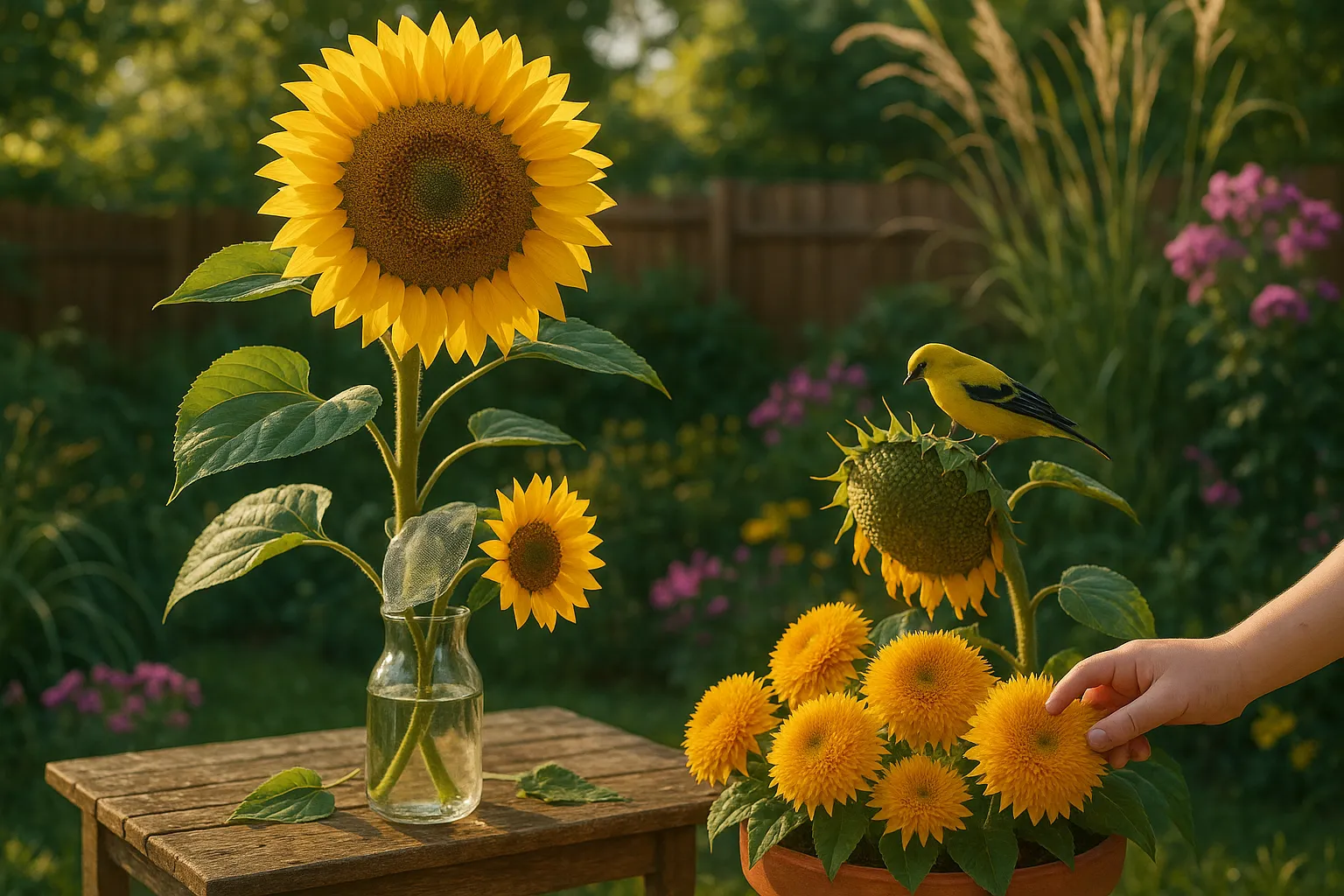
You can grow two very different sunflower experiences in the same season: the towering, old‑fashioned Mammoth and the compact, fluffy Teddy Bear. Both are Helianthus annuus varieties, but they serve different purposes in your garden and in your vase. This guide pitches Mammoth vs. Teddy Bear on size, care, problems, and uses, so you can pick the right plant for your space, schedule, and design goals. Expect clear comparisons, practical tips, and honest warnings so you avoid common mistakes and get more blooms with less fuss.
Quick Side‑By‑Side Comparison
Fact: Mammoth and Teddy Bear solve different gardening needs. Mammoth gives height and big cut-flowers: Teddy Bear gives compact, many-headed displays.
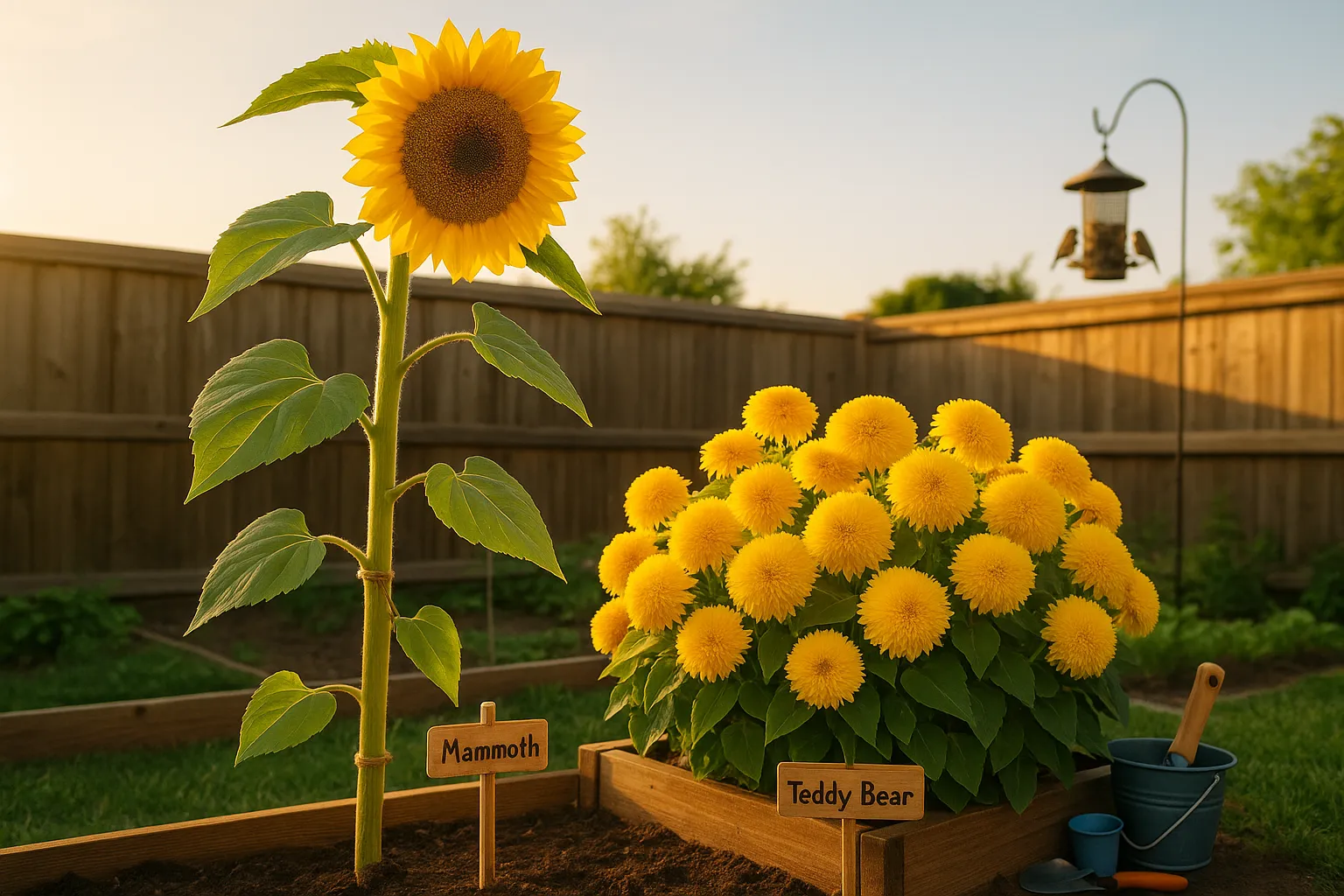
Mammoth (Helianthus annuus ‘Mammoth’): Height 8–12+ feet: single large flower heads often 10–14 inches across: classic yellow ray florets around a dark center: strong stems but may need staking. Best for tall screens, dramatic focal points, and large cut bouquets.
Teddy Bear (often sold as ‘Teddy Bear’ or ‘Little Prince’ types): Height 2–4 feet: multiple pom‑pom style blooms 3–5 inches across: double‑petaled, fuzzy appearance: bushy habit that fills space without support. Best for borders, containers, and kid‑friendly plots.
Quick numbers to help you compare at a glance:
Days to bloom: Mammoth 80–100: Teddy Bear 60–75.
Sun requirement: Full sun for both (6+ hours/day).
Cold tolerance: Both are annuals: start after frost.
If you want drama and seed for birds, choose Mammoth. If you want low maintenance, many flowers, and child-safe beds, choose Teddy Bear.
Detailed Variety Profiles
Mammoth Sunflower: Appearance, Size, And Growth Habit
Fact: Mammoth is the archetypal giant sunflower used for tall backdrops and long‑stem cutting. The Mammoth variety features a single dominant terminal head that can reach 10–14 inches across. Leaves are large and rough: stems are thick but can bend under heavy flower weight. You will see birds like goldfinches visit the seeds late season. Mammoth is genetically selected for head size and seed production, that’s why it’s popular for sunflower contests and wildlife plantings.
Mammoth performs best when planted in open sites where it can get full sun and unobstructed height. It may branch if you pinch the tip early, but most gardeners let it grow to full height to keep a single giant bloom for cutting.
Teddy Bear Sunflower: Appearance, Size, And Growth Habit
Fact: Teddy Bear is a dwarf, double‑petaled variety that produces many small, fuzzy blooms. Each flower looks almost like a chrysanthemum rather than a classic sunflower. Plants reach 2–4 feet and form dense, bushy clumps. The double florets reduce seed production, which makes them less attractive to seed‑eating birds but more attractive as decorative bedding plants.
You will plant Teddy Bear when you want continuous color over several weeks and minimal staking. The plant branches vigorously and can produce dozens of blooms per plant, giving a cottage‑garden look with less vertical impact than Mammoth.
Growing And Care Requirements
Site, Soil, And Light Preferences
Fact: Both varieties prefer full sun and well‑drained soil. Sunflowers do best in loamy soil with pH 6.0–7.5. They tolerate poorer soils, but heavy clay or constantly wet ground will stunt roots and cause stem rot.
Plant Mammoth where the plant won’t shade smaller neighbors. Choose a site with at least 6–8 hours of direct sun. For Teddy Bear, a sunny border or a large container works fine, but ensure good drainage.
Planting, Spacing, And Sowing Timeline
Fact: Timing matters. Sow after the last hard frost when soil warms to 50°F+.
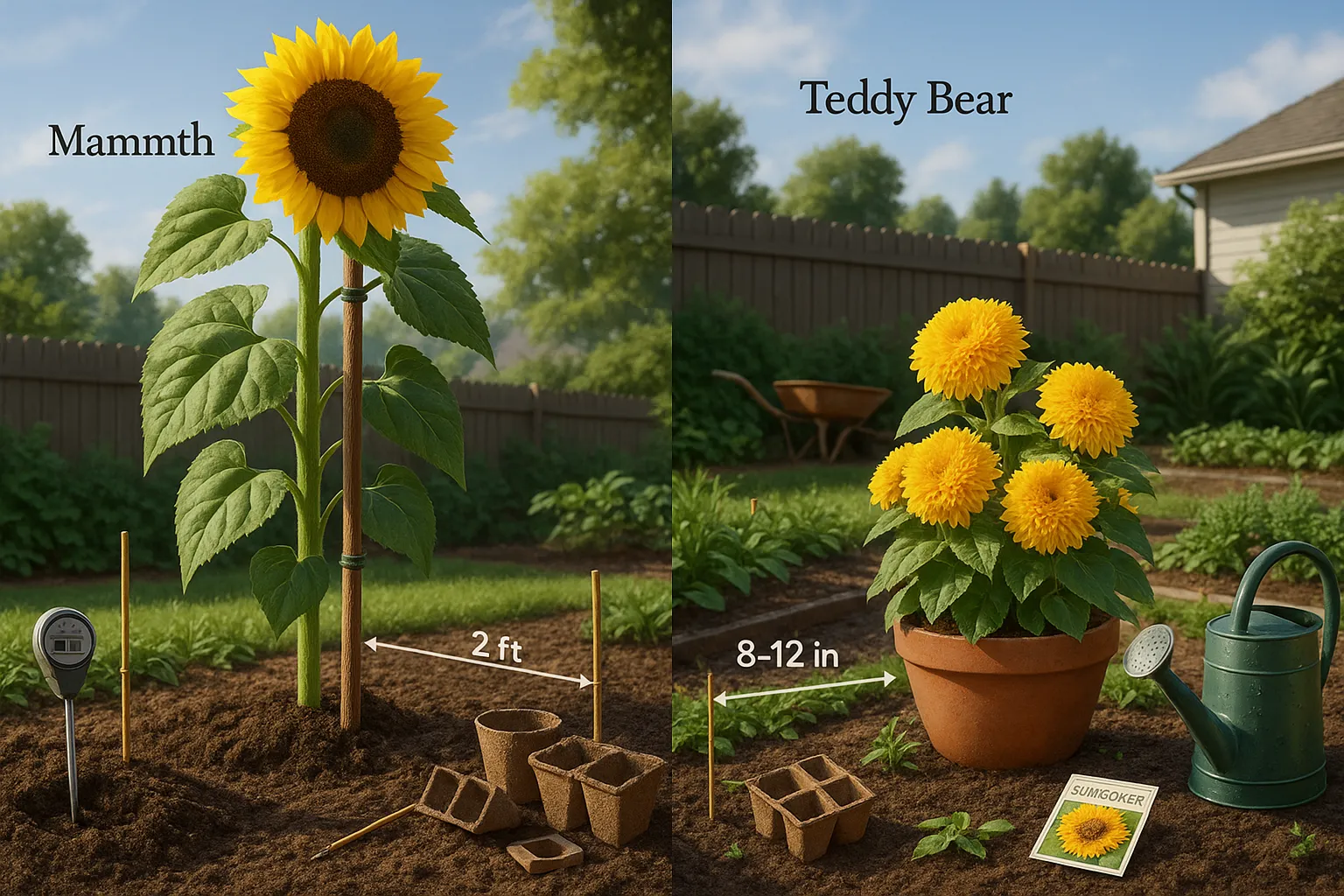
Mammoth: Sow seeds 1–2 inches deep, spaced 1–2 feet apart if you want multiple giants: otherwise 2–3 feet for single specimens. You can start indoors 2–3 weeks early in peat pots to avoid root disturbance, but direct sowing is simplest.
Teddy Bear: Sow seeds 1 inch deep and 8–12 inches apart. They transplant well, so you can start seedlings in trays 4–6 weeks before last frost.
Succession sow Teddy Bear every 2–3 weeks for continuous bloom. Mammoth needs longer to mature, so plan a single planting early in the season.
Watering, Fertilizing, And Support Needs
Fact: Sunflowers need consistent moisture during establishment and bloom: they do not like waterlogged soil.
Water: Provide 1 inch of water per week, more in hot, dry spells. Deep water encourages strong roots.
Fertilizer: Use a balanced fertilizer (10-10-10) sparingly. Overfeeding nitrogen leads to lush leaves but fewer flowers. For Mammoth, a side dressing when plants are 2–3 feet tall helps flower development.
Support: Stake Mammoth if you grow in windy areas or heavy soil. Teddy Bear rarely needs support.
Follow common sense: let soil dry slightly between waterings, and mulch to conserve moisture and suppress weeds.
Common Problems And Solutions
Pests And Diseases: Identification And Control
Fact: Sunflowers face a predictable set of pests and fungal issues. Common pests include aphids, cutworms, sunflower moths, and birds. Fungal problems include powdery mildew and sclerotinia (white mold).
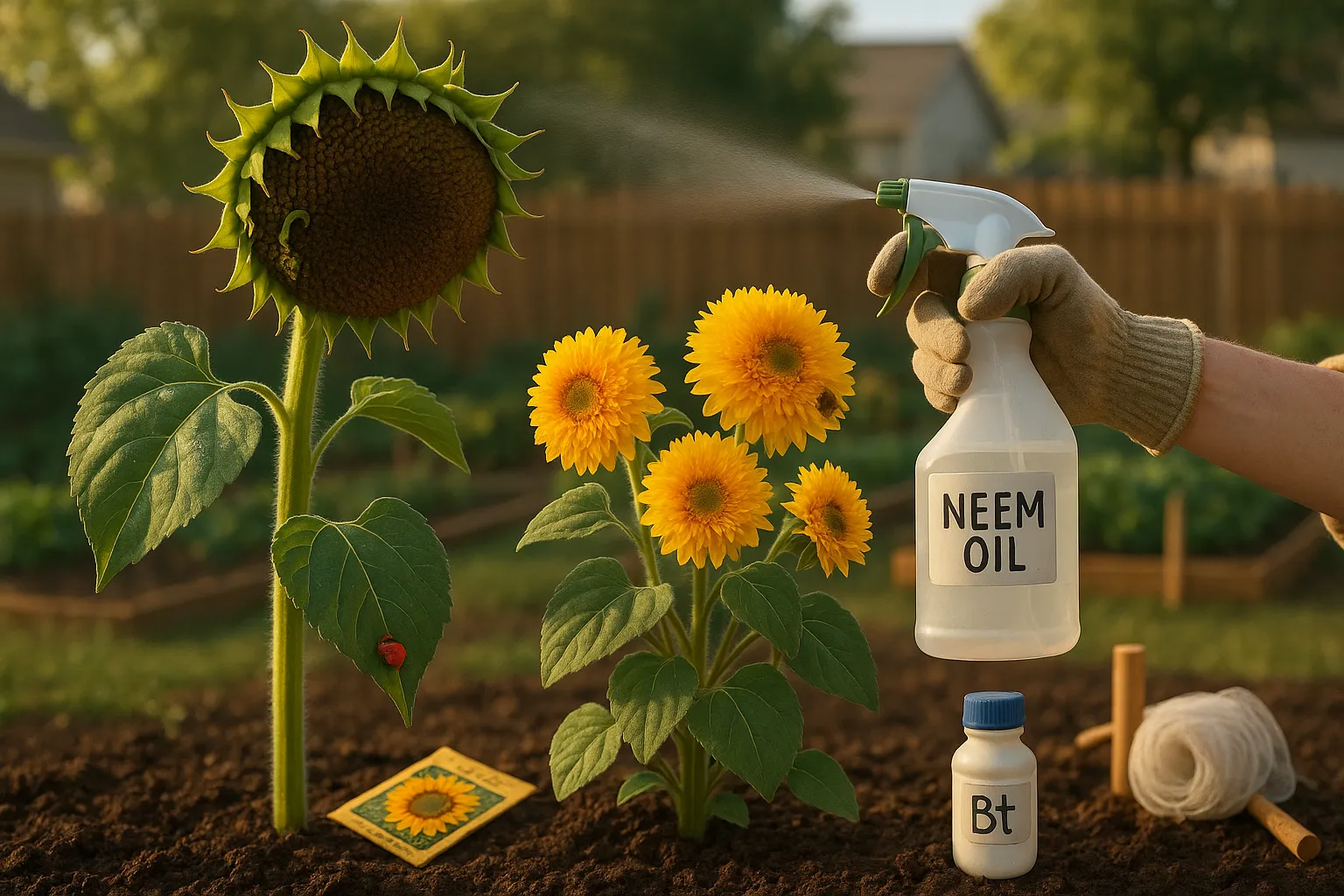
Aphids: Look for clusters on new growth. Control by spraying with a strong stream of water, using insecticidal soap, or releasing ladybugs (Coccinella septempunctata).
Sunflower moths and caterpillars: Remove affected heads and use Bacillus thuringiensis (Bt) for larvae control.
Birds: Net the heads close to bloom if you want seed: otherwise leave them, they provide food for finches.
Powdery mildew: Improve air flow by spacing plants and avoid overhead watering. Use neem oil or fungicidal sprays if severe.
Sclerotinia: Rotate crops and avoid planting sunflowers in the same spot year after year.
Poor Germination, Bolting, And Low Blooming: Fixes
Fact: Germination fails mostly due to cold soil, old seed, or pests.
Poor germination: Use fresh seed and plant when soil is warm. Pre‑soak seeds 12–24 hours to speed germination, but don’t overdo it or seeds rot.
Bolting: This is rare for annual sunflowers, but stress from drought can cause uneven growth. Keep moisture steady and mulch to regulate soil temperature.
Low blooming: Check light, less than 6 hours will reduce flowers. Cut back excessive nitrogen feed and deadhead Teddy Bear to encourage new blooms. For Mammoth, avoid overpinching which reduces final head size.
Honest note: You will lose a few seedlings now and then. That’s normal. Replant quickly so later sowings keep the display full.
Uses, Styling, And Landscape Ideas
Best Uses For Mammoth: Cut Flowers, Wildlife, And Focal Points
Fact: Mammoth makes dramatic cut flowers and feeds wildlife. A single Mammoth stem gives a bold, stand‑alone bloom for a statement vase. Leave spent heads for birds, the seeds feed sparrows, cardinals, and goldfinches. Use Mammoth at the back of a border or as a seasonal screen. Pair with tall grasses like Miscanthus or Perennial Phlox for a late‑summer tapestry.
Styling tip: Cut Mammoth stems early in the morning and place them in deep water: they last longer when you remove lower leaves. If you want seeds, let heads ripen on the plant and cover with netting to protect from hungry birds.
Best Uses For Teddy Bear: Borders, Containers, And Kids’ Gardens
Fact: Teddy Bear fills space quickly with cheerful, soft blooms and is kid‑friendly. Plant them in front borders, mixed containers, or a children’s sensory garden where soft petals are easy to touch. Teddy Bear’s compact size makes it suited for urban balconies and school plots.
Styling tip: Mix Teddy Bear with zinnias, cosmos, or salvias for a pollinator magnet. Deadhead spent blooms to keep the plant producing. They’re nice in low vases or mason jars for casual arrangements that kids can help make.
How To Choose Between Mammoth And Teddy Bear
Decision Checklist: Space, Purpose, Maintenance, And Timeline
Fact: Match the variety to your space and goals using four simple criteria.
Space: If you have tall back borders, fields, or open yard, Mammoth fits. If you have small yards, containers, or front borders, pick Teddy Bear.
Purpose: For large cut bouquets or bird seed, pick Mammoth. For mass planting, color, and child‑friendly beds, pick Teddy Bear.
Maintenance: Mammoth may need staking and more water: Teddy Bear needs less support and more frequent deadheading.
Timeline: If you want earlier blooms and repeat flower flushes, pick Teddy Bear: for late‑season spectacle, pick Mammoth.
Use this quick rubric to decide: choose the plant that meets your height allowance, desired floral form, and time willingness.
Where To Buy Seeds And Best Time To Plant
Fact: You can buy both varieties from major suppliers and local garden centers. Reliable sources include Johnny’s Selected Seeds, Baker Creek Heirloom Seeds, and Burpee.
Best time to plant: Direct sow after the final frost when soil is warm (usually late spring). For earlier starts, sow Teddy Bear indoors 4–6 weeks before last frost: Mammoth can be started in peat pots 2–3 weeks early but does best sown outside.
Buying tips: Buy fresh seed each year for best germination. Check seed packets for days‑to‑bloom and cultivar specifics. If you want certified organic seed, look for suppliers that label their collections accordingly.
Next step: pick a site, order seed from a trusted vendor, and plan your sowing dates. Start small if you’re new: you’ll learn fast and get a better crop next season.
To provide the best experiences, we use technologies like cookies to store and/or access device information. Consenting to these technologies will allow us to process data such as browsing behaviour or unique IDs on this site. Not consenting or withdrawing consent, may adversely affect certain features and functions.
Functional
Always active
The technical storage or access is strictly necessary for the legitimate purpose of enabling the use of a specific service explicitly requested by the subscriber or user, or for the sole purpose of carrying out the transmission of a communication over an electronic communications network.
Preferences
The technical storage or access is necessary for the legitimate purpose of storing preferences that are not requested by the subscriber or user.
Statistics
The technical storage or access that is used exclusively for statistical purposes.The technical storage or access that is used exclusively for anonymous statistical purposes. Without a subpoena, voluntary compliance on the part of your Internet Service Provider, or additional records from a third party, information stored or retrieved for this purpose alone cannot usually be used to identify you.
Marketing
The technical storage or access is required to create user profiles to send advertising, or to track the user on a website or across several websites for similar marketing purposes.