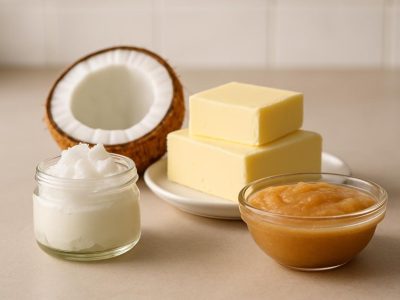
Baking often feels like a delicate dance, where each ingredient plays a vital role in creating that perfect texture and flavor. But what happens when you’re halfway through your favorite recipe and realize you’re out of shortening? Don’t panic—your kitchen likely holds some surprising alternatives that can save the day without compromising taste or quality.
Shortening might be prized for its ability to create flaky crusts and tender cookies, but it’s far from irreplaceable. Whether you’re looking for healthier options, dairy-free swaps, or simply using what’s on hand, there are plenty of substitutes waiting to step up. Some may even enhance your recipe in ways you didn’t expect.
What Is Shortening?
Shortening is a fat used in baking to create tender, flaky textures. It lacks water content, making it ideal for recipes where you want minimal gluten formation, like pie crusts or cookies. Derived from animal fats or vegetable oils, it’s solid at room temperature and has a high melting point.
Its neutral flavor doesn’t interfere with the taste of baked goods. Unlike butter or margarine, shortening contains no milk solids, so it doesn’t brown during baking. Common examples include Crisco and other hydrogenated oils designed specifically for baking purposes.
You might notice that shortening delivers consistency in recipes due to its stable composition. This makes it a go-to ingredient for professional bakers when precision matters most.
Why Use A Substitute For Shortening?
Substituting shortening in recipes can address health concerns, dietary needs, or practical constraints. Whether you’re looking for healthier options or simply ran out of shortening, alternatives offer flexibility without compromising texture or flavor.
Health Considerations
Shortening contains trans fats in partially hydrogenated forms, which increase LDL cholesterol levels and risk of heart disease. Even newer formulations with reduced trans fats still lack nutritional value. By using substitutes like coconut oil or avocado oil, you introduce healthier fats into your diet while maintaining desired baking results. For example, mashed bananas replace shortening in muffins to add natural sweetness and reduce calorie content simultaneously.
Dietary Restrictions
Shortening lacks dairy but may conflict with other dietary preferences like veganism if derived from animal fat. Plant-based replacements such as vegetable oils or margarine cater to vegan diets and those avoiding animal-derived products. Gluten-free recipes also benefit from liquid oils that don’t contribute to gluten structure formation. If you’re accommodating multiple restrictions at once—like nut allergies—a neutral option like sunflower seed butter works effectively.
Practical Substitutions For Baking
Practicality often dictates substitutions when ingredients are unavailable mid-recipe preparation. Butter enhances flavor while mimicking the solid consistency of shortening; its water content creates softer textures compared to flakier results from pure fats. Olive oil suits savory baking applications such as bread where slight flavor enhancement complements the dish instead of overpowering it.
Common Substitutes For Shortening
Running out of shortening doesn’t mean compromising the quality of your baked goods. Many alternatives can match its functionality while catering to specific dietary preferences or health goals.
Butter
Butter provides richness and enhances flavor in baked items. Its water content, approximately 16%, makes it less effective for creating the same flaky texture as shortening. To substitute, use a 1:1 ratio but consider reducing added liquid slightly in your recipe. For example, butter works wonderfully in cookies, imparting a golden color and creamy taste.
Margarine
Margarine resembles shortening due to its solid consistency and higher fat content. It’s an excellent dairy-free option if you choose plant-based varieties. Replace shortening with margarine at an equal measure for cakes or pie crusts while maintaining a similar texture and neutral flavor profile.
Coconut Oil
Coconut oil is versatile with its solid-at-room-temperature property similar to shortening. It adds a subtle coconut aroma that complements desserts like brownies or muffins but might not suit savory dishes as well. Use refined coconut oil if you prefer no detectable flavor; replace shortening on a 1:1 basis.
Lard
Lard delivers exceptional flakiness in pastries such as pie crusts due to its pure fat composition. Its mild pork flavor may enhance savory recipes over sweet ones unless neutral-tasting lard is used. Substitute using an equal amount, ensuring optimal results in both texture and moisture retention.
Vegetable Oil
Liquid vegetable oil serves best for moist baked treats like quick breads or cakes rather than flaky pastries since it lacks the structural benefits of solid fats. Use three-fourths of the required amount when replacing shortening because oils contain more concentrated fat per volume.
Substitute
Ideal Usage
Key Notes
Butter
Cookies, cakes
Add richness; reduce liquid slightly
Margarine
Pie crusts, cakes
Dairy-free alternative; similar texture
Coconut Oil
Brownies, muffins
Adds light aroma; use refined for neutrality
Lard
Pastries
Exceptional flakiness; suitable for savory
Vegetable Oil
Quick breads, cakes
Best for moist textures; adjust quantity
Applesauce
Applesauce acts as a low-fat replacement ideal for healthier baking options like muffins or spice cakes where moisture matters more than structure. Swap half the required amount of shortening with unsweetened applesauce to retain balance without overpowering flavors.
When Not To Use A Shortening Substitute
Some recipes rely heavily on shortening’s unique properties. Using substitutes in these cases might compromise texture, flavor, or overall results.
Texture Considerations
Shortening creates a specific tender and flaky texture due to its high fat content and lack of water. Substitutes like butter or margarine introduce moisture, which can lead to tougher baked goods by promoting gluten formation. For example, pie crusts may lose their characteristic flakiness if you replace shortening with an alternative that contains water.
Certain recipes requiring solid fats at room temperature might also suffer textural inconsistencies when liquid oils are used instead. Cookie dough made with vegetable oil instead of shortening often spreads more during baking, resulting in thinner cookies with crisp edges rather than soft centers.
To avoid unexpected textures, stick with shortening for pastries or laminated doughs where precision is critical.
Flavor Changes
Shortening’s neutral taste ensures it doesn’t alter the intended flavor profile of your recipe. Substitutes like coconut oil add distinct flavors that can dominate subtle ingredients. For instance, using coconut oil in sugar cookies could overshadow vanilla notes while enhancing tropical undertones—ideal for some but unsuitable for others seeking a classic taste.
Butter offers rich flavor but browns faster during baking due to milk solids. This property affects both the appearance and taste of the final product, especially in light-colored treats like shortbread cookies.
If preserving delicate flavors matters most—such as in meringue-topped pies or plain biscuits—avoiding strong-flavored substitutes becomes essential.
Tips For Successful Substitutions
Making substitutions for shortening in baking requires precision and an understanding of how each alternative impacts your recipe. Following these tips ensures your baked goods retain their texture, flavor, and quality.
Measuring Properly
Accurate measurements are crucial when swapping shortening with other fats. Shortening is 100% fat, so its substitutes must closely match this ratio to maintain consistency. For example, butter contains about 80% fat and 20% water. To replace 1 cup of shortening with butter, use slightly more—approximately 1 cup plus 2 tablespoons—to compensate for the water content.
When using oils like vegetable or coconut oil in place of solid shortening, measure carefully since liquid fats can alter dough structure. Use cups designed for wet ingredients to ensure correct amounts. Avoid estimating by sight; even small miscalculations may result in dense or uneven textures.
Adapting Recipes
Adjust recipes based on the substitute’s properties and flavor profile to achieve optimal results. If you’re replacing shortening with coconut oil, consider its distinct coconut flavor—it works well in cookies but might overpower pie crusts unless a tropical taste fits the dish.
For lard or margarine replacements, account for differences in melting points to prevent spreading during baking. Chill dough made with softer fats before baking if the recipe involves pastries or cookies requiring sharp shapes.
Liquid substitutes like applesauce can reduce fat content while adding moisture but may produce denser results. These work best in muffins or quick breads where fluffiness isn’t critical. In such cases, increasing leavening agents slightly helps balance the heavier batter.
Always test small batches when adapting critical recipes like laminated doughs where shortening’s unique characteristics significantly influence outcomes.
Conclusion
When you find yourself without shortening, there’s no need to worry. Your baking can still shine with the right substitute that fits your needs and preferences. From healthier options to plant-based alternatives, there’s a solution for every recipe and dietary requirement.
Understanding how each substitute interacts with your ingredients ensures successful results without sacrificing flavor or texture. With a little creativity and attention to detail, you can confidently adapt recipes while expanding your baking skills.
To provide the best experiences, we use technologies like cookies to store and/or access device information. Consenting to these technologies will allow us to process data such as browsing behaviour or unique IDs on this site. Not consenting or withdrawing consent, may adversely affect certain features and functions.
Functional
Always active
The technical storage or access is strictly necessary for the legitimate purpose of enabling the use of a specific service explicitly requested by the subscriber or user, or for the sole purpose of carrying out the transmission of a communication over an electronic communications network.
Preferences
The technical storage or access is necessary for the legitimate purpose of storing preferences that are not requested by the subscriber or user.
Statistics
The technical storage or access that is used exclusively for statistical purposes.The technical storage or access that is used exclusively for anonymous statistical purposes. Without a subpoena, voluntary compliance on the part of your Internet Service Provider, or additional records from a third party, information stored or retrieved for this purpose alone cannot usually be used to identify you.
Marketing
The technical storage or access is required to create user profiles to send advertising, or to track the user on a website or across several websites for similar marketing purposes.