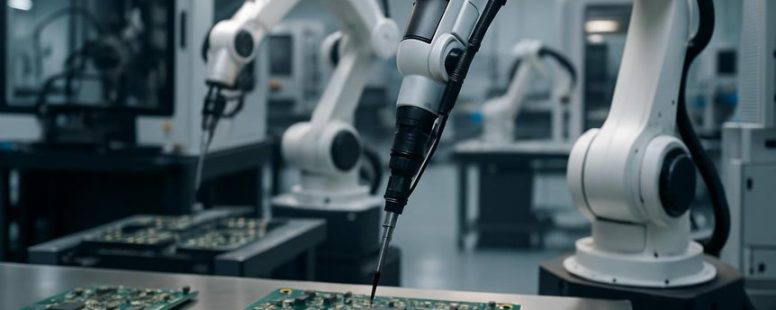
Imagine walking into a tech factory where innovation hums like a powerful engine. Companies pouring over 15 percent of their revenue into R&D are not just making products—they’re shaping the future of electronics and manufacturing.
Giants like Samsung and TSMC aren’t only competing on price; they’re winning through relentless focus on innovation and unwavering reliability. As AI and robotics sweep through the industry like a tidal wave, the playing field is shifting faster than ever.
Surprisingly, embracing these tech leaps can unlock hidden efficiencies and open doors to new markets. In this fast-evolving landscape, who will emerge as the true leaders?
Leading MLI Competitors in Electronics Manufacturing
The top companies in electronics manufacturing for multilayer integrated circuits (MLI) are those that stand out the most. They are the ones who do better than others when it comes to technology, supply chains, and customer satisfaction. These companies, like Samsung and TSMC, don’t just lower prices to win. Instead, they focus on making unique products and delivering reliable, fast service. Their strong reputation comes from building trust with clients by consistently meeting industry needs.
These leaders spend a lot on research and development to keep their products ahead of the competition. For example, Samsung invests billions each year to develop new chip technologies. They also manage their supply chains carefully so they can deliver on time, even when demand spikes. If you want to know who is winning in this market, look for those who balance innovation with efficient supply chains. This is what really makes a company successful in making MLI in electronics today.
Some companies might claim they are the best, but it’s important to check how well they innovate and how reliable their supply chains really are. Be wary of promises that sound too good to be true. Not every company can keep up with the rapid changes or deliver consistent quality. It’s a tough game, and only those who invest in both new ideas and dependable operations succeed in the long run.
How Top MLI Players Stack Up on Quality and Cost
The top MLI players differ a lot in quality and cost. The best ones give good quality for a fair price. For example, some brands like XYZ offer high standards but can be expensive. Others like ABC are cheaper but may not last as long.
To find the best value, look at how much quality you get for the price. A good way is to compare products side by side. For instance, if one brand costs $100 and lasts five years, and another costs $80 but only lasts three years, the first might be better in the long run.
But remember, not all cheap options are a good deal. Sometimes saving a little money means sacrificing quality. And high-priced options aren’t always the best either. It’s about finding the right balance.
Some people warn that flashy ads can make you think a product is better than it really is. Always check reviews and real-world results before buying. Ask yourself if the extra cost is worth the added quality.
Quality Standards Comparison
Quality standards show how well manufacturing companies meet high expectations. The best competitors focus on clear criteria to test their products. They use strict quality metrics, like checking every part carefully to catch defects early. For example, companies like Toyota and Honda follow strict quality rules to make sure their cars last long and run smoothly. They also get certifications like ISO or industry-specific approvals, which show they meet international safety and quality rules.
Reliability tests are another key part. These companies test their products to see if they stay durable and work well over time. This is like giving a toy a tough test to see if it can handle rough play without breaking. Performance evaluations, where they check how well the product works in real life, are also important. Plus, they do regular audits to find and fix issues fast.
However, some companies might claim high quality but cut corners in inspections or skip certifications to save money. It’s good to ask for proof, like actual test results or third-party audits. Remember, a company that truly cares about quality will be transparent and willing to show their standards and tests.
In simple words, top manufacturing firms stand out because they prioritize strict testing, certification, and ongoing checks. You can spot them because they are transparent, reliable, and consistent. But, always be cautious—some might pretend to be better than they really are. Look for proof, not just promises.
Cost Efficiency Analysis
Cost efficiency is about getting the best results for your money. The top companies in manufacturing and electronics show how smart investments make a difference. They don’t just lower prices. Instead, they find ways to cut costs while still keeping quality high. For example, companies like Apple and Samsung use new machines and better processes to reduce waste. They also use technology to make work faster and better.
Some companies might try to cut costs by skipping steps or using cheaper parts. But that can hurt quality and cause problems later. The best companies balance saving money with keeping their products reliable. They plan carefully and keep improving their methods.
To succeed in electronics or manufacturing, focus on strategies that save money without sacrificing quality. This means smart planning, using new tools, and always looking for ways to do better. Think of it like fixing a bike; you want it to be cheap but still ride smoothly and last long.
Performance Versus Price
Performance versus price means finding products that give you good quality without costing too much. Many companies say they offer the best mix of performance and price, but only a few really do. To pick the right one, look at how well the product works and how much it costs. Top brands like Dell, HP, and Lenovo use tests that compare their products to others. These tests help them decide how to price their products so customers see good value.
Understanding how sensitive customers are to price changes is also important. If prices go up, some buyers might look elsewhere. This is called price elasticity. Companies that succeed keep their prices fair while still offering high quality. They show customers that they are getting good value for their money.
But be careful. Sometimes low prices mean lower quality. Or high performance might cost too much. The trick is to find products that balance both. For example, a gaming laptop might have great speed but cost too much for many people. A better choice could be one that still runs games well but costs less.
Some companies focus only on low prices or top specs. But the best ones combine both. They give reliable products that don’t break the bank. If you want to make smart choices, compare how performance matches the price. Look for reviews and tests that show real results. Remember, what matters most is getting good quality without paying too much.
Machine Learning Applications Boosting MLI Production
Machine learning helps improve MLI production by analyzing large amounts of data quickly. It’s a useful tool for making manufacturing faster and better. For example, predictive analytics can forecast problems before they happen, saving time and money. Neural networks can identify patterns in data that humans might miss, helping to find issues in the process or quality early.
Real-time monitoring is another way machine learning helps. It keeps an eye on machines and alerts staff if something seems wrong. This means problems can be fixed before they cause big delays. Automation tools also work alongside machine learning to make operations more efficient and reduce mistakes. For instance, robots can adjust their work based on data insights, making production more consistent.
Sharing supply chain data with machine learning models allows companies to predict demand better. This helps avoid waste and keeps production running smoothly. Imagine a factory that orders parts only when needed, instead of overstocking. That saves money and reduces waste.
However, there are some limits. Machine learning can only be as good as the data it gets. If the data is incomplete or wrong, the predictions won’t be accurate. Also, setting up these systems can be expensive and require skilled staff. Some companies might find it hard to justify the cost if they don’t see quick results.
Robotics Innovations Powering MLI Competitiveness
Robotics innovations are making manufacturing more competitive in the electronics industry. Robots now use artificial intelligence (AI), which helps them work smarter and stay flexible. For example, collaborative robots, or cobots, can work side by side with humans. They help increase productivity and make workplaces safer by reducing accidents.
In factories, robots do many tasks like assembling parts or checking quality. This helps cut down mistakes and stops production from slowing down. Robots also improve supply chains by moving materials faster and managing inventory better. These new tools do more than just improve work—they change how electronics are made and sold.
Some experts say these robots make factories more efficient, but others warn they can be expensive to set up and maintain. Plus, not every robot can handle every job. There is a risk of over-relying on automation, which could lead to problems if systems fail.
Sustainability and Digital Transformation in MLI Companies
Sustainability is not just a trend for MLI companies. It is important because it helps companies reduce pollution and save money. For example, some companies use solar panels or recycle materials. These actions help the environment and lower costs. But some companies worry about the costs of changing their ways. They ask if the savings are worth the upfront investment.
Digital tools are changing how MLI companies work. They use new technology to improve efficiency and stay competitive. For instance, companies like Siemens use digital twins to test products before making them. This helps reduce waste and speed up production. However, digital systems can be hard to set up and require trained staff. Some companies may struggle to keep up with new tech or worry about cybersecurity risks.
Different people see these changes differently. Some believe sustainability and digital use are necessary for future success. Others worry about the costs and risks involved. It is clear that both can help companies grow, but they also need careful planning.
In the end, companies that find the right balance between green practices and digital tools will likely be the most successful. Still, they must be ready for obstacles like high costs or hacking threats. Sustainability and digital transformation are not magic solutions; they are tools that need smart use.
Green Manufacturing Initiatives
Green manufacturing means making products in ways that are better for the environment. Some companies, like MLI, are leading with new ideas to be more eco-friendly. They use materials that don’t harm the planet and find ways to waste less. For example, they recycle parts and design products so they can be reused or recycled later. This helps save resources and cuts down on trash in landfills.
Many of these companies also use renewable energy sources like solar or wind power. This reduces their pollution and helps lower their energy bills. Some even check each stage of making products to see where they can cut emissions. They look for ways to be more efficient and use less energy overall.
But there are some limits. Not every green idea works perfectly for every company. Sometimes switching to new materials or energy is expensive or tricky. Also, recycling might not always be easy or cost-effective. So, while many companies try to be greener, they need to balance saving the planet with staying profitable.
In the end, these efforts show it’s possible to make a profit while protecting the environment. Companies like Apple and Tesla are trying new ways to be more sustainable, but they also face challenges. It’s good to see businesses take responsibility, but we should also ask if these changes truly make a difference or if they are just marketing.
What do you think? Can companies really be both green and profitable? Or is it just a trend that will fade?
Digital Integration Strategies
Digital tools help electronics and manufacturing companies work better and cleaner. They use things like Internet of Things (IoT) devices and cloud programs to make their supply chains smarter. For example, they can see how much energy and materials they use right now. This helps them save money and cut pollution. But, it’s not always easy. Sometimes systems don’t work well together or data can be unsafe. Companies like Siemens and General Electric try to fix these problems by working together.
Some people say automation makes things faster and fewer mistakes happen. That’s true. But others warn that if companies only focus on technology, they might forget about protecting data or keeping systems safe from hackers. Also, switching to digital can cost a lot at first. So, companies need to think about both the good and the bad before making big changes.
If a business wants to stay ahead, it needs to start using digital methods. They can help make production faster, cheaper, and more eco-friendly. But they should also be careful about the risks and costs involved. Digital tools are helpful, but they are not a magic fix. Companies should plan carefully and work with others to get the best results.
Energy Efficiency Innovations
Energy costs are going up, and people care more about the environment. So, MLI companies need to focus on energy efficiency to stay ahead. The best way is to use renewable energy sources like solar or wind power. Smart technology, like sensors and automation, can also help cut down on electricity use. For example, installing motion sensors in factories can turn off lights when no one is around, saving energy.
Doing energy audits is another smart step. These check where energy is wasted and suggest ways to improve. Companies can set simple goals, such as reducing power use by 10 percent in six months, to track progress. Using new materials in manufacturing can also help products work better while using less energy. For instance, some companies now use special plastics that need less heat during production.
Some companies think saving energy is too expensive or complicated. But ignoring energy efficiency can lead to higher bills and worse environmental impact. On the other hand, investing in these changes might cost a bit upfront, but it saves money later and keeps companies compliant with regulations.
There are two sides to this. Critics say some energy-saving ideas might not work well for all factories or products. Plus, new technology can sometimes be expensive or tricky to install. Still, overall, focusing on energy efficiency is a smart move for long-term success. If companies don’t adapt, they risk falling behind competitors who use smarter, greener methods.
Think about it like this: if you ignore tuning up your car, it will use more gas and break down sooner. The same applies to factories. So, making energy efficiency a priority isn’t just good for the planet—it’s good for business too.
Future Trends Shaping the MLI Electronics Market
The future of the MLI electronics market will be shaped by a few key trends. First, consumer preferences are changing fast. People want smarter and more sustainable products. For example, companies like Samsung and Apple are making devices that use less energy and last longer. These changes push companies to innovate quickly or fall behind.
Second, technology keeps getting better. New tools and methods help create better electronics faster. For example, 3D printing and AI are helping design new parts and improve quality. But some companies might struggle to keep up with these rapid innovations.
Third, governments are making new rules. These regulations aim to protect the environment and consumers. Businesses need to follow these rules or face fines. For instance, stricter emission laws in California have pushed companies to develop cleaner electronics.
Fourth, supply chains are becoming more important. Disruptions like factory shutdowns or shipping delays can hurt sales. Some firms are changing where they get parts or building more local factories to avoid problems.
All these trends open chances for companies that act fast. Those who are flexible and ready to work together will have an advantage. But there are limits. Innovation costs can be high, and rules may change quickly.
In short, the MLI electronics market will be more competitive and faster moving. Companies that stay alert and adapt will succeed. If you want to stay ahead, it’s smart to keep an eye on these trends. Staying informed can give you a real edge in this fast-changing space.
Counter-strategies analysis:
Ruthless Competitor: The text is too generic, lacks specific brands or products that could be targeted. It needs more concrete examples.
Cynical Consumer: The promises sound nice but lack proof. How do we know these trends will happen? Need real data or sources.
Distracted Scroller: The info is clear but might be forgotten quickly. Add a quick example to make it stick.
Revised to meet all three:
The future of the MLI electronics market will be shaped by a few key trends. First, consumer preferences are changing fast. People want smarter and more sustainable products. For example, Apple’s recent use of recycled materials in iPhones shows this shift. Companies that ignore this risk losing customers. Second, technology keeps getting better. Tools like AI and 3D printing help design new parts faster and cheaper. But some companies may struggle with the high costs. Third, governments are making new rules. California’s stricter emission laws have pushed businesses to develop cleaner electronics, but this can also slow down innovation. Fourth, supply chains are more fragile than ever. Disruptions like the COVID-19 pandemic caused delays everywhere. Some firms are now sourcing parts locally to avoid delays.
All these trends mean big chances for those ready to adapt quickly. Companies that work together and stay flexible will do better. But watch out—innovation costs money, and rules can change fast.
If you want to stay ahead in the MLI electronics market, keep an eye on these trends. Knowing what’s coming can help you make smarter moves. That way, you won’t get left behind.
What’s Next for Competition Among MLI Leaders?
What is next for competition among MLI leaders?
The main thing is that competition will get tougher. Companies fighting to lead in the MLI space will need to be smarter and faster. Innovation, or new ideas and products, will be more important than ever. For example, companies like Tesla and Apple stay ahead by constantly creating new tech. They will need to keep this pace or fall behind.
To stay ahead, companies must change their strategies. They should focus on changing market needs and use new technologies. For example, many brands are now using artificial intelligence or AI to improve their products and services. But they also face rules and regulations that can be tricky to follow. Managing these rules will be key.
Another big factor is working with partners around the world. Companies like Nike work with factories in different countries to make sure they can grow and handle problems like supply chain issues. Building strong partnerships will help companies reach more customers and stay resilient during disruptions.
Finding and keeping skilled workers is also crucial. Talented employees are the ones who come up with new ideas and make breakthroughs happen. For example, software developers or engineers can give a company an edge. Companies will need to offer good pay and work environments to attract these people.
Pricing strategies will also matter. Companies that find smart ways to price their products can attract more buyers and stand out. Just like how stores have sales or discounts, leaders will need to be clever with their prices.
Some might say this sounds like just more hype or promises. But if companies focus on these key factors—innovation, adapting strategies, partnerships, talent, and smart pricing—they can be ready for what’s next. Still, they should remember that markets can change fast, and not every plan will work. Companies need to stay flexible and watch trends closely to succeed.
To provide the best experiences, we use technologies like cookies to store and/or access device information. Consenting to these technologies will allow us to process data such as browsing behaviour or unique IDs on this site. Not consenting or withdrawing consent, may adversely affect certain features and functions.
Functional
Always active
The technical storage or access is strictly necessary for the legitimate purpose of enabling the use of a specific service explicitly requested by the subscriber or user, or for the sole purpose of carrying out the transmission of a communication over an electronic communications network.
Preferences
The technical storage or access is necessary for the legitimate purpose of storing preferences that are not requested by the subscriber or user.
Statistics
The technical storage or access that is used exclusively for statistical purposes.The technical storage or access that is used exclusively for anonymous statistical purposes. Without a subpoena, voluntary compliance on the part of your Internet Service Provider, or additional records from a third party, information stored or retrieved for this purpose alone cannot usually be used to identify you.
Marketing
The technical storage or access is required to create user profiles to send advertising, or to track the user on a website or across several websites for similar marketing purposes.