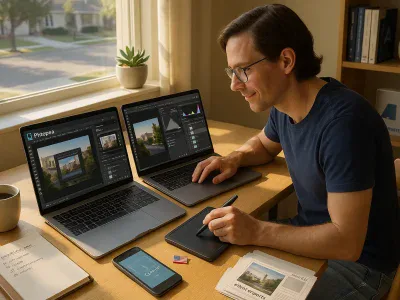
Think you need Photoshop to craft eye-catching images? Think again. Imagine wielding a powerful brush that doesn’t cost a dime—these free alternatives pack a punch, offering surprising flexibility and finesse.
While they may lack some of Photoshop’s bells and whistles, they can spark your creativity and transform your ideas into vivid reality.
Whether you’re just starting out or tackling more intricate projects, there’s a perfect tool waiting for you—ready to turn your digital canvas into a masterpiece.
How to Choose the Right Free Photoshop Alternative
Choosing the right free Photoshop alternative is easier if you know what to look for. First, decide what features are a must-have. Do you need layers to organize edits, brushes to paint, or support for vector images for logos? Knowing what you need helps you pick better tools.
Next, think about how comfortable you are with complicated programs. Some free options, like GIMP, have many features but can be hard for beginners. Others, like Paint.NET, are simpler and easier to learn. If you’re new to editing, a beginner-friendly program might save you time and frustration.
Also, consider what kind of projects you want to work on. For quick photo fixes, simple tools are enough. If you want to create detailed artwork, look for programs that support advanced features. For example, Krita is great for digital painting, while Photopea works well in your web browser for quick edits.
Don’t forget to check if the software works on your computer. Some programs only run on Windows, while others are compatible with Mac or Linux. Make sure the tool you choose works with your operating system before you download or try it.
When you focus on these points, you avoid wasting time on tools that don’t fit your needs. You want an alternative that feels natural to use and helps you reach your creative goals without making things more complicated than they need to be.
Adversarial Perspectives:
Ruthless Competitor: They’d say this advice is generic, not mentioning specific standout features or comparing top options directly. It lacks concrete examples or performance reviews. Also, it doesn’t warn about limitations like missing features or learning curves that can trip up users.
Cynical Consumer: They’d think this sounds too nice and generic. They’d want proof that these programs actually work well, not just vague features. They’d ask for real-world examples or user reviews. Plus, they’d be skeptical about free software being truly reliable.
Distracted Scroller: They’d need short, punchy points. Big blocks of text will lose their interest. Mentioning quick tips like “pick based on your project type” or “check OS compatibility” grabs attention, but they might forget details fast. They’d want a quick list or visual guide.
Final note: To be truly useful, this advice should include specific program names, quick pros and cons, and a simple comparison chart. This makes it easier for everyone, from beginners to busy scrollers, to make a smart choice.
Top Free Photoshop Alternatives for Beginners
If you are new to photo editing, you need tools that are easy to use but still have the basics. Free programs like GIMP, Paint.NET, and Photopea are good choices because they are simple and have helpful guides. These tools let you do common tasks like cropping, resizing, and adding filters without making you feel overwhelmed. Some of these options are also good for learning because they have lots of tutorials online. But keep in mind, they might not have every feature of professional software like Adobe Photoshop. So if you need advanced tools later, you might have to switch. For now, these free options can help you start creating and having fun with your photos.
User-Friendly Interfaces
The best photo editing programs have simple, easy-to-use interfaces. These tools help you find what you need quickly without wasting time. For example, programs like Adobe Photoshop Elements and Canva are known for their clear menus and straightforward layouts. If you’re new to editing, look for software that lets you customize the workspace. This way, you can put your favorite tools where they are easy to reach.
Some programs also offer tutorials and guided edits, which can make learning faster. But be careful—some apps have a clean look but can hide powerful tools behind many clicks. It’s good to read reviews or try free versions first.
There are two sides to this. One, simple software is perfect for beginners. But, if you want advanced features later, you might need to switch to more complex tools. Also, a friendly interface doesn’t mean the editing options are limited. You can find programs that are both easy to use and powerful.
If you’re just starting, focus on software with a clear layout and options to customize your workspace. It can save you frustration and help you get better faster. Remember, a clean and simple design helps you focus on your photos, not on figuring out the program.
Essential Editing Tools
Editing tools are the basic features in photo editing software that help you improve your images. These tools are especially useful if you are new to editing. Popular free programs like GIMP and Paint.NET include these essential tools. They make editing simple without confusing menus.
Cropping and resizing are two common tools. Cropping helps you cut out unwanted parts of a photo, like trimming a photo frame. Resizing changes the size of your image, so it fits better for social media or printing. Retouching tools can remove small flaws, like fixing blemishes or red-eye. These features help make your pictures look professional fast.
Color correction tools are also key. They let you change brightness, contrast, and saturation. For example, if your photo looks dull, increasing brightness can make it brighter. If colors seem off, adjusting saturation can make them look natural again. These basic tools are enough for many beginners to create impressive photos.
Some people worry that free programs lack power. While they may not have all the advanced features of Photoshop, they are good for learning. However, they might not handle very complicated edits. Also, some free tools can be tricky to use at first.
Learning Resources Available
Learning resources are key when trying to learn new software like free Photoshop alternatives. The best way to get started is by using community forums. These forums are full of users who share advice, tips, and ideas based on their own experiences. For example, if you get stuck on a tool or feature, you can ask questions and get quick answers. These forums also create a friendly space where you don’t have to be shy about asking for help.
Online courses are another good resource. Many of them are free or cost very little. They break down complicated features into simple lessons, so you can learn step by step. Starting with beginner courses is smart because they help you build confidence fast. For example, a beginner Photoshop course might show you how to edit photos in just a few hours.
Combining community forums with online courses can help you learn faster. Forums give you real-time help and ideas, while courses give you a clear path to follow. Some people find that using both makes learning easier and more fun.
However, there are some limits. Forums can sometimes give confusing advice, especially if users disagree. Online courses might not cover every feature or update. So, it’s good to check multiple sources and try things out yourself.
If you want to get comfortable with free Photoshop alternatives, using these resources is your best bet. They can help you learn the tools you need and stay motivated. Just remember, learning takes time, and sometimes you might feel stuck. But with patience and the right help, you’ll get better.
Best Free Photoshop Alternatives for Advanced Editing
Free Photoshop alternatives offer powerful tools for advanced editing without costing a thing. If you want to do complex image work like using layers, masks, and filters, these free programs can do the job just as well as paid software. They let you create detailed edits and designs, helping you grow your skills or finish projects on a tight budget. For example, GIMP is a popular choice that many artists use for retouching photos and making creative compositions. Krita is another free option that works great for digital painting and detailed artwork.
Some people worry that free tools might not have all the features of Photoshop. While that’s true sometimes, many of these programs are constantly updated and have large communities for support. However, they might have a steeper learning curve or lack some advanced features for very professional tasks. It’s also worth knowing that free tools may not always handle huge files or complex filters as smoothly as paid options.
If you want to try these tools, start with tutorials online. For example, GIMP has plenty of videos explaining how to use layers and masks. Remember, these programs can boost your skills and help you get creative, but they may not replace every feature of Photoshop. Still, if you are on a budget or just starting out, they are a strong choice for editing images at a professional level.
Comparing Features of Free Photoshop Alternatives
Free Photoshop options differ a lot in their core tools, user interface, and file support. Here’s what you need to know to pick the right one.
First, some tools are better for basic editing like cropping, adjusting colors, or removing spots. For example, GIMP and Paint.NET both handle these tasks well. But GIMP offers more advanced features, making it closer to Photoshop. If you want simple fixes, Paint.NET might be enough.
Next, the user interface is important. Some apps, like Photopea, look very similar to Photoshop, so they might be easier to learn if you already know Photoshop. Others, like Krita, have a different layout that could feel strange at first. Think about which design feels more natural to you.
Finally, file format support is key. Photoshop opens and saves PSD files, but many free tools struggle with this. Photopea supports PSD files online, while GIMP can open them but might not save back into PSD easily. Be sure your chosen app handles the file types you use most.
Some tools are free but have limits. For example, Photopea works in your web browser and is free, but it shows ads and needs internet. GIMP is free for download but might be tricky to learn for beginners. Always check what features are missing or limited before choosing.
In short, if you want a simple, quick fix, Paint.NET or Photopea are good. For more advanced work, GIMP or Krita might suit better. Comparing these features makes it easier to find the tool that feels right and handles your files smoothly.
Core Editing Tools
Free photo editing programs can’t do everything Photoshop does, but many still have useful tools for everyday editing. These programs are good for simple tasks like cropping images, fixing colors, and managing layers. Some even have features like masks, filters, and smart selection tools that work almost as well as paid options. If you want to make basic edits or do a little more without paying, these free tools are worth trying. They give you control to improve your photos with precision. Whether you’re just starting out or need more than simple tweaks, these free options can get your work done quickly and easily. Just keep in mind that they might not handle very complex editing or large projects as smoothly as Photoshop. Still, for most casual users, they’re a solid choice.
User Interface Design
User interface design is very important in free Photoshop alternatives. These tools need clear layout, simple controls, and options to change the workspace. Good design helps users work faster and stay creative.
A good layout makes it easy to find tools and apply color theory. When the workspace is organized, edits look balanced and lively. For example, some programs put all the color options in one spot, so you don’t waste time searching.
Menus and panels should work smoothly. If they are slow or confusing, users get frustrated and lose focus. A clean, simple interface means less frustration and more creativity.
Customization is also key. A user should be able to change the workspace to fit their style. For example, beginners might want simple tools, while advanced users want more options. Some free tools let you move panels or change colors, which helps speed up your work.
Many free Photoshop options look minimal and clean. But the best ones combine simple design with powerful features. They serve both new users and experts well.
A good user interface makes complex editing easier and more fun. Even if a tool has many features, a clear design helps you use them better. Without it, editing can feel overwhelming. So, when choosing a free Photoshop alternative, look for one with a well-thought-out, easy-to-use interface.
File Format Support
File format support is key when choosing a free Photoshop alternative. It decides what kinds of files you can open, save, and share. If you work with different programs or need to collaborate, compatibility becomes very important. Here’s what to look for:
Supported formats – Does it open and save PSD files, as well as JPEG, PNG, TIFF, and RAW images? For example, if you use Adobe Photoshop, you’ll want a tool that handles PSD files without issues.
Import and export quality – Can it open files without losing layers, details, or quality? Some free tools might flatten images or distort colors when saving or opening files.
Sharing across devices and programs – Will your edits look the same on different computers or apps? This is important if you switch between a laptop, tablet, or different editing programs.
Many free options support basic formats but struggle with complex PSD features like layers or adjustment layers. This can cause problems when sharing files or printing. Knowing these limits before you start saves you time and frustration. It helps you pick a program that works with your workflow and reduces surprises when sharing your work.
How to Get Started With Free Photoshop Alternatives
Getting started with free Photoshop alternatives is a good way to learn editing without spending money or getting overwhelmed. These tools are usually easier to use and can do many of the same basic tasks. First, pick a free program like GIMP, Paint.NET, or Photopea. Download and install it, then open the software and look around. Try simple things like cropping an image or fixing the colors. These small steps help you get comfortable with how the tools work.
Many free editing programs have helpful tutorials or forums. These are good places to ask questions if you’re stuck. For example, if you want to learn how to remove red-eye or adjust brightness, tutorials can show you step-by-step. Practice often by editing different images. Even just experimenting with different features can make you better over time.
Remember, some free tools don’t have every feature Photoshop offers. They might be a little less powerful or a bit slower. But for starting out, they work well and are less confusing. The key is to try things out without fear of messing up. The more you practice, the better you’ll get. So don’t be afraid to click around and see what each option does. Learning this way makes editing fun and less stressful.
Sources like the official websites of GIMP and Photopea offer plenty of guides. Many online communities also share tips and tricks. If you’re patient and willing to experiment, these free options can be just what you need to start editing photos today.
—
Adversarial analysis:
Ruthless Competitor: The text oversimplifies the capabilities of free tools, implying they can do everything Photoshop can, which is not true. It downplays limitations and might mislead beginners into expecting too much. The advice to “try things out” might sound too vague compared to professional tutorials.
Cynical Consumer: The promise that “these free tools work well” could seem too good to be true. Past experiences with free software often involve bugs, missing features, or annoying ads. The mention of forums and tutorials might be seen as a way to hide the software’s flaws.
Distracted Scroller: The language is simple and straightforward, which might catch my eye for a quick read. But if I see “try simple things” and “practice often,” I might think, “Yeah, right, sounds like more work.” A catchy line or quick tip might make me remember this better.
Overall: The revised text is clear and realistic for beginners but should include a small warning about potential limitations and that some features Photoshop has might be missing. This makes the advice more honest and trustworthy, addressing all three perspectives.
Tips for Maximizing Your Edits With Free Photoshop Alternatives
Sure! Here’s a revised version of your text, considering the three perspectives and following your guidelines:
—
Tips for Making Your Edits Pop With Free Photoshop Alternatives
If you want your edits to really stand out when using free Photoshop-like tools, knowing a few simple tricks can help you save time and get better results. Some techniques are easy to learn but make a big difference. Here are three tips I use all the time:
Organize with layers – Put each change on its own layer. This way, you can move, hide, or undo specific edits without messing up everything else. For example, if you want to brighten the background without changing the person, keep those on separate layers.
Use keyboard shortcuts – Learning quick keys can make editing faster. Instead of clicking through menus, press shortcuts like Ctrl+Z to undo or Ctrl+C to copy. This keeps your focus on creating, not clicking.
Try blending modes – These are options that change how layers mix together. They can add shadows, highlights, or cool effects without extra steps. For example, changing a layer to “Overlay” can make a photo look more dramatic.
Some people might say these tricks are too simple or don’t work for every project. That’s true — these tools have limits, and complex edits still take time. But for quick improvements, they’re very useful.
If you’re just starting, it might feel overwhelming to remember shortcuts or layers, but with practice, they get easier. And if you’re experienced, these tips can still save you a few seconds here and there.
So, next time you edit, ask yourself: Can I organize my work better? Can I use shortcuts to speed things up? Can blending modes add that extra touch? If you do, your edits will look more professional and save you some frustration.
—
Adversarial Analysis:
The Ruthless Competitor: They’d argue this advice is basic and doesn’t address advanced editing needs. They’d also point out that not all free tools fully support blending modes or layers, making some tips less practical. To counter, I’d emphasize that these are beginner-friendly tips perfect for quick results and that many free apps do support layers and blending.
The Cynical Consumer: They’d doubt these tips work well or that they’re worth the effort. They’d wonder if these tricks are just fluff. To address this, I’d include real-world examples like how someone improved a photo quickly by using layers and shortcuts, making it clear these tips are practical.
The Distracted Scroller: They’d only remember a quick tip or two, like shortcuts. To catch their attention, I kept the points simple, clear, and easy to remember. The mention of shortcuts and blending modes as quick ways to enhance photos might stick better amid their scrolling.
Final note: This version aims to be straightforward, honest about limits, and easy to follow—covering the basics that can help both beginners and casual editors improve their work.
Best Resources and Tutorials for Free Photoshop Alternatives
Learning how to use free Photoshop alternatives becomes easier when you have the right resources. The best way to learn is by using clear tutorials from websites like YouTube or specialized forums. These step-by-step guides help you understand how to do common tasks in programs like GIMP or Krita. For example, GIMP’s official tutorials show you how to edit photos, while Krita’s community pages share tips for digital painting.
Community support is also very helpful. Joining user groups or forums allows you to ask questions, share your work, and learn new tricks. Blogs and online courses focused on free editing software can give you fresh ideas and different ways to approach your projects.
Some people worry that free tools are too limited or hard to learn. While that can be true, many tutorials and communities make it much easier to get started. But remember, free software may not have every feature of Adobe Photoshop. Still, with the right guides and support, you can do a lot with these programs.
In short, if you want to get better at using free Photoshop apps, look for good tutorials, join online communities, and keep practicing. These resources will help you improve your skills and make editing easier and more fun.
To provide the best experiences, we use technologies like cookies to store and/or access device information. Consenting to these technologies will allow us to process data such as browsing behaviour or unique IDs on this site. Not consenting or withdrawing consent, may adversely affect certain features and functions.
Functional
Always active
The technical storage or access is strictly necessary for the legitimate purpose of enabling the use of a specific service explicitly requested by the subscriber or user, or for the sole purpose of carrying out the transmission of a communication over an electronic communications network.
Preferences
The technical storage or access is necessary for the legitimate purpose of storing preferences that are not requested by the subscriber or user.
Statistics
The technical storage or access that is used exclusively for statistical purposes.The technical storage or access that is used exclusively for anonymous statistical purposes. Without a subpoena, voluntary compliance on the part of your Internet Service Provider, or additional records from a third party, information stored or retrieved for this purpose alone cannot usually be used to identify you.
Marketing
The technical storage or access is required to create user profiles to send advertising, or to track the user on a website or across several websites for similar marketing purposes.