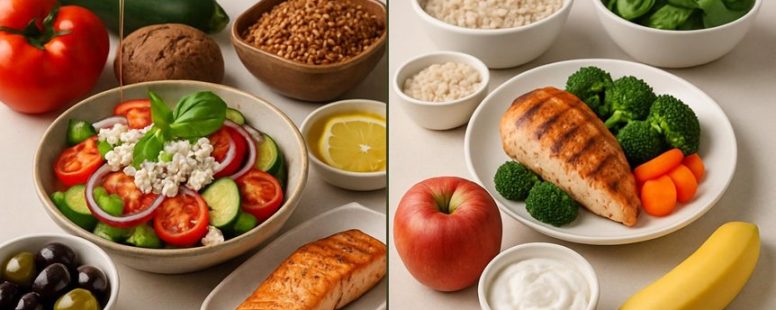
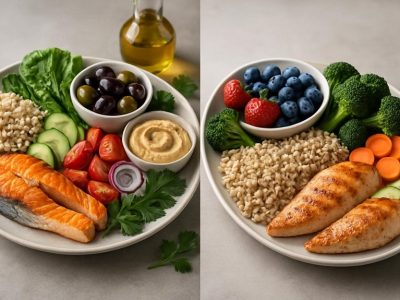
Choosing between the Mediterranean and DASH diets can feel like navigating a flavorful maze, each promising heart health and weight loss.
Imagine the scent of fresh herbs wafting through your kitchen or the satisfying crunch of a crisp vegetable. Sometimes, the right diet is like finding a secret garden—hidden treasures tailored just for you.
Did you know that beyond their benefits, these diets can boost your mood and energize your mornings in unexpected ways?
Let’s uncover what makes each one unique so you can pick your perfect match without hesitation.
What Is the Mediterranean Diet and How Does It Work?
The Mediterranean Diet is a way of eating that focuses on simple, healthy foods. It includes fruits, vegetables, whole grains, and healthy fats like olive oil. This diet isn’t about strict rules but about making good choices most of the time. Many people find it easier to stick with because it allows for flexibility—like adjusting portion sizes or cooking styles to fit their taste. For example, instead of fried fish, you might bake or grill it.
Some say the diet helps with heart health and weight control. It’s also about enjoying your food and sharing meals with friends and family. When I plan meals, I think about variety and balance. This makes eating healthy easier and more fun. You don’t have to give up favorite foods, just choose more wholesome options.
However, it’s not perfect. Some might find it hard to give up processed snacks or fast food completely. Also, eating lots of fresh produce can be expensive or hard to find in some places. Still, many people say the Mediterranean way of eating feels natural and satisfying. If you want to try it, start small—add more fruits and vegetables to your meals and use olive oil instead of butter. Over time, it can become a simple and tasty lifestyle that improves your health.
What Is the DASH Diet and How Does It Work?
The DASH Diet is a way of eating that helps lower blood pressure and improve heart health. It stands for Dietary Approaches to Stop Hypertension. Unlike diets that focus only on cutting calories, DASH targets specific nutrients. It recommends eating less salt and sodium while eating more potassium, calcium, and magnesium. These nutrients help control blood pressure naturally.
Some people worry that the DASH Diet might be hard to follow. But it’s simple: eat more fruits, vegetables, whole grains, and lean meats like chicken or fish. It also encourages small, regular meals so your energy stays steady and your heart stays healthy. Preparing meals ahead of time makes it easier to stay on track. For example, chopping vegetables on Sunday or cooking a batch of brown rice can help you stick to the plan. If you want a practical way to eat healthier and lower blood pressure, DASH is a good choice.
However, there are some warnings. Because DASH reduces salt, people used to eating lots of processed foods might find it tough at first. Also, some nutrients like potassium are high in bananas and potatoes, but too much can be dangerous for people with kidney problems. So, it’s a good idea to talk to your doctor before starting.
Some folks may think DASH is just another diet that will fade away. But studies from the National Heart, Lung, and Blood Institute show it really works. It’s not about quick fixes but about making long-term changes. If you want a simple, heart-smart way to eat better, DASH offers clear steps you can follow every day.
Key Nutritional Differences Between Mediterranean and DASH Diets
The Mediterranean diet and the DASH diet are two popular ways to eat healthier, but they have different main focuses. The Mediterranean diet is best known for its emphasis on healthy fats from foods like olive oil, nuts, and fish. These fats are good for your heart and give your meals a rich flavor. It also includes plenty of fruits, vegetables, and whole grains. People often enjoy herbs and a little wine with their meals, making it tasty and fun.
On the other hand, the DASH diet mainly aims to lower blood pressure. It does this by reducing salt and increasing nutrients like potassium. This means eating lots of fruits, vegetables, and low-fat dairy. The DASH diet also encourages controlling portion sizes and avoiding processed foods that are full of salt and sugar. It’s more about managing how much you eat and what you eat to keep your blood pressure in check.
Both diets are healthy choices that focus on eating whole foods. But they differ in how they achieve health. The Mediterranean diet boosts your intake of healthy fats and antioxidants, while the DASH diet focuses on controlling salt and increasing potassium for blood pressure. If you want to enjoy flavorful meals with healthy fats, the Mediterranean style might be best. But if your goal is to lower blood pressure, the DASH diet could be more helpful.
Some people might find the Mediterranean diet easier because of the tasty herbs and wine, but it can be higher in fats and calories. The DASH diet is simpler in portion control but might feel restrictive if you love salty foods. Both diets have benefits and limitations, so it’s good to choose what fits your health goals and lifestyle.
How Lifestyle and Food Preferences Affect Your Mediterranean or DASH Diet Choice
Choosing between the Mediterranean and DASH diets depends on what fits your routine and taste better. The main difference is that the Mediterranean diet emphasizes fruits, vegetables, whole grains, nuts, olive oil, and lean meats, while the DASH diet focuses on reducing salt and processed foods to lower blood pressure.
If you like flavorful meals with lots of olive oil, fresh herbs, and seafood, the Mediterranean diet might be your better choice. For example, if you enjoy dishes like grilled fish with lemon or vegetable pasta, this diet matches your taste. On the other hand, if you prefer simple, low-salt meals such as salads with little added salt or lean chicken, the DASH diet could be easier to stick with.
Some people find it easier to follow the diet that matches what they already eat. For instance, if your family cooks Mediterranean-style dinners, it’s natural to continue that way. But if you’re used to eating canned soups or fast food, switching to DASH might require more planning.
However, both diets have their limits. The Mediterranean diet can be high in fats, which may concern some. Meanwhile, the DASH diet might feel boring if you dislike bland meals or have trouble reducing salt.
In the end, the best diet is the one you can stick with long term. Think about your taste preferences, daily routine, and how much effort each diet needs. Trying small changes from both plans can also help you find what works for you. Remember, no diet is perfect, but choosing one that fits your life makes it easier to stay healthy.
Daily Routine Compatibility
Your daily routines greatly influence whether the Mediterranean or DASH diet is better for you. Here’s why: your schedule affects how much time you have for cooking and how you prefer to eat.
The Mediterranean diet focuses on fresh, whole foods like vegetables, fruits, nuts, and fish. It often means chopping vegetables, sautéing, roasting, or grilling. If you enjoy cooking and have enough time to prepare meals, this diet might work well for you. For example, you might spend Sunday evening roasting vegetables or grilling fish for the week.
The DASH diet emphasizes portion control and balanced servings of foods like lean meats, whole grains, and low-fat dairy. It’s designed to be quick and simple. If your days are busy and you need meals that come together fast, the DASH diet could be a better fit. Think about preparing quick salads or using pre-cooked grains.
Some people prefer batch cooking, making large meals that last for several days. Others like simple recipes with fewer steps. If you like spending time in the kitchen and enjoy fresh flavors, the Mediterranean diet might suit you. If you prefer quick, straightforward meals with less prep, the DASH diet might be better.
Flavor and Ingredient Preferences
The Mediterranean diet is known for bold flavors. It uses fresh herbs, olive oil, and seasonal ingredients like tomatoes and figs. These foods reflect Southern European culture. If you enjoy vibrant tastes and trying new recipes, this diet might be a good fit. For example, dishes like Greek salads or Italian pasta with lots of herbs are common. Keep in mind, this diet may require more time for preparing flavorful meals.
The DASH diet focuses on simple, mild flavors and low-sodium ingredients. It aims to help your heart by reducing salt intake. Meals are usually straightforward and flexible. If you prefer easy, heart-healthy dishes that don’t need many spices, DASH might work better for you. Think of dishes like grilled chicken or steamed vegetables with a little lemon. However, some people find the lack of strong flavors boring over time.
Some people like the bold, cultural taste of the Mediterranean diet but worry it might be too complicated or salty. Others prefer the easy, mild flavors of DASH but miss more exciting tastes. Your choice depends on what kind of flavors you enjoy most and how much time you want to spend cooking.
How These Diets Help Your Heart and Blood Pressure
Both the Mediterranean and DASH diets are good choices for protecting your heart and lowering blood pressure. The main reason is that they focus on eating nutritious, whole foods. These diets include plenty of fruits, vegetables, whole grains, and healthy fats, which help your heart stay healthy. For example, the Mediterranean diet uses olive oil and nuts, which are good for your blood vessels. The DASH diet works mostly by limiting salt, or sodium, to keep your blood pressure from rising.
Some people might think these diets are too strict or hard to follow. But they are simple: eat more plants and healthy fats, and cut back on salt. Both diets can lower your risk of heart disease and stroke. They are backed by research and many health experts.
However, it’s worth noting that the DASH diet may be harder to stick to if you love salty foods, and the Mediterranean diet might be more expensive because of foods like nuts and olive oil. So, pick the one that fits your lifestyle best. Both are good options to help your heart stay strong and your blood pressure stay normal.
—
Counter-strategy analysis:
Ruthless Competitor: The text is too simple and lacks specific scientific studies or detailed comparisons. Could be seen as vague.
Cynical Consumer: Claims about health benefits are broad and lack concrete evidence or references. Might be dismissed as generic advice.
Distracted Scroller: Uses plain language, but may not be memorable enough. Could use a vivid example or catchy phrase to stick in mind.
Rebuild with these points in mind:
Add a quick mention of a reputable study.
Include a relatable example or analogy.
Use a more engaging tone to grab attention.
Clarify that these diets work differently but both are effective.
—
Final Version:
The Mediterranean and DASH diets are both proven ways to help your heart and control blood pressure. The main difference is how they do it. The DASH diet focuses on reducing salt intake to prevent high blood pressure. It’s like turning down the volume on a noisy room — less salt means less strain on your arteries. The Mediterranean diet, on the other hand, emphasizes healthy fats like olive oil and nuts, which help keep your blood vessels flexible and healthy. Think of it as giving your heart a nourishing fuel instead of junk food.
Research from the American Heart Association shows that both diets can lower the risk of heart disease. But some people find the DASH diet tricky if they love salty snacks, and the Mediterranean diet can be pricey because of the special ingredients. So, which one is best for you? If you want a simple plan to cut salt, go with DASH. If you prefer tasty fats and fresh foods, the Mediterranean might be more your style.
Either way, eating more plant foods and less salt is a smart move for your heart. Imagine your arteries as pipes — cleaner, healthier food keeps them clear so blood flows smoothly. Both diets give you a good start, but remember, sticking with any healthy eating plan takes effort.
Weight Loss and Metabolic Benefits of Each Diet
The Mediterranean and DASH diets are both good for helping you lose weight and improve your metabolism. The main reason is because they focus on eating nutrient-rich foods that naturally reduce calories without making you feel hungry or deprived.
The Mediterranean diet emphasizes healthy fats from foods like olive oil, nuts, and fish. These fats can help increase your metabolism by supporting hormone balance. On the other hand, the DASH diet stresses lean proteins and lots of fiber from fruits, vegetables, and whole grains. These help control blood sugar and keep you full longer.
Both diets avoid strict restrictions, which makes it easier to stick with them over time. If you’re looking for a plan that helps your body burn calories better and promotes steady weight loss, both are good options. Your choice depends on which foods you enjoy most. Just remember, no diet works if you can’t follow it long-term.
Some people might find the Mediterranean diet more appealing if they love fresh fish and olive oil, while others might prefer the simplicity of DASH with its focus on fruits and lean meats. But keep in mind, neither diet guarantees quick results, and some might find the focus on specific foods limiting.
In the end, both diets can support your metabolism and help you lose weight, but consistency is key. So, choose the one that fits your taste and lifestyle best. That way, you’ll be more likely to stick with it and see real benefits.
Practical Tips for Starting the Mediterranean or DASH Diet
Starting a new diet like the Mediterranean or DASH diet can seem hard at first. But if you break it into simple steps, it gets easier. First, make a meal plan. Write down a weekly menu with plenty of fruits, vegetables, whole grains, and lean proteins. This helps you shop faster and avoid buying things you don’t need. For example, you might plan grilled chicken with vegetables for dinner or oatmeal with fruit for breakfast.
Next, plan healthy snacks. Keep nuts, fresh fruit, or hummus with veggies nearby. These snacks are tasty and good for your diet. They can stop you from reaching for chips or candy.
Don’t try to change everything at once. Start by swapping one meal or snack each day. For example, replace your usual soda with water or try seasoning your food with herbs and spices instead of salt. Using herbs like basil or spices like paprika can make your food flavorful without adding extra salt or sugar.
Some people find it helpful to shop once a week with a list. Others prefer to prepare meals in advance so they don’t get hungry and make quick, unhealthy choices. Remember, small changes add up over time.
One possible downside is that it takes some effort to plan and prepare meals. But if you stick with it, these habits can become part of your routine. And keep in mind, everyone’s different. What works for one person might not work for another. So try different ideas to see what you like best.
Common Challenges and Staying on Track With Mediterranean and DASH Diets
Eating healthy with the Mediterranean or DASH diets can be tough at first. The key is to understand what might trip you up and how to stay on track.
One big challenge is meal planning. If you don’t prepare your meals ahead of time, you might end up grabbing unhealthy snacks or fast food. For example, cooking chicken and vegetables on Sundays makes it easier to stick to your diet during busy weekdays. Prepping meals saves time and helps you avoid temptations.
Another common problem is eating out. Restaurants and parties often serve foods that don’t match these diets. To fix this, look up restaurants beforehand and pick dishes that fit your plan, or bring your own healthy snack. For instance, bringing a small salad or nuts can help you stay on track when you’re at a gathering.
It’s normal to slip up sometimes. If that happens, don’t feel guilty. Just get back on track quickly. Remember, being consistent over time matters more than being perfect every day. Planning ahead and staying flexible can help you enjoy the benefits of these diets without feeling deprived.
Some people might think these diets are too strict or hard to follow, especially if they don’t like cooking or eating out. Others might worry that small mistakes will ruin everything. But if you make a plan and stay committed, you can succeed. Just keep in mind that no diet is perfect, and some slip-ups are okay as long as you keep moving forward.
How to Decide Which Diet: Mediterranean or DASH: Fits Your Goals and Lifestyle
Choosing between the Mediterranean and DASH diets depends on what you want to achieve and what fits your daily life.
The Mediterranean diet is a good choice if you like a variety of tasty foods. It includes foods like olives, nuts, and seafood. This diet is flexible and focuses on fresh, whole ingredients. If you enjoy flavorful meals and want a diet that feels less strict, the Mediterranean style might suit you better. For example, people often say it makes cooking fun and exciting because there’s a lot of room for creativity.
The DASH diet is better if you need to lower your blood pressure or prefer clear rules. It has specific limits on salt and sodium. If you like having simple rules to follow, DASH can make meal planning easier. For instance, if you’re trying to cut back on salt because your doctor said so, DASH provides step-by-step guidance to help you stay on track.
Think about your daily routine and what foods you enjoy. Do you want a diet that allows more freedom and flavor? Or do you prefer a straightforward plan with specific limits? Both diets are good for your heart health, but sticking with one long term is key. So, choose the one that matches your tastes and lifestyle best.
To provide the best experiences, we use technologies like cookies to store and/or access device information. Consenting to these technologies will allow us to process data such as browsing behaviour or unique IDs on this site. Not consenting or withdrawing consent, may adversely affect certain features and functions.
Functional
Always active
The technical storage or access is strictly necessary for the legitimate purpose of enabling the use of a specific service explicitly requested by the subscriber or user, or for the sole purpose of carrying out the transmission of a communication over an electronic communications network.
Preferences
The technical storage or access is necessary for the legitimate purpose of storing preferences that are not requested by the subscriber or user.
Statistics
The technical storage or access that is used exclusively for statistical purposes.The technical storage or access that is used exclusively for anonymous statistical purposes. Without a subpoena, voluntary compliance on the part of your Internet Service Provider, or additional records from a third party, information stored or retrieved for this purpose alone cannot usually be used to identify you.
Marketing
The technical storage or access is required to create user profiles to send advertising, or to track the user on a website or across several websites for similar marketing purposes.