Navigating the intricate world of East Asian languages can feel daunting, especially when faced with the rich textures of Japanese and Chinese. Both languages have deep historical roots and unique cultural nuances, making them stand apart. Yet, at a quick glance, one might confuse the two due to their shared use of Chinese characters, known as kanji in Japanese and hanzi in Chinese. In this exploration, we will discover not just the fundamental differences between these languages but also reveal insights that will enhance our appreciation of their individual traits. Understanding these languages isn’t just about language learning: it opens a window into their respective cultures, traditions, and worldviews. Ready to unravel the layers? Let’s jump in.
Understanding The Basics of Japanese and Chinese
Character Systems: Kanji, Hiragana, and Katakana vs. Hanzi
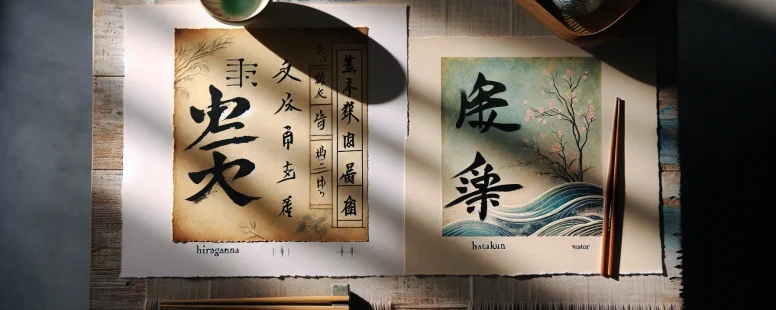
When we approach the character systems, we immediately notice a vital difference in Japanese and Chinese languages. Japanese employs three scripts: kanji, hiragana, and katakana.
Kanji: These characters are borrowed from Chinese hanzi. They often represent whole words or significant concepts. For example, the kanji for “water” is 水, which is the same in both languages, but the usage and meaning can differ.
Hiragana: This is a phonetic script used for native Japanese words and grammatical functions. It’s simpler, consisting of 46 basic sounds, enabling us to express all parts of speech in Japanese. For example, the word for “water” in hiragana is みず (mizu).
Katakana: Used primarily for foreign loanwords, onomatopoeia, and scientific names, this script contrasts with kanji and hiragana by adding another layer to the Japanese writing system. The word “water” could be expressed as ウォーター (wōtā) when referring to the English term.
On the flip side, Chinese predominantly uses hanzi characters, which carry meaning as well as sound. Unlike Japanese, there is no supplementary script to accompany the meaning: all words count on these complex characters, making them already rich and nuanced in their expressions.
Pronunciation and Phonetics: Key Differences
Diving into pronunciation, we encounter another striking difference. Chinese is a tonal language, meaning that a change in tone alters the word’s meaning completely. For example, the syllable “ma” can have several meanings based on the tone used: mother (妈), horse (马), scold (骂), or hemp (麻). This tonal quality creates a sophisticated challenge when we learn the language.
Conversely, Japanese does not use tones in the same way. It has a relatively straightforward phonetic structure with syllables that follow a consistent open / closed pattern. The sounds can be categorized into simple ones, for instance, “ka,” “ki,” “ku,” “ke,” “ko.” This simplicity can make Japanese pronunciation more approachable for English speakers.
Grammar Structure: Contrasting Language Features
The grammar structures of Japanese and Chinese also highlight their unique qualities.
Japanese Grammar: Typically follows a Subject-Object-Verb (SOV) order. For instance, in the sentence “I eat sushi,” translated into Japanese, it reads, “I sushi eat.” This order allows for a certain fluidity, enabling speakers to convey messages while emphasizing various parts of sentences.
Chinese Grammar: Primarily follows a Subject-Verb-Object (SVO) structure, similar to English. So, the same sentence “I eat sushi” remains as is, creating a more direct approach to sentence formation.
These grammatical frameworks lend to different language experiences for learners: Japanese can feel intricate due to its varying particles and levels of politeness, while Chinese, though straightforward, demands a firm grasp of tones and characters.
Cultural Context: Influence on Language
Language is deeply intertwined with culture, and understanding this relationship can enhance our insight into Japanese and Chinese.
In Japanese culture, the language carries layers of social hierarchy and politeness. Expressions vary based on the speaker’s relationship with the listener, which can dramatically alter the phrasing of a sentence. For example, saying “thank you” can be expressed as “arigatou” (ありがとう) in casual settings or “arigatou gozaimasu” (ありがとうございます) in formal contexts. This approach manifests respect and acknowledgment of social standings, intricately woven into the fabric of Japanese life.
Chinese culture, on the other hand, reflects its history in the language itself. Many idiomatic phrases derive from historical examples, tying them to cultural anecdotes. For instance, the saying “yù zì hào yǔ” (愚自骄人) translates to “pride breeds foolishness,” encapsulating values of humility and caution inspired by Confucian thought.
By exploring these cultural contexts, we gain a better appreciation, realizing that language is more than mere words: it embodies societal values and collective histories.
Visual Distinctions: Styles and Scripts
Visually, Japanese and Chinese text often present different vibes that can further guide our identification efforts.
Japanese writing, for instance, features a mix of the three scripts: kanji, hiragana, and katakana. This amalgamation creates a unique visual texture. A typical Japanese sentence may include kanji for significant nouns and verbs, with hiragana accompanying grammatical components.
Chinese, in contrast, relies purely on hanzi. The characters can be quite intricate, often combining various strokes that require considerable practice to master.
Also, we note the arrangement on the page. Japanese writing can flow vertically or horizontally, whereas Chinese writing typically runs horizontally from left to right. This subtle distinction can sometimes assist us in telling the languages apart, even before recognizing the characters.
Common Misunderstandings and Stereotypes
Many misconceptions surround the differences between Japanese and Chinese that can lead to confusion or even misrepresentation.
Stereotype 1: All Asian languages look alike.
This oversimplification ignores the rich diversity among Asian cultures and their languages. Japanese kanji may resemble Chinese characters, yet their meanings and uses can differ significantly.
Stereotype 2: Japanese is just a simplified version of Chinese.
This belief fails to recognize the rich history, unique structure, and cultural influences on Japanese that set it apart from Chinese.
Practical Tips for Identification
To help us differentiate, here are some practical approaches:
Look for Script Variations: The presence of hiragana or katakana indicates Japanese. If you see purely hanzi characters, you’re likely dealing with Chinese.
Consider Pronunciation and Tone: When hearing the languages, listen for tonal inflections (Chinese) versus a simpler phonetic tone (Japanese).
Study Common Words: Learning common phrases or expressions in both languages can enhance our skills in distinguishing them based on what we hear and see.
Learning Resources to Enhance Understanding
As we embark on our journey to understand these languages better, various resources can aid our progress:
Language Learning Apps: Platforms like Duolingo and HelloChinese offer beginner-friendly lessons tailored to help us grasp basic phrases in both languages.
Online Courses: Websites such as Coursera or edX often have courses provided by universities where we can deepen our knowledge collectively.
Books and Workbooks: Text resources like “Japanese from Zero.” and “Integrated Chinese” provide structured learning experiences, complete with exercises to practice what we learn.
Community Forums: Engaging with learners and native speakers on platforms like Reddit or language exchange sites helps us to practice and gain insights.
Finding the right resource that resonates with our learning style can enhance the understanding and appreciation of the languages.
Conclusion
To conclude, distinguishing between Japanese and Chinese is not just about recognizing characters or phonetics: it involves understanding the cultural nuances and historical connections that shape them. Armed with this knowledge, we foster a deeper appreciation for both languages and the cultures they represent. Let us take our newfound insights and explore these vibrant languages further, opening doors to rich traditions, beautiful stories, and meaningful connections.
Published: February 24, 2026 at 7:25 pm by Ellie B, Site owner & Publisher
To provide the best experiences, we use technologies like cookies to store and/or access device information. Consenting to these technologies will allow us to process data such as browsing behaviour or unique IDs on this site. Not consenting or withdrawing consent, may adversely affect certain features and functions.
Functional
Always active
The technical storage or access is strictly necessary for the legitimate purpose of enabling the use of a specific service explicitly requested by the subscriber or user, or for the sole purpose of carrying out the transmission of a communication over an electronic communications network.
Preferences
The technical storage or access is necessary for the legitimate purpose of storing preferences that are not requested by the subscriber or user.
Statistics
The technical storage or access that is used exclusively for statistical purposes.The technical storage or access that is used exclusively for anonymous statistical purposes. Without a subpoena, voluntary compliance on the part of your Internet Service Provider, or additional records from a third party, information stored or retrieved for this purpose alone cannot usually be used to identify you.
Marketing
The technical storage or access is required to create user profiles to send advertising, or to track the user on a website or across several websites for similar marketing purposes.