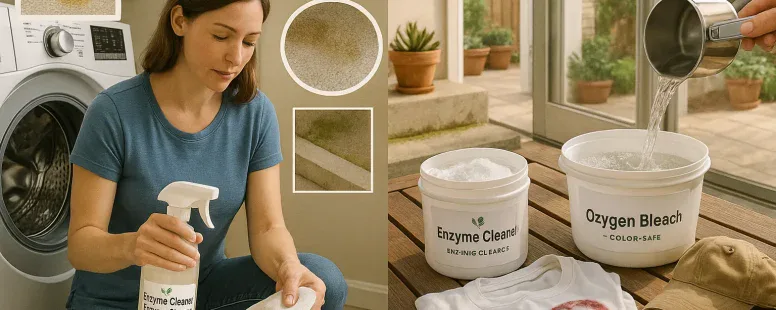
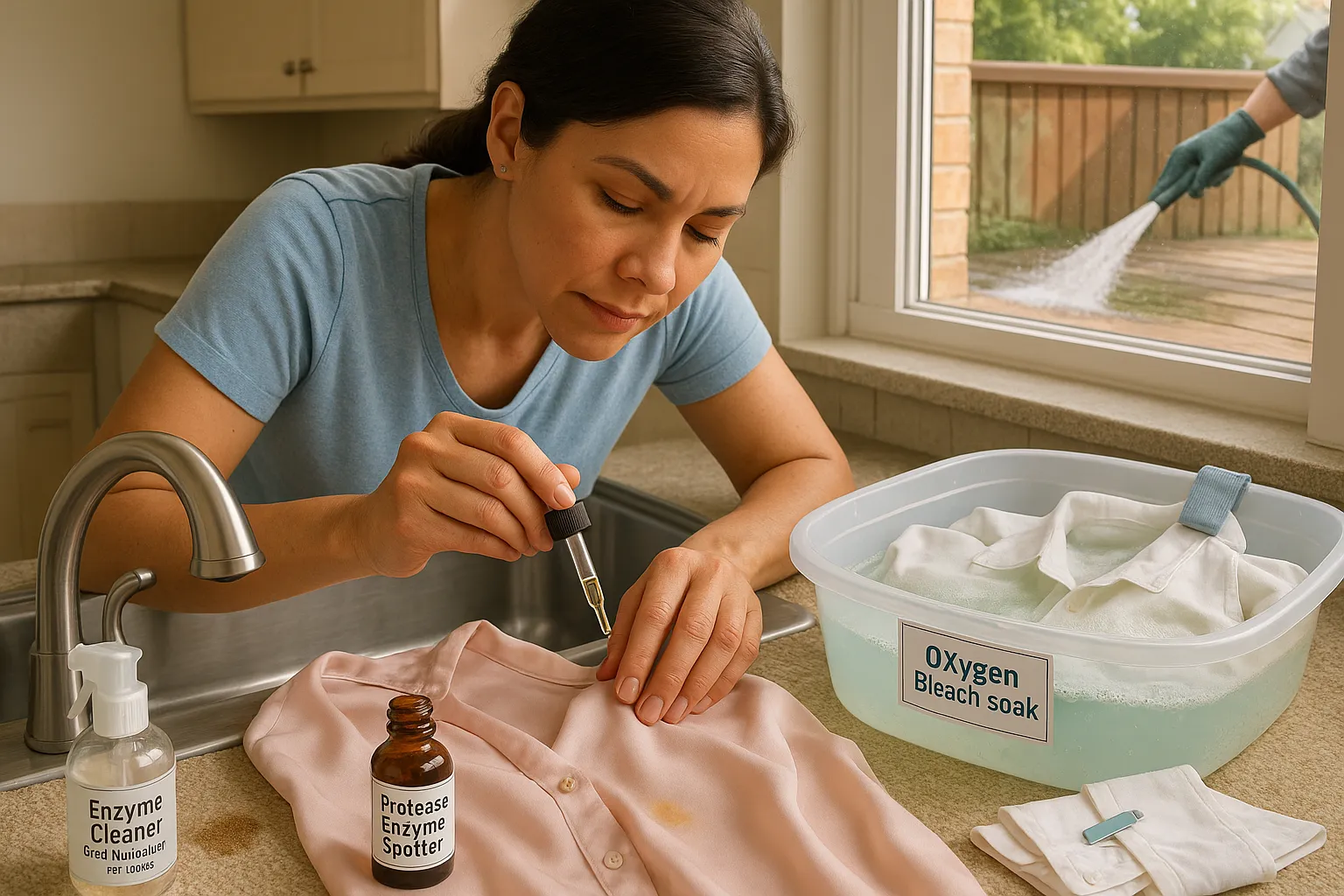
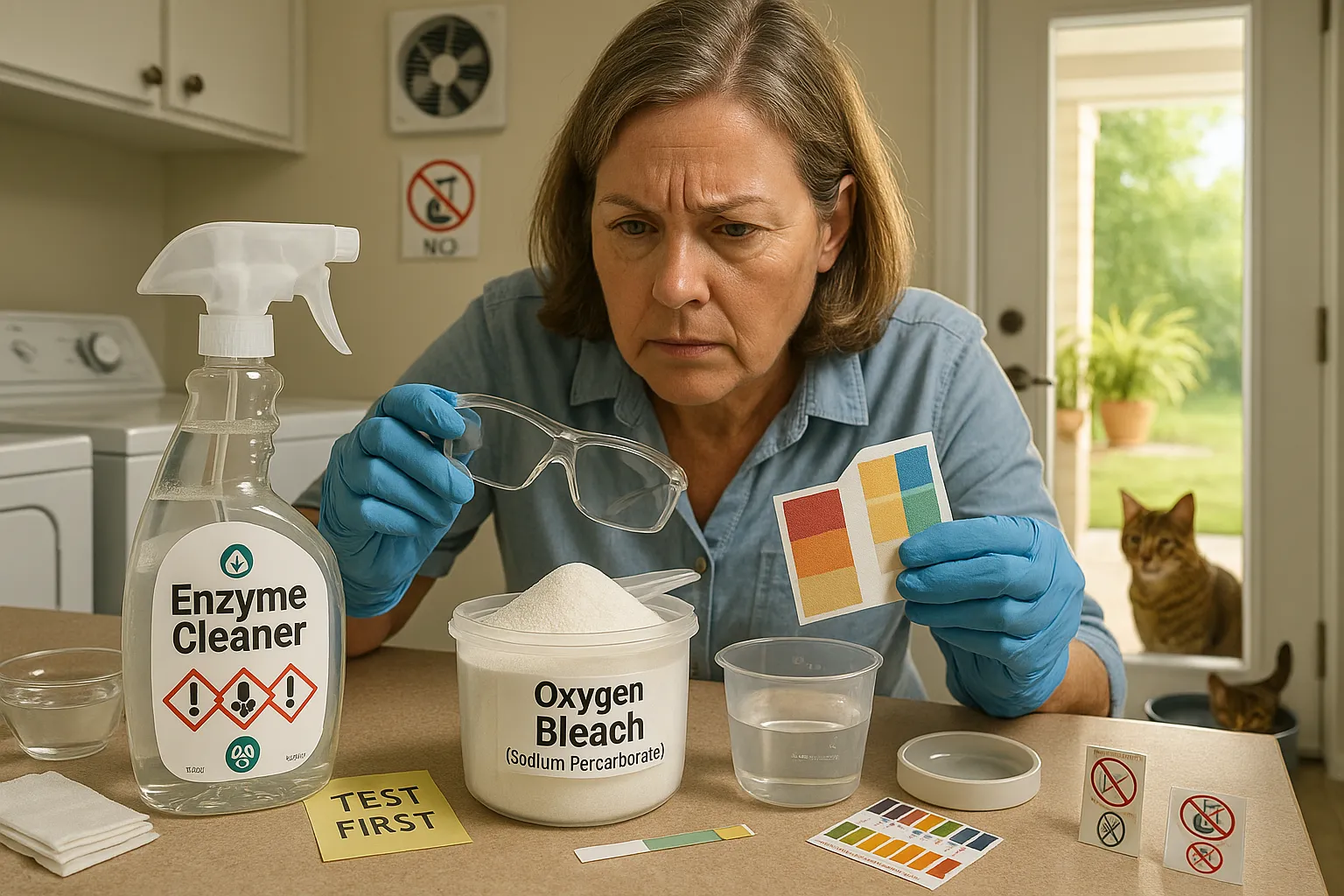
Organic stains, blood, grass, wine, grease, leave more than marks: they carry proteins, fats, and sugars that cling to fibers and surfaces. You can stand over a stained shirt and feel a small panic, the bright smear like a bruise on fabric. But not all stain removers attack those molecules the same way. Enzyme cleaners and oxygen bleach approach the problem from different linguistic of chemistry and biology: one digests, the other oxidizes. Knowing how each works gives you a real advantage, faster removal, less damage to fabric, and fewer repeat treatments. This article compares enzyme cleaners vs. oxygen bleach for organic stains so you’ll pick the right tool and save time, money, and future headaches.
What Counts As An Organic Stain And Why It Matters
Fact: Organic stains come from living things and contain molecules, proteins, lipids, and carbohydrates, that respond differently to cleaners.
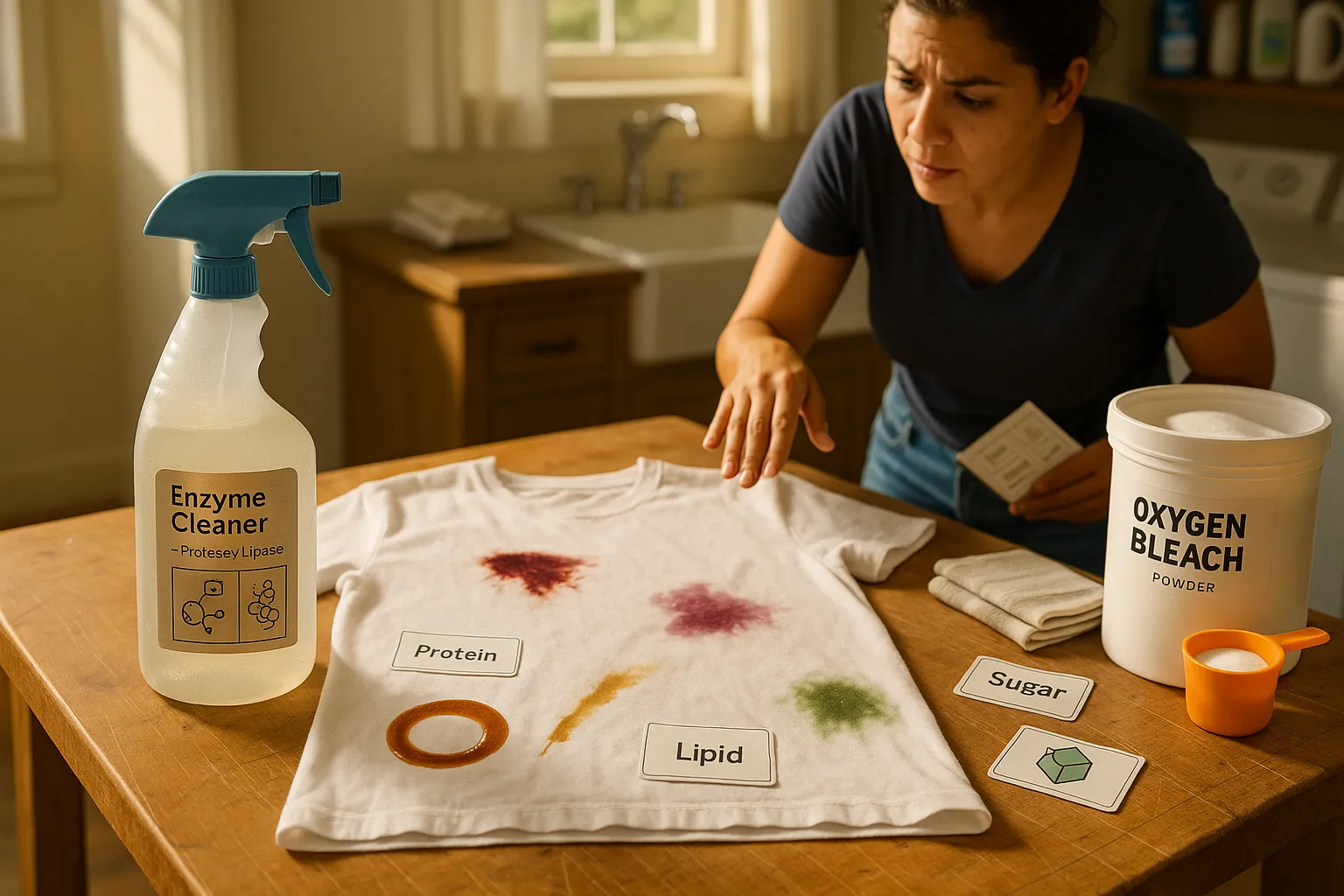
Organic stains include blood, sweat, urine, milk, vomit, grass, wine, coffee, and food oils. These stains often contain proteins (hemoglobin in blood), fats (cooking oil), and sugars (fruit juices). That composition matters because cleaners target specific bonds. Enzyme cleaners attack biological bonds in proteins and fats. Oxygen bleach breaks down chromophores and oxidizes organic molecules.
Why it matters for you: choose a product that attacks the dominant molecule. For example, blood is protein-heavy so a protease-rich enzyme formula usually works better than a simple detergent. Grease needs lipase activity or a surfactant: wine’s color molecules often respond well to oxidation. If you misidentify the stain, you waste time and can set the stain permanently, heat from a dryer will lock protein stains in, and strong bleach can strip dye from a favorite shirt.
How Enzyme Cleaners Work
Fact: Enzyme cleaners use biological catalysts to break large organic molecules into small, soluble pieces you can rinse away.
Enzyme cleaners contain proteins, enzymes, that speed up specific chemical reactions without being consumed. Brands you might recognize include Nature’s Miracle (pet stains) and products with labels like “protease” or “lipase.” Enzymes target stains precisely and often continue working after you rinse, because fragments get further digested.
How Enzyme Cleaners Work, Proteases, Lipases, And Amylases
Fact: Different enzymes target different molecules: proteases break proteins, lipases break fats, amylases break starches.
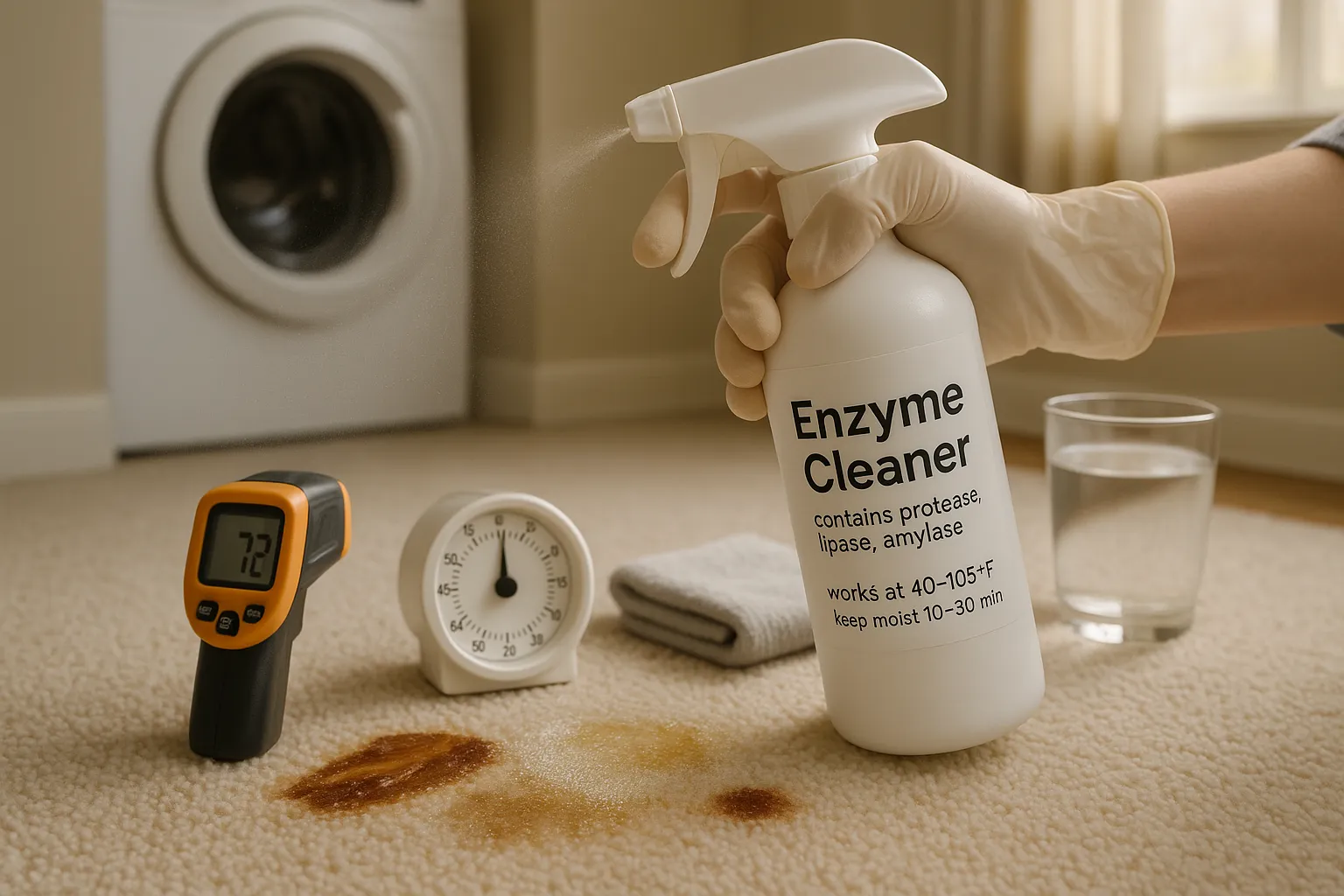
Proteases cut peptide bonds in proteins like blood and milk. Lipases separate triglycerides in greasy stains. Amylases attack carbohydrate chains in sauces and baby food. When you read a label, look for these names. For pet urine, proteases reduce odor by digesting odor-causing peptides: lipases handle greasy food spots: amylases take care of cereal and sauce residues.
How Enzyme Cleaners Work, Optimal Conditions (Temperature, pH, Contact Time)
Fact: Enzymes need the right temperature and pH to work: outside that window their activity drops sharply.
Most household enzyme cleaners work best between 40–105°F (5–40°C) and at near-neutral pH. Too-hot water denatures the enzyme. Too-cold water slows the reaction. Contact time matters: enzymes often need 10–30 minutes, sometimes longer for set-in stains. You should keep the treated area moist and avoid immediate heat (no dryer) so enzymes finish their job. Some formulas include stabilizers that extend shelf life, but they still lose potency over months if stored improperly.
How Oxygen Bleach Works
Fact: Oxygen bleach uses peroxide chemistry to release oxygen that oxidizes and breaks apart stain molecules and chromophores.
Oxygen bleaches typically use sodium percarbonate or hydrogen peroxide precursors. When dissolved, they release hydrogen peroxide which forms reactive oxygen species. Those species attack double bonds and color-bearing structures in organic molecules, making stains colorless and more soluble.
How Oxygen Bleach Works, Chemical Action And Release Of Oxygen
Fact: The active step is the release of oxygen which oxidizes organic molecules and weakens their attachment to fibers.
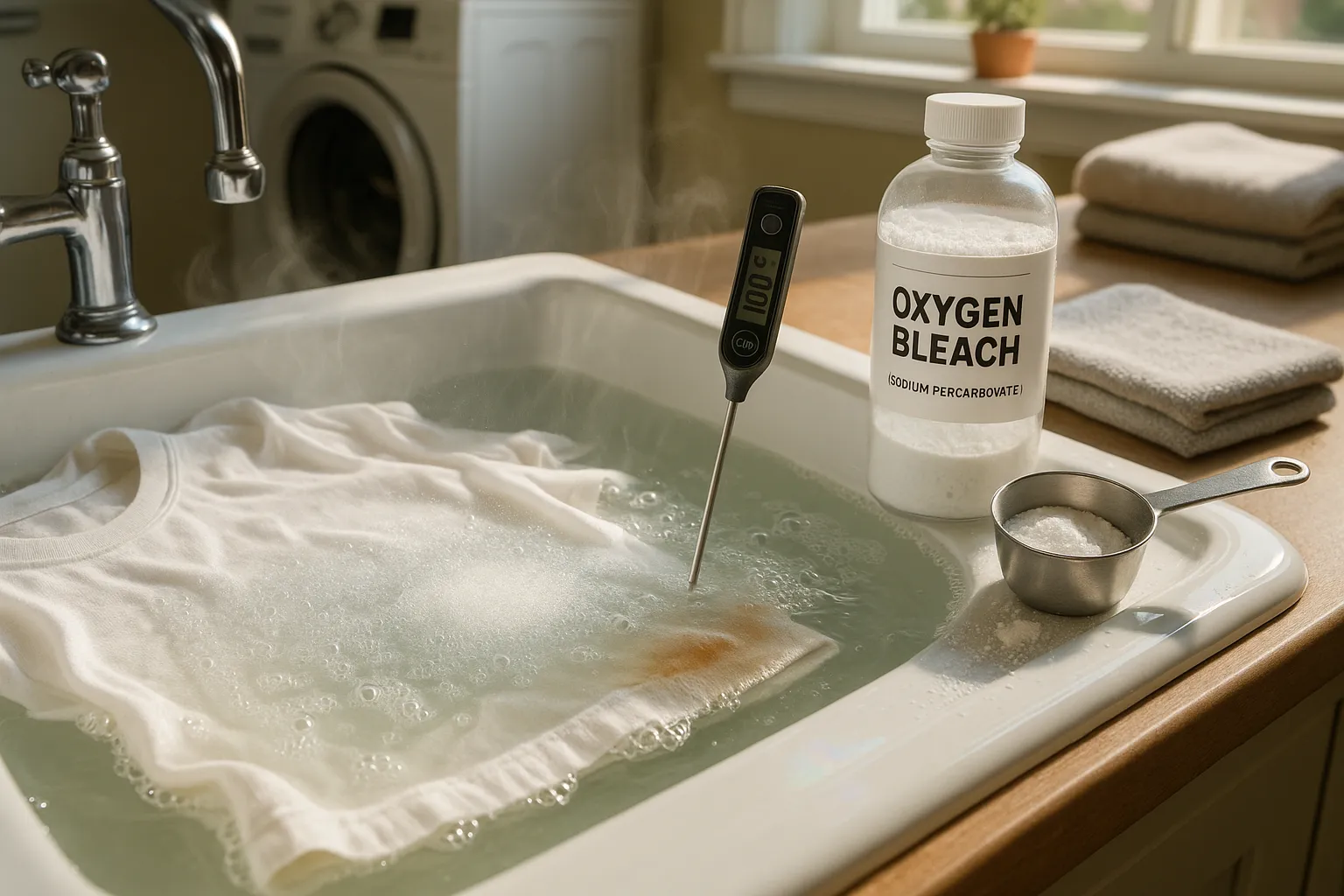
Sodium percarbonate becomes hydrogen peroxide and soda ash in water. Hydrogen peroxide decomposes to water and oxygen: while decomposing it generates radicals and other oxidants that cleave chromophores. This process lightens color and breaks down organic matter. Oxygen bleach is milder than chlorine bleach and is safer for many fabrics, but it still oxidizes dyes and finishes.
How Oxygen Bleach Works, Best Conditions For Activation
Fact: Oxygen bleach needs warm water and time to activate fully: alkalinity and agitation improve results.
Warm water (around 100–120°F / 40–50°C) speeds the release of oxygen. Many oxygen-bleach products recommend soaking for 30 minutes to several hours. An alkaline environment enhances cleaning because it helps saponify fats and improves peroxide stability. Avoid mixing oxygen bleach with acids or ammonia, these can neutralize the action or produce hazards.
Comparing Effectiveness By Surface And Stain Type
Fact: Effectiveness depends on both the stain chemistry and the material you treat.
Match the remover to the surface: fabrics, carpets, and hard surfaces each react differently. Below are practical comparisons and examples.
Comparing Effectiveness, Fabrics And Clothing
Fact: For fresh protein stains on clothing, enzymes often outperform oxygen bleach: for colored wine or fruit stains, oxygen bleach can be better.
Enzymes break down blood and sweat: they work well on delicates when used at recommended temperatures and with proper rinsing. Oxygen bleach lifts pigments and is good for white cotton and color-safe laundering when dyes are stable. For example, a white cotton shirt with red wine often responds faster to oxygen bleach soak, while a silk blouse with blood needs a gentle protease product or a professional cleaner.
Comparing Effectiveness, Carpets, Upholstery, And Rugs
Fact: Enzymes reduce odor and fully digest pet messes, while oxygen bleach removes visible color from many organic spills without harsh fumes.
Pet urine: enzyme cleaners are usually superior because they remove odor-causing molecules. Carpet with coffee or wine: oxygen bleach can lift the pigment, but you must test for colorfastness. For wool or fragile upholstery, avoid strong oxidizers: use enzyme-based cleaners formulated for upholstery.
Comparing Effectiveness, Hard Surfaces And Outdoor Stains
Fact: Oxygen bleach is often stronger on outdoor organic stains (mildew, moss, algae) while enzymes are useful for grease and food residues in kitchen settings.
Concrete and decks respond well to oxygen bleach, it brightens wood and kills biological growth. Enzymes help remove dried food, grease on countertops, and protein residues in garbage disposals. For grill grates or oil-splattered concrete, a combination of degreaser then oxygen bleach soak works best.
Safety, Environmental, And Material Compatibility Considerations
Fact: Both product types have safety and environmental trade-offs: reading labels and testing matters.
Use protective gloves and follow ventilation guidance. Don’t mix cleaners. Consider pets and plants when rinsing outdoors. Below are specific concerns.
Safety And Toxicity For People And Pets
Fact: Enzyme cleaners are generally low-toxicity but can cause allergies: oxygen bleach can irritate skin and eyes and release oxygen gas.
Enzymes can cause respiratory or skin sensitization in some people. Keep enzyme sprays away from faces and avoid inhaling mist. Oxygen bleach is less volatile than chlorine but can irritate. If a pet licks a treated spot, enzymes rarely cause harm, but peroxide residues can irritate mucous membranes until rinsed.
Environmental Impact And Biodegradability
Fact: Enzyme cleaners are biodegradable: oxygen bleach breaks down to water and oxygen but may raise local alkalinity.
Enzymes come from biological sources and generally have low environmental persistence. Oxygen bleach decomposes into benign products, though large runoff can affect aquatic life via pH shifts. Avoid dumping concentrated solutions into storm drains.
Material Compatibility And Colorfastness Risks
Fact: Oxygen bleach can fade dyes: enzymes are gentler on color but can weaken some finishes.
Always test in an inconspicuous area. Oxygen bleach is usually safe on white cotton: it can harm dyed fabrics and some synthetic finishes. Enzymes may attack natural protein fibers if formulated aggressively: silk and wool require special care.
How To Choose The Right Product For Specific Situations
Fact: Choose based on stain chemistry, material, and household constraints like kids or pets.
Match stain type to active ingredient and consider time, temperature, and safety needs.
Choosing For Different Stain Types (Blood, Urine, Grease, Wine, Grass)
Fact: Blood and urine respond best to protease enzymes: grease needs lipases or surfactants: wine and grass often need oxidation.
Blood: apply a protease enzyme in cool water, let sit 15–30 minutes, then launder. Urine: enzyme cleaners remove odor and stain if allowed long contact time. Grease: use a lipase product or degreaser followed by detergent. Wine: oxygen bleach soak works well on whites: on colored items, blot then use enzyme if protein is present (e.g., dairy in sauces). Grass: enzymes and oxygen bleach both help: test colorfastness first.
Choosing For Different Materials (Delicates, Synthetic Fabrics, Wood, Concrete)
Fact: Delicates favor enzyme formulations made for silk/wool: concrete tolerates oxygen bleach better than enzymes.
Delicates: use low-temp enzyme cleaners or professional care. Synthetics: check label: some plastics and finishes can react. Wood: avoid prolonged wetting: a gentle enzyme wipe can remove food, oxygen bleach can brighten outdoor wood briefly. Concrete: oxygen bleach lifts biological stains and is cost-effective for patios.
Choosing For Homes With Kids Or Pets
Fact: Choose low-toxicity, biodegradable enzyme cleaners for home with children and animals: use oxygen bleach with supervision.
Enzymes reduce odor and are less harsh, making them a good choice for pet messes. Store both types locked away. Rinse treated areas thoroughly if young children or pets will contact them soon after treatment.
Application Tips, Dosage, And Best Practices
Fact: Proper pretesting, dilution, and contact time make the difference between success and setting a stain.
Follow label instructions, test first, and control temperature and time.
Pretesting, Dilution, And Contact Time Guidelines
Fact: Always test a hidden area before full application: dilute according to label and allow adequate contact time.
For enzymes, use cool to warm water and keep the area moist for 10–30 minutes or longer for older stains. For oxygen bleach, dissolve per package directions in warm water and soak 30 minutes to several hours. If you’re unsure, start with the mildest effective concentration and increase carefully.
Application Order, Agitation, And Rinsing Instructions
Fact: Apply cleaner, agitate gently if safe, then rinse thoroughly: heat only after stain removal.
Blot excess first. Apply enzyme or oxygen solution. Lightly agitate with a soft brush for carpets or use a cloth for fabrics. Rinse or launder after the recommended time. Don’t put a treated garment in the dryer until the stain is gone, heat sets protein stains. Use repeated enzyme applications for stubborn odors.
Storage, Shelf Life, And Mixing Warnings
Fact: Store enzyme cleaners cool and dry: keep oxygen bleach sealed and dry until use.
Enzymes lose activity over months if exposed to heat. Oxygen bleach loses potency if left wet. Never mix enzyme products with chlorine bleach or strong acids. Mixing can produce noxious gases or destroy active ingredients. Label and date your bottles if you dilute them for repeated use.
Troubleshooting, When To Combine Methods, And Professional Help
Fact: If a stain resists, consider sequencing methods or seeking professional cleaning.
Experiment carefully and stop if color loss appears. Below are rules of thumb and red flags.
When To Use Enzymes First Versus Oxygen Bleach First
Fact: Use enzymes first on protein- and odor-based stains: use oxygen bleach first on colored pigment stains.
If the stain smells (urine, vomit), start with enzymes to remove odor molecules. If the issue is vivid pigment on white cotton (red wine, beet), try oxygen bleach soak first. If unsure, test a small area with each method to see which works without harming the fabric.
Safe Ways To Combine Methods And What To Avoid Mixing
Fact: You can apply enzyme treatment, rinse, then follow with oxygen bleach: never mix active products directly.
Sequence treatments with a full rinse between them. Do not mix enzyme directly with peroxide or chlorine. Avoid heat between steps when treating protein stains. If you plan combination treatment for heavily soiled upholstery, do spot tests first.
Signs A Stain Needs Professional Treatment
Fact: Persistent discoloration after multiple safe attempts, fabric weakening, or antique/delicate items need pro care.
If dye loss appears, fibers pill, or a valuable garment shows structural damage, stop home attempts. Professional cleaners use controlled solvents, low-temp enzymatic baths, or ozone treatments that are safer for rare textiles. When in doubt, consult a reputable cleaner and describe what home methods you tried.
To provide the best experiences, we use technologies like cookies to store and/or access device information. Consenting to these technologies will allow us to process data such as browsing behaviour or unique IDs on this site. Not consenting or withdrawing consent, may adversely affect certain features and functions.
Functional
Always active
The technical storage or access is strictly necessary for the legitimate purpose of enabling the use of a specific service explicitly requested by the subscriber or user, or for the sole purpose of carrying out the transmission of a communication over an electronic communications network.
Preferences
The technical storage or access is necessary for the legitimate purpose of storing preferences that are not requested by the subscriber or user.
Statistics
The technical storage or access that is used exclusively for statistical purposes.The technical storage or access that is used exclusively for anonymous statistical purposes. Without a subpoena, voluntary compliance on the part of your Internet Service Provider, or additional records from a third party, information stored or retrieved for this purpose alone cannot usually be used to identify you.
Marketing
The technical storage or access is required to create user profiles to send advertising, or to track the user on a website or across several websites for similar marketing purposes.