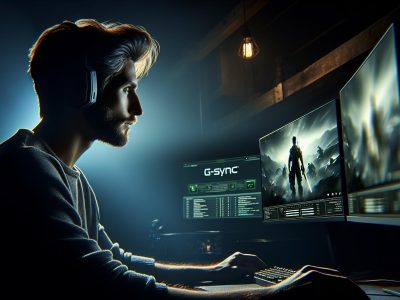
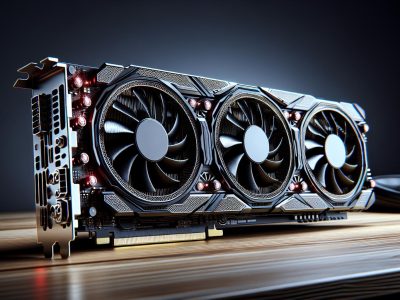
Picture upgrading your gaming setup, only to wonder if your NVIDIA graphics card will play nice with that shiny FreeSync monitor you just bought. It’s a question many gamers face and one that could make or break the smoothness of your gameplay experience. With screen tearing and stuttering lurking as potential distractions, finding harmony between these technologies becomes crucial.
You might assume NVIDIA and FreeSync are incompatible since they come from competing ecosystems, but the reality may surprise you. Understanding how these two work together can unlock a world of fluid visuals without very costly on premium alternatives. So, does NVIDIA truly work with FreeSync? Let’s jump into what makes this pairing possible—and whether it’s worth considering for your next gaming adventure.
Understanding FreeSync Technology
FreeSync technology reduces screen tearing and stuttering during gameplay by synchronizing a monitor’s refresh rate with a graphics card’s frame rate. It’s designed to enhance the visual experience, particularly in fast-paced games.
What Is FreeSync?
FreeSync is AMD’s adaptive sync technology that adjusts the refresh rate of compatible monitors to match the frame output of your GPU. Unlike fixed refresh rates, it varies dynamically, addressing mismatches between graphic rendering and display rates. This synchronization ensures smoother visuals without introducing latency or ghosting effects.
FreeSync relies on the Adaptive-Sync standard from VESA (Video Electronics Standards Association). It doesn’t require proprietary hardware modules like NVIDIA G-Sync, making it more affordable for manufacturers and consumers. As a result, many gaming monitors incorporate FreeSync compatibility as a cost-effective solution for reducing visual artifacts.
Benefits Of FreeSync For Gamers
Eliminating Screen Tearing
Screen tearing occurs when the monitor displays multiple frames simultaneously due to frame rate mismatches. With FreeSync enabled, this issue disappears because the GPU and monitor work together in real time.
Reducing Input Lag
Input lag disrupts responsiveness during competitive gaming scenarios like first-person shooters or racing games. By syncing refresh rates directly with rendered frames, FreeSync minimizes delays between user input and on-screen actions.
Improving Affordability
Many budget-friendly monitors support FreeSync since its implementation doesn’t involve additional licensing fees or specialized components like those required for G-Sync-certified displays.
Enhancing Compatibility Range
Some advanced versions of FreeSync—such as ‘FreeSync Premium’—offer features like low-framerate compensation (LFC), which maintains smooth gameplay even when FPS drops below your monitor’s minimum supported range.
Gamers using titles such as Fortnite, Call of Duty: Warzone, or Cyberpunk 2077 often report noticeable improvements in fluidity when utilizing these technologies effectively with their setups.
Nvidia And FreeSync Compatibility
NVIDIA graphics cards can work with FreeSync monitors, even though originating from different ecosystems. This compatibility opens up cost-effective options for gamers seeking smooth visuals and enhanced gameplay.
How G-Sync Differs From FreeSync
G-Sync uses proprietary hardware modules inside monitors to synchronize frame rates with NVIDIA GPUs, ensuring minimal latency and eliminating screen tearing. These modules increase monitor costs but guarantee consistent performance across certified G-Sync displays. Also, G-Sync supports advanced features like variable overdrive and low-latency modes.
In contrast, FreeSync relies on the VESA Adaptive Sync standard without requiring specialized hardware. It operates through open protocols that allow dynamic refresh rate adaptation between the GPU and display. While less expensive than G-Sync, performance may vary based on individual monitor quality or firmware updates.
Nvidia’s Support For FreeSync Monitors
Starting in 2019, NVIDIA enabled support for select FreeSync monitors via their “G-Sync Compatible” certification program. By using a compatible GeForce GPU (e.g., GTX 10-series or newer) alongside updated drivers, you can activate adaptive sync functionality even on uncertified FreeSync models. But, results depend largely on each monitor’s capabilities.
A notable example is gaming titles such as Apex Legends benefiting significantly from this integration—reducing input lag while maintaining fluid motion during intense gameplay sessions. To ensure optimal results, test your setup by enabling VRR (Variable Refresh Rate) in both your GPU settings and monitor menu options.
Key Feature
G-Sync
FreeSync
Hardware Requirement
Proprietary module
None
Cost Impact
Higher
Lower
Certification
Strictly enforced
Optional
This compatibility means you aren’t limited to one ecosystem when choosing gaming displays or GPUs; leveraging these technologies effectively enhances immersion across diverse setups without unnecessary expenses.
Setting Up Nvidia With FreeSync Monitors
NVIDIA GPUs can work seamlessly with FreeSync monitors, enhancing your gaming experience without requiring proprietary hardware. Proper setup ensures you get the most out of this compatibility.
Checking Compatibility
Confirm that your monitor supports FreeSync and verify if it’s listed as “G-Sync Compatible” on NVIDIA’s official website. You can use uncertified FreeSync monitors too, but results may vary based on quality. Ensure your NVIDIA GPU is from the GeForce GTX 10-series or newer, as older models lack adaptive sync support.
To check compatibility in practice, look for options like “Adaptive Sync” or “FreeSync” in your monitor’s settings menu. Cross-reference these features with supported driver versions available through NVIDIA Control Panel.
Steps To Enable FreeSync On Nvidia GPUs
Update Drivers: Download the latest drivers for your GeForce GPU from NVIDIA’s website to access adaptive sync functionality.
Activate FreeSync: Navigate to your monitor’s on-screen display (OSD) menu and enable “FreeSync” or a similar option.
Open NVIDIA Control Panel: Right-click on the desktop and select “NVIDIA Control Panel.” Go to “Display” > “Set up G-SYNC.”
Enable G-Sync/Compatible Mode: Check the box labeled “Enable G-SYNC, G-SYNC Compatible,” selecting full-screen mode for optimal results.
Apply Changes: Save configuration and test by running graphically demanding games like Cyberpunk 2077 or Apex Legends to observe reduced screen tearing.
If input lag occurs during testing, adjust frame rates within software settings or limit FPS using tools such as RTSS (Rivatuner Statistics Server).
Troubleshooting Common Issues
When encountering issues like flickering screens or inconsistent frame pacing:
Check Cables: Use DisplayPort connections instead of HDMI whenever possible; many displays require DP for adaptive sync functionality.
Refresh Rate Misalignment: Match refresh rate between game settings and monitor specifications—e.g., set both at 144Hz for smoother performance.
Driver Reinstallation: Corrupted files often cause errors; clean install GPU drivers through software utilities like DDU (Display Driver Uninstaller).
Disable Conflicting Features: Turn off V-Sync in-game when using adaptive sync technology to prevent redundancies.
For persistent problems even after resolving these factors, consult manufacturer documentation specific to your GPU model and display unit compatibility standards.
Gaming Performance With Nvidia And FreeSync
Gaming performance improves significantly when pairing NVIDIA GPUs with FreeSync monitors. This combination enhances frame rate synchronization, minimizing screen tearing and stuttering for smoother gameplay.
Advantages Of Using FreeSync With Nvidia GPUs
Enhanced visual fluidity stands out as a key benefit of using FreeSync with NVIDIA GPUs. By synchronizing the monitor’s refresh rate with the GPU’s frame output, games like Valorant or Cyberpunk 2077 run more seamlessly. This is particularly valuable in fast-paced gaming scenarios where even minor disruptions can affect immersion.
Broader display options become accessible due to NVIDIA’s “G-Sync Compatible” program, which supports many FreeSync monitors. Gamers gain access to budget-friendly displays without sacrificing adaptive sync technology. For instance, models from ASUS and LG often deliver excellent results at competitive prices.
Improved responsiveness during gameplay benefits competitive players. Reduced input lag through adaptive sync ensures instant reactions in titles such as Call of Duty: Modern Warfare II or Overwatch 2, giving you an edge in critical moments.
Lower costs compared to G-Sync-certified monitors make this setup attractive for gamers on a budget. Without proprietary hardware requirements, manufacturers offer affordable options that still support smooth visuals and reduced latency.
Potential Limitations And Drawbacks
Variable compatibility presents challenges since not all FreeSync monitors function optimally with NVIDIA GPUs. Some uncertified models might experience issues like flickering or limited refresh range alignment unless carefully configured.
Performance inconsistencies may arise depending on monitor quality and settings. Mid-range displays might struggle to maintain high refresh rates during graphically intensive sequences in AAA games like The Witcher 3 or Hogwarts Legacy.
Feature limitations occur because not every monitor includes advanced features like low-framerate compensation (LFC). Without LFC support, frame drops below the minimum threshold could result in noticeable stutter instead of smooth transitions.
Driver updates are crucial but sometimes overlooked by users seeking optimal performance between their GPU and monitor configurations. Failing to install the latest drivers risks losing stability or missing out on new compatibility improvements introduced by NVIDIA updates.
Conclusion
NVIDIA’s compatibility with FreeSync opens up exciting possibilities for gamers seeking smoother visuals without very costly. By leveraging adaptive sync technology, you can enjoy a more immersive experience on a wide range of monitors, even if they’re not G-Sync certified.
Whether you’re diving into fast-paced shooters or exploring expansive open worlds, pairing NVIDIA GPUs with FreeSync monitors enhances fluidity and responsiveness. With proper setup and regular driver updates, you can overcome potential challenges and unlock the full potential of this cost-effective combination.
This integration empowers you to balance performance and affordability while expanding your options in gaming hardware. If you’re looking for an accessible way to elevate your gameplay, using NVIDIA graphics cards with FreeSync monitors is a smart move worth considering.
To provide the best experiences, we use technologies like cookies to store and/or access device information. Consenting to these technologies will allow us to process data such as browsing behaviour or unique IDs on this site. Not consenting or withdrawing consent, may adversely affect certain features and functions.
Functional
Always active
The technical storage or access is strictly necessary for the legitimate purpose of enabling the use of a specific service explicitly requested by the subscriber or user, or for the sole purpose of carrying out the transmission of a communication over an electronic communications network.
Preferences
The technical storage or access is necessary for the legitimate purpose of storing preferences that are not requested by the subscriber or user.
Statistics
The technical storage or access that is used exclusively for statistical purposes.The technical storage or access that is used exclusively for anonymous statistical purposes. Without a subpoena, voluntary compliance on the part of your Internet Service Provider, or additional records from a third party, information stored or retrieved for this purpose alone cannot usually be used to identify you.
Marketing
The technical storage or access is required to create user profiles to send advertising, or to track the user on a website or across several websites for similar marketing purposes.