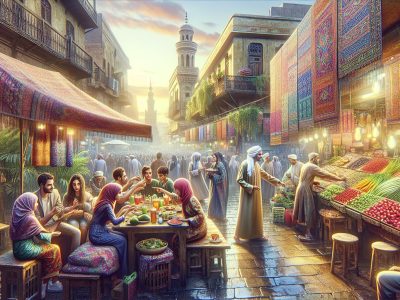
Picture walking through a bustling marketplace, the air alive with vibrant conversations in languages that seem to dance off the tongue. You hear Urdu’s poetic cadence weaving its rich tapestry of South Asian culture, while Arabic’s rhythmic precision echoes with centuries of tradition and spirituality. At first glance, these two languages might feel like distant cousins—connected yet distinct.
But what truly sets them apart? Is it their scripts that share an artistic elegance or their roots embedded in history? Maybe it’s how they’ve shaped literature, music, and daily life across different regions. Understanding the differences between Urdu and Arabic isn’t just about linguistics—it’s about uncovering stories of identity, heritage, and connection. Whether you’re curious about their origins or intrigued by their modern-day influence, exploring these languages offers a fascinating glimpse into two worlds brimming with beauty and depth.
Overview Of Urdu And Arabic
Urdu and Arabic are distinct languages with deep historical, cultural, and linguistic roots. Although they share some similarities, each holds unique features shaped by its development and usage.
Historical Background
Arabic originated in the Arabian Peninsula around the 4th century CE. It is one of the oldest Semitic languages, playing a crucial role in Islamic civilization as the language of the Quran. Over centuries, it influenced numerous regions through trade, conquest, and religion.
Urdu developed much later during the 12th century in South Asia. It’s an Indo-Aryan language influenced by Persian, Turkish, and Arabic due to Mughal rule. Its script—Nastaliq—is derived from Persian calligraphy but incorporates many Arabic letters. While both languages share lexical borrowings, their evolution followed different paths.
Geographic Distribution
Arabic is spoken across 22 countries in the Middle East and North Africa (MENA), including Saudi Arabia, Egypt, Iraq, Syria, and Morocco. With over 310 million native speakers (Ethnologue), it’s among the world’s most widely spoken languages.
Urdu is primarily spoken in Pakistan as its national language and parts of India where it’s recognized as one of 22 official languages. Globally, nearly 230 million people use Urdu as either a first or second language (World Atlas). While Arabic dominates MENA regions culturally and linguistically; Urdu thrives across South Asian diasporas worldwide.
Cultural Significance
Arabic holds immense religious significance for Muslims globally as it preserves Islamic teachings through sacred texts like the Quran and Hadiths. Also known for its poetic tradition—like Al-Mutanabbi’s works—it conveys eloquence with rich syntax patterns.
Linguistic Roots And Origins
Urdu and Arabic share historical connections but originate from distinct linguistic roots. Understanding their origins reveals how cultural exchanges influenced their development.
Language Families
Arabic belongs to the Semitic branch of the Afro-Asiatic language family, alongside Hebrew and Amharic. It emerged in the Arabian Peninsula and became a cornerstone of Islamic culture. As a Semitic language, it exhibits root-based morphology, where three-letter roots convey core meanings (e.g., “k-t-b” relates to writing).
Urdu is part of the Indo-Aryan subgroup within the Indo-European family, related to Hindi and Sanskrit. Originating in South Asia during the 12th century CE, Urdu absorbed elements from Persian, Turkish, and Arabic due to Mughal influences. Unlike Arabic’s triconsonantal system, Urdu relies on an inflectional grammar structure typical of Indo-Aryan languages.
Script And Writing System
Arabic uses an abjad script with 28 letters written right-to-left. Its cursive form emphasizes calligraphy; for instance, Kufic and Naskh styles are prominent in art and manuscripts. Diacritics indicate vowels but aren’t always mandatory in everyday texts.
Urdu employs a modified Perso-Arabic script called Nastaliq with additional letters for sounds unique to South Asian languages like “ٹ” (ṭ) or “ڈ” (ḍ). Written right-to-left like Arabic but more elaborate in style, it’s renowned for its aesthetic appeal in poetry.
Both scripts reflect their cultural heritages through design yet adapt differently based on linguistic needs.
Grammar And Syntax Differences
Urdu and Arabic exhibit distinct grammar and syntax systems shaped by their linguistic roots, cultural contexts, and historical evolution. These differences influence sentence construction, verb usage, and vocabulary formation.
Sentence Structure
Arabic relies on a root-based system with strict grammatical rules. Sentences typically follow a Verb-Subject-Object (VSO) structure but can also adopt Subject-Verb-Object (SVO) order in specific contexts for emphasis. For example, the phrase “He wrote a book” translates to “Kataba kitab(an)” in VSO format.
Urdu primarily employs an SOV structure. The same phrase “He wrote a book” translates to “Usne ek kitaab likhi.” Also, Urdu includes auxiliary verbs that modify tense or mood within sentences.
While Arabic emphasizes case endings for nouns to indicate grammatical roles like subject or object (e.g., nominative -u, accusative -a), Urdu depends on postpositions such as “ko” or “se.” This difference makes Arabic syntax more reliant on morphological changes compared to Urdu’s word order adjustments.
Vocabulary And Word Formation
Arabic derives words using triliteral roots comprising three consonants. These roots form various words by applying patterns with vowels and affixes. For instance, the root K-T-B generates related terms like ‘kitab’ (book), ‘kataba’ (he wrote), and ‘maktab’ (office).
Urdu borrows heavily from Persian, Turkish, Sanskrit, and Arabic but integrates them into its Indo-Aryan framework. Words are often modified phonetically or morphologically to fit native grammatical structures. For example: Arabic-origin ‘ilm’ becomes ‘ilmi’ when forming adjectives in Urdu.
Both languages use gendered nouns; but while Arabic assigns gender inherently even to non-living objects (‘shams,’ the sun is feminine), Urdu aligns noun genders closer with natural gender distinctions where possible—though exceptions exist widely across its lexicon.
Pronunciation And Phonetics
Urdu and Arabic exhibit distinct pronunciation patterns rooted in their linguistic frameworks. Their phonetic systems reflect the cultural and historical influences of each language.
Sound Systems
Arabic emphasizes precise articulation through guttural sounds, which originate deep in the throat. For example, letters like “ع” (Ayn) and “خ” (Khaa) require unique throat movements unfamiliar to non-native speakers. In contrast, Urdu relies on softer consonants and fluid intonation influenced by Persian and Hindustani traditions. Urdu’s sound system includes aspirated stops such as “بھ” (Bha) or “پھ” (Pha), adding a melodious quality.
Stress patterns also differ significantly. Arabic often accentuates specific syllables for rhythmic balance, while Urdu employs more uniform stress distribution across words.
Shared And Unique Phonemes
Both languages share phonemes due to historical interactions but use them differently. Shared sounds include “ق” (Qaaf) and “ف” (Faa), though their articulation varies; Arabic produces these with greater emphasis on precision, whereas Urdu adapts them into its softer tonal range.
Unique phonemes set these languages apart. Arabic contains emphatic consonants like “ص” (Saad), absent in Urdu’s inventory. Meanwhile, the retroflex series in Urdu—such as ٹ (Ṭa) or ڑ (Ṛa)—derives from Indo-Aryan roots and lacks equivalents in Arabic.
These differences shape their auditory identities, making each language distinctive yet interconnected through shared elements of cultural exchange.
Influence On Each Other
Urdu and Arabic have influenced each other through shared history, cultural interactions, and linguistic exchanges. These influences are visible in vocabulary, literature, and artistic traditions.
Borrowed Words
Arabic has contributed significantly to Urdu’s lexicon. Many Urdu words for religious, philosophical, and scientific concepts originate from Arabic. For example, terms like “ilm” (knowledge), “kitab” (book), and “insaf” (justice) trace back to Arabic roots. Similarly, Quranic terminology deeply shaped the linguistic framework of Urdu’s formal registers.
On the other hand, while less common than the reverse influence, some modern spoken Arabic dialects adopted Urdu words due to South Asian migration to Arab countries. Examples include “biryani,” a popular dish name now familiar in Gulf regions.
Borrowing isn’t limited to individual words—it extends to expressions reflecting shared cultural values. Phrases like “Alhamdulillah” (Praise be to God) resonate across both languages due to their Islamic significance.
Cross-Cultural Exchange
Historical encounters between Arabs and South Asians fostered rich cultural exchanges that left linguistic imprints on both sides. Mughal-era scholars often studied classical Arabic texts alongside Persian works when shaping Urdu literary traditions. This dual exposure enriched poetic styles like ghazals by incorporating rhythmic structures inspired by Arabic prosody.
Conversely, Arab merchants who traded along Indian Ocean routes encountered regional languages influencing their colloquial speech patterns over time. You can observe subtle phonetic shifts or idiomatic adaptations derived from such interactions in specific coastal dialects today.
These exchanges extend beyond linguistics into music and calligraphy—fields where blending elements of Nastaliq script with traditional Kufic styles reflect mutual admiration for aesthetic harmony forged through centuries of connection.
Practical Applications And Usage
Urdu and Arabic serve distinct purposes in various cultural, religious, and modern contexts. Their usage reflects their historical evolution and linguistic richness.
Religious Contexts
Arabic holds unparalleled significance in Islamic rituals. As the language of the Quran, it’s integral to prayers (Salah), recitations, and theological discourse. Muslims worldwide learn Arabic for spiritual connection and understanding sacred texts. For example, phrases like “Bismillah” (In the name of Allah) are universally recognized among Muslims regardless of native tongue.
Urdu also plays a vital role in religious practices but is culturally specific. It’s widely used in South Asia for Islamic sermons (Khutbahs), poetry honoring Prophet Muhammad (Naats), and translations of religious texts into an accessible language for local communities. Prominent scholars like Maulana Abul Kalam Azad contributed significantly to Urdu’s role in spreading Islamic teachings.
Modern-Day Communication
Arabic dominates as a lingua franca across 22 Middle Eastern and North African countries. It’s essential for international diplomacy, trade agreements, and media broadcasting like Al Jazeera’s global reach. Standard Arabic unites diverse dialect speakers from Morocco to Iraq even though regional variations.
Urdu thrives as a primary communication tool within Pakistan and India’s diaspora communities globally. Platforms like Bollywood films extend its influence far beyond its geographical roots. Social media channels amplify Urdu expressions through memes, short videos, or poetry posts catering to multilingual audiences.
Conclusion
Exploring the differences between Urdu and Arabic reveals the rich histories, cultural depth, and unique identities of these two remarkable languages. Each holds a special place in its respective regions and communities, reflecting centuries of tradition, creativity, and connection.
Whether you’re drawn to the poetic elegance of Urdu or the rhythmic precision of Arabic, both languages offer an opportunity to appreciate diverse linguistic heritages. Understanding their distinctions enhances your awareness of how language shapes culture and connects people across time and geography.
To provide the best experiences, we use technologies like cookies to store and/or access device information. Consenting to these technologies will allow us to process data such as browsing behaviour or unique IDs on this site. Not consenting or withdrawing consent, may adversely affect certain features and functions.
Functional
Always active
The technical storage or access is strictly necessary for the legitimate purpose of enabling the use of a specific service explicitly requested by the subscriber or user, or for the sole purpose of carrying out the transmission of a communication over an electronic communications network.
Preferences
The technical storage or access is necessary for the legitimate purpose of storing preferences that are not requested by the subscriber or user.
Statistics
The technical storage or access that is used exclusively for statistical purposes.The technical storage or access that is used exclusively for anonymous statistical purposes. Without a subpoena, voluntary compliance on the part of your Internet Service Provider, or additional records from a third party, information stored or retrieved for this purpose alone cannot usually be used to identify you.
Marketing
The technical storage or access is required to create user profiles to send advertising, or to track the user on a website or across several websites for similar marketing purposes.