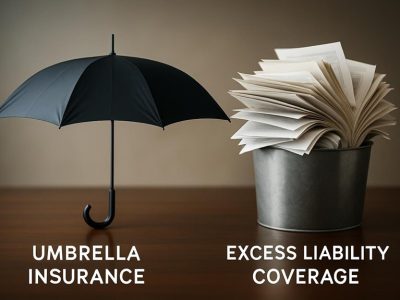
Navigating the intricacies of insurance policies is essential to ensuring comprehensive coverage, yet differentiating between options like Umbrella Policies and Excess Liability Coverage can be challenging. Recognizing their unique roles provides clarity for making informed decisions.
Understanding the Basics
Definition of an Umbrella Policy
An Umbrella Policy serves as supplemental insurance that provides additional liability coverage beyond the limits of your standard insurance policies, such as home, auto, or renters’ insurance. It acts as a versatile safeguard for unforeseeable accidents and claims.
Definition of Excess Liability Coverage
Excess Liability Coverage, in contrast, extends the limits of an existing liability policy. It exclusively increases coverage in specific instances outlined by the primary policy, without introducing new coverage categories or features.
Key Features and Characteristics
Coverage Scope of Umbrella Policies
Umbrella Policies encompass a broad range of liability scenarios, often including legal fees, libel, slander, and incidents not directly covered by standard insurance (subject to exclusions).
Coverage Scope of Excess Liability Policies
Excess Liability Policies focus on heightening the financial limits of an existing policy. This targeted mechanism ensures that policyholders have substantial coverage for covered claims without expanding beyond the scope of the primary policy.
Comparison of Policy Terms and Conditions
Common Scenarios for Utilizing Umbrella Policies
Umbrella Policies shine in diverse situations, such as providing extended liability coverage if you are legally accountable for significant injury or property damage beyond the limits of your current policies. They often cover multiple underlying policies.
Common Scenarios for Utilizing Excess Liability Policies
Excess Liability serves effectively in contexts needing a substantive extension of the financial limits of coverage, like when faced with a lawsuit exceeding the primary policy’s liability cap.
Considerations When Choosing Between the Two
Cost Implications of Each Policy Type
While Umbrella Policies might entail broader liability protection, their cost reflects the expanded coverage scope. Conversely, Excess Liability Policies are proportional to the scale of coverage extension, typically tied to a single policy.
Assessing Coverage Needs for Individuals and Businesses
Individual and business coverage needs to vary based on asset levels, risk exposure, and the nature of required liability protection. Selecting a policy approach entails evaluating these factors, ensuring suitable and efficient protection.
To provide the best experiences, we use technologies like cookies to store and/or access device information. Consenting to these technologies will allow us to process data such as browsing behaviour or unique IDs on this site. Not consenting or withdrawing consent, may adversely affect certain features and functions.
Functional
Always active
The technical storage or access is strictly necessary for the legitimate purpose of enabling the use of a specific service explicitly requested by the subscriber or user, or for the sole purpose of carrying out the transmission of a communication over an electronic communications network.
Preferences
The technical storage or access is necessary for the legitimate purpose of storing preferences that are not requested by the subscriber or user.
Statistics
The technical storage or access that is used exclusively for statistical purposes.The technical storage or access that is used exclusively for anonymous statistical purposes. Without a subpoena, voluntary compliance on the part of your Internet Service Provider, or additional records from a third party, information stored or retrieved for this purpose alone cannot usually be used to identify you.
Marketing
The technical storage or access is required to create user profiles to send advertising, or to track the user on a website or across several websites for similar marketing purposes.