Have you ever considered the profound impact simple distinctions like major and minor have across various fields of knowledge and practice? From music to academics and even into legal frameworks, these classifications provide clarity, structure, and emotional nuance. By exploring their applications and implications, you’ll gain insights into how such terminology shapes understanding.
Defining Major and Minor
Origins and Usage of the Terms
The terms “major” and “minor” originate from Latin roots, conveying notions of size, importance, or degree. Across languages, these words have maintained their core meanings, enabling a versatile application in both formal and everyday contexts.
Applications in Different Contexts
The adaptability of these terms is remarkable. In one context, “major” might signify prominence or a larger scale, while “minor” suggests lesser significance or a subsidiary role. These meanings hold true whether discussing academic disciplines, legal categories, or musical compositions.
Major and Minor in Music Theory
Characteristics of Major Scales and Chords
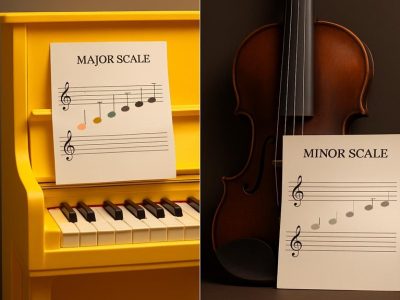
In music theory, a major scale is constructed using a specific sequence of whole and half steps, creating a bright sound associated with uplifting emotions. Major chords maintain this pattern, giving them their recognized joyful essence.
Characteristics of Minor Scales and Chords
Minor scales, differing in their step patterns, convey a more somber or contemplative mood. Minor chords align with these characteristics, allowing for expressive depth in musical storytelling.
Emotional and Aesthetic Impacts
Musical compositions leverage the contrast between major and minor to evoke a range of emotions. This dichotomy forms the basis of much of Western music’s expressive power, bridging cultural and psychological spaces.
Major and Minor in Academic Studies
Structuring an Academic Major
Choosing a major defines your primary field of study during your academic pursuit. It shapes the bulk of your coursework and can influence your future career trajectory.
Role of Minors in Academic Pursuits
A minor, on the other hand, supports or complements your major by allowing exploration of additional subjects, so broadening your academic experience and enhancing your skills portfolio.
Major and Minor Legal Distinctions
Examples of Major Crimes
Major crimes, often referred to as felonies, encompass severe offenses such as robbery and child, dealing significant societal harm and usually resulting in substantial penalties.
Examples of Minor Offenses
Minor offenses, or misdemeanors, are less severe and include acts like jaywalking. They typically result in lighter penalties but are still integral to maintaining societal order.
To provide the best experiences, we use technologies like cookies to store and/or access device information. Consenting to these technologies will allow us to process data such as browsing behaviour or unique IDs on this site. Not consenting or withdrawing consent, may adversely affect certain features and functions.
Functional
Always active
The technical storage or access is strictly necessary for the legitimate purpose of enabling the use of a specific service explicitly requested by the subscriber or user, or for the sole purpose of carrying out the transmission of a communication over an electronic communications network.
Preferences
The technical storage or access is necessary for the legitimate purpose of storing preferences that are not requested by the subscriber or user.
Statistics
The technical storage or access that is used exclusively for statistical purposes.The technical storage or access that is used exclusively for anonymous statistical purposes. Without a subpoena, voluntary compliance on the part of your Internet Service Provider, or additional records from a third party, information stored or retrieved for this purpose alone cannot usually be used to identify you.
Marketing
The technical storage or access is required to create user profiles to send advertising, or to track the user on a website or across several websites for similar marketing purposes.