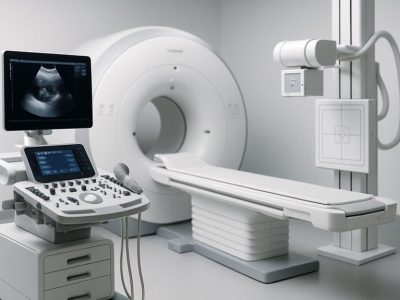
Imagine you’re sitting in a doctor’s office, the sterile smell of antiseptic in the air, and you’re told you need an imaging test. But which one? The terms “ultrasound” and “CT scan” might sound like medical jargon, yet they play crucial roles in modern diagnostics.
Ultrasounds use sound waves to create images of your organs and tissues, offering a gentle, radiation-free option. CT scans, on the other hand, employ X-rays to produce detailed cross-sectional images of your body, providing a more comprehensive view. Understanding the differences can help you feel more informed and confident about your healthcare choices.
So, what’s the real distinction between these two? Let’s jump into the intriguing area of medical imaging and uncover the unique advantages each method brings to the table.
Understanding Medical Imaging Technologies
Medical imaging technologies are essential in modern healthcare for providing a closer look at what’s happening inside your body. These technologies use different methods to produce real-time images of tissues, organs, and other internal structures. But ain’t it fascinating how science finds ways to peek inside you without ever cutting you open?
Ultrasound Technology
Ultrasounds rely on sound waves to capture images of your inside. Imagine a bat using echolocation, only it’s a smart machine instead. This technique is handy for observing soft tissues, monitoring pregnancies, detecting gallstones, and examining organs like the liver, heart, and kidneys. The coolest part, it’s radiation-free!
Some key benefits of ultrasounds are:
Non-Invasive: Ultrasounds are usually painless and involve no injections, needles, or cuts.
Safe: They probably won’t expose you to harmful radiation.
Real-Time Imaging: You can watch your baby moving in real-time, like a mini-live show!
Ever wondered if there’s any downside? The reality is ultrasounds might not be as detailed as some other imaging technologies when examining bones or air-filled spaces like lungs.
CT Scan Technology
CT scans, or computed tomography, take things a notch higher by using X-rays to capture detailed cross-sectional images of your body. Think of it like slicing a loaf of bread and seeing each slice individually. This method is ideal for detecting tumors, diagnosing muscle and bone disorders, pinpointing internal injuries, and guiding surgical procedures.
What makes CT scans so effective:
High Detail: They provide extremely detailed images, making it easier to identify abnormal structures.
Comprehensive View: Can evaluate bone, soft tissue, and blood vessels simultaneously.
Quick: Usually takes just a few minutes to complete the scan.
But hold on, mate, there’s a flip side too, it involves a small amount of radiation exposure. Though it’s minimal, the cumulative effect of multiple scans can add up over time.
Choosing the Right Technology
Wondering which one is right for you? It’s all about what your doc thinks will get the job done best. Ultrasounds are great for examining soft tissues, and are usually the go-to for pregnancy checks due to their safety profile. CT scans are ideal when detailed images are needed, particularly for diagnosing complex conditions or planning surgeries.
Remember, sometimes it ain’t as straightforward, and your healthcare provider might recommend one over the other based on your specific needs and circumstances. The bottom line, always discuss your options and ask questions to fully understand the reasons behind the chosen imaging modality.
Stay curious and informed, if you got more questions poppin’ up, don’t hesitate to reach out to your healthcare provider. Who knew tech in healthcare could be so cool, right?
What Is An Ultrasound?
Ever wonder how doctors peek inside your body without making a single cut Ultrasound is the magic wand they wave. This non-invasive marvel uses sound waves to create images, showing you soft tissues and organs in real-time.
How Ultrasound Works
You might ask, How does this contraption really work Ultrasound employs high-frequency sound waves, beyond what human ears can detect. These waves bounce off tissues and return to the machine, which then translates them into images. The process doesn’t use radiation, which means it’s as safe as a sausage on a summer day.
Imagine you’re looking at a jellybean in a jar of water. When sound waves hit the jellybean, they reflect back, providing an image. This principle allows doctors to see organs and blood flow. So next time you hear that “ping noise,” remember, it’s busy capturing live images.
Common Uses Of Ultrasound
Why are ultrasounds so popular They’re versatile and safe. They’re used for everything from checking baby’s health during pregnancy to examining your gallbladder. Pregnant women often go for ultrasound scans to ensure their baby’s development is on track. It’s not just about babies though.
Doctors also use it to diagnose problems with organs like the liver, kidneys, and heart. Got muscle issues Ulstrasound can help there too. They’re also handy in guiding needles during biopsy procedures. While ultrasounds might not give detailed views like a CT scan, they’re still pretty impressive in providing critical information.
What Is A CT Scan?
CT scans, also known as computed tomography scans, use X-rays to create detailed cross-sectional images. Unlike ultrasounds, which are great for soft tissues, CT scans investigate deep and offer a comprehensive view.
How CT Scan Works
Ever wondered how CT scans create such intricate images? This magic happens when a rotating X-ray machine captures multiple images from different angles. These images are then combined by a computer to form a detailed 3D picture. This method provides a clearer view inside your body than traditional X-rays. It’s like piecing together a jigsaw puzzle but way cooler. But, keep in mind that this process involves exposure to some radiation.
Common Uses Of CT Scan
CT scans can serve multiple purposes. For instance, they’re used to diagnose injuries and internal bleeding. If you’ve ever injured yourself playing sports, a CT scan might’ve been ordered to check for any hidden damage. Also, CT scans help detect tumors and cancers, offering crucial insight into their size and location. Trying to figure out what’s causing that unexplained pain? A CT scan can help pin down various conditions like infections or bone disorders. But, remember, while CT scans provide a lot detail, they aren’t always the go-to option for every medical issue due to their radiation exposure. Discuss the pros and cons with your healthcare provider.
Key Differences Between Ultrasound And CT Scan
You’re probably wondering when to choose an ultrasound over a CT scan, right? Both have their perks. Let’s dig into the main differences.
Imaging Techniques
Ultrasound rides on sound waves, while CT scans hitch a ride with X-rays. Ultrasounds send high-frequency sound waves into your body which bounce back to create images. It’s like playing a game of echo, but inside your body. On the flip side, CT scans use multiple X-ray images combined into a 3D model. Imagine piecing together a puzzle, CT scans create detailed images using this method.
Areas Of Use
Ultrasounds often check on pregnancies, soft tissue, and organ issues. Think baby monitoring or checking for gallstones. No bones about it, though, they don’t show bones clearly. CT scans step in for complex issues like head injuries or detecting tumors. They’re your go-to when you need clear, intricate details of bones and other hard tissues. So, if it’s a broken bone or tumor you’re worried about, CT’s likely your friend.
Safety Considerations
Ultrasounds are super safe since they don’t use radiation. It’s why they’re the darling for prenatal monitoring. But, there’s a catch. They might not show everything clearly if you’re dealing with bones or air-filled spaces. CT scans use radiation, which is safe in low doses but can be a concern with frequent exposure. They give clear images but always weigh the pros versus the radiation exposure. The key takeaway? Talk to your doc about the best choice, alright?
Advantages And Disadvantages
When it comes to choosing between an ultrasound and a CT scan, ther’s pros and cons for each. Let’s jump into the nitty-gritty and see what’s what.
Advantages Of Ultrasound
Ultrasounds are great for several reasons. They’re non-invasive, so you don’t need to worry about any needles or surgical procedures. You might be familiar with their use in pregnancy monitoring, but that’s not all. They can effectively examine soft tissues like muscles, tendons, and even organs. Another key benefit of ultrasounds is that they don’t use any radiation, making them a safer option for repeated use.
Disadvantages Of Ultrasound
But hey, it’s not all sunshine and rainbows. Ultrasounds have limitations too. For instance, they might not provide detailed images of bones or air-filled spaces like the lungs. This means they’re not the best choice for diagnosing bone fractures or lung conditions. Plus, the quality of the image depends a lot on the skill of the technician performing the ultrasound.
Advantages Of CT Scan
CT scans also have their perks. They offer highly detailed and comprehensive images, making them useful for diagnosing complex conditions. If you’ve got a head injury or a suspicious lump, a CT scan is probably your best bet. The scan can capture multiple angles and combine them into a 3D image, giving you a complete view of the area being examined. It’s particularly useful for detecting tumors, internal injuries, and bone disorders.
Disadvantages Of CT Scan
But, there’s a flip side. CT scans expose you to a small amount of radiation. While this might not be a big deal for a single scan, it can add up if you need multiple scans over time. This makes it less ideal for routine checks. Another thing to note is that CT scans can be quite expensive compared to other imaging options.
So, when it comes to deciding between an ultrasound and a CT scan, it’s probably best to chat with your healthcare provider to figure out which one suits your needs the most. Both have their advantages and disadvantages, and the right choice largely depends on your specific medical situation.
Choosing The Right Imaging Method
Alright, it’s decision time! When you’re faced with the choice between an ultrasound and a CT scan, a few things are worth considering. First off, think about what you need to find out. If you’re expecting and want to check on your baby, an ultrasound could be your best buddy. It’s safe, non-invasive, and can show you real-time images without a sweat.
If we’re talking complex conditions like detecting tumors or diagnosing head injuries, a CT scan might swoop in as the hero. It captures highly detailed images from all sorts of angles and pieces them together into a 3D image that can reveal what’s really going on inside. But, remember, it does involve a bit of radiation. So, it’s probably not your go-to for every little issue.
Ask Your Doctor
So, how do you choose? It’s simple – ask your healthcare provider. They can evaluate your specific needs and guide you towards the best imaging method. Maybe you need more detail on an injury, or perhaps you want to check out the dynamics of your soft tissues. You probably won’t regret getting a second opinion either.
Consider The Safety
Safety is another biggie. Ultrasounds are safe enough to use repeatedly without worries about radiation. That’s why they’re so common during pregnancies. If it’s a question of safety, an ultrasound might just win the prize. But, CT scans aren’t exactly dangerous – they just involve low-dose radiation. Discuss the risks with your doctor if you have concerns.
Think About The Cost
Don’t forget the moolah! CT scans can be more expensive than ultrasounds. If cost is a significant factor for you, this could sway your decision. But keep in mind the value of getting an accurate diagnosis. Sometimes you gotta spend a little more to get the peace of mind you need.
Reflect On The Convenience
Not all imaging rooms are created equal. Think about the convenience factor too. You might want an imaging method that’s quick and painless. If you’re in a hurry, ultrasounds are generally faster and don’t require prepping time. CT scans, though a bit more thorough, might take longer and could require you to stay still for the dang machine to do its thing.
Choosing between an ultrasound and a CT scan isn’t always cut and dried. By pondering over your specific needs, asking your doctor, and weighing the costs and benefits, you’ll be on the right track to making an well-informed choice.
Conclusion
Understanding the differences between ultrasounds and CT scans empowers you to make informed healthcare decisions. Each imaging method has its unique advantages and limitations, making them suitable for different medical needs. Ultrasounds offer a safe, non-invasive option for monitoring pregnancies and examining soft tissues, while CT scans provide detailed images essential for diagnosing complex conditions.
Consulting with your healthcare provider is crucial when deciding which imaging method is best for you. Consider the specific medical issue, safety, cost, and convenience to ensure you choose the most appropriate and effective option for your situation.
To provide the best experiences, we use technologies like cookies to store and/or access device information. Consenting to these technologies will allow us to process data such as browsing behaviour or unique IDs on this site. Not consenting or withdrawing consent, may adversely affect certain features and functions.
Functional
Always active
The technical storage or access is strictly necessary for the legitimate purpose of enabling the use of a specific service explicitly requested by the subscriber or user, or for the sole purpose of carrying out the transmission of a communication over an electronic communications network.
Preferences
The technical storage or access is necessary for the legitimate purpose of storing preferences that are not requested by the subscriber or user.
Statistics
The technical storage or access that is used exclusively for statistical purposes.The technical storage or access that is used exclusively for anonymous statistical purposes. Without a subpoena, voluntary compliance on the part of your Internet Service Provider, or additional records from a third party, information stored or retrieved for this purpose alone cannot usually be used to identify you.
Marketing
The technical storage or access is required to create user profiles to send advertising, or to track the user on a website or across several websites for similar marketing purposes.