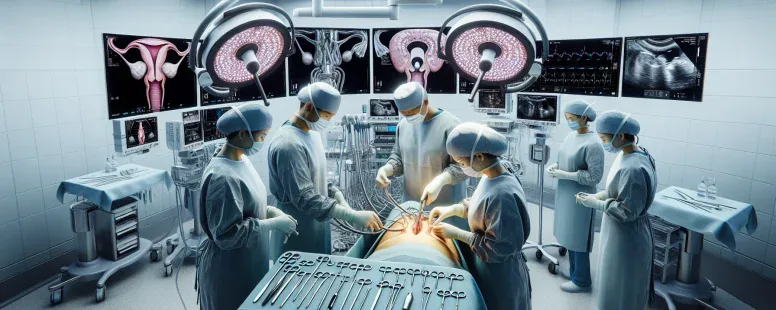
surgical options for hysterectomy, understanding your choices can feel overwhelming. Two commonly discussed techniques—Total Laparoscopic Hysterectomy (TLH) and Laparoscopically Assisted Vaginal Hysterectomy (LAVH)—might seem similar at first glance, but they’re distinct in approach and execution. Knowing these differences isn’t just about medical jargon; it’s about empowering you to make informed decisions about your health.
Picture being presented with two paths: one offering a fully laparoscopic procedure and the other blending laparoscopic precision with vaginal expertise. Each has its own unique advantages and considerations, tailored to specific needs and circumstances. Whether you’re navigating this decision for yourself or helping a loved one understand their options, clarity is key.
By exploring how TLH differs from LAVH in technique, recovery time, and suitability, you’ll gain the confidence to engage in meaningful discussions with your healthcare provider—and take charge of your well-being.
Understanding TLH And LAVH
Total Laparoscopic Hysterectomy (TLH) and Laparoscopically Assisted Vaginal Hysterectomy (LAVH) are advanced surgical techniques for hysterectomy. While both involve laparoscopic tools, their procedural approaches and applications differ significantly.
What Is TLH?
TLH is a minimally invasive procedure where the uterus is entirely removed laparoscopically. Surgeons make small incisions in the abdomen to insert a camera and specialized instruments.
Procedure: The surgery involves detaching the uterus from surrounding structures entirely through laparoscopic means.
Applications: TLH is suitable for patients with uterine fibroids, endometriosis, or early-stage uterine cancer.
Recovery: Patients typically experience shorter hospital stays, reduced postoperative pain, and quicker recovery compared to open surgeries.
For instance, if you have extensive adhesions due to prior surgeries but desire minimal scarring, TLH could be an effective choice under your surgeon’s guidance.
What Is LAVH?
LAVH combines laparoscopic surgery with vaginal hysterectomy techniques. Surgeons use laparoscopy to mobilize the uterus before removing it vaginally.
Procedure: The initial steps involve releasing attachments of the uterus using laparoscopic instruments. Vaginal removal follows this step.
Applications: Doctors recommend LAVH for conditions like pelvic organ prolapse or benign gynecological diseases requiring vaginal access.
Recovery: Recovery times are slightly longer than TLH but still faster than traditional abdominal hysterectomies.
If you’re dealing with conditions better treated via vaginal access yet want the diagnostic benefits of laparoscopy, LAVH might align more closely with your needs.
Key Differences Between TLH And LAVH
Understanding the distinctions between Total Laparoscopic Hysterectomy (TLH) and Laparoscopically Assisted Vaginal Hysterectomy (LAVH) helps you make informed decisions about surgical options. These methods differ in approach, recovery, and patient suitability.
Surgical Approach
The surgical techniques vary significantly. In TLH, surgeons remove the uterus entirely through laparoscopic instruments inserted into small abdominal incisions. This method avoids vaginal access altogether. Conversely, LAVH starts with laparoscopy to detach the uterus but completes removal vaginally. The dual approach of LAVH makes it suitable for addressing pelvic conditions requiring vaginal intervention.
For example, a patient with endometriosis localized to the uterine walls might benefit more from TLH due to its precision in accessing difficult areas laparoscopically. Meanwhile, someone experiencing pelvic organ prolapse could find LAVH advantageous because of its direct vaginal repair capabilities.
Recovery Time And Healing
Healing durations differ between these procedures. TLH generally results in faster recovery—approximately 2-4 weeks—due to minimal tissue disruption during surgery. With smaller incisions and no need for additional vaginal manipulation, pain levels are often lower compared to other methods.
Recovery after LAVH usually takes slightly longer at around 4-6 weeks since it involves both abdominal and vaginal healing processes. Even though this, it’s still quicker than traditional open hysterectomies that can take up to 8 weeks or longer.
For instance, a working professional opting for TLH may return to their routine sooner than one undergoing LAVH who requires extended downtime due to combined internal recoveries.
Suitability For Patients
Patient eligibility depends on medical history and condition severity. Surgeons often recommend TLH for individuals managing uterine fibroids or early-stage uterine cancer where clear visualization via laparoscopy is critical. This technique is also ideal when preserving surrounding structures during minimally invasive surgery matters most.
On the other hand, LAVH suits cases involving benign diseases like ovarian cysts or rectocele repair needing concurrent access through both laparoscopic tools and the vagina.
Advantages And Disadvantages Of Each Procedure
Understanding the pros and cons of TLH and LAVH helps in selecting the most appropriate surgical option based on your medical needs.
Pros And Cons Of TLH
Advantages:
Minimally invasive approach: TLH removes the uterus entirely through laparoscopic techniques, reducing tissue disruption. This leads to less pain post-surgery.
Shorter recovery time: Healing typically takes 2-4 weeks compared to traditional methods. Patients often resume daily activities faster.
Reduced scarring: Small incisions minimize visible scars, which some patients prefer for cosmetic reasons.
Broader applicability: Suitable for conditions like uterine fibroids, early-stage cancer, or endometriosis.
Steeper learning curve for surgeons: The procedure demands advanced laparoscopic skills; surgeon expertise may vary across facilities.
Potential complications: Risks include injury to surrounding organs such as the bladder or bowel if anatomical visibility is limited.
Pros And Cons Of LAVH
Advantages:
Dual surgical approach: Combining laparoscopy with a vaginal technique allows comprehensive treatment of pelvic organ prolapse or benign gynecological diseases needing vaginal access.
Improved visualization during surgery: The laparoscopic phase enhances visual clarity before transitioning to vaginal removal of the uterus.
Faster than open surgeries: Recovery (4–6 weeks) remains quicker compared to abdominal hysterectomies even though involving two healing sites.
Longer recovery period than TLH: Dual-site healing increases downtime slightly compared to minimally invasive-only approaches like TLH.
Higher complexity in certain cases: Switching between laparoscopic and vaginal stages may prolong operative time depending on patient anatomy or pathology extent.
Not ideal for severe adhesions or large fibroids: Extensive scarring or significantly enlarged uteri pose challenges during this combined method.
Factors To Consider When Choosing Between TLH And LAVH
Medical Condition and Surgical Goals
TLH is often recommended for conditions like uterine fibroids, endometriosis, or early-stage uterine cancer. If your condition requires precise laparoscopic intervention without vaginal involvement, TLH aligns better with surgical goals. On the other hand, LAVH suits pelvic organ prolapse or benign gynecological diseases needing vaginal access. For example, in cases of severe prolapse, the vaginal approach in LAVH facilitates effective tissue removal and repair.
Recovery Time
TLH generally offers faster recovery due to its minimally invasive nature. Patients typically resume daily activities within 2-4 weeks. In contrast, LAVH involves both abdominal and vaginal healing, extending recovery to around 4-6 weeks. If your schedule demands quicker post-operative recovery and minimal disruption, TLH might be preferable.
Surgeon Expertise
Performing TLH requires advanced laparoscopic skills due to its technical complexity. Surgeons may recommend this technique if they have extensive experience with such procedures. Conversely, LAVH combines two techniques but necessitates proficiency in both laparoscopic surgery and vaginal approaches. Ask about your surgeon’s expertise to ensure optimal outcomes.
Surgical Equipment Availability
Hospitals equipped with high-definition imaging systems and specialized laparoscopic tools are essential for performing TLH effectively. While most facilities can support LAVH equipment requirements due to its dual approach, limitations in advanced technology could influence the choice toward a simpler procedure.
Patient Preferences
Your comfort level about surgical incision locations or post-operative care influences decision-making. Some patients prefer avoiding any abdominal scars when possible; others prioritize shorter hospital stays over potential scarring concerns. Discuss these preferences openly with your healthcare provider so they align treatment plans accordingly.
Factor
Relevance to Procedure Choice
Medical Condition
Determines suitability based on disease type
Recovery Time
Impacts return-to-work timelines
Surgeon Expertise
Influences procedural safety and effectiveness
Equipment Availability
Affects feasibility of specific methods
Patient Preferences
Guides decisions based on personal priorities
Conclusion
Choosing between TLH and LAVH depends on your unique medical needs, recovery goals, and the expertise of your surgeon. Both procedures offer minimally invasive options with distinct approaches and benefits tailored to specific conditions.
By understanding these surgical techniques, you’re better equipped to discuss your options with your healthcare provider and select the procedure that aligns with your health priorities. Empower yourself with knowledge and make decisions confidently for a smoother path to recovery.
To provide the best experiences, we use technologies like cookies to store and/or access device information. Consenting to these technologies will allow us to process data such as browsing behaviour or unique IDs on this site. Not consenting or withdrawing consent, may adversely affect certain features and functions.
Functional
Always active
The technical storage or access is strictly necessary for the legitimate purpose of enabling the use of a specific service explicitly requested by the subscriber or user, or for the sole purpose of carrying out the transmission of a communication over an electronic communications network.
Preferences
The technical storage or access is necessary for the legitimate purpose of storing preferences that are not requested by the subscriber or user.
Statistics
The technical storage or access that is used exclusively for statistical purposes.The technical storage or access that is used exclusively for anonymous statistical purposes. Without a subpoena, voluntary compliance on the part of your Internet Service Provider, or additional records from a third party, information stored or retrieved for this purpose alone cannot usually be used to identify you.
Marketing
The technical storage or access is required to create user profiles to send advertising, or to track the user on a website or across several websites for similar marketing purposes.