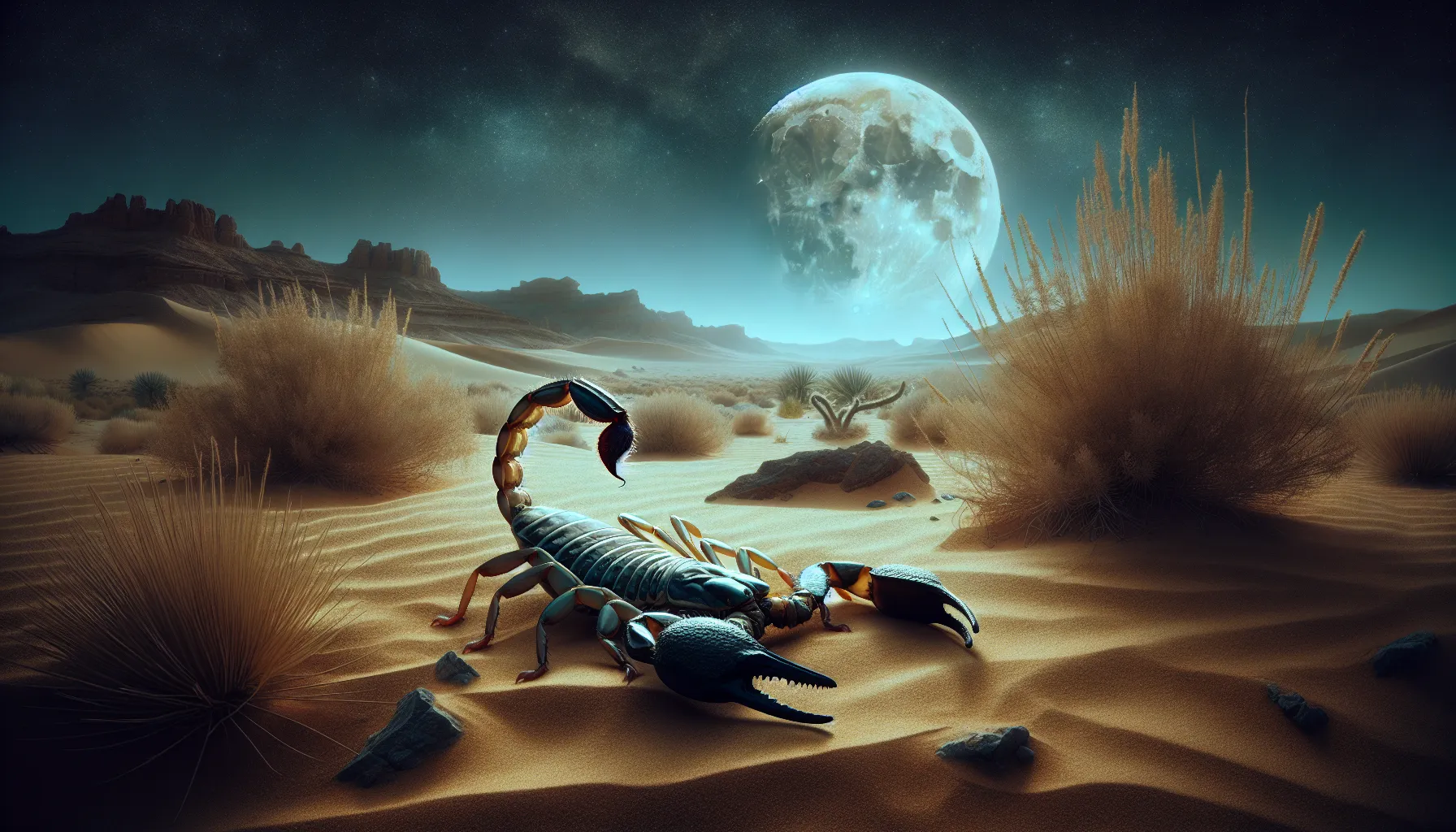
In the animal kingdom, diverse species exhibit unparalleled variations in structure and behavior, leading to a fascinating array of adaptations. Among arthropods, both scorpions and spiders captivate interest due to their distinctive characteristics and ecological roles. Even though their shared classification within the Arachnida class, these creatures display significant differences worth exploring. By delving into their anatomy, habitat preferences, and lifestyle behaviors, you’ll gain a clearer understanding of what sets them apart.
Understanding Scorpions
Physical Characteristics of Scorpions
Scorpions are immediately recognizable by their elongated bodies, segmented tails tipped with venomous stingers, and large pincers used for capturing prey. These features not only serve them in hunting but also contribute to their remarkable adaptation to various environments.
Habitat and Lifestyle of Scorpions
Primarily nocturnal, scorpions thrive in deserts, forests, and even mountainous terrains. Their ability to conserve water aids them in surviving harsh conditions. Also, they possess a keen sense of vibration, enabling them to detect prey or predators with remarkable precision.
Understanding Spiders
Physical Characteristics of Spiders
Spiders are famed for their eight legs and often hairy bodies. They have two-part body structures consisting of a cephalothorax and an abdomen. Unique to spiders is their silk-producing capability, which serves various purposes, including web construction, prey capture, and nesting.
Habitat and Lifestyle of Spiders
Spiders are versatile and can be found in almost every ecosystem, ranging from tropical forests to domestic corners. Depending on the species, their lifestyles vary greatly, with some orb-weaving magnificent webs and others actively hunting or ambushing prey.
Key Differences Between Scorpions and Spiders
Anatomical Comparisons
While both are arachnids, scorpions possess grasping pincers and stingers, whereas spiders are known for their silk glands and spinnerets. Also, their respiratory systems differ: scorpions use book lungs, while spiders employ a combination of book lungs and tracheae.
Behavioral and Ecological Differentiations
Behaviorally, scorpions are primarily solitary and nocturnal, whereas spiders show versatile social structures and varied periods of activity. Ecologically, scorpions thrive in arid regions, while spiders adapt to diverse habitats, showcasing their resilience and adaptability.
Common Misconceptions About Scorpions and Spiders
A common misconception is that all scorpions and spiders are highly venomous and fatal to humans. In reality, only a small percentage of species pose serious risks. Another fallacy is assuming their similarity due to their arachnid classification, overlooking their distinct biological and ecological traits.
To provide the best experiences, we use technologies like cookies to store and/or access device information. Consenting to these technologies will allow us to process data such as browsing behaviour or unique IDs on this site. Not consenting or withdrawing consent, may adversely affect certain features and functions.
Functional
Always active
The technical storage or access is strictly necessary for the legitimate purpose of enabling the use of a specific service explicitly requested by the subscriber or user, or for the sole purpose of carrying out the transmission of a communication over an electronic communications network.
Preferences
The technical storage or access is necessary for the legitimate purpose of storing preferences that are not requested by the subscriber or user.
Statistics
The technical storage or access that is used exclusively for statistical purposes.The technical storage or access that is used exclusively for anonymous statistical purposes. Without a subpoena, voluntary compliance on the part of your Internet Service Provider, or additional records from a third party, information stored or retrieved for this purpose alone cannot usually be used to identify you.
Marketing
The technical storage or access is required to create user profiles to send advertising, or to track the user on a website or across several websites for similar marketing purposes.