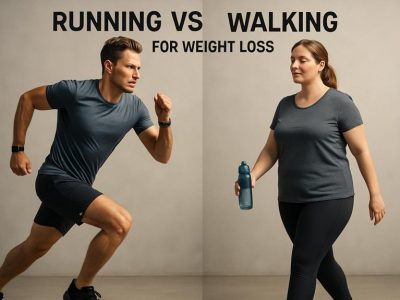
You’ve laced up your shoes, ready to hit the pavement. But wait – should you run or jog? This simple question might have left you scratching your head more than once. After all, aren’t they essentially the same thing?
Well, it’s not quite that straightforward. Running and jogging may seem similar but there are key differences between them which impact everything from our physical exertion levels to health benefits received.
Understanding the Basic Concepts: Running and Jogging
Dive deeper into understanding what separates running from jogging.
Definition of Running
Running, typically characterized by a faster pace, involves both feet off the ground simultaneously during each stride. It’s an aerobic exercise that requires more energy expenditure compared to jogging. The exertion in running pushes your cardiovascular system harder than it would while jogging.
Example:
Consider you’re trying to catch a bus; instinctively, you start sprinting—that’s running!
Feature
Description
Pace
Faster
Energy
More
Definition of Jogging
Jogging is defined as moving at a comfortably slow or leisurely pace where one foot stays on the ground at all times. This less intense form of cardio exercise makes for lower physical stress levels making it easier on joints and muscles.
Example:
Picture yourself enjoying movement through nature with no rush – yes! That’s called ‘jogging’.
Feature
Description
Momentum
Slow & Leisurely
Rigor
Lower
Exploring the Key Features
This section will investigate deeper into specific physical aspects of running and jogging.
Physical Aspects of Running
Running, an intense cardiovascular activity, typically requires a greater level of effort compared to its counterpart, jogging. In terms of mechanics involved in this exercise type, there’s a period where both feet leave the ground simultaneously – termed as “flight phase”. This particular trait results in increased calorie burn rate (around 110 calories per mile for someone weighing 180 pounds). It also significantly engages your core muscles and enhances aerobic capacity.
Physical Aspects of Jogging
On the other hand, you’ll find that jogging is more lenient on one’s body due to its slower pace characterized by continuous contact with at least one foot on the ground – eliminating any flight phase seen in running. While it burns fewer calories than running (approximately 80-90 calories per mile for someone weighing around 180 pounds), it offers great benefits too: lower risk for injury given less stress exerted onto joints; can be maintained longer enhancing endurance; provides decent cardio workout while being gentler on heart rate and respiratory system.
Examining the Differences between Running and Jogging
In this section, we’ll dissect key distinctions between running and jogging. We investigate deeper into their pace difference, bodily impact, and required fitness levels.
Pace Difference
When it comes to speed variance in both activities, you’d find a noticeable gap. Runners typically maintain speeds of over 6 mph (9.65 km/h), while joggers stay within the range of 4-6 mph (6.44 – 9.65 km/h). It’s crucial to note that these figures aren’t set in stone; they vary based on individual abilities and training levels.
For instance:
Seasoned runners can achieve speeds exceeding 15 mph (24km/hr).
Newbie joggers might start at slower paces like 3mph(5km/hr).
Remember though: fast or slow isn’t always better—it’s all about your personal goals!
Impact on the Body
While both activities involve similar movements, they exert different impacts on your body due to intensity variances:
Running provides an intense cardiovascular workout which burns more calories but exerts high stress on joints because during its flight phase—where neither foot touches ground—you land with forces up-to three times your weight.
Contrarily,
Jogging is lower-intensity cardio exercise causing lesser joint-stress since one foot remains grounded throughout — translating into fewer injuries! Plus, continuous contact with ground means better balance control for beginners.
Regardless of choice – remember good form reduces injury risks significantly!
Required Fitness Level
Fitness demands differ substantially between running & jogging as well:
Starting off,
Running requires higher stamina level given its demanding nature – not ideal if you’re starting out from scratch!
On other hand,
Jogging is beginner-friendly needing less initial endurance making it perfect ‘gateway’ activity towards fitter lifestyle.
Health Benefits & Risks
Diving deeper into the world of running and jogging, we now examine their respective health benefits along with shared risks. Let’s unfold these aspects one by one.
Health Benefits of Running
Running, known for its high-intensity nature, offers numerous physical benefits. High among them is cardiovascular fitness enhancement – it strengthens your heart muscle while reducing risk factors such as hypertension and cholesterol levels^1^. Next comes calorie burn; a 30-minute run at moderate speed can help you shed up to 400 calories^2^.
Plus to physiological advantages, running also impacts mental wellbeing positively—it aids in stress reduction and uplifts mood through the release of endorphins or “feel good” hormones^3^.
The only prerequisite? Consistency! Make sure you lace up those shoes regularly!
Health Benefits of Jogging
If high intensity isn’t your thing but steady endurance exercise appeals more, then jogging might be just right for you. It provides similar cardio-respiratory benefits without putting excessive strain on joints—making it an ideal choice especially if starting off new towards fitness journey.
Jogging also promotes weight management—a jogger can expect to lose approximately 150-200 calories during a half-hour session^[4^], depending on pace and bodyweight.
Remember: slow progress beats no progress!
Shared Health Risks Of Running And Jogging
While both exercises have undeniable health perks they aren’t devoid from potential risks either – particularly when overdone or performed incorrectly.
Common issues include joint problems like runner’s knee (Patellofemoral Pain Syndrome) due to repetitive impact exerted while moving fast^[5^. Inadequate warm-up or improper footwear may lead shin splints causing discomfort around lower leg area^[6^. Overtraining syndrome characterized by fatigue unresponsive rest occurs following intense prolonged training periods without adequate recovery time ^[7^-9] .
As always, moderation and proper technique are key. Listen to your body signals and consult a professional if needed.
Remember: It’s not about being the fastest or going the furthest—it’s all about staying healthy!
Choosing the Right Exercise: Running or Jogging?
You’ve learned about the fundamental differences between running and jogging, but how do you decide which is right for your personal fitness journey? Here are some factors to consider and why a consultation with health professionals can be beneficial.
Factors to Consider
Selecting an exercise regimen requires careful consideration of various elements.
Fitness Level: Gauge your current physical condition before deciding on any workout routine. For beginners aiming at gradual progression, starting with jogging might make sense.
Health Conditions: Acknowledge pre-existing conditions like joint problems or cardiovascular diseases as they directly influence your choice; high-intensity workouts like running could exacerbate such issues.
Goals: Understand what you aim to achieve from exercising—weight loss demands more intense exercises (like running), while maintaining general wellbeing may require only moderate activities (such as jogging).
4.Balance this information against potential risks identified earlier in our article – overtraining syndrome, excessive strain on joints – remembering that moderation is key.
Consultation with Health Professionals
While self-assessment provides valuable insight into choosing between running and jogging, it’s crucial not always definitive because of individual physiological variations significantly affect responses towards different types of exercise routines.
Hence consulting health professionals becomes essential:
A healthcare provider offers comprehensive evaluations considering all aspects of one’s medical history before recommending a suitable fitness plan.
Physical therapists provide insights into body mechanics & recommend either low impact exercises like jogginng if prone to injuries
Fitness trainers can help set achievable goals based on assessment results aligning them perfectly within an ideal intensity range so minimizing injury risk yet maximizing gains simultaneously.
Conclusion
When it comes to your fitness journey, the choice between running and jogging isn’t a one-size-fits-all. You’ve learned that each has its distinct pace, physical demand levels, and health benefits. Running’s high-intensity workout offers more calorie burn but puts more stress on joints while jogging presents an easier entry point into regular exercise with less joint impact.
It all boils down to personal factors – from your current fitness level and health conditions to individual goals. Remember there’s no right or wrong pick here; both activities promote cardiovascular wellness in their own ways. Your best move? Consult healthcare providers for professional advice tailored just for you because eventually what matters is adopting a routine that fits seamlessly into your lifestyle ensuring sustainable progress towards better health.
To provide the best experiences, we use technologies like cookies to store and/or access device information. Consenting to these technologies will allow us to process data such as browsing behaviour or unique IDs on this site. Not consenting or withdrawing consent, may adversely affect certain features and functions.
Functional
Always active
The technical storage or access is strictly necessary for the legitimate purpose of enabling the use of a specific service explicitly requested by the subscriber or user, or for the sole purpose of carrying out the transmission of a communication over an electronic communications network.
Preferences
The technical storage or access is necessary for the legitimate purpose of storing preferences that are not requested by the subscriber or user.
Statistics
The technical storage or access that is used exclusively for statistical purposes.The technical storage or access that is used exclusively for anonymous statistical purposes. Without a subpoena, voluntary compliance on the part of your Internet Service Provider, or additional records from a third party, information stored or retrieved for this purpose alone cannot usually be used to identify you.
Marketing
The technical storage or access is required to create user profiles to send advertising, or to track the user on a website or across several websites for similar marketing purposes.