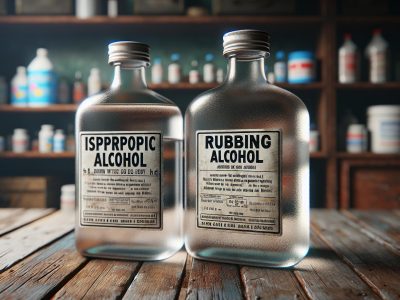
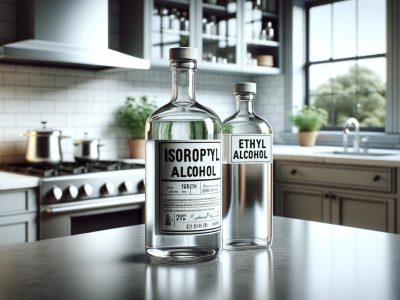
Ever found yourself in the first-aid section of your local store, staring at bottles labeled ‘rubbing alcohol’ and ‘isopropyl alcohol’, unsure about which one to pick? You’re not alone. These two types often get mixed up, but they aren’t exactly identical twins.
In this text, we’ll investigate into the world of alcohols used for disinfection – rubbing and isopropyl. We’ll dissect their differences down to a molecular level while keeping it simple enough for anyone curious about these common household items.
So buckle up! It’s time to clear out any confusion you might have had between rubbing alcohol and its close relative – isopropyl alcohol.
Understanding Rubbing Alcohol and Isopropyl Alcohol
To better understand the difference between rubbing alcohol and isopropyl alcohol, it’s essential to define what each term means. This clarification ensures you’ll use these substances correctly in your household.
What Is Rubbing Alcohol?
Rubbing alcohol refers to a solution made up of around 70% isopropanol or ethanol. It earns its name from one of its most common uses: providing a soothing effect when applied – or “rubbed” – on the skin for muscle sores. Its antiseptic properties make it an effective disinfectant for minor cuts, scrapes, burns as well as sterilizing surfaces at home.
Aside from medicinal purposes, many people also use rubbing alcohol in various cleaning tasks due to its evaporating nature that leaves no residue behind (e.g., removing sticky residues like adhesive labels).
Percentage
Chemical Composition
70%
Isopropanol/Ethanol
Please note this isn’t intended for consumption; ingesting can lead to severe health problems given its high toxicity level compared with consumable alcohols found in beverages.
What Is Isopropyl Alcohol?
Isopropyl alcohol – often referred by chemists as propan-2-ol – comes under different concentrations varying primarily between 60%-90%. A compound derived synthetically through propene hydration process has garnered wide acceptance across several industries including healthcare due their versatile characteristics such antiseptic capabilities similar those seen within aforementioned substance i.e., ‘rubbing variant’.
In medical settings particularly during surgical procedures where prevention infection remains paramount importance doctors heavily rely solutions containing higher concentration this chemical preparation instruments prior operation ensuring they’re free any potential bacterial viral contamination threat pose serious risk patient’s recovery process afterwards if left unattended effectively mitigated using highly concentrated forms which unfortunately aren’t typically available general public over-the-counter purchases.
Percentage
Primary Usage
60%-90%
Disinfection
While it’s also used as a cleaning agent due to its strong solvent properties, caution is advised when using it on certain materials like plastic or rubber that could potentially be damaged. Like rubbing alcohol, consuming isopropyl alcohol can lead to severe health implications and isn’t recommended.
Chemical Composition and Properties
Dive deeper into the world of alcohols, particularly rubbing alcohol and isopropyl alcohol. Uncover their unique chemical compositions and properties that differentiate them even though their similar uses.
Composition of Rubbing Alcohol
Rubbing alcohol isn’t pure but a mixture in nature. It comprises approximately 70% by volume of absolute ethanol or isopropanol mixed with water, denaturants—substances making it unfit for consumption—and other chemicals like colorants or fragrances to enhance its use as an antiseptic agent.
For instance, Wintergreen-scented rubbing alcohols usually contain methyl salicylate—a compound related to aspirin—that offers additional analgesic effects on top of its disinfectant capabilities.
Notably, percentages can fluctuate depending on manufacturers’ preferences; but, they typically range between 60-80%.
Properties of Isopropyl Alcohol
Isopropyl alcohol (also known as IPA) presents itself differently from rubbing alcohol through certain characteristics.
Firstly—it’s purer than your standard household rubbing-alcohol solution: concentrations hover around 90%. This high concentration allows it to kill bacteria more effectively—an aspect highly prized within healthcare environments requiring stringent sanitation measures.
Secondly—the boiling point stands at about 82 degrees Celsius due to molecular interactions influenced by two hydrocarbon groups attached to oxygen-bearing carbon atom—a significant contrast against common belief stating all forms of ‘alcohol’ possess low boiling points.
Finally—it exhibits volatile behavior upon exposure open air leading quick evaporation without leaving any residue behind – ideal when dealing cleaning electronics delicate surfaces cannot tolerate moisture accumulation over time.
Common Uses and Applications
Delving further into the practical aspects, let’s consider how these two types of alcohol manifest in your daily life and professional fields.
Uses of Rubbing Alcohol in Everyday Life
Rubbing alcohol finds a place in many homes. It’s often applied as an antiseptic to minor cuts or burns because it helps prevent infections by killing bacteria. Also, its quick evaporation property makes it useful for cleaning electronics such as mobile phones and laptops where water isn’t suitable due to potential damage risks.
In home care routines, rubbing alcohol plays a vital role too – acting as a disinfectant on surfaces like kitchen counters or bathroom tiles – reducing microbial populations significantly.
It also serves cosmetic functions; mixed with distilled water can be used as deodorizing foot spray- preventing odors caused by bacterial growth while evaporating quickly enough not to leave feet wet!
Finally, you might find use for rubbing alcohol even within arts & crafts hobbies: erasing permanent markers from most non-porous surfaces is one such example that testifies this versatility.
Industrial and Medical Applications of Isopropyl Alcohol
Isopropyl Alcohol (IPA), predominantly found within medical settings or industrial applications has higher purity levels than its counterpart.
Medical professionals prefer IPA owing primarily towards high effectiveness against various microorganisms including bacteria,viruses,fungi etcetera.This allows safe usage across wide range instruments-everything stethoscopes surgical equipment! Also,due rapid rate at which dries up,it becomes ideal choice delicate materials without leaving any residue behind hence protecting integrity instrument surface itself making possible maintain sterile environment throughout procedures
Within manufacturing industries ,it proves equally essential :used cleaner degreaser parts machinery especially before painting application thereby ensuring smooth finish.Also solvent production resins,paints,oils waxes .
Not only limited laboratories factories,isopropyl holds firm ground electronic industry.Here excellent dissolving capabilities play part cleaning intricate parts circuit boards without causing harm materials .This ensures longevity electronics maintaining performance optimal levels .
Overall, both rubbing alcohol and isopropyl alcohol exhibit a wide array of uses spanning across domestic, medical and industrial sectors. This underlines the importance these substances hold in our everyday lives as well as professional spaces.
Safety and Precautions
In the previous section, you discovered how rubbing alcohol and isopropyl alcohol serve as crucial agents in diverse fields. Now let’s investigate into some safety measures when handling these alcohols, along with precautions to be aware of potential health risks.
Handling and Storage Tips
Rubbing alcohol or isopropyl alcohol isn’t your average household item. Proper care during their usage ensures a safer environment for everyone involved. Here are some guidelines:
Store them away from children’s reach: These alcohols can pose serious harm if ingested accidentally.
Keep it cool: Always store them in a well-ventilated area at room temperature (around 20°C/68°F) – heat exposure may lead to evaporation or even fire hazards.
No open flames: As they’re highly flammable substances, keep both types of alcohols away from any sources of ignition such as lighters or gas stoves.
Sealed tight: Make sure that the bottle caps are tightly sealed after use to prevent leakage or spills.
Potential Health Risks
Even though being common disinfectants, rubbing and isopropyl alcohols carry several potential health risks:
1.Breathing Problems – Prolonged inhalation could cause respiratory issues like coughing & throat irritation.
2.Skin Irritation – They might dry out your skin leading to redness & itching; using moisturizer post application minimizes this effect though!
3.Vision Issues – Accidental contact with eyes can result in pain & blurry vision; immediate rinsing helps alleviate discomfort!
Conclusion
So, you’ve seen the key differences between rubbing alcohol and isopropyl alcohol. Their concentration levels set them apart along with their uses in everyday life and professional settings. But remember – safety first! It’s crucial to store these alcohols properly and be aware of potential health risks like skin irritation or inhalation hazards. Rubbing or Isopropyl? Now that you’re equipped with this knowledge, it’s easier for you to decide which one best fits your needs while ensuring a safe handling practice at all times.
To provide the best experiences, we use technologies like cookies to store and/or access device information. Consenting to these technologies will allow us to process data such as browsing behaviour or unique IDs on this site. Not consenting or withdrawing consent, may adversely affect certain features and functions.
Functional
Always active
The technical storage or access is strictly necessary for the legitimate purpose of enabling the use of a specific service explicitly requested by the subscriber or user, or for the sole purpose of carrying out the transmission of a communication over an electronic communications network.
Preferences
The technical storage or access is necessary for the legitimate purpose of storing preferences that are not requested by the subscriber or user.
Statistics
The technical storage or access that is used exclusively for statistical purposes.The technical storage or access that is used exclusively for anonymous statistical purposes. Without a subpoena, voluntary compliance on the part of your Internet Service Provider, or additional records from a third party, information stored or retrieved for this purpose alone cannot usually be used to identify you.
Marketing
The technical storage or access is required to create user profiles to send advertising, or to track the user on a website or across several websites for similar marketing purposes.