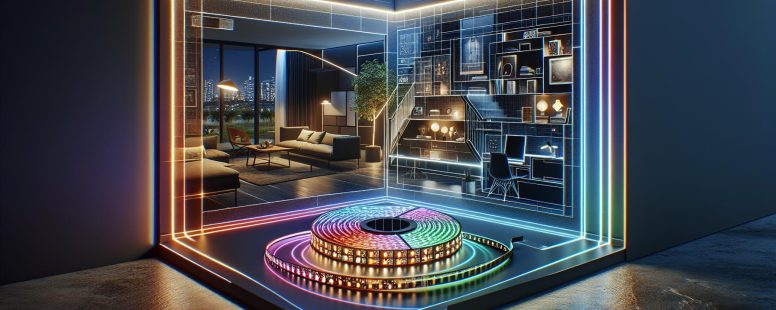
Picture transforming your space with vibrant, customizable lighting that matches your every mood. Whether you’re setting the stage for a cozy movie night or hosting an energetic party, LED strip lights have revolutionized how we illuminate our surroundings. But as you jump into the world of colorful lighting, terms like RGB and RGBIC might leave you scratching your head.
What’s the real difference between these two? Is one better than the other for your needs? Understanding their unique features can help you create stunning visual effects, from seamless color gradients to bold, dynamic patterns. By exploring what sets RGB apart from RGBIC, you’ll unlock endless possibilities for creativity and personalization in your lighting setup.
Understanding RGB and RGBIC
RGB and RGBIC lighting technologies redefine how you approach customizable illumination. By grasping their differences, you can create dynamic lighting setups tailored to any space or occasion.
What Is RGB?
RGB stands for Red, Green, and Blue. These three primary colors blend at varying intensities to produce millions of color combinations. Traditional RGB LED strip lights illuminate in one solid color at a time across the entire strip. For example, if set to blue, every LED along the strip emits only blue light simultaneously.
RGB works well for static color designs or synchronized changes across an entire strip. It’s ideal for simple setups like under-cabinet lighting or single-color ambiance in living areas.
What Is RGBIC?
RGBIC includes “IC,” meaning Integrated Circuit. This technology enables individual control over each segment of LEDs within a strip. Unlike standard RGB strips that display one uniform color, RGBIC strips can showcase multiple colors simultaneously on different sections of the same strip.
For instance, while one part of an RGBIC light could glow red, another section might display green or yellow—enhancing visual effects such as gradients or rainbows. This feature makes it perfect for creative applications like gaming setups or event decorations requiring advanced patterns and animations.
Key Differences Between RGB and RGBIC
RGB and RGBIC LED strips differ in technology, lighting capabilities, color accuracy, and customization options. Understanding these differences helps you select the right option for your specific needs.
Technology and Structure
RGB uses three primary colors—red, green, and blue—embedded within each diode to create various hues by blending light intensity. These diodes function collectively across the strip, displaying one uniform color at any given time.
RGBIC incorporates an Integrated Circuit (IC) alongside LEDs. This IC enables individual segments of a strip to operate independently, producing multiple colors simultaneously along different sections of the same strip.
Lighting Capabilities
RGB strips display static or synchronized colors across their entire length. They’re suitable for scenarios requiring simpler or uniform lighting setups like under-counter illumination or accent walls.
RGBIC offers advanced animation effects such as gradients, flowing patterns, or dynamic transitions due to segment-specific control. These features are ideal for visually complex designs like gaming rigs or event decorations where diverse visuals elevate ambiance.
Color Accuracy
RGB produces millions of color combinations through additive mixing but lacks precision when transitioning between shades due to collective diode operation.
RGBIC delivers improved accuracy since its IC can fine-tune each segment’s output independently. This results in smoother transitions and more vibrant displays even during intricate animations.
Flexibility and Customization
RGB supports basic customizations like brightness adjustment or single-color selection but limits creative possibilities because of its uniform color projection.
RGBIC provides unmatched flexibility with programmable sections that allow you to design unique patterns or themes matching personal preferences or functional requirements—for example, multicolored backdrops at parties or interactive lighting synced with music beats.
Advantages And Disadvantages
Understanding the pros and cons of RGB and RGBIC helps you choose the best lighting solution for your needs. Each offers unique benefits tailored to different applications.
Pros and Cons of RGB
RGB lighting is straightforward, offering simplicity in both setup and operation. You can achieve millions of color variations by blending red, green, and blue diodes. This makes it ideal for ambient lighting, such as under-cabinet strips or accent lights behind TVs.
Advantages
Cost-effectiveness: RGB LED strips are generally cheaper due to their simpler technology.
Ease of installation: With uniform color output, these strips require minimal configuration.
Energy-efficient performance: They consume less power compared to advanced alternatives like RGBIC.
Disadvantages
Limited customization: An entire strip displays only one color at a time.
No advanced effects: Lacks individual segment control for animations or multicolor patterns.
Lower visual impact: Not suitable for dynamic setups like gaming rigs or event decor.
Pros and Cons of RGBIC
RGBIC integrates an “Integrated Circuit,” allowing independent control over sections of LEDs. This feature enables vibrant, multicolor displays with complex patterns that enhance creative experiences.
Advantages
Enhanced customization options: Each section’s ability to display different colors provides endless design possibilities.
Dynamic visuals: Perfect for creating gradients, flowing animations, or music-synced light shows.
Versatile applications: Ideal for gaming setups, holiday decorations, or stage designs requiring high-impact visuals.
Disadvantages
Higher cost: The integrated circuit increases production costs, making these strips more expensive than standard RGB ones.
Complexity in setup: Requires careful programming or app-based control to use its full potential.
Incompatibility issues: Some systems might not support certain features without additional accessories.
Choosing between RGB and RGBIC depends on your priorities—whether it’s affordability or advanced capabilities that matter most.
Applications of RGB and RGBIC
RGB and RGBIC technologies serve distinct purposes based on their capabilities. Understanding where each excels can help you make optimal lighting choices.
Where RGB Is Commonly Used
RGB lighting fits settings that demand simplicity or uniform color displays. You often find RGB LED strips in under-cabinet lighting, accentuating kitchen counters with steady hues like warm white or soft blue. Gaming setups also use RGB to create synchronized effects across peripherals such as keyboards, mice, and monitors.
Static backdrops for events frequently use RGB due to its straightforward operation. For instance, wedding venues may employ single-color themes like pastel pinks or whites for cohesive ambiance. Also, businesses incorporate RGB in signage to highlight logos or text with minimal color transitions.
Where RGBIC Excels
RGBIC shines in dynamic environments requiring multicolor animations and complex patterns. It’s commonly used in gaming rooms where vibrant light shows sync seamlessly with gameplay action. For example, individual LED segments can pulse red during intense battle scenes or shift rainbow-like during victories.
Event decorations benefit from the versatility of RGBIC, which enables colorful gradients and stunning motion sequences on walls or stages. Holiday displays leverage this technology for animated designs like cascading snowflakes or waving flags.
Smart homes integrate RGBIC into entertainment systems by syncing lights with music beats through apps like Govee Home. This creates immersive experiences during parties or movie nights by transforming spaces into interactive visual landscapes tailored to your preferences.
Conclusion
Choosing between RGB and RGBIC lighting depends on your specific needs and creative goals. If simplicity, affordability, and ease of use are your priorities, RGB lighting is an excellent choice for uniform color setups. But, if you’re looking for vibrant displays with advanced animations and multicolor effects, RGBIC offers unmatched flexibility and personalization.
Understanding the differences between these two technologies ensures you can create the perfect lighting atmosphere for any space or occasion. Whether you’re upgrading a gaming setup or planning dynamic event decorations, there’s a solution to match your vision.
To provide the best experiences, we use technologies like cookies to store and/or access device information. Consenting to these technologies will allow us to process data such as browsing behaviour or unique IDs on this site. Not consenting or withdrawing consent, may adversely affect certain features and functions.
Functional
Always active
The technical storage or access is strictly necessary for the legitimate purpose of enabling the use of a specific service explicitly requested by the subscriber or user, or for the sole purpose of carrying out the transmission of a communication over an electronic communications network.
Preferences
The technical storage or access is necessary for the legitimate purpose of storing preferences that are not requested by the subscriber or user.
Statistics
The technical storage or access that is used exclusively for statistical purposes.The technical storage or access that is used exclusively for anonymous statistical purposes. Without a subpoena, voluntary compliance on the part of your Internet Service Provider, or additional records from a third party, information stored or retrieved for this purpose alone cannot usually be used to identify you.
Marketing
The technical storage or access is required to create user profiles to send advertising, or to track the user on a website or across several websites for similar marketing purposes.