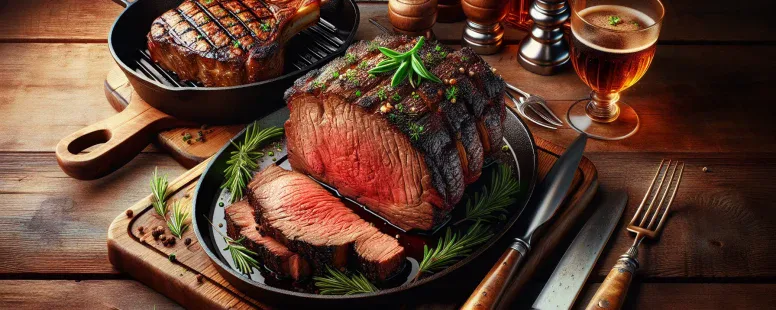
Picture the sizzle of a steakhouse kitchen—the savory aroma of beef mingling with a hint of smoke as a thick cut hits the grill. Your mouth waters as you picture that first juicy bite, but a question lingers: is it prime rib or ribeye stealing the show? While both cuts promise rich flavor and tender texture, their differences might surprise you.
Choosing between prime rib and ribeye isn’t just about taste—it’s about the experience you crave. One offers a melt-in-your-mouth roast perfect for celebrations, while the other delivers bold, buttery bites seared to perfection. Unraveling the secrets behind these two iconic cuts could elevate your next meal from ordinary to unforgettable.
Understanding Prime Rib and Ribeye
Prime rib and ribeye come from the same primal cut, the rib section, yet the experiences they offer differ sharply. Prime rib, often called a standing rib roast, is usually roasted whole and sliced to order. Ribeye, on the other hand, gets cut into individual steaks and often seared for a quick, caramelized crust. This distinction shapes both taste and texture.
Prime rib delivers a broad spectrum of sensory details—succulent fat cap, marbled center, and roasted meaty edges. Chefs at steakhouses like Peter Luger (Brooklyn) or Lawry’s (Los Angeles) emphasize how a slow-roast brings out juices and a deep beefy aroma. Ribeye’s defining traits focus on bold marbling and a buttery mouthfeel that steak enthusiasts often describe as “steakhouse perfection” (Source: Certified Angus Beef). If you’ve ever tasted a Delmonico steak, you’ve eaten a cut of ribeye—seared fast, locking in robust flavors.
Both cuts originate between ribs six and twelve. The difference, though subtle at the butcher’s block, becomes glaring on the plate. Prime rib usually gets prepared bone-in, which enhances flavor during a long roast. Meanwhile, ribeye’s quick-cook style highlights streaks of fat that melt quickly, creating rich juices in mere minutes.
If you ask yourself, “Why does the same section taste so different?” consider the context—moist slow-roasting for prime rib imparts tenderness, while intense high heat for ribeye yields that crisp edge. Home cooks can experiment: try roasting a three-bone prime rib alongside pan-searing a ribeye, and notice how cooking drives transformation.
When restaurateurs list “prime” next to a ribeye, it refers not to the cut but the USDA grade—a common misconception. According to the USDA, “prime” means the beef has abundant marbling, not that’s from a prime rib roast (USDA.gov). This language confuses many diners, yet underscores the importance of understanding both the naming and the method.
These cuts invite debate and evoke memories—think of gatherings where the prime rib centerpiece steals the show, or the ribeye calls out to anyone craving that steakhouse bite. What matters most is knowing the story behind each cut, and experimenting until you find that perfect bite. Your next meal, whether reserved for a celebration or an everyday dinner, could hinge on this single, savory choice.
The Key Differences Between Prime Rib and Ribeye
Prime rib and ribeye each bring their own character to your plate, rooted in their origin within the rib primal. Understanding the distinctions between these beef cuts helps you make informed choices at restaurants or in your own kitchen.
Cut Location and Anatomy
Prime rib comes from the rib roast, which includes ribs six through twelve. This section features both muscle and a generous fat cap, with portions often weighing several pounds. Ribeye is cut directly from the same rib section but is sliced into single-serving steaks, typically boneless, sometimes bone-in (tomahawk ribeye serves as a striking example). These cuts share marbling patterns but differ in portion size and presentation.
Texture and Marbling
Texture in prime rib reflects its roasting method. It stays moist and tender due to its slow, oven-based cooking, resembling a luxurious, almost creamy mouthfeel. Ribeye, by contrast, shows more chew and an immediate burst of juiciness when seared at high heat. Marbling, or intramuscular fat, features prominently in both cuts, but ribeye usually presents with denser, flashier streaks. USDA Prime grades—think of steakhouse-quality ribeyes—display intense marbling, while select grades feature leaner, less rich options.
Flavor Profile
Prime rib emphasizes deep, robust flavors that build over hours of slow roasting. Aromas fill the kitchen, layers of rendered fat infuse each slice, and the crust offers subtle, peppery notes. Ribeye’s experience is bolder and almost theatrical—a crackling sear locks in buttery juices, and each bite features contrasting notes of char and beefy richness. For those craving concentrated, beef-forward flavors, ribeye stands out. Prime rib appeals to diners seeking nuance, tender bites, and a classic roast profile. Both promise memorable meals, though the journey from oven to plate or skillet to table marks their key flavor differences.
Cooking Methods Compared
Cooking prime rib and ribeye involves different approaches, each maximizing unique flavors and textures. These methods matter if you want the beef’s character—marbling, fat, bone, and structure—to shine.
Cooking Prime Rib
Prime rib preparation focuses on slow roasting in the oven, a method where even heat coaxes collagen to dissolve. You’ll rarely sear prime rib first; instead, the roast starts low and steady, which keeps juices locked inside the rib section. Some chefs, like those at Lawry’s The Prime Rib in Beverly Hills, let the roast rest before slicing tableside for guests. The brown, crisp exterior forms slowly, creating a contrast when you cut into its rosy center. For example, a holiday dinner table might feature a bone-in standing rib roast, crusted in garlic and herbs, wafting aromas that fill a room with anticipation. After all, questions usually arise: “Do I slice it thick, thin, with bone or boneless?”—each yielding a different mouthfeel.
A water bath, or sous vide, sometimes enters the story. Here, precision temperature control results in medium-rare slices end to end; but, this technique’s debated by purists who claim oven roasting gives a richer crust and aroma. USDA guidance recommends an internal temperature of 130°F for medium-rare prime rib, balancing food safety and tenderness (USDA.gov, 2023).
Cooking Ribeye
You’ll often cook ribeye steaks hot and fast, usually on a grill or skillet. High heat creates a sizzling sear that caramelizes the marbled fat instantly. Sear both sides to form a charred crust—it’s similar to branding a memory onto your taste buds. Many home chefs use cast iron for even heat, flipping the steak every 30 seconds for optimal browning—this technique, recommended by chef J. Kenji López-Alt (Serious Eats, 2021), locks in juices while building a complex exterior flavor.
Anecdotes from steakhouse kitchens hint to the magic of ribeyes: frantic energy as each steak hits the grill, flames leaping, aromas rising as diners wait. Would you rather go bone-in cowboy style or classic boneless? Ribeye’s versatility means you can finish it with herb butter, let it rest for 5 minutes, then slice against the grain for maximum tenderness. Reverse sear approaches—where you oven-roast first, then sear—are sometimes used, though grill-and-go remains most popular.
Cut
Typical Method
Temperature
Benefits
Example Venue
Prime Rib
Slow oven roast
130°F (MR)
Even doneness, succulent, aromatic crust
Lawry’s The Prime Rib
Ribeye
High-heat sear / grill
130°F (MR)
Fast crust, juicy bite, adaptable
Peter Luger Steak House
Choosing between these cuts means weighing tradition, preference, and occasion. Does a holiday roast fill your memories, or is the seared steak your weeknight hero? The primal rib section offers both experiences—when you understand the methods, you get to decide which one tells your story at the table.
Serving Styles and Occasions
Prime rib transforms a holiday table into a centerstage, with its glistening fat cap and tender, marbled slices that prompt silence before applause at Thanksgiving or Christmas banquets. You get a slow-roasted spectacle, portioned thick or thin. Servers carve tableside in white-tablecloth steakhouses, and the aroma? That scent sticks with you, like the memory of a great story—add au jus and horseradish, and you’ve got a conversation starter. Roasted prime rib is standard at catered weddings, high-end buffets, and Sunday dinners, where family bonds feel as rich as the beef.
Ribeye occasions focus on sizzle and instant gratification. These steaks show up individually, whether at backyard barbecues, intimate date-night grills, or bustling steakhouse chains like LongHorn (source: National Restaurant Association, 2022 report). You can wield a set of tongs and sear a ribeye faster than a prime rib can lose heat, flipping once for those classic grill marks. Enthusiasts rave about cowboy ribeyes at summer cookouts, and bone-in ribeye turns a regular evening into a personal celebration. Some diners crave the seared crust, using compounds butters like blue cheese or herb to add even more drama.
Luxury diners debate which cut claims superior status. People often argue that prime rib, indulgent and ceremonial, fits milestone anniversaries while ribeyes command high value in a more casual but still upscale steakhouse setting. Think about this: Have you ever seen a birthday steak get the same applause as a prime rib roast at a holiday feast? You might choose ribeye for solitary triumphs—acing an interview, closing a deal, or just celebrating Friday. Prime rib, on the other hand, never really feels right eaten alone—something about its heft begs for an audience.
Specialty menus highlight these cultural semantics. Chefs write “prime rib plate with Yorkshire pudding” to evoke memories of Old English traditions, while “dry-aged ribeye” draws steak connoisseurs eager for that mineral tang and robust chew. If you’ve observed a hotel brunch, prime rib stations create queues, the anticipation rising with every slice. Meanwhile, ribeye pops up as the choice in diverse settings, from Argentine parrillas to French bistros.
Both serve as centerpieces, each carrying its own narrative through time and taste. Whether you serve prime rib at a grand family reunion, or ribeye at a spontaneous backyard gathering, your beef story reveals not only preferences but priorities. Which do you crave more—the collective cheers or that first, solitary, sizzling bite?
Price and Availability
Price tags on prime rib and ribeye steer your choices much like signposts on a winding country road. Shopping at your local butcher, you’d notice prime rib being offered by the roast, its sheer weight and presence reserved often for celebratory feasts—think Christmas or high-end Sunday dinners. Usually, you’ll pay between $15-$30 per pound for USDA Choice prime rib, but if you’ve ever splurged on USDA Prime, prices can soar to $35-$50 per pound (USDA Market News, 2023). Ribeye steaks, on the other hand, appear behind glass in single-portion confidence, often costing $12-$20 per pound for USDA Choice and up to $28 per pound for USDA Prime.
Cut
USDA Choice Price/pound
USDA Prime Price/pound
Typical Availability
Prime Rib
$15–$30
$35–$50
Holiday, high-end, pre-order
Ribeye
$12–$20
Up to $28
Year-round, grocery, steakhouse
Availability paints a different story. Strolling through a standard grocery, you’d rarely spot a large whole prime rib roast outside major holidays unless, perhaps, you ask the butcher for a custom order. Local steakhouses reserve this centerpiece for special weekend menus, showcasing its celebratory aura. Ribeye, by contrast, remains ever faithful; you can find it resting in neat rows nearly year-round, its marbled promise visible under plastic, eager to leap onto your home grill.
Many diners—maybe yourself included—have been stung by “sticker shock” when first seeing the price of prime rib at your favorite steakhouse or during a special event. Its higher cost reflects both the size and the culinary expectation its name carries. As for ribeye, the price varies but its reliable everyday availability keeps enthusiasts coming back like old friends gathering for another round. Why do folks choose one over the other—is it just occasion, or does convenience and flexibility play a role in your decision, too?
Restaurants play a game of supply, demand, and occasion. Steakhouse menus feature ribeye as a daily staple, while prime rib may appear only on Fridays or Sundays, anchoring the experience as something worth waiting for. Is it more impressive to slide a thick slice of prime rib across a white tablecloth, or does the drama of a sizzling ribeye dominate your memory?
You might notice price swings by region, grocer, or grade, yet one thing remains: both cuts, born from the primal rib, measure up as investment pieces in your dining repertoire. If you want a showstopper for a crowd, prime rib stands tall. When the Tuesday night craving for luxury hits, ribeye will not let you down—even if your wallet disagree’s.
Which Should You Choose?
Prime rib or ribeye—your plate’s destiny might hang on a story. When you’re staring at a steakhouse menu, picture the prime rib’s grand entrance: a luscious roast glistening under the lights, its aroma whispering of old family feasts or smoky holiday evenings. You might recall last December, when your uncle carved the first slice and the table fell silent, anticipation hanging thick as the steam. Prime rib nurtures slow conversations, bigger gatherings, traditional vibes. Chefs at Lawry’s in Beverly Hills have carved standing ribs for decades, giving the cut iconic status among celebratory menus.
Ribeye, in contrast, dances across the skillet solo, each steak sizzling to a bold, caramelized finish. Think of a weeknight grill session—smoke curling into twilight, juices popping, the crust splitting under your fork as you recall the best ribeye you have ever enjoyed at Peter Luger’s in Brooklyn. Ribeye fits everyday victories, spontaneous cravings, or intimate dinners with friends who likes their meat a bit rare. Every bite bursts with buttery fat and just-chewy-enough marbling, a sensory snap that rewards impatience.
Both options express culinary craftsmanship, but your preferences—texture, flavor, ritual—shape the right choice. Crave a dramatic centerpiece with melt-to-the-touch tenderness? Prime rib commands attention for your event, though it demands time and planning; if you don’t have a crowd or a few hours, it might be too much for weeknight dinners. Favor intense sear, bold flavor, and customizable doneness? Ribeye’s versatility shines, especially if you’re cooking for one or two, or just want a faster prep.
Consider cost and occasion. Prime rib, hovering at $30-$50 per pound (USDA Prime), wears its luxury status openly, and it’s often ordered days in advance for special gatherings (source: USDA Livestock Reports). Ribeye, at $12-$28 per pound, pops up more frequently in butcher cases, its smaller portions making it flexible for steak night or quick grilling (source: National Cattlemen’s Beef Association).
Ask yourself: Do you want your meal to be an event, or a thrill of smoky flavor—do you savor nostalgia or lean into sensation? Let your answer, like the marbling in that beef, run deep into your culinary memories. Each cut tells a story, and tonight, you get to write yours.
Conclusion
Choosing between prime rib and ribeye really comes down to what you’re craving and the kind of experience you want at the table. Both cuts bring something special to your plate—one offering a sense of occasion and the other delivering quick, bold satisfaction.
Let your next meal reflect your mood or the moment you want to create. Whether you’re hosting a festive gathering or just treating yourself to a steak night, you can’t go wrong with either option. Let your taste buds guide you and enjoy the journey each cut has to offer.
To provide the best experiences, we use technologies like cookies to store and/or access device information. Consenting to these technologies will allow us to process data such as browsing behaviour or unique IDs on this site. Not consenting or withdrawing consent, may adversely affect certain features and functions.
Functional
Always active
The technical storage or access is strictly necessary for the legitimate purpose of enabling the use of a specific service explicitly requested by the subscriber or user, or for the sole purpose of carrying out the transmission of a communication over an electronic communications network.
Preferences
The technical storage or access is necessary for the legitimate purpose of storing preferences that are not requested by the subscriber or user.
Statistics
The technical storage or access that is used exclusively for statistical purposes.The technical storage or access that is used exclusively for anonymous statistical purposes. Without a subpoena, voluntary compliance on the part of your Internet Service Provider, or additional records from a third party, information stored or retrieved for this purpose alone cannot usually be used to identify you.
Marketing
The technical storage or access is required to create user profiles to send advertising, or to track the user on a website or across several websites for similar marketing purposes.