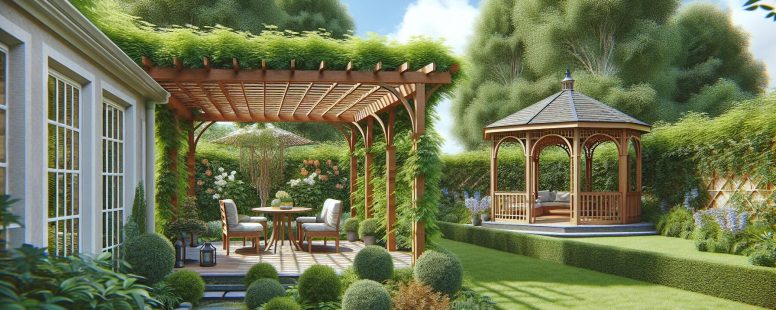
Imagine stepping into your backyard, where you’re greeted by the dappled sunlight filtering through the slats of a pergola, or perhaps the cozy, enclosed comfort of a gazebo. These outdoor structures transform your garden into a personal oasis, but how do you choose the right one for your space?
Understanding the differences between a pergola and a gazebo can help you make an well-informed choice. While both offer unique benefits, they cater to different needs and aesthetics. Jump into the world of pergolas and gazebos to discover which one will elevate your outdoor living experience.
Overview Of Pergolas And Gazebos
Pergolas and gazebos likely both bring charm to outdoor spaces, but they’re not exactly cousins in the structure family. Let’s break it down, so you can probably flaunt your backyard knowledge at the next barbecue. Ready to immerse?
Pergolas, those airy, open-sided structures, often make you feel like you could be relaxing in the Tuscan countryside. Typically, pergolas feature vertical posts supporting crossbeams, creating a latticed roof. This design is great for supporting climbing plants such as vines and wisteria. Think of it as helping nature meet architecture. You likely find pergolas as extensions to homes, often shading patios, walkways, or decks.
Gazebos, on the other hand, are the proverbial crown jewels of backyard retreats. Usually octagonal or circular, these freestanding structures come with a complete roof and sometimes even cozy, built-in seating. They offer full shade and, with the right touches, can even be screened to help keep those pesky bugs at bay. Unlike pergolas, gazebos create an enclosed space, which might make them more suitable for intimate gatherings and picnics.
Ever wondered why you might pick one over the other?
If you’re leaning towards a pergola, you might be after a lighter, more open feel that lets in some sun while still offering a bit of shelter. You likely want a versatile space that can both enhance your garden’s aesthetics and provide support for climbing plants.
Gazebos might catch your eye if you’re into having a more defined, enclosed space for dining or lounging. They can also offer better protection from the elements compared to pergolas.
Which one suits your style?
Structural Differences
When comparing pergolas and gazebos, understanding their structural differences is key. These variations influence their functionality and aesthetics.
Design And Aesthetics
Pergolas offer an open design, consisting of vertical posts and crossbeams, that can easily support climbing plants. These structures bring a sense of airiness to your backyard, making them perfect for parties and events. Gazebos differ in that they’re often octagonal or circular, with a complete roof and built-in seating, offering more enclosed and intimate space. They provide better protection from elements. Want a cozy nook? Go for a gazebo! Looking for an open, breezy area? A pergola might be your best bet.
Material And Construction
Pergolas are typically made from wood, vinyl, or aluminum, and can easily be customized to match your garden’s style. They might include drapes, lights, or even retractable canopies if desired. Gazebos, on the other hand, are usually constructed from wood or metal, and may feature intricate designs and details. They suggest a more permanent structure and typically require a solid foundation. So, depending on your construction expertise, you’ll want to consider the materials carefully. Wondering which material is best? It probably depends on your budget and climate.
Functionality And Usage
Understanding the functionality and usage of pergolas and gazebos can help you maximize your outdoor space. These structures serve different purposes based on their design and construction.
Common Uses
Pergolas are popular for creating semi-shaded spaces in gardens. They can support climbing plants like wisteria or grapevines, transforming your yard into a lush, green oasis. Hosts often use pergolas for outdoor dining areas, parties, or BBQ spots. Imagine dinner under the stars with a gentle canopy above. Who wouldn’t love that?
Gazebos, on the other hand, offer a more enclosed space. If you value privacy and protection from the elements, gazebos might be your go-to. People often use them as quiet relaxation areas or for more intimate gatherings. They can house hot tubs or be converted into outdoor living rooms. Picture reading a book in a cozy nook shielded from rain; now, that’s luxury.
Seasonal Considerations
When considering seasonal use, pergolas work great in warmer months. They might not provide much shelter from heavy rain or snow. But, attaching retractable canopies or climbing plants can offer additional shade and some protection.
Gazebos are more versatile for year-round use. Their roofed design provides ample shelter from sun, rain, and even snow. If you live in a region with extreme weather, a gazebo likely offers better durability and comfort. You might even add screens or glass panels for added protection, making them usable almost any time of year.
Ever wondered which structure suits your needs better? The choice largely depends on your local climate and how you plan to use the space. Consider how each structure aligns with your lifestyle to make an well-informed choice.
Installation And Maintenance
You’ve probably been wondering about the practical aspects of installing and maintaining a pergola or gazebo. Let’s jump into the nitty-gritty details.
Installation Process
Installing a pergola involves less prep work than a gazebo. You might need to set up vertical posts and crossbeams, and you’ll typically have fewer materials to deal with. Depending on the size, you may complete the job in a day or two.
For gazebos, the process is likely more involved. Often they require a solid foundation—and good luck if you don’t have a flat yard! Also, since many gazebos are larger with full roofs, construction time might extend to several days or even over a week, particularly if you’re dealing with intricate designs.
Have you checked out DIY kits? They might make your life easier by providing pre-cut materials and straightforward instructions. Pergolas usually come in simpler kits, while gazebo kits tend to be more complex.
Maintenance Requirements
Pergolas need a bit more TLC than gazebos, mainly due to their open-air nature. Regular inspections help you spot potential issues like wear and tear on the wood. Metal pergolas might need rust treatment occasionally.
Gazebos, although sturdier, still require some upkeep. You’d probably need to check the roof for damages, especially after heavy storms. Wooden gazebos might also need repainting or sealing to protect against the elements.
Ever tried pressure-washing? It’s a great way to keep both structures clean, though be careful with delicate materials.
And there you have it, whether you’re looking at a snug gazebo or an airy pergola—installation and maintenance can be key factors in your decision-making process.
Cost Comparison
Comparing the costs of pergolas and gazebos can provide some insight into which structure might fit your budget better.
Pergola Costs
Pergolas tend to be the cheaper option. You might spend between $1,800 and $6,000, depending on size, materials, and labor. Wood is the most common material, but you can also find options in vinyl and aluminum. For a DIY enthusiast, kits are available for $1,000 to $4,000. Remember, custom designs or luxury materials (like cedar or redwood) will push the price up.
Gazebo Costs
Gazebos, but, are usually pricier due to their complex structure and solid foundation requirements. Prices typically range from $3,000 to $10,000. You’ll find that the material also plays a role in costs. While wooden gazebos are common, metal and vinyl options do exist, albeit at different price points. If you’re considering a high-end model with electricity and built-in seating, the cost can climb to $15,000 or more.
Additional Costs
Don’t forget to think about installation fees when budgeting. Pergolas, though simpler, might cost $500 to $1,500 for professional installation. Gazebos, being more complex, can add $1,500 to $3,000 to your overall expense. And then there’s maintenance. Pergolas made of wood may need staining or sealing every few years, which costs money over time, while gazebos often require roofing repairs and paint touch-ups.
Seasonal Considerations
When you’re thinking about ongoing costs, also consider seasonal use. Pergolas, which are ideal for summer, might need additional features like shade canopies or retractable covers, adding to the expense. Gazebos, being usable year-round, likely offer better value in the long run if you’re in an area with harsh weather.
Conclusion
Choosing between a pergola and a gazebo eventually comes down to your specific needs and preferences. If you’re looking for a versatile, airy space that can host lively gatherings and support climbing plants, a pergola might be your ideal choice. On the other hand, if you prefer a more enclosed, intimate setting that offers year-round protection from the elements, a gazebo could be the better option.
Consider the installation and maintenance requirements as well as your budget. Pergolas are generally more affordable and easier to install, while gazebos offer a more permanent and durable solution. Think about your local climate and how you plan to use the space throughout the year to make the best decision for your outdoor living experience.
To provide the best experiences, we use technologies like cookies to store and/or access device information. Consenting to these technologies will allow us to process data such as browsing behaviour or unique IDs on this site. Not consenting or withdrawing consent, may adversely affect certain features and functions.
Functional
Always active
The technical storage or access is strictly necessary for the legitimate purpose of enabling the use of a specific service explicitly requested by the subscriber or user, or for the sole purpose of carrying out the transmission of a communication over an electronic communications network.
Preferences
The technical storage or access is necessary for the legitimate purpose of storing preferences that are not requested by the subscriber or user.
Statistics
The technical storage or access that is used exclusively for statistical purposes.The technical storage or access that is used exclusively for anonymous statistical purposes. Without a subpoena, voluntary compliance on the part of your Internet Service Provider, or additional records from a third party, information stored or retrieved for this purpose alone cannot usually be used to identify you.
Marketing
The technical storage or access is required to create user profiles to send advertising, or to track the user on a website or across several websites for similar marketing purposes.