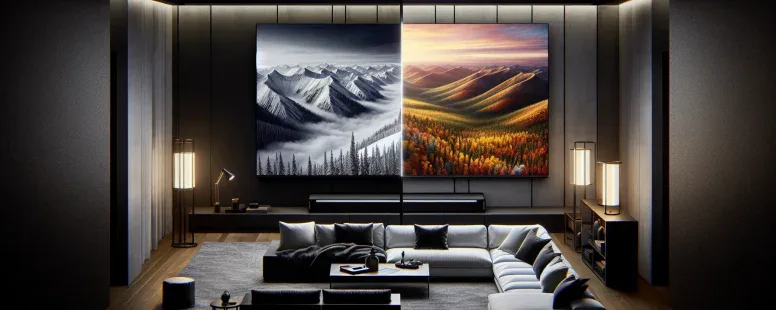
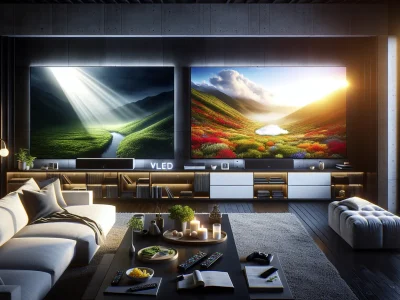
Picture watching your favorite movie with colors so vivid they almost leap off the screen, every shadow and highlight perfectly balanced. With display technology evolving rapidly, choosing between OLED and QD-OLED can feel like stepping into a maze of technical jargon. Both promise stunning visuals, but what sets them apart?
OLED has long been celebrated for its deep blacks and rich contrast, redefining how we experience screens. Enter QD-OLED—a newer contender blending quantum dot brilliance with OLED’s precision to deliver an even more immersive viewing experience. But is it truly better? Understanding their differences could change the way you see entertainment forever.
What Is OLED?
OLED stands for Organic Light-Emitting Diode, a display technology known for its ability to deliver high contrast and vibrant colors. It uses organic compounds that emit light when an electric current passes through them.
How OLED Technology Works
Each pixel in an OLED screen contains organic material that emits its own light. There’s no need for a backlight because the pixels themselves produce illumination. This self-emissive property enables precise control over individual pixels, allowing true blacks by turning off specific pixels entirely.
For example, if you’re watching a space scene in a movie, stars can appear bright while the surrounding space remains pitch black. The absence of a backlight also makes OLED panels thinner and more flexible compared to traditional LED displays.
Key Features Of OLED
Deep Blacks: Pixels can turn off completely, creating absolute darkness.
Wide Viewing Angles: Picture quality remains consistent even when viewed from sharp angles.
Fast Response Times: Quick pixel transitions reduce motion blur during fast-paced content like sports or gaming.
Slim Design: Without the need for backlighting layers, screens are lightweight and ultra-thin.
These features make OLED displays ideal for applications requiring precision visuals and immersive experiences.
What Is QD-OLED?
QD-OLED, or Quantum Dot Organic Light-Emitting Diode, combines quantum dot technology with OLED panels to enhance brightness and color accuracy. This hybrid approach aims to deliver a superior viewing experience compared to traditional OLED screens.
How QD-OLED Technology Works
QD-OLED integrates a blue OLED light source with quantum dots to produce vibrant colors. The process begins with the blue OLED layer emitting light, which then passes through a layer of quantum dots. These nanoparticles convert the blue light into red and green wavelengths while maintaining high brightness levels. By using this structure, QD-OLED eliminates the need for color filters found in standard displays.
Each pixel in a QD-OLED screen independently controls its emission intensity, offering greater precision for contrast and color reproduction. Unlike conventional LED backlit systems, it achieves deep blacks by turning off individual pixels entirely.
Key Features Of QD-OLED
Enhanced Brightness: Quantum dots boost overall luminance without compromising energy efficiency.
Wide Color Gamut: Delivers vivid hues across HDR content due to precise wavelength conversion.
Improved Viewing Angles: Maintains consistent visuals from various positions without noticeable distortion.
Dynamic Contrast Ratios: Achieves true blacks alongside brighter highlights for more lifelike scenes.
Reduced Burn-in Risks: Optimized materials reduce image retention compared to traditional OLEDs.
By combining these characteristics, QD-OLED provides an advanced alternative tailored for premium displays like TVs and monitors designed for immersive entertainment experiences or professional-grade visuals.
Difference Between OLED And QD-OLED
Understanding the difference between OLED and QD-OLED helps you make informed decisions when choosing a display. Both technologies offer unique strengths, catering to different needs and preferences.
Display Quality And Color Accuracy
OLED screens deliver deep blacks by turning off individual pixels, enhancing contrast and making colors appear vibrant. They achieve precise color reproduction, suitable for cinematic visuals or professional editing tasks. For example, watching a movie with dark scenes feels immersive due to OLED’s pixel-level control.
QD-OLED takes color accuracy further by integrating quantum dots. These dots convert blue light into pure red and green tones without traditional filters, resulting in richer hues and wider color gamuts. When viewing nature documentaries on a QD-OLED screen, shades of green in forests or gradients in sunsets appear more lifelike.
Brightness And Contrast
OLED displays excel in contrast ratios due to their ability to completely switch off pixels for true black levels. But, their peak brightness can be limited compared to some modern alternatives.
QD-OLED overcomes this limitation with higher brightness levels while maintaining dynamic contrasts. The combination of blue OLED emitters and quantum dot layers enhances clarity even in brightly lit rooms or during daylight viewing sessions.
Energy Efficiency And Longevity
OLED panels consume less energy when displaying darker images since turned-off pixels don’t draw power. Yet prolonged use may lead to burn-in issues where static images leave lasting impressions on the screen over time.
QD-OLED improves upon longevity by reducing burn-in risks through optimized materials and design innovations. Also, its efficiency remains consistent across various content types because quantum dots enhance light conversion without significant energy loss.
Pros And Cons Of OLED
Pros of OLED
Deep Blacks: Each pixel emits its own light and can turn off completely, delivering an absolute black level unmatched by other technologies. This makes scenes with high contrast appear more dramatic and lifelike.
Wide Viewing Angles: Colors and brightness remain consistent even when viewed from extreme angles, making them suitable for group settings or unconventional viewing positions.
Fast Response Times: With near-instantaneous pixel transitions, motion blur is minimal in fast-paced content like sports or gaming.
Slim Design: OLED panels are thin and lightweight due to the absence of a backlight. Flexible designs allow use in curved screens or innovative form factors such as rollable displays.
Cons of OLED
Burn-In Risks: Prolonged display of static images can cause burn-in over time, where residual image artifacts persist on the screen. This issue is more noticeable in applications with constant elements like news tickers or gaming HUDs.
Limited Brightness Levels: While sufficient for most environments, peak brightness may fall short compared to alternatives like QD-OLED, especially in brightly lit rooms.
Cost Factors: Production costs for OLED panels remain relatively high due to complex manufacturing processes. As a result, devices using this technology often come at premium prices.
Lifespan Variations: Organic materials used in pixels degrade differently based on color emissions; blue subpixels typically fade faster than red or green ones.
Understanding these advantages and limitations helps you choose whether OLED fits your specific needs—whether it’s cinematic visuals at home or professional-grade editing tasks requiring precision control over colors.
Pros And Cons Of QD-OLED
Pros of QD-OLED
Enhanced Brightness
QD-OLED screens deliver higher brightness levels than traditional OLEDs by using quantum dots to efficiently convert blue light into red and green. This ensures vibrant visuals even in well-lit rooms, making it ideal for daytime viewing or brightly lit spaces.
Wide Color Gamut
The integration of quantum dot technology enables QD-OLED displays to achieve a wider color gamut. This results in richer, more vivid hues that enhance the realism of images, especially when watching HDR content like nature documentaries or action-packed movies.
Improved Viewing Angles
With uniform light distribution and advanced pixel control, QD-OLED offers consistent picture quality from various angles without noticeable color degradation or loss of contrast. You can enjoy the same visual clarity whether you’re sitting directly in front of the screen or off to the side.
Reduced Burn-In Risks
By utilizing optimized materials and innovative design, QD-OLED minimizes burn-in risks compared to traditional OLED panels. This makes them suitable for content with static elements such as gaming HUDs or news tickers.
Dynamic Contrast Ratios
The combination of OLED’s self-emissive pixels and quantum dots enhances dynamic contrast ratios, providing lifelike scene reproduction with deep blacks and bright highlights for immersive entertainment experiences.
Cons of QD-OLED
Higher Production Costs
Manufacturing processes for combining quantum dot layers with OLED panels are complex and expensive. So, QD-OLED products often come at premium prices compared to standard OLED options available on the market.
Limited Availability
As a newer technology, QD-OLED is still limited in availability across brands and product categories like TVs or monitors, unlike traditional OLED displays widely adopted by manufacturers globally.
Blue Light Degradation Concerns
Since QD-OLED relies heavily on blue OLED emitters as its base light source, concerns exist about their faster degradation rates over time compared to red and green components—potentially affecting long-term performance consistency.
Energy Consumption Variations
While offering enhanced brightness capabilities, achieving these peak levels may result in higher energy consumption during extended use when displaying brighter scenes consistently.
Which One Should You Choose?
Choosing between OLED and QD-OLED depends on your specific needs and preferences. If deep blacks, wide viewing angles, and slim designs are priorities, OLED screens deliver exceptional performance. They’re ideal for cinematic visuals in dark rooms or for tasks requiring precise color grading, like photo or video editing.
QD-OLED suits you better if enhanced brightness and vibrant colors matter more. The integration of quantum dots improves clarity in well-lit environments, making QD-OLED a strong contender for TVs placed in bright living spaces or monitors used during daytime hours. Reduced burn-in risks also make them more suitable for static content like gaming HUDs or productivity applications.
Budget considerations might guide your choice too. OLED panels tend to cost less than QD-OLED options due to the latter’s newer technology and complex manufacturing process. But, investing in QD-OLED could be worthwhile if you’re seeking superior brightness levels with broader color accuracy.
Assess usage scenarios before deciding. For example, an OLED TV enhances movie-watching experiences at night by showcasing true black tones without reflections interfering with quality. On the other hand, a QD-OLED monitor ensures consistent color reproduction under different lighting conditions—a significant advantage for professionals handling creative projects.
Matching the display features to your lifestyle ensures long-term satisfaction while optimizing visual performance across various settings.
Conclusion
Choosing between OLED and QD-OLED comes down to your priorities and how you plan to use your display. Each technology offers unique strengths tailored to specific viewing needs, whether it’s the deep contrast of OLED or the enhanced brightness and color accuracy of QD-OLED.
By understanding the differences, you can make an well-informed choice that aligns with your preferences, budget, and viewing environment. Both options deliver stunning visuals but cater to distinct experiences, ensuring there’s a perfect fit for everyone.
To provide the best experiences, we use technologies like cookies to store and/or access device information. Consenting to these technologies will allow us to process data such as browsing behaviour or unique IDs on this site. Not consenting or withdrawing consent, may adversely affect certain features and functions.
Functional
Always active
The technical storage or access is strictly necessary for the legitimate purpose of enabling the use of a specific service explicitly requested by the subscriber or user, or for the sole purpose of carrying out the transmission of a communication over an electronic communications network.
Preferences
The technical storage or access is necessary for the legitimate purpose of storing preferences that are not requested by the subscriber or user.
Statistics
The technical storage or access that is used exclusively for statistical purposes.The technical storage or access that is used exclusively for anonymous statistical purposes. Without a subpoena, voluntary compliance on the part of your Internet Service Provider, or additional records from a third party, information stored or retrieved for this purpose alone cannot usually be used to identify you.
Marketing
The technical storage or access is required to create user profiles to send advertising, or to track the user on a website or across several websites for similar marketing purposes.