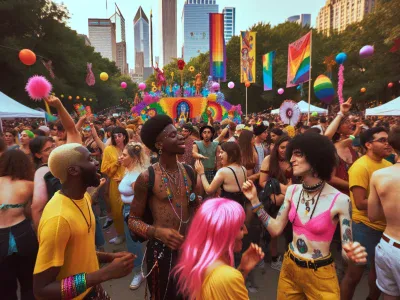
Picture yourself at a bustling comic convention—colorful costumes swirl past, laughter echoes, and the air buzzes with excitement. You overhear a heated debate: is the person raving about quantum physics a nerd or a geek? The words fly around like confetti, but their meanings often blur in the chaos.
You might think these labels are interchangeable, but there’s a world of difference hiding beneath the surface. Knowing what sets a nerd apart from a geek doesn’t just satisfy curiosity—it can unlock new ways to connect, share passions, and even boost your confidence in social circles. Get ready to peel back the layers and discover the surprising truths that make these identities so unique.
Understanding the Terms: Nerd vs. Geek
When you jump into the roots of “nerd” and “geek”, the terms reveal layered meanings shaped by decades of pop culture, academia, and tech evolution. Picture two classmates from Stanford in the late ’70s: the “nerd” pores over astrophysics journals, code syntax, and quantum theory. The “geek” assembles a homemade computer in his dorm, obsessing over radio schematics and the plot twists in “Doctor Who”. Neither label fits into the other’s shoes, though both share intense curiosity.
Linguists like Anatoly Liberman note, “nerd” entered slang from Dr. Seuss’s 1950 picture book If I Ran the Zoo [Merriam-Webster]. Over time, it came to signify people with deep intellectual passion, often in science, math, or literature. You may spot a nerd with encyclopedic knowledge of string theory or medieval poetry. Nerds sometimes get stereotyped as socially awkward, yet they thrive in academic environments and research labs, driving scientific progress.
“Geek”, on the other hand, traces back to circus sideshows, where a geek performed unusual feats, later evolving into “someone obsessively enthusiastic about a subject”. In current contexts, you’ll find geeks binge-watching Marvel movies, building IoT gadgets, or attending Comic-Con in elaborate cosplay. Geeks connect their passions to hobbies, pop culture, and community, like the hacker culture that shaped Silicon Valley (Levy, “Hackers: Heroes of the Computer Revolution”).
A tricky question persists: do you identify by your passions or your expertise? Nerds often seek mastery and in-depth understanding, while geeks cultivate broad, sometimes quirky, collections of fandom or skills. Online forums like Stack Exchange overflow with debates about who’s a nerd and who’s a geek. You’ll hear stories—like the physics major who memorizes every Marvel character’s backstory, or the software engineer correcting Klingon syntax at a trivia night.
Can you call yourself both? Absolutely—these boundaries blur as interests overlap and subcultures merge. What matters most is the shared energy of learning and enthusiasm, the foundation for communities, innovation, and friendships. Labels serve to connect, start conversations, and if anything, offer a badge of honor for those who dive headfirst into their passions—whether that’s building a nuclear reactor in the garage, or just memorizing every line from “The Lord of the Rings”. Which one are you, anyway?
Historical Origins and Evolution
You walk into a high school in the 1950s, hearing someone call another a “nerd” under their breath. Jump ahead to a modern tech meetup, where someone proudly labels themselves a “geek”—what happened in between? These words traveled bumpy roads, shifting meaning as society evolved. While both terms now serve as cultural badges, their roots wander from dusty bookshelves to the smell of circus tents, creating a tangled web of meaning for anyone curious enough to trace the threads.
The Etymology of “Nerd”
You find the earliest “nerd” on page 89 of Dr. Seuss’s 1950 book If I Ran the Zoo. The word slides from the snout of a whimsical creature into real-life American slang, cementing itself in Detroit high school yearbooks by the mid-1950s (Liberman, Oxford English Dictionary). Nerd enters public consciousness as a label for those folks choosing chess over basketball, books over parties. Scholars, such as linguist Ben Zimmer, argue that nerd first connoted social awkwardness tied to high intelligence, a meaning that snowball through decades. If you’d tried calling Einstein a “nerd” in his day, would he have laughed, or pondered your linguistic creativity?
The Etymology of “Geek”
You chase “geek” to Germanic roots, specifically the Low German word geck, signifying a fool or oddball. Circus slang in the early 20th century cements geek as a performer biting live animals, a shocking spectacle meant to startle crowds (Cassell’s Dictionary of Slang). Over decades, the meaning morphs from sideshow oddity to respected subculture identity. Technology and pop culture shifts push geek into the spotlight—you now spot self-described “comic book geeks” organizing global conventions. If Steve Wozniak hadn’t proudly called himself a “computer geek,” would “Geek Squad” even exist?
You observe both “nerd” and “geek” traversed different evolutionary trails, gathering nuance from academia, technology, and pop culture. As you debate which camp you fit in, ask yourself: are you delving deep to master quantum physics, or assembling the ultimate Star Wars collection? As both terms continue to evolve, your perspective keeps their stories alive.
Key Characteristics and Stereotypes
Key characteristics and stereotypes shape how you understand the divide between nerds and geeks. These markers fuel lively debates at fan meetups and social media threads, because labels tell more than just a story—they create identity.
Personality Traits
Personality traits of nerds often orbit intellect like planet’s circle a glowing star. You might see a nerd lost in a book about quantum mechanics or correcting a teacher on Pi’s decimal points, showing a devotion to academic details that borders on obsession. According to psychologist David Anderegg, nerds display introversion, analytical thinking, and sometimes social awkwardness (source: Nerds: Who They Are and Why We Need More of Them). You wonder—Is it shyness or focus that isolates them? Some say both.
Personality traits for geeks, but, pulse with enthusiasm. Picture someone recounting the history of Marvel Comics at a party, captivating listeners, smiling wide with each superhero fact, his energy lights up the room. Geeks display gregariousness, contagious excitement, and expressive communication—often in groups, often out loud. The stereotype paints them as fans who make obscure references, but really, they’re connectors, weaving an invisible thread between people who share the same passions.
Hobbies and Interests
Hobbies and interests separate nerds from geeks at comic-cons and campus clubs. Nerds often choose fields like mathematics, computer science, or linguistics—think solving Sudoku, programming Python, or dissecting Tolkien’s languages. You see examples in chess tournaments, academic decathlons, or research papers, feats recognized more in classrooms and labs than on TikTok feeds.
Hobbies and interests for geeks revolve around collectables, fandoms, and pop culture. Star Wars memorabilia lines shelves, classic video game cartridges stack up like Tetris blocks, cosplay costumes burst from closets. You catch geeks at conventions, trading Magic: The Gathering cards, debating Doctor Who canon, or beta-testing open-source software. Forbes (2021) mentioned that the game industry—a geek domain—generates over $159 billion annually, evidence of broad cultural impact.
What category fits you when your bookshelf holds quantum physics and every Star Trek box set? Does geekness and nerdiness overlap, or does one shine brighter? If curiosity drives your every quest or passion glues your community, perhaps you wear both badges—proudly, and sometimes at the same time.
Societal Perceptions and Cultural Impact
Societal perceptions of nerds and geeks shift frequently, shaped by both mainstream media and subcultural movements. Understanding these influences reveals why these identities hold such a complex role in your daily conversations and pop culture.
Portrayal in Media and Pop Culture
Television, film, and advertising define the visual image of nerds and geeks for many viewers. Popular sitcoms like “The Big Bang Theory” display the nerd stereotype—characters fluent in quantum mechanics, awkward in social settings, and devoted to comic book lore. Documentaries and podcasts, including NPR’s “How to Do Everything,” showcase geeks as deeply passionate fans, dissecting obscure Star Wars trivia or the next episode of a cult anime.
Comic conventions like San Diego Comic-Con offer vivid stages where “geek” becomes a badge of honor. Fans in elaborate cosplay share obscure facts—did you ever consider how Japanese mecha anime inspires Western robot films? Meanwhile, tech expos such as CES highlight nerd innovation, with crowds drawn to academic presentations on quantum computing or bioinformatics.
But, negative media stereotypes persist, especially in children’s programming or reality television. In many narratives, nerds act as comedic outsiders, while geeks serve merely as quirky sidekicks. Still, more recent films—think “Spider-Man: Into the Spider-Verse” or “Stranger Things”—redeem and celebrate these identities, suggesting society now sees them as trailblazers, not outcasts. Is there space for new representations, or do creators still rely too much on the old tropes?
Community and Identity
Communities, both physical and digital, create lasting bonds based on shared nerd or geek identities. Reddit boards like r/AskHistorians and r/Marvel challenge stereotypes by fostering knowledge exchange and passionate debate—if you browse their threads, you’ll notice experts and hobbyists alike asking questions, trading references, and building collective archives.
Gaming cafes, LAN parties, and board game nights form physical venues for geek community, where participants celebrate collaborative storytelling or tabletop mastery. These spaces let you freely express interests that mainstream social circles sometimes reject, making room for personal stories and new friendships. Consider how chess clubs blend nerd-like analytical study with the camaraderie of a comic book shop’s weekly Magic: The Gathering meet-up.
Self-identification often blends nerd and geek elements. People sometimes claim both labels, using them strategically—an engineer at a hackathon calls herself a nerd during a programming sprint, then a geek while discussing her Doctor Who scarf collection. Every fan group navigates the boundaries in different ways, and not everyone agrees where lines are drawn.
Multiple viewpoints sharpen community identity too. Some criticize the gatekeeping seen in fan communities, arguing that exclusion contradicts the original subcultural values of curiosity and inclusion (see Jenkins, 2013, “Textual Poachers”). Others maintain these boundaries safeguard authenticity and depth. Which side do you find more convincing, and do the lines between nerd and geek mean as much today as before?
Identity within these communities evolves with each conversation, fan event, and social media post—like code changing as it’s debugged in real time, or a storyline expanding as new creators join.
Overlapping Qualities and Blurred Lines
Spotting the difference between a nerd and a geek sometimes looks like trying to draw a chalk outline on quicksand—layers shift, edges merge, identities blur. You step into a board game café: Three friends argue over JavaScript syntax, debate NASA’s Artemis mission, then jump into a heated Pokémon card trade. Who’s the geek? Who’s the nerd? Maybe those categories, like fog dancing above a river, aren’t fixed.
Both nerd and geek share qualities that makes the boundaries difficult. Curiosity radiates from both—nerds binge whitepapers on quantum computing while geeks devour lore from Star Trek, but both love deep exploration. Data from Pew Research Center shows that 44% of US adults aged 18–29 identify with either label when asked about tech affinity or pop culture enthusiasm. These numbers suggest bridges, not walls.
Watch fan conventions, for example. You’ll meet a physics major cosplaying as Doctor Who, reciting proofs in Klingon. One attendee at Comic-Con 2023 told Wired, “I code at NASA by day, DM for five campaigns by night.” This kind of hybrid fascinates sociologists like Dr. David Kalt, who writes, “Passion plus expertise—and community—matter more than dictionary definitions now.” Ornate passions cross lines—someone can explain Schrödinger’s Cat with a Spider-Verse meme.
Let’s ask: Is a programmer who collects vintage Legos a nerd, a geek, or both once? These questions tease out something unique about identity, showing that “type” evolves with new interests, life stages, or technologies. For instance, the rise of esports muddied old binaries—competitive gamers now code mods, run stat algorithms, and celebrate every Comic-Con, fitting “geek” and “nerd” archetypes at once.
Professional opportunities can hinge on these blurred boundaries. Tech companies often seek candidates who can both theorize (nerd) and evangelize fandoms (geek) to diverse users. According to LinkedIn’s 2022 Trends, hybrid “geek-nerd” skillsets drive most growth in software, gaming, and STEM fields. You thrive if you can bridge worlds—building an AI chess engine by morning, then running an anime trivia night by dusk.
Why does this matter? Understanding overlaps helps avoid rigid labels; encourages friendships across interests, and fosters inclusive communities online and offline. Maybe you’ll realize your next collaborator shares your Shakespeare obsession and your love for open-source code.
Can you see your own passions in these blurred lines, or do you prefer claiming a side? If you stand at the crossroads, embrace it—your identity creates fresh space for connection, discovery and innovation.
Why the Difference Between Nerd and Geek Matters
Every comic convention hall echoes with debates—are you the math-whiz nerd juggling quantum mechanics, or the cosplay geek, piecing together your third Doctor Who scarf? These labels—nerd and geek—carry social currency that shapes how friends, coworkers, and even strangers perceive you in modern culture (Nguyen et al., 2020). If you introduce yourself as a geek at a hackathon, for example, you might spark instant camaraderie with others trading Pokémon cards. Say you’re a nerd obsessed with astrophysics at a trivia night, and suddenly conversations shift to Nobel laureates instead of Marvel’s cinematic timeline.
Language form the backbone of social belonging. “Nerd” signals deep expertise in structured knowledge domains like mathematics or computer science. “Geek” denotes enthusiasm for niche pop culture or collectibles, ranging from rare comic editions to all-night Dungeons & Dragons campaigns. Consider Wil Wheaton, the actor and author, who self-identifies as both nerd and geek—his TEDxTalk “Why It’s Awesome to Be a Nerd” blends tales of coding sprints, convention meetups, and vintage game lore, showing how these identities can overlap (Wheaton, 2013).
Discussions about nerds and geeks don’t just mark differences—they open doors to community. Online, subreddits like r/AskScience gather nerds for data-deep dives, while threads in r/Funkopop unite geeks over unboxing rituals. Offline, board game bars or tech expos create fertile ground for new friendships and, sometimes, job networking. When these difference go ignored, you risk missing out on communities that match your curiosity or undervaluing the talent next to you in a gaming queue.
Questions about identity thrive at social crossroads. What happens when an astrophysicist binges anime or a comic-con-goer wins the national spelling bee? Society’s tendency to box people in oversimplifies reality. In 2022, the Pew Research Center found young adults increasingly prefer hybrid identities; they blend academic interests with entertainment obsessions (Pew, 2022). So, you might code software all morning and debate Star Wars trivia all night, defying labels entirely.
Your identity impacts career choices, friendships, even mental health. A 2018 Stanford study linked positive nerd or geek self-identity with resilience and adaptability in STEM careers, especially for women and minorities navigating isolating work environments (Stanford, 2018). Celebrate these nuanced distinctions, because they can unlock confidence in your passions and signal belonging amid ever-shifting cultural tides. So the next time someone asks, “Are you more of a nerd, or a geek?” you know it’s not a simple question—it’s a gateway to richer conversations, deeper friendships, and stronger communities.
Conclusion
Embracing whether you’re a nerd, a geek, or a blend of both lets you celebrate what makes you unique. These labels aren’t just words—they’re pathways to deeper connections and shared passions. When you understand where you fit or how you overlap, you open doors to new friendships, communities, and opportunities.
So next time you find yourself at a convention or chatting online, wear your identity with pride. The world needs every kind of curious mind and passionate heart.
To provide the best experiences, we use technologies like cookies to store and/or access device information. Consenting to these technologies will allow us to process data such as browsing behaviour or unique IDs on this site. Not consenting or withdrawing consent, may adversely affect certain features and functions.
Functional
Always active
The technical storage or access is strictly necessary for the legitimate purpose of enabling the use of a specific service explicitly requested by the subscriber or user, or for the sole purpose of carrying out the transmission of a communication over an electronic communications network.
Preferences
The technical storage or access is necessary for the legitimate purpose of storing preferences that are not requested by the subscriber or user.
Statistics
The technical storage or access that is used exclusively for statistical purposes.The technical storage or access that is used exclusively for anonymous statistical purposes. Without a subpoena, voluntary compliance on the part of your Internet Service Provider, or additional records from a third party, information stored or retrieved for this purpose alone cannot usually be used to identify you.
Marketing
The technical storage or access is required to create user profiles to send advertising, or to track the user on a website or across several websites for similar marketing purposes.