Picture yourself standing on a windswept dock at dawn salt spray clinging to your skin as ships and stealthy figures move with purpose in the mist. You might wonder—what really sets apart the Navy’s vast armada from the fierce brotherhood of the Marine Corps? The answer isn’t just about uniforms or who sails the seas versus who storms the shore.
There’s a world of hidden strengths and surprising roles behind these iconic branches. Understanding the difference could change how you see teamwork courage and the art of defense. Dive deeper and you’ll find unexpected skills that shape not only battles but also innovation and global influence—benefits that ripple far beyond the military.
Overview of the Navy and Marine Corps
Both the Navy and the Marine Corps operate as separate branches in the United States military, yet their missions often intertwine during global operations. Your understanding grows when you see a Navy fleet—aircraft carriers flanked by destroyers—moving silently over the horizon, while a Marine Expeditionary Unit prepares for rapid amphibious assaults. Navy ships provide the floating bases, advanced radar, and logistics infrastructure. Marine units execute precision strikes ashore, using their expertise in close combat and urban warfare.
Most sailors, such as those working on the USS George H.W. Bush, steer, maintain, and defend naval assets at sea, whereas Marines like the 1st Marine Division often deploy from these ships to secure beachheads, embassies, or humanitarian zones. Sometimes, these branches compete for resources—budgeting battles, leadership appointments, or new equipment adoption—yet they operate in congruence during conflict, such as the 2003 Iraq invasion, according to the Congressional Research Service.
Maybe you’ve wondered: why does the Navy command large aircraft carriers while the Marine Corps focuses on lighter amphibious ships? These organizational choices reflect centuries of doctrine, the legacy of Admiral Chester Nimitz in WWII for the Navy, and General John A. Lejeune for the Marines. Sailors become technological experts, learning sonar systems or nuclear propulsion; in contrast, most Marines train rigorously in combat skills, small-unit leadership, and adaptability on land and sea.
Is the difference just in tactics? For example, special entities—Navy SEALs versus Marine Raiders—showcase each branch’s elite units and their special operations capabilities from maritime insertion to counter-insurgency. Both foster unwavering commitment and teamwork, even though distinct cultures and mottos: “Semper Fidelis” for the Marines, “Non sibi sed patriae” for Navy personnel. How does your view change when you understand these roles not just as job titles but as lifelines in coordinated theater missions?
Branch
Primary Role
Example Units
Signature Environment
Key Historical Influence
Navy
Sea control, logistics, air support
USS John C. Stennis, SEALs
Oceans, carriers, subs
Adm. Chester Nimitz
Marine Corps
Amphibious assault, rapid response
1st Marine Division, Raiders
Littorals, expeditionary
Gen. John A. Lejeune
Reflect on the unseen links in joint operations or the questions that surface about military culture—what stories does a deployment tell beyond the steel hulls, crisp uniforms, or mottos? Through exploring contrasts and shared missions, your understanding of each branch’s strategic impact, resilience, and sacrifice, grows deeper.
Core Missions and Roles
You notice the Navy and Marine Corps seem like siblings with different destinies—bound together by a nation’s call, yet shaped by distinct missions and environments. Their stories often intertwine at sea, yet each branch’s core reasons for being drive them down paths sometimes parallel, sometimes utterly divergent.
Primary Responsibilities
Navy operations keep the world’s waters humming with activity. Sailors operate missile destroyers, nuclear submarines, and aircraft carriers, patrolling everything from the chilly North Atlantic to the sun-scorched Persian Gulf. Ships like USS Nimitz serve as floating airbases, enabling long-range strikes and humanitarian relief (U.S. Navy, 2023). You find logistics at the Navy’s core—moving fuel, ammunition, equipment—so joint forces fight, survive, and win far from shore.
Marine Corps missions center around fast, crushing impact. Marines storm beaches first, sometimes launching amphibious assaults within hours of deployment orders. During the Battle of Fallujah in 2004, Marines cleared entire city blocks building by building (Department of Defense, 2004). If you’re thinking about brute force combined with precision, you’re seeing the Marine ethos in action. Marines often secure embassies, rescue hostages, and seize airfields. No matter where conflict erupts, Marines aim for swift action before situations spiral.
Consider which branch would respond first if pirates seize a shipping lane in the Strait of Malacca. The Navy surrounds and intercepts, while Marines hit hard and fast—two hands in a single operation.
Operational Environments
Operational domains set the Navy and Marine Corps apart like night and day. Navy sailors practically live at sea, treating every ship as both home and fortress. If you can picture a destroyer gliding through rough Pacific waves under a black, star-splattered sky, you’re picturing daily Navy life.
Marines built careers on flexibility on land, sea, and air. When evacuating American citizens from embassies during civil unrest, Marine Expeditionary Units launch from ships, ride helicopters through hostile territory, and secure perimeters in hours—sometimes minutes. The 2021 Kabul airlift illustrated how Marine units created safe zones and staged extractions at Hamid Karzai Airport, coordinating with other forces under constant pressure (U.S. CENTCOM, 2021).
Naval operations often demand months immersed in international waters, handling nuclear reactors or sonar arrays hundreds of feet below the surface. Marine operations see boots pounding foreign soil, deserts, jungles, and mountain passes—everywhere rapid U.S. force projection is required.
By blending ocean mastery with ground combat ferocity, both Navy and Marine Corps multiply the reach and resilience of American strategy. When stories of courage and unity rise from joint operations, you’re witnessing the core missions of two distinct, indomitable sea services.
Training and Recruitment
Training and recruitment define the paths of Navy sailors and Marine Corps warriors, setting these two pillars apart before you even hit basic training. Each branch attracts candidates with different ambitions, pushing you to measure your grit long before you wear the uniform.
Entry Requirements
Entry requirements for the Navy and Marine Corps share similarities but diverge at critical points that shape your future military journey. For the Navy, you usually need a high school diploma and must pass the Armed Services Vocational Aptitude Battery (ASVAB) with a minimum score of 35. Marines generally accept a lower minimum ASVAB score—32—but place heavier emphasis on physical fitness. Curious? Look at who stands in line outside recruiting offices: future sailors might talk about engineering and global travel, while would-be Marines swap stories about close combat and brotherhood.
Age ranges differ too. The Navy will take you if you’re between 17 and 39, with parental consent for minors; while the Marine Corps caps initial enlistment at 28, seeking younger candidates who can handle intense physical training (source: Today’s Military). Vision standards, tattoos, and criminal history all enter the conversation, but the Marine recruiter’s first question often remains: “Could you run three miles right now?” These decisions hint at the individual character each service branch want’s to build.
Training Regimens
If you picture Navy boot camp at Great Lakes, Illinois, think endurance drills, firefighting simulations, and swimming evaluations—vivid proof of training tailored for floating cities like the USS Gerald R. Ford. Sailors carry stories of night watches on deck, bracing against howling wind and salt spray as they earn their sea legs. In contrast, the Marines’ boot camp at Parris Island or San Diego is a crucible where drill instructors amplify everything: discipline, marksmanship, and close combat—set to the tune of shouted cadence and blistered feet.
Comparisons reveal this: Navy recruits complete an eight-week training focusing on technical proficiency and teamwork, punctuated by the “Battle Stations 21” exercise. Marines endure 13 weeks of grueling physical and mental pressure, peaking in “The Crucible”, where exhaustion and teamwork collide under duress—a forging moment echoed in the tales of Medal of Honor recipients and combat veterans. Can you see yourself standing in formation before dawn, heart drumming under the flag, knowing you’re earning not just a job but a brotherhood or a voyage? The answer shapes the branch you’ll call home.
Branch
Minimum ASVAB Score
Age Range
Training Length
Notable Feature
Navy
35
17–39
8 weeks
Battle Stations 21
Marine Corps
32
17–28
13 weeks
The Crucible, Combat Fitness
These divergent entry points and training regimes don’t just fill rosters. They forge identities, seed legends, and determine whether you’ll navigate global waters or storm enemy shores. Consider the legacy you want to shape—does your story begin on the deck of a carrier, or in the muddy trenches with the Corps?
Organizational Structure and Culture
Organizational structure and culture shape how Navy sailors and Marine Corps warriors see duty, honor, and teamwork. These frameworks don’t just assign ranks; they forge identities and command respect in every operation.
Hierarchical Differences
Hierarchy in the Navy branches with a complex lattice of ranks, from seamen to admirals. Officers manage entire fleets, keeping a strict chain of command that echoes the vast, interconnected nature of naval operations like Carrier Strike Groups. Within a carrier group, for example, commanders must communicate with pilots, logistics chiefs, and intelligence units. Each sub-branch—the Navy Nurse Corps and the Judge Advocate General’s Corps—adopts protocols unique to maritime environments. Flexibility often blends with bureaucracy as missions range from humanitarian aid to high-stakes nuclear deterrence.
Marine Corps hierarchy feels leaner and sharper, focusing on infantry units led by non-commissioned officers and staff sergeants. Battlefield decisions often fall to those closest to the action. A Marine staff sergeant leading a rifle squad at the front line knows the chain runs tight, quick, and clear, reflecting a culture of readiness and quick response for missions like the 2021 Kabul airlift. In amphibious assaults, orders cascade swiftly, and Marine Expeditionary Units operate with a high degree of independence for their size. Marine aviation shares some Navy elements, but every Marine—pilot or not—trains as a rifleman first.
Which approach works better in a crisis? Navy structure might confuse with its layers, but it allows for massive coordinated actions. Marine Corps hierarchy compresses decision-making, so adaptability wins the day when seconds count.
Traditions and Values
Traditions in the Navy shimmer with rituals: every sailor knows the meanings behind “crossing the line ceremonies,” the fact that the USS Constitution launched in 1797 still sails, and how “anchors aweigh” resounds in ceremonies from Annapolis to Yokosuka. These symbols reinforce bonds that span oceans and generations. The Navy core values—Honor, Courage, Commitment—appear in written codes, etched on emblems, and echoed in the stories from submarine veterans and carrier sailors alike. These values tighten unity but also create pressure not everyone withstand easily (see: US Navy Ethos).
Marine Corps traditions hit with intensity. The Eagle, Globe, and Anchor insignia embodies not just service but sacrifice. Birthday balls celebrate the founding in 1775, and every Marine recites the Rifleman’s Creed. Stories like Dan Daly charging through Belleau Wood or modern Marines holding a line in Helmand Province add gravity to the motto “Semper Fidelis.” Values—Honor, Courage, and Commitment—mirror the Navy but with fierce emphasis on esprit de corps and the idea that “every Marine a rifleman.” These mantras don’t just echo in boot camp—they define your bond with fellow Marines long after the uniform comes off.
Could you thrive in those storied halls, salute the flag at the raising of colors, or feel pride in legacy gestures like the “blood stripe” for valor at Chapultepec? Military tradition isn’t just history—it’s a daily compass shaping every decision, from the captain’s bridge to the muddy foxholes where resilience makes or breaks the mission.
Branch
Key Rank Example
Core Value(s)
Notable Tradition
Navy
Admiral
Honor, Courage, Commitment
Crossing the Line Ceremony
Marine Corps
Staff Sergeant
Honor, Courage, Commitment
Marine Corps Birthday Ball
Equipment and Uniforms
Equipment and uniforms set Navy and Marine Corps apart in both form and function. Unique choices in weapons, vehicles, and uniform design reflect each branch’s mission and identity, sometimes sparking debates over practicality, tradition, and innovation.
Weapons and Vehicles
The Navy employs ships, submarines, and aircraft such as the Arleigh Burke-class destroyer, F/A-18 Super Hornet, and Virginia-class submarine—these platforms extend US power across oceans. When you see a carrier strike group gliding through Pacific waters, it’s a floating city defended by missile systems, ready to launch aircraft at a moment’s notice (U.S. Navy, 2023). The Aegis Combat System, a digital brain onboard destroyers and cruisers, can detect, track, and neutralize threats hundreds of miles away—almost like a chess grandmaster thinking six moves ahead.
The Marine Corps focuses on amphibious vehicles, light armored reconnaissance, and direct firepower for rapid landings. You’ll find Marines inside an Amphibious Assault Vehicle (AAV) or behind the M777 howitzer, moving fast between ship and shore. The M1A1 Abrams tank, modified for beach operations, sometimes acts as both battering ram and shield. The F-35B Lightning II, a stealth jet capable of vertical takeoff, lets the Marines punch above their weight—wasn’t it wild when two F-35Bs launched from the USS Essex during drills off Japan in 2018, surprising even seasoned Navy captains? (DoD News, 2018).
Does versatility count more than specialization in a firefight—or does placing lethal technology atop the seas prove decisive? Both branches sculpt their arsenals with these questions echoing through every procurement meeting.
Branch
Weapon Example
Vehicle Example
Specialty
Navy
Tomahawk missile
Nimitz-class carrier
Sea dominance
Marine Corps
M27 Infantry Rifle
Amphibious Assault Vehicle
Rapid amphibious assault
Distinctive Uniforms
Navy uniforms display rank, assignment, and function at a glance, sometimes confusing outsiders with their historical echoes. Crisp dress whites announce ceremonial precision, while blue digital camouflage—known as “blueberries” until 2019—once drew jokes about “hiding in the ocean.” Submariners wear coveralls, a nod to gritty realities beneath the waves. The Navy’s reliance on distinctive insignia and service-specific patches underscores specialty skills: see a gold dolphin badge, and you know the sailor has mastered submarines.
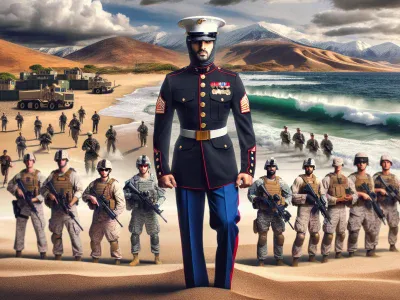
Marines choose utility, tradition, and symbolism in their threads. The Dress Blues—blue jacket, red trim, white belt—turn heads at every parade, drawing inspiration from Continental Marines. The camouflage Marine Corps Combat Utility Uniform (MCCUU) prioritizes fit, durability, and hazard protection; it’s rare to find a Marine not squared away, boots gleaming and creases sharp. The Eagle, Globe, and Anchor emblem rests over every heart, a silent promise of loyalty and grit.
Uniform myths persist. Does donning “Dress Blues” really lift a Marine’s fighting spirit? Recruits have described putting on the uniform as a rite-of-passage, the weight of tradition settling on their shoulders. And what about that old tale—Navy denim bellbottoms designed to double as flotation devices? While the story adds romance, historical review (Naval History and Heritage Command, 2020) suggests practicality dictated design.
Uniform and equipment choices shape first impressions at every joint exercise and ceremonial event. They tell stories before you say a word, amplifying identity and legacy. Which do you find more striking in a crowded port—Navy blue or Marine crimson?
Deployment and Career Paths
Deployment shapes your daily reality, and career paths carve the direction of your ambitions in both the Navy and the Marine Corps. Understanding these differences reframes your expectations for adventure, stability, and lifelong growth.
Typical Deployments
Navy deployments usually revolve around ships, submarines, and maritime aviation groups. You might spend 6 to 9 months at sea, crossing oceans aboard aircraft carriers like the USS Gerald R. Ford or supporting humanitarian relief after a typhoon strikes the Philippines. Scenarios often shift rapidly—from launching Tomahawk missiles at hostile targets (2017 Shayrat airbase strike) to standing watch off the coast of Somalia, facing piracy threats.
Marine Corps deployments mirror a different beat. Often, you moves ashore with Marine Expeditionary Units (MEUs), responding to crises faster than a prairie fire in high wind. Marines hit the beaches in places like Anbar Province or land with supplies following the 2010 Haiti earthquake. Short-notice, high-intensity, the “tip of the spear” mythos holds true—most deployments last 6 to 8 months but feel like a lifetime compacted into action-laden days. Fewer amenities and fewer guarantees of routine make every deployment an exercise in adaptability.
What if you prefer the steady rhythm of the sea to the relentless drum of combat patrols? Would you lean toward the shipborne predictability of Navy tours, or the improvisational grit of Marine ground ops?
Career Advancement
Career advancement in the Navy channels through a matrix of specialization and education. You might climb from Enlisted ranks to Petty Officer or Chief, or aim for a Commissioned path via the Naval Academy in Annapolis. Opportunities like the Nuclear Power Program or cryptologic technician roles entice you toward high-demand technical skills—many sailors transition into civilian engineering or cybersecurity jobs after service (Bureau of Labor Statistics, 2023).
In the Marine Corps, your achievements depend heavily on leadership under fire and the ability to execute decisive action. The meritorious promotion system propels those who distinguish themselves in the Crucible or on deployment in Helmand. Infantry Marines sometimes shift into select jobs (Recon or Embassy Security Guard duty). Officers who emerge from Quantico bear broader responsibility early, managing platoons that run point during multinational exercises.
Promotions sometimes come fast, but career ceilings can arrive quick, too; the Marine Corps operates leaner, with fewer billet options at higher ranks compared to the vast bureaucracy of the Navy. The legacy question persists: Do you value the broad spectrum of Navy careers or the Marine’s tradition-bound climb, where command decisions become your mainstay challenge?
Branch
Typical Deployment Length
Common Environments
Career Path Highlights
Navy
6-9 months
Ships, submarines, aircraft carriers
Technical specialization, advanced degrees; options in nuclear, cyber, aviation
Marine Corps
6-8 months
Amphibious operations, combat zones
Leadership focus, early command; limited upper ranks, tradition-driven selection
You see, choices ripple through future deployments and promotions. Will you chase the next horizon from a flight deck, or carve your legacy through decisive moments under fire on foreign soil?
Conclusion
When you look past the surface it’s clear that the Navy and Marine Corps each bring something vital to the table. Their differences aren’t just technical—they shape how missions unfold and how service members grow.
By learning about these branches you’re not just picking up military trivia. You’re gaining a deeper appreciation for the teamwork adaptability and innovation that define America’s defense forces. Whether you’re considering a military path or simply want to understand what sets these branches apart this knowledge helps you see the bigger picture of national security and global impact.
Published: July 26, 2025 at 4:30 am by Ellie B, Site owner & Publisher
To provide the best experiences, we use technologies like cookies to store and/or access device information. Consenting to these technologies will allow us to process data such as browsing behaviour or unique IDs on this site. Not consenting or withdrawing consent, may adversely affect certain features and functions.
Functional
Always active
The technical storage or access is strictly necessary for the legitimate purpose of enabling the use of a specific service explicitly requested by the subscriber or user, or for the sole purpose of carrying out the transmission of a communication over an electronic communications network.
Preferences
The technical storage or access is necessary for the legitimate purpose of storing preferences that are not requested by the subscriber or user.
Statistics
The technical storage or access that is used exclusively for statistical purposes.The technical storage or access that is used exclusively for anonymous statistical purposes. Without a subpoena, voluntary compliance on the part of your Internet Service Provider, or additional records from a third party, information stored or retrieved for this purpose alone cannot usually be used to identify you.
Marketing
The technical storage or access is required to create user profiles to send advertising, or to track the user on a website or across several websites for similar marketing purposes.